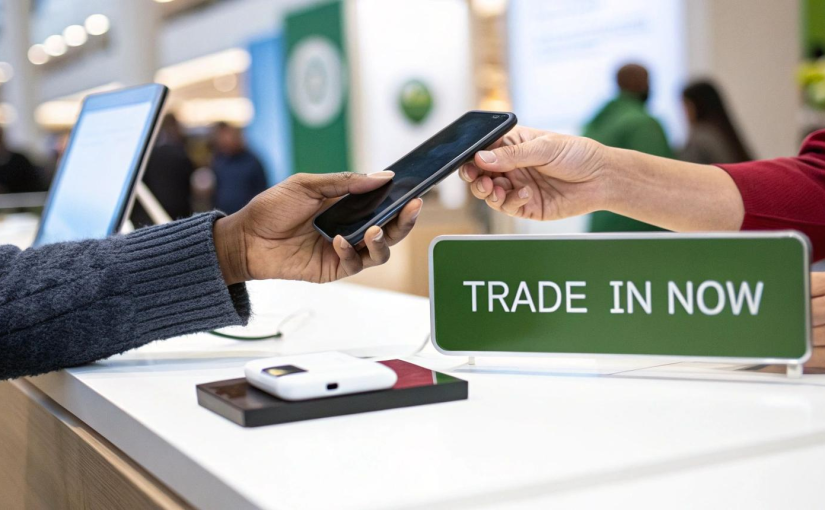
The Growing Appeal of Smartphone Trade-In Deals in New Zealand
For many New Zealanders, buying a new smartphone has become a decision that requires more thought than simply choosing the latest model. With household budgets under pressure and the cost of everyday essentials remaining a concern, consumers are increasingly looking for ways to reduce the price of expensive electronics. Smartphone trade-in programmes have therefore become an attractive option for people who want to upgrade without paying the full retail price.
Mobile providers and electronics retailers are making these offers more visible. Instead of leaving an old phone unused in a drawer, customers can exchange an eligible device for credit towards another handset. Depending on the model and its condition, the reduction can sometimes be substantial.
However, an important question remains: are these programmes genuinely helping New Zealanders save money, or are they simply encouraging consumers to replace their phones more frequently?
The answer is not straightforward. Trade-in deals can provide real financial benefits, but their value depends on the condition of the device, the price of the replacement phone and the conditions attached to the promotion.
Why More Kiwis Are Considering Trading In Their Old Phones
One reason trade-in programmes are attracting attention is that many households already own unused smartphones. A phone may be replaced because its camera is no longer impressive, its software feels outdated or a newer model offers additional features. Yet the previous device often remains perfectly usable.
Research commissioned by Spark and published in October 2026 found that 70% of New Zealand households had at least one unused mobile phone. Among people with an unused handset, 81% either did not know its value or estimated it was worth less than NZ$250. Spark reported an average trade-in value of NZ$265 based on its own year-to-date trade-in data.
These findings suggest that some consumers may be overlooking the financial value of their old electronics.
The situation is particularly relevant for families with several mobile users. Parents may have an older handset after upgrading, while teenagers might receive a replacement phone when starting secondary school. Rather than allowing these devices to accumulate, households can investigate whether they qualify for a trade-in offer.
For people trying to manage household expenses, recovering even a few hundred dollars can make a meaningful difference.
Spark and One NZ Are Making Trade-Ins More Attractive
New Zealand’s telecommunications market has become increasingly competitive, with providers looking for ways to attract and retain customers. Trade-in programmes are one way to make a new handset appear more affordable.
In October 2026, Spark introduced Spark Upgrader, a service designed to bring together estimated trade-in values, available mobile phone deals and selected customer offers. Customers can explore their potential savings online, through the Spark app or in-store.
One NZ has also been highlighting the value of older smartphones. According to figures published in October 2026, its customers traded in phones worth an average of NZ$478 during the year up to September. The company reported that 69% of traded devices were valued above NZ$250.
Interestingly, the iPhone 13 was the most commonly traded handset in One NZ’s reported figures. This suggests that consumers are not necessarily replacing phones immediately after release. Many are holding onto devices for several years before deciding to upgrade.
These programmes offer convenience, but consumers should remember that estimated trade-in values are not guaranteed payments. The final offer can change after a retailer checks the device’s condition, eligibility and specifications.
Do Trade-In Discounts Actually Reduce the Cost of a New Phone?
The biggest attraction of a trade-in deal is its apparent simplicity. A customer chooses a new smartphone, hands over an older device and receives a discount.
However, the advertised discount should never be the only figure considered.
Imagine someone wants to purchase a smartphone priced at NZ$1,800. A retailer offers NZ$350 for their existing handset, reducing the apparent purchase price to NZ$1,450.
That looks like a considerable saving. But what if another retailer sells the same replacement phone for NZ$1,600 without requiring a trade-in?
In that situation, the trade-in offer may not represent the best financial outcome. The customer could potentially achieve a lower total cost by purchasing elsewhere and selling the old device independently.
There is also the possibility of additional promotional conditions. Some offers require customers to sign up for an eligible mobile plan, purchase through a particular provider or commit to an interest-free repayment arrangement.
The important distinction is between receiving a discount and genuinely spending less.
New Zealand consumers should compare the final amount payable, including any plan costs, fees and repayment obligations. A large trade-in valuation is not necessarily a good deal if the overall package costs more.
The Condition of Your Old Smartphone Matters
Not every smartphone receives the same trade-in valuation. A relatively recent flagship device in excellent condition will generally attract more interest than an older entry-level model with visible damage.
Several factors can influence the final offer:
- Physical condition: Cracked screens, damaged frames and broken buttons can reduce the valuation.
- Battery performance: A phone that struggles to maintain its charge may be less attractive to refurbishment businesses.
- Storage capacity: Higher-capacity versions can retain more resale value, depending on demand.
- Age and model: Popular recent models are often easier to resell than outdated devices.
- Functionality: Camera problems, charging issues and faulty displays may affect eligibility.
Battery condition deserves particular attention because it directly affects the everyday experience of using a smartphone.
An older smartphone battery may have experienced hundreds of charging cycles, gradually losing some of its original capacity. Even when a handset looks almost new, reduced battery performance can influence its second-hand appeal.
Before requesting a trade-in estimate, consumers should check their device carefully and provide accurate information. Overestimating its condition could lead to disappointment when the retailer completes its physical assessment.
Are New Zealanders Being Encouraged to Upgrade Too Frequently?
There is another side to the trade-in debate. While these programmes can reduce the upfront cost of a replacement device, they may also encourage people to upgrade more frequently than necessary.
Smartphone manufacturers regularly introduce improved cameras, brighter displays, faster processors and new artificial intelligence features. Marketing campaigns often present these changes as reasons to purchase the newest model.
For some consumers, however, the differences between consecutive generations may not justify the expense.
A three-year-old smartphone can still handle messaging, online banking, navigation, video streaming and everyday photography. Unless the existing device has developed serious problems or no longer receives important security updates, replacing it might not be financially sensible.
Trade-in promotions can make upgrading feel like an opportunity that should not be missed. A limited-time bonus or an attractive estimated valuation may create pressure to make a quick decision.
Consumers should resist that pressure.
The most effective way to save money is not necessarily to receive the biggest discount. It may be to avoid purchasing a replacement device until there is a genuine need.
Refurbished Smartphones Offer Another Way to Save
Trade-in programmes are also contributing to the growth of New Zealand’s refurbished smartphone market.
Instead of sending every returned handset directly for recycling, providers can assess suitable devices, repair minor problems and prepare them for another owner.
One NZ announced in October 2026 that it was expanding its refurbished phone offering, initially focusing on selected Apple iPhone models sold through its online store. The refurbished devices were professionally restored and supported by a 24-month warranty.
This development gives consumers another option between purchasing a brand-new flagship and buying an unverified second-hand phone from an individual seller.
For budget-conscious shoppers, refurbished smartphones can offer several advantages.
Firstly, the purchase price is generally lower than that of an equivalent new model. Secondly, customers may gain access to premium features that would otherwise exceed their budget. Finally, buying a refurbished device can help extend the useful life of electronics.
Nevertheless, buyers should check the warranty, return policy, cosmetic grading and battery condition before making a purchase.
A refurbished phone is only a sensible bargain if it performs reliably and meets the buyer’s expectations.
The Environmental Benefits Behind Phone Trade-Ins
Financial savings are important, but environmental considerations are becoming another reason for New Zealanders to reconsider what happens to their old electronics.
Smartphones contain valuable materials, including metals and components that can potentially be recovered and reused. Throwing unwanted devices into general household rubbish wastes these resources and can create environmental problems.
New Zealand’s RE:MOBILE programme reached a significant milestone in October 2026, collecting more than one million mobile phones since its establishment in 2014.
According to the New Zealand Telecommunications Forum, the programme had diverted approximately 174.5 tonnes of waste from landfill and 376 tonnes of carbon emissions. It also works with telecommunications providers, retailers and community organisations to make phone recycling accessible nationwide.
This demonstrates that responsible device disposal is becoming a more established part of the country’s electronics market.
Trade-ins can support this process by giving usable phones another life through refurbishment and resale. Devices that cannot reasonably be repaired can instead enter appropriate recycling channels.
There is also an important distinction between recycling and reuse. Keeping a functioning smartphone in circulation generally avoids the need to manufacture an immediate replacement for another consumer.
For New Zealand households, choosing a refurbished device or keeping an existing handset for longer can therefore be a practical way to reduce electronic waste.
What Should Consumers Check Before Accepting a Trade-In Deal?
A little research can prevent an attractive promotion from becoming an expensive mistake.
Before accepting an offer, consumers should compare several details rather than focusing exclusively on the advertised trade-in amount.
First, check the current market price of the replacement smartphone. Compare offers from telecommunications providers, electronics retailers and other reputable sellers.
Second, obtain an estimate for the old handset from more than one source where possible. A retailer’s offer may be convenient, but an independent resale option could provide a better return.
Third, read the promotional conditions carefully. Check whether the discount requires a particular mobile plan, a minimum repayment period or an additional purchase.
Fourth, inspect the existing phone’s condition. Make sure the screen, cameras, buttons, speakers and charging connection work properly. Check the smartphone battery performance and disclose any known faults during the valuation process.
Finally, protect personal information before handing over the device. Back up important photographs and contacts, sign out of accounts, remove payment cards and perform a factory reset. Remember to remove the SIM card and any removable memory card.
These steps are particularly important because a smartphone can contain years of private messages, financial information and personal photographs.
Are Trade-In Deals Better Than Keeping Your Existing Phone?
For some people, the best financial decision may be to keep their current smartphone.
If a handset still works well, receives security updates and meets everyday requirements, there is little reason to replace it simply because a promotional offer is available.
Consider a consumer who owns a two-year-old flagship phone. If the device performs reliably, keeping it for another year could avoid a substantial purchase altogether. Even a generous trade-in discount may not compensate for the additional money required to buy a new model.
On the other hand, someone experiencing repeated charging problems, poor performance or an unreliable display may benefit from replacing their handset.
The decision should also take account of repair costs. Replacing a worn smartphone battery or repairing a minor fault may cost considerably less than purchasing a new phone, provided the device remains otherwise suitable.
This is particularly relevant in a market where premium smartphones can represent a significant household expense.
The Future of Smartphone Trade-Ins in New Zealand
The New Zealand smartphone market is likely to see more emphasis on trade-ins, refurbished devices and longer product lifecycles.
Telecommunications providers want to make their offers more competitive, while consumers are looking for practical ways to control spending. At the same time, environmental awareness is increasing pressure on the electronics industry to improve how unwanted devices are managed.
The growth of digital trade-in estimates and combined promotional offers could make the process easier. Customers may increasingly be able to assess their existing phone’s value before deciding which replacement device to purchase.
However, transparency will remain essential. Consumers need clear information about valuations, eligibility requirements, warranties and the full cost of purchasing a replacement handset.
Ultimately, a successful trade-in market should benefit both buyers and the environment, rather than simply accelerating the replacement cycle.
So, Are Smartphone Trade-In Deals Really Worth It?
Smartphone trade-in deals can genuinely help New Zealanders save money, especially when an older handset still has meaningful resale value. Recent initiatives from Spark and One NZ show that mobile providers are making these options easier to access, while the growth of refurbished devices is creating more affordable alternatives.
But a trade-in offer should never automatically be considered a bargain.
The smartest consumers will compare prices, check contract conditions, evaluate their existing phone’s condition and consider whether an upgrade is necessary in the first place.
For New Zealand households managing everyday expenses, the goal should be to get the greatest value from every device they own. Sometimes that means trading in an old phone. Sometimes it means purchasing a refurbished model. And sometimes the most economical choice is simply to keep using the smartphone already in their pocket.
A good deal is not about owning the newest technology. It is about making technology work better for your budget.