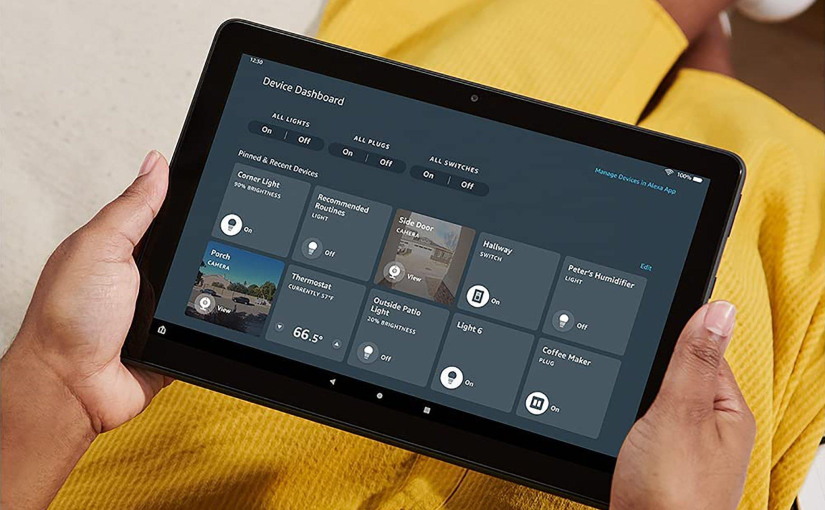
The Smart Home Revolution Is Reaching New Zealand
Imagine waking up on a chilly winter morning in Auckland. Before getting out of bed, you ask a tablet to check the weather, adjust the heat pump, switch on the kitchen lights and show you how much electricity your household used overnight. Meanwhile, your coffee machine starts preparing breakfast, and a notification reminds you that your electric vehicle needs charging before the afternoon commute.
This might sound like something from a futuristic film, but the technology behind this experience is becoming increasingly accessible. Artificial intelligence, connected appliances and smart home platforms are changing how people interact with their living spaces. For New Zealand households, these developments could introduce an entirely new way of managing everyday life.
At the centre of this transformation could be an ordinary-looking tablet. Rather than serving only as a device for watching videos, browsing the internet or checking emails, an AI-powered home tablet could become the central dashboard connecting different household technologies.
New Zealanders are already becoming more familiar with artificial intelligence. According to InternetNZ’s Aotearoa Internet Insights 2025, four out of five online New Zealanders had used AI during the previous 12 months, while 58% reported using it at least weekly. This growing familiarity creates an interesting opportunity for AI-powered household technology.
The question is no longer simply whether smart homes are possible. It is whether Kiwi households are ready to make a tablet the command centre of their daily routines.
Why Tablets Could Become the Heart of Smart Homes
Smart homes often involve several different applications, remote controls and connected devices. A household might use one app for lighting, another for security cameras, a separate platform for heating and yet another for managing entertainment equipment.
Although each individual product can be useful, managing everything separately can become frustrating.
An AI-powered tablet could bring these functions together through a single interface. Instead of searching through several applications, household members could access important controls from one convenient screen.
For example, a family in Wellington might create a personalised evening routine. With one command, the tablet could dim the living room lights, adjust the temperature, activate selected security settings and start a television streaming application.
Artificial intelligence could make this experience more sophisticated. Rather than simply following fixed instructions, the system could learn which settings household members prefer at different times of the day.
A parent might prefer warmer indoor temperatures during the evening, while teenagers could have different entertainment preferences. The tablet could present personalised recommendations without requiring everyone to navigate complicated settings.
Importantly, this does not mean that every appliance needs to be replaced. Existing smart devices may be integrated into a wider system if they support compatible platforms and communication standards.
New Zealand’s Growing Interest in Smarter Living
There are several reasons why smart home technology could attract greater attention across Aotearoa.
Electricity costs, household comfort, convenience and energy efficiency are important considerations for many New Zealand families. Technology that helps people understand and manage their energy consumption could therefore have practical appeal.
New Zealand’s Energy Efficiency and Conservation Authority (EECA) has published guidance explaining how smart home technologies can help households optimise energy use. Connected appliances, smart controls and automated scheduling can make it easier to manage electricity consumption and shift some activities away from peak demand periods.
The opportunity is particularly interesting during winter.
In cities such as Christchurch, Dunedin and Wellington, colder weather can mean increased heating requirements. Households may use heat pumps, electric heaters, hot water systems and other appliances more frequently.
An intelligent home dashboard could help residents understand which devices consume the most electricity and when household demand is highest.
For instance, a tablet might display a daily energy overview, identify unusual consumption patterns and suggest practical adjustments. It could remind residents to switch off unnecessary equipment or schedule certain appliances to operate during cheaper electricity periods, where their electricity plan supports this.
These features would not automatically guarantee lower power bills. However, they could make household energy information easier to understand and act upon.
AI Could Make Everyday Household Management Easier
One of the most exciting possibilities is the transition from traditional touchscreen controls to conversational interaction.
Instead of manually adjusting individual settings, residents could communicate with an AI assistant using everyday language.
A homeowner might ask, “Is anyone expected at the front door this afternoon?” The tablet could display relevant information from a connected video doorbell, provided the system has permission to access that device.
Another person might ask, “Which appliances are still running?” The assistant could check compatible connected equipment and provide a simple overview.
AI could also help organise family schedules.
For busy households, the tablet might display school reminders, work meetings, grocery lists, appointments and household maintenance notifications. It could potentially recognise scheduling conflicts and suggest alternative arrangements.
Consider a family in Hamilton with two working parents and school-aged children. Their morning routine might involve preparing lunches, checking school notices, organising transport and making sure everyone leaves on time.
A central household dashboard could bring these tasks together, reducing the need to check several phones and applications.
The real advantage would not necessarily be the intelligence of the tablet itself. It would be the ability to connect information and make everyday decisions less complicated.
Could Smart Tablets Help Kiwi Families Manage Electricity?
Energy management could become one of the most valuable applications of AI-powered household tablets.
New Zealand has a substantial renewable electricity sector, with approximately 80–85% of its electricity generated from renewable sources, according to EECA. Nevertheless, electricity demand still fluctuates, and household consumption often rises during winter mornings and early evenings.
This creates an opportunity for smarter energy management.
A connected tablet could display electricity consumption across different household devices. If supported by compatible monitoring equipment, it might show how much energy a heat pump, washing machine or hot water system is using.
AI could then analyse these patterns and offer suggestions.
For example, if a household regularly operates its washing machine during an expensive peak period, the assistant could recommend a different schedule. If an appliance appears to consume more electricity than usual, it might notify the owner that further investigation could be worthwhile.
For electric vehicle owners, the possibilities could be even more interesting. A household dashboard might coordinate vehicle charging with other electricity demands, helping residents avoid running several energy-intensive appliances simultaneously.
These functions could be particularly useful as New Zealand continues exploring demand flexibility and smarter electricity management.
However, the system should always allow homeowners to decide whether automated adjustments are acceptable. Convenience should never mean surrendering control over household energy decisions.
The Importance of Tablet Performance and Battery Life
A tablet intended to control an entire household has different requirements from one used occasionally for entertainment.
A smart home dashboard may remain active throughout the day, receiving notifications, displaying camera feeds, monitoring connected devices and responding to voice commands.
Consequently, reliability becomes extremely important.
Battery performance is one consideration that consumers should not overlook when choosing a suitable device. A tablet that constantly needs recharging may become inconvenient, particularly if it is mounted on a kitchen wall or placed in a central living area.
A dependable tablet battery helps support longer periods of everyday use, especially when the device is expected to remain available for household controls and notifications.
Display quality also matters. A sufficiently bright screen can make information easier to read in different lighting conditions, while a responsive touchscreen allows household members to access controls quickly.
Processing performance is another consideration. AI-powered applications, video feeds and multiple connected services may place greater demands on the device than ordinary browsing.
For households planning to use a tablet as a permanent smart home interface, choosing a model with suitable performance, dependable connectivity and good power management could make a meaningful difference.
Matter and Device Compatibility Could Change Everything
One challenge facing the smart home industry is compatibility.
Not every smart light, security camera, thermostat or appliance works with every digital ecosystem. Consumers can easily become frustrated when devices from different manufacturers require separate applications or refuse to communicate with one another.
This is where Matter could become increasingly important.
Matter is a connectivity standard designed to improve interoperability between smart home products from different manufacturers. Its wider adoption could make it easier for consumers to build connected environments without depending entirely on one brand.
For a tablet-based control system, compatibility is essential.
Imagine purchasing smart lighting from one company, a thermostat from another and a security camera from a third. Ideally, a central dashboard should allow residents to manage these devices without constantly switching between applications.
However, Matter support does not automatically mean that every feature of every product will work with every tablet. Consumers should still check platform compatibility, supported functions and connectivity requirements before purchasing equipment.
The most successful home control systems will probably be those that offer flexibility rather than forcing customers into a closed technology ecosystem.
Security and Privacy Could Become Major Concerns
As households connect more devices to the internet, the amount of personal information circulating through digital systems increases.
A home tablet could potentially access sensitive information, including security camera footage, household schedules, voice recordings and details about when residents are away.
This creates obvious privacy concerns.
InternetNZ’s 2025 research highlights that New Zealanders are increasingly aware of the risks associated with artificial intelligence, including its potential misuse and the need for appropriate regulation.
Smart home manufacturers will therefore need to demonstrate that their products offer meaningful security protections.
Consumers should look for devices that provide regular software updates, strong account authentication and clear privacy controls. They should also understand which information is processed locally and which data is sent to cloud services.
Voice assistants deserve particular attention. A household should be able to review microphone permissions, control recording settings and disable features that are not needed.
There is also a practical security question. What happens if someone gains access to the central tablet?
If one device controls door locks, cameras and other important household systems, unauthorised access could create serious problems.
For this reason, sensitive controls should have additional protection, and household members should retain alternative ways to operate essential devices.
Convenience must not come at the expense of safety.
Could AI Tablets Be Useful for Older New Zealanders?
Another potentially valuable application involves ageing populations and people who prefer simpler technology.
Some older residents find it difficult to manage multiple smartphone applications, small touchscreen controls and complicated electronic interfaces.
A centrally positioned tablet with large icons, voice interaction and straightforward menus could make household technology easier to access.
For example, residents might use it to adjust lighting, check the temperature, communicate with family members or view a compatible security camera.
AI assistants could also help with everyday reminders, such as remembering appointments or checking household shopping lists.
In rural communities, where travelling to services can sometimes require additional planning, connected communication tools may offer another way to stay in contact with family and support networks.
Nevertheless, designers should avoid assuming that every older person wants an AI-driven home. Clear instructions, accessible interfaces and straightforward manual controls remain essential.
The best technology should make people feel more independent, not more dependent on complicated systems.
Why Some Kiwi Households May Hesitate
Despite the possibilities, AI-powered home tablets are unlikely to become essential purchases overnight.
Cost remains an important consideration. Purchasing a capable tablet, compatible smart appliances, sensors and other accessories can require a significant initial investment.
There is also the question of whether the benefits justify the expense.
A household that only wants to control a few lights may not need an expensive central dashboard. A smartphone and several basic smart home applications might already provide sufficient functionality.
Installation is another potential barrier. Although some connected devices are designed for simple setup, integrating several different products can become confusing.
New Zealand’s smart home research provides an interesting perspective. A University of Otago report examining responses from 1,636 households found that only 5% of respondents were very familiar with the concept of a smart home. Meanwhile, 60% expressed at least some interest in having one.
The research also identified concerns about data security, installation difficulties and value for money.
These findings suggest that interest exists, but consumers still need clearer information and accessible solutions before smart home technology becomes mainstream.
What Should Consumers Look for in a Home Control Tablet?
For New Zealanders considering this technology, the most important decision is not necessarily choosing the most expensive tablet.
Instead, consumers should think about how they intend to use it.
A good home control device should offer a responsive touchscreen, reliable Wi-Fi connectivity, sufficient processing power and compatibility with the smart home ecosystem they plan to use.
Battery capacity and charging arrangements also deserve attention. A tablet battery should be capable of supporting the intended usage pattern, although a permanently installed dashboard may benefit from a suitable charging arrangement rather than relying entirely on battery power.
Consumers should also consider software support. Smart home technology evolves quickly, and a device that receives regular updates is more likely to remain useful as new applications and connected products become available.
For families with children, parental controls and individual user profiles could be helpful. For security-conscious homeowners, privacy settings and account protection should be priorities.
A third important consideration is long-term reliability. If the tablet becomes the main interface for household controls, it should remain easy to operate even when the internet connection is temporarily unavailable. Essential functions should ideally have alternative controls.
The Future of Kiwi Homes Could Be More Connected
The idea of an AI-powered tablet becoming the central control point for a New Zealand household is no longer particularly far-fetched.
The technology already exists in different forms. Smart speakers, connected lighting, intelligent heating controls, security cameras and AI assistants are gradually creating the foundations for more integrated homes.
The next step could be bringing these experiences together through a convenient touchscreen interface that understands household routines and responds to natural language.
For Kiwi families, the appeal is easy to understand. A well-designed system could simplify daily schedules, improve household visibility, support more informed energy decisions and make connected technology easier to manage.
However, successful adoption will depend on more than impressive AI demonstrations. Affordability, compatibility, privacy, accessibility and dependable performance will determine whether these systems become genuinely useful.
The tablet itself will also need to remain reliable. As household members begin depending on it for everyday tasks, a well-maintained tablet battery and dependable power supply will become part of the overall user experience.
Perhaps the most interesting possibility is that the future smart home will not require residents to learn dozens of complicated applications. Instead, they may simply walk into the kitchen, glance at a single screen and ask their home what needs attention.
For New Zealand households, that could be the real beginning of a smarter way of living.