Reusable menstrual products are becoming an increasingly interesting part of the conversation about sustainable living in New Zealand. From menstrual cups and reusable pads to period underwear, more people are looking for alternatives to disposable products that can reduce household waste, save money over time and offer greater control over personal care routines. However, there is one practical issue that can make the switch less appealing: cleaning.
For many people, the biggest challenge is not choosing a reusable product but maintaining it properly. Washing, rinsing, drying and storing menstrual products can take time, especially when someone is travelling, working long hours or sharing a bathroom with other people. This is where smart cleaning machines could make a difference.
Imagine a compact device that can clean and sanitise a menstrual cup with minimal effort, or a small appliance that helps users maintain reusable period products without turning the bathroom into a laundry station. Such technology could make sustainable menstrual care more convenient and encourage more people to reconsider disposable alternatives.
New Zealand has a strong interest in sustainability, practical innovation and accessible personal technology. Could smart machines become the next step in making reusable menstrual products easier to manage?
Why Reusable Menstrual Products Are Attracting Attention in New Zealand
New Zealand consumers are increasingly familiar with conversations about reducing waste, choosing durable products and making everyday purchases more environmentally responsible. Menstrual care is part of this wider discussion.
Disposable pads and tampons are convenient, but they need to be purchased repeatedly and create ongoing waste. Reusable menstrual cups, washable pads and period underwear offer another approach. Instead of replacing a product after every use, consumers can clean and reuse it according to the manufacturer’s instructions.
For students, workers and families managing household budgets, this can also be an attractive financial consideration. Although reusable products may cost more initially, they can reduce the need for frequent purchases over time.
However, convenience remains essential. A product can be environmentally friendly and economical, but if maintaining it feels complicated, consumers may hesitate to use it regularly.
This is particularly relevant in New Zealand, where lifestyles vary considerably. Someone living in Auckland and commuting daily may have different cleaning needs from a person travelling around the South Island, camping near a lake or working in a rural community.
Reusable products must fit into real routines, not just look appealing in sustainability campaigns. Better cleaning technology could help bridge that gap.
The Cleaning Challenge Behind Reusable Period Products
Reusable menstrual products are not all cleaned in the same way. Menstrual cups, for example, generally require rinsing between uses and cleaning or sterilising according to the manufacturer’s directions. Reusable pads and period underwear usually require appropriate washing and thorough drying.
These steps are manageable at home, but they can become inconvenient in certain situations.
Consider someone spending a weekend hiking in Fiordland. Access to running water, private bathrooms and laundry facilities may be limited. A person staying in shared accommodation may also prefer not to spend time washing personal-care products in a communal bathroom.
There are other everyday situations to consider. University students may have busy schedules, travellers may be moving between accommodation providers, and people working long shifts may simply want a quicker cleaning routine.
The challenge is not necessarily that reusable menstrual products are difficult to clean. Rather, their maintenance can involve several separate steps that consumers must remember and complete consistently.
This creates an opportunity for small household appliances designed around personal hygiene.
A dedicated cleaning device could potentially simplify part of the process, making reusable products feel less demanding without removing the user’s responsibility to follow proper hygiene instructions.
Smart Cleaning Machines Are Already Becoming a Reality
This idea is not entirely futuristic. New Zealand has already produced an interesting example of how technology could improve reusable menstrual care.
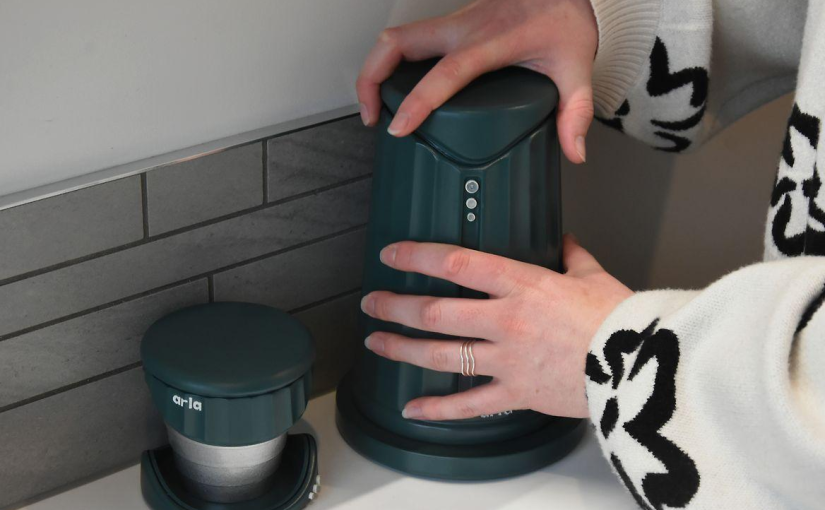
One particularly notable design is Arla Gen II, developed by Massey University graduate Sophie West. The portable system is designed to clean and sterilise reusable menstrual cups and discs in one compact product.
Its design addresses a surprisingly familiar problem. Some users are uncomfortable boiling menstrual cups in a shared kitchen, while others find it difficult to sterilise their products when travelling. Arla Gen II combines a collapsible silicone shaker cup with an induction-heated base. Users can add water, shake the product to clean it, and then use the heated base for sterilisation.
Importantly, the shaker component can operate without electricity, while the heating stage uses an induction base. The design also switches off automatically after sterilisation.
This is an example of technology responding to a real everyday inconvenience rather than creating a complicated new lifestyle. It demonstrates how thoughtful industrial design can make an existing sustainable product easier to use.
The project has also attracted international design recognition through the James Dyson Award, putting a New Zealand-developed menstrual health innovation into a wider conversation about practical consumer technology.
For local consumers, this is an exciting development. It suggests that New Zealand’s contribution to sustainable technology does not have to come exclusively from large electronics companies. University graduates, independent designers and small businesses can also develop useful products with international potential.
How Could Smart Cleaning Devices Actually Work?
A smart menstrual product cleaner does not necessarily need a complicated touchscreen or a connection to the internet. In fact, the most successful designs may be those that make cleaning simpler through a combination of carefully selected technologies.
Several features could make these devices particularly useful.
Automated cleaning cycles
A compact cleaner could guide users through a cleaning process with a simple button. Depending on the product’s design, it might circulate water, provide controlled agitation or use ultrasonic technology to help remove residue from suitable surfaces.
The objective would be to reduce the amount of manual work involved while making the process more consistent.
Temperature-controlled sterilisation
Some devices could use controlled heating to sterilise compatible menstrual cups and discs. A built-in temperature sensor could monitor the heating process, while an automatic shut-off function could reduce the risk of overheating.
However, temperature and sterilisation methods must be validated for the specific product materials. Not every reusable menstrual product can safely withstand boiling or high temperatures.
Compact ultraviolet technology
Ultraviolet light is another technology that attracts attention in personal hygiene appliances. Carefully engineered UV-C systems may help inactivate microorganisms on surfaces that receive sufficient exposure.
Nevertheless, UV technology should not automatically be treated as a replacement for washing. Shadows, surface irregularities and organic material can affect performance. Any device making sterilisation claims would need appropriate independent testing.
Smart sensors and automatic controls
Future devices could include sensors that monitor water temperature, cleaning duration and device conditions. A small display or indicator light could show whether a cycle has finished.
These features would make the experience easier for people who prefer simple instructions rather than remembering multiple cleaning steps.
The best design would not necessarily be the most technologically advanced one. It would be the device that makes proper care easier without adding unnecessary complications.
Why Battery Technology Could Matter for Portable Cleaners
Portability is an important consideration for people who want to use reusable menstrual products outside their homes. A cleaning device that only works beside a kitchen socket may be less attractive to travellers, students and people who frequently move between locations.
This is where rechargeable technology could become valuable.
A future portable cleaner might use a compact consumer electronics battery to power its electronic controls, sensors, water circulation system or other low-power functions. This could allow users to operate the device in bathrooms, hotel rooms or other locations without constantly searching for a power outlet.
Battery-powered designs could also make it possible to develop smaller appliances with fewer cables. For someone packing light for a weekend trip around New Zealand, a compact rechargeable cleaner could be more convenient than carrying several separate cleaning accessories.
There are practical engineering challenges, however. Heating water requires considerably more energy than operating a small indicator light or sensor. A manufacturer would need to balance battery capacity, charging time, operating temperature and overall product size.
Some products might therefore use a rechargeable battery for everyday electronic functions while relying on a separate powered base for higher-energy heating. Others could use manual cleaning methods that require very little electricity.
A well-designed consumer electronics battery system would also need suitable protection against moisture, overheating and electrical faults. Since these appliances are likely to be used in bathrooms, water resistance and safe charging arrangements would be particularly important.
Future products could even include battery indicators, USB-C charging and energy-efficient operating modes. These familiar features from everyday electronics could make personal-care appliances feel more intuitive and accessible.
Could Reusable Menstrual Product Cleaners Become Travel Essentials?
New Zealand is a country where outdoor activities are part of everyday life. People enjoy camping, hiking, road trips, beach holidays and exploring remote destinations. However, these experiences can make personal hygiene more challenging, particularly when access to clean water and private washing facilities is limited.
A portable menstrual product cleaner could offer a practical solution.
Imagine a small device that fits inside a travel bag and allows someone to clean a menstrual cup in a hotel bathroom or campsite washroom. Rather than carrying a large sterilising pot or finding a suitable kitchen, users could bring a dedicated appliance designed specifically for personal menstrual care.
This could be especially useful for international students, backpackers and people travelling between New Zealand’s cities and rural communities.
Travel-friendly designs would need to consider more than size. They should be lightweight, easy to empty, simple to rinse and capable of operating safely in different environments.
A rechargeable consumer electronics battery could support portable functions such as electronic controls, sensors and low-power cleaning mechanisms. Manufacturers might also explore detachable battery modules, allowing users to charge the device separately from its water-containing components.
Another interesting possibility is a dual-mode design. At home, the appliance could connect to a powered base for more advanced cleaning functions. During travel, users could rely on a simpler manual or battery-assisted mode.
This approach could make sustainable menstrual care more practical without requiring people to purchase several different appliances.
The Connection Between Smart Cleaning and Women’s Health Research
Convenience is important, but hygiene must remain the priority.
One reason this technology deserves attention is that researchers in New Zealand are also investigating the safety of reusable menstrual products.
In May 2026, researchers at the University of Auckland, including microbiologists Dr Priscila Dauros-Singorenko and Associate Professor Siouxsie Wiles, highlighted a lack of independent research into biofilm formation on menstrual cups and discs.
Biofilms are communities of microorganisms that attach to surfaces and form protective structures. They can be more difficult to remove than microorganisms that are not attached to a surface.
The researchers want to investigate how different microorganisms interact with menstrual product materials under conditions that better reflect real-world use.
This raises an important question for technology developers: can a smart cleaning machine demonstrate that it cleans effectively rather than simply making the process look more convenient?
A device should not be marketed as completely eliminating bacteria or preventing infections without strong scientific evidence. Its performance needs to be evaluated using appropriate laboratory testing.
Material compatibility is equally important. Silicone, thermoplastic elastomers and other materials may respond differently to heat, cleaning agents and repeated mechanical treatment.
Manufacturers should also consider how the cleaning appliance itself is maintained. A machine that collects moisture or develops residue inside inaccessible compartments could create new hygiene concerns.
The ideal solution would combine thoughtful engineering with independent microbiological research.
For New Zealand, this creates an interesting opportunity for collaboration between universities, designers, health professionals and consumer technology businesses.
Could Smart Cleaning Technology Reduce Period Waste?
The environmental argument is another reason this technology could attract attention.
Disposable menstrual products create waste because they are designed for short-term use. Reusable cups and washable products offer an alternative by allowing the same item to be used repeatedly when maintained correctly.
New Zealand’s environmental priorities make this particularly relevant.
The country has a strong interest in reducing unnecessary waste, improving product durability and encouraging more responsible consumption. Sustainable menstrual care fits naturally into these wider discussions.
However, buying a reusable product is only one part of the equation. Consumers also need convenient ways to maintain it over its intended lifespan.
If cleaning appliances make reusable products easier to manage, they could encourage more people to consider switching.
There is also an opportunity to rethink how personal-care appliances are manufactured.
Instead of creating disposable electronic accessories, companies could develop durable devices with replaceable components, repairable structures and long-lasting rechargeable power systems.
A well-engineered consumer electronics battery could support this approach by powering a reusable appliance over many cleaning cycles. Battery replacement should also be considered during product development so that the entire device does not become electronic waste when its power source eventually loses capacity.
The environmental benefits would still depend on the appliance’s manufacturing materials, electricity consumption, lifespan and eventual recycling. A reusable cleaner is not automatically more sustainable simply because it uses rechargeable technology.
The real goal should be to reduce the environmental impact of the complete menstrual care routine.
What Would Make These Devices More Attractive to Kiwi Consumers?
Even a clever invention needs to fit into people’s budgets and daily habits.
For smart menstrual cleaning devices to succeed in New Zealand, affordability will be an important consideration.
A premium appliance with complicated controls might attract technology enthusiasts, but many consumers would prefer something compact, reliable and reasonably priced.
The most appealing features could include:
- A compact design that fits easily into a bathroom cabinet or travel bag.
- Simple one-button operation with clear cleaning instructions.
- Removable components that are easy to wash and maintain.
- Automatic shut-off and appropriate temperature controls.
- Rechargeable operation where practical.
- Compatibility with different menstrual cup and disc designs.
- Clear information about cleaning performance and material safety.
Privacy should also be considered.
Menstrual health remains a personal subject, and not everyone feels comfortable discussing it in shared accommodation or public spaces. A discreet appliance that looks like an ordinary personal-care device could make users feel more comfortable.
This is particularly relevant for younger consumers and university students who may share bathrooms or live in flats.
Technology companies should also avoid assuming that every user has identical needs. People with disabilities, different mobility requirements and varying levels of access to private facilities may benefit from different product designs.
Good innovation begins with listening to users rather than simply adding more electronic features.
The Business Opportunity for New Zealand Technology Companies
The development of smart menstrual cleaning machines could open an interesting market for New Zealand designers and manufacturers.
The country already has businesses working in sustainable personal care. Hello Period, for example, has developed a range of reusable menstrual products, including cups, discs and washable pads.
Meanwhile, Arla Gen II demonstrates how industrial design can address the practical challenges associated with cleaning and sterilising reusable menstrual products.
These developments suggest that menstrual care innovation does not have to focus exclusively on the product itself. Accessories, cleaning appliances, storage systems and travel solutions could become valuable parts of the wider market.
There may also be opportunities for collaboration with electronics manufacturers.
Companies specialising in miniature heating systems, waterproof enclosures, rechargeable power supplies and low-energy sensors could contribute to the next generation of personal hygiene appliances.
A particularly promising direction would be modular product design. Instead of replacing an entire appliance when one component fails, users could replace the heating element, charging module or other individual parts.
This would potentially improve repairability and reduce long-term ownership costs.
For New Zealand startups, the domestic market could provide a useful testing ground before expanding internationally. A successful design could appeal to consumers in Australia, the United Kingdom and other markets where reusable menstrual products are becoming increasingly familiar.
What Could the Future Bathroom Look Like?
The bathroom is gradually becoming a more technology-friendly space.
Electric toothbrushes, smart scales, water-saving shower systems and automatic soap dispensers have already changed how people approach everyday personal care.
Smart menstrual product cleaners could become another example of this development.
Future appliances might feature automatic cycle selection, intelligent water management and simple mobile notifications. Some could even recognise different cleaning accessories and recommend suitable maintenance routines.
However, connected features should remain optional. Users should not need an internet connection or a smartphone account just to clean an essential personal-care product.
Privacy, reliability and ease of maintenance should matter more than impressive-looking software.
Energy efficiency will also influence product development. Smaller batteries, efficient heating components and intelligent power management could help create appliances that are practical without becoming unnecessarily complicated.
Designers may eventually explore products that combine cleaning, drying and storage in one compact system. Such appliances could be particularly useful for people living in small apartments or travelling frequently.
The opportunity is not simply to make bathrooms smarter. It is to make everyday personal care more comfortable, accessible and sustainable.
A Small Invention Could Make a Meaningful Difference
Smart cleaning machines may not sound like the most glamorous development in consumer technology, but they address a genuine everyday problem.
New Zealand’s growing interest in sustainable menstrual care, combined with innovative projects such as Arla Gen II and emerging research into reusable product hygiene, makes this an especially relevant topic.
The next generation of devices will need to prove that they can do more than look convenient. They must deliver reliable cleaning performance, protect users, accommodate different product materials and remain affordable.
Portable designs, efficient heating systems and carefully engineered consumer electronics battery solutions could all contribute to making these appliances more practical.
Ultimately, the most successful innovation may be surprisingly simple: a small, reliable machine that removes some of the inconvenience from reusable menstrual care.
If technology can make sustainable choices easier to maintain in everyday life, more people may feel confident adopting them. And that could be a meaningful step forward for both personal wellbeing and New Zealand’s wider sustainability ambitions.