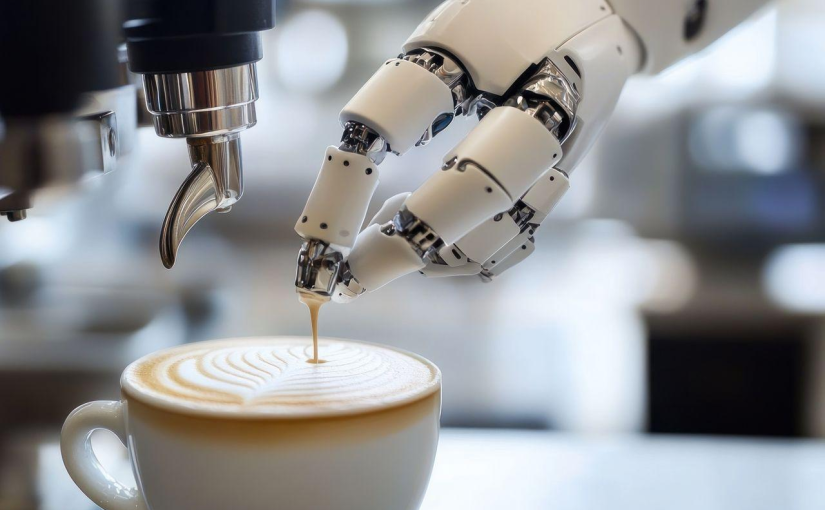
New Zealand’s Coffee Culture Meets the Age of Robotics
New Zealand has a special relationship with coffee. From the busy streets of Auckland to the independent cafés of Wellington and the relaxed coastal neighbourhoods of Christchurch, coffee is much more than a morning drink. It is part of everyday life, a reason to meet friends, a familiar stop during the working day, and an important part of the country’s hospitality culture. Among the many drinks enjoyed across the country, the flat white has become an unmistakable favourite.
But what happens when the person behind the espresso machine is no longer a person?
Robot baristas are gradually changing the way people think about coffee preparation. Instead of relying entirely on human staff, automated systems can grind beans, control extraction, steam milk, prepare drinks and even serve customers through digital ordering systems. What once seemed like a futuristic attraction is becoming a practical business idea.
New Zealand has already experienced this transformation. Auckland welcomed robot-operated coffee outlets, including COFE+ locations, demonstrating that automated coffee services can attract customers who value speed and convenience. The development raises an interesting question: could robots eventually make the perfect flat white without human assistance?
Auckland Has Already Had a Taste of Robot-Made Coffee
For many New Zealanders, the idea of ordering coffee from a robot is no longer purely science fiction. Auckland has become an interesting testing ground for automated café technology, with robotic coffee stations appearing in locations where office workers, students and commuters want quick service.
One example is COFE+, which introduced robotic coffee operations in Auckland. Its first location opened at Queen’s Food Court in January 2025, followed by another in Newmarket. The machines were designed to prepare drinks quickly while using coffee beans selected for local preferences.
Reports at the time indicated that the operation could produce approximately 100 cups daily, with individual drinks taking around 60 seconds to prepare.
This is an important development because New Zealand customers are not necessarily looking for technology simply because it looks impressive. They want coffee that tastes good, arrives at the right temperature and does not require a long wait.
For someone rushing to a morning meeting in Auckland’s central business district, a robotic coffee station could offer a convenient alternative to standing in a busy café queue.
However, convenience is only the beginning of the story. The real challenge is whether automated equipment can consistently reproduce the quality and personality that make New Zealand coffee culture distinctive.
Can a Robot Actually Make a Proper Flat White?
The flat white presents a particularly interesting challenge for robotic coffee makers.
Unlike a basic black coffee, a flat white requires a carefully balanced combination of espresso and textured milk. The milk should be smooth and velvety, with fine microfoam rather than large, dry bubbles. The coffee must also retain enough flavour to stand out without becoming unpleasantly bitter.
A human barista develops these skills through experience. They learn how different coffee beans behave, adjust grinder settings, monitor extraction times and judge milk texture through observation and touch.
A robot approaches the same process differently.
Automated coffee systems use programmed movements, sensors, pumps, temperature controls and software to manage individual preparation stages. More advanced machines can adjust recipes according to drink selection and operating conditions.
This creates an opportunity for consistency. A machine does not become distracted during a busy morning rush or forget a recipe after preparing dozens of drinks.
Nevertheless, producing a technically acceptable espresso is not the same as creating an excellent flat white.
Milk texture remains particularly important. If the steaming process introduces too much air, the result may feel closer to a cappuccino than the smooth drink New Zealand customers expect.
The New Zealand Specialty Coffee Association has previously explored this question through a comparison between a human competition barista and a robotic coffee arm. The experience highlighted differences in milk texture, flavour and the importance of human skill. Interestingly, the robot’s flat white was also a stumbling block in the comparison.
The experiment showed that automation has genuine potential, but there is still a gap between preparing a drink and mastering the craft of coffee making.
Why New Zealand Cafés Are Interested in Automation
Running a café in New Zealand involves much more than purchasing an espresso machine and opening the doors.
Business owners must manage wages, rent, electricity, ingredients, equipment maintenance, staff training and unpredictable customer demand. Smaller independent cafés can face particular pressure when operating costs increase.
This is where robotic coffee technology becomes attractive.
A robotic coffee station can perform repetitive preparation tasks without requiring a person to stand beside the machine throughout the entire process. Depending on its design, it may also operate in a compact space that would not accommodate a conventional café.
For example, an automated coffee outlet could potentially serve customers inside an office building, university, shopping centre or transport hub.
These environments have something in common: people frequently want refreshments without spending much time waiting.
A robot could also help businesses maintain standardised recipes across multiple locations. A customer ordering the same drink at different outlets may receive a more consistent result because the preparation process follows controlled instructions.
However, automation does not automatically eliminate operating expenses. Machines require servicing, cleaning, software support and replacement components. Business owners must also consider the cost of coffee ingredients and the reliability of payment systems.
The strongest opportunity may therefore come from using robots for specific tasks rather than expecting them to replace every part of a traditional café.
The Technology Behind an Automated Coffee Experience
A modern robotic café is a combination of several technologies working together.
The robotic arm is perhaps the most visually impressive component. It can move cups, operate equipment and follow carefully programmed preparation sequences. Some systems use multiple mechanical components to handle different stages of drink production.
Behind these movements is a digital control system.
Software manages ordering information, drink recipes, payment confirmation and equipment operation. Sensors help monitor conditions, while automated cleaning functions can reduce the amount of manual intervention required between operating cycles.
Connectivity is another important part of the experience.
A connected coffee machine may receive orders through a touchscreen or mobile application, communicate with payment terminals and send operating information to a central management platform.
This means a robotic coffee station is not simply a mechanical arm making espresso. It is also a networked consumer technology product.
Its electronic control boards, touchscreen displays, wireless communication components and payment equipment all depend on reliable electrical power. In this wider ecosystem, the consumer electronics battery is an interesting consideration for portable accessories, wireless control devices and supporting electronic equipment.
Although a commercial robotic coffee machine generally relies on mains electricity, smaller connected components may need independent power to remain functional.
Could Artificial Intelligence Make Robot Baristas More Creative?
The next stage of robotic coffee development could involve artificial intelligence.
Traditional automated coffee machines mainly follow predefined instructions. More advanced systems are beginning to explore ways of interpreting customer preferences, recognising objects and adapting their behaviour to different situations.
Imagine entering a café and asking a robotic barista for a flat white that is slightly stronger than usual, with oat milk and less foam.
Instead of selecting every setting manually, an intelligent ordering system could interpret the request, identify the relevant recipe and communicate the instructions to the coffee-making equipment.
Personalisation could become even more interesting over time.
Customers might save their favourite drink combinations, adjust sweetness levels, choose different milk options or receive suggestions based on previous orders.
For New Zealand cafés serving a diverse customer base, this flexibility could be valuable.
AI could also help operators identify recurring equipment problems, monitor ingredient consumption and predict when certain components require maintenance.
However, there is an important distinction between a machine understanding a customer’s request and genuinely understanding their taste.
A robot may successfully remember that someone prefers a particular espresso blend, but it cannot necessarily reproduce the friendly conversation or spontaneous recommendation offered by an experienced barista.
That difference could become one of the defining features of the future café experience.
The Importance of Batteries and Reliable Electronics
As robotic coffee technology becomes more sophisticated, the supporting electronic ecosystem will also become more important.
A fully automated coffee station may contain several electronic systems, including digital displays, wireless communication modules, sensors, payment readers and remote monitoring equipment.
Each component contributes to the customer experience. A failure in one part of the system could interrupt ordering, payment or drink preparation.
Power management is therefore an important consideration.
The main coffee-making equipment typically draws power directly from the electrical supply, but supporting devices may use rechargeable batteries. Wireless payment accessories, portable diagnostic tools and mobile management equipment all need dependable power sources.
The consumer electronics battery can therefore be relevant to the wider ecosystem surrounding automated cafés, even though it is not necessarily the main energy source for the robotic arm or espresso machine.
Battery performance matters particularly when electronic accessories are expected to operate throughout long business hours. Reliable charging, appropriate capacity and protection against excessive heat can help maintain dependable operation.
Maintenance teams may also use portable electronic testing equipment to inspect sensors, controllers and communication devices.
As more cafés adopt connected equipment, businesses will need to consider not only the performance of the coffee machine but also the reliability of its supporting electronics.
The consumer electronics battery is one small but relevant part of this increasingly connected environment.
Will Robot Baristas Replace Human Coffee Experts?
This is perhaps the biggest question facing the industry.
New Zealand’s independent cafés are built around more than the products they sell. Their atmosphere, personal service, local character and relationships with customers are important reasons people return.
A regular customer might visit the same café every morning because the barista remembers their usual order. Another might enjoy asking about a new coffee bean or discussing the difference between two brewing methods.
These experiences are difficult to automate.
A robot can follow a recipe, but building a genuine relationship with a customer is a different challenge.
There are also practical limitations. A machine may struggle when an unusual order requires improvisation, when ingredients run out unexpectedly or when equipment behaves differently from normal.
Human workers can recognise these situations and respond creatively.
Rather than replacing all baristas, robotics may encourage a different division of responsibilities. Machines could handle repetitive preparation, while employees focus on customer service, coffee selection, quality control and maintaining the overall café experience.
This approach could allow businesses to experiment with automation without losing the human atmosphere that makes local cafés attractive.
Could Robotic Cafés Become More Common Beyond Auckland?
Auckland provides a useful starting point, but the potential market extends much further.
Wellington has a strong independent café culture, with customers who often appreciate carefully prepared coffee and distinctive local businesses. Christchurch offers opportunities in shopping centres, office developments and transport-related locations.
Smaller cities and regional communities may also find automated coffee stations useful where traditional café operating hours are difficult to maintain.
For example, a robotic coffee outlet could potentially serve customers in a university building early in the morning, remain available during the afternoon and continue operating outside conventional café hours.
Tourism could create another opportunity.
New Zealand attracts visitors who travel between cities, coastal destinations and outdoor attractions. Automated coffee stations in suitable visitor locations could provide convenient refreshments without requiring a large hospitality operation.
However, successful expansion will depend on more than the novelty of robotic technology.
Operators must understand local preferences, provide reliable maintenance and ensure that customers are comfortable using automated services.
New Zealanders may be curious about robot-made coffee, but curiosity alone will not create long-term demand.
The quality of the drink will ultimately matter most.
What Could the Future New Zealand Café Look Like?
The future café may not be a choice between humans and robots.
Instead, it could combine the strengths of both.
A customer might enter a traditional-looking café, order through a touchscreen and watch a robotic arm prepare an espresso-based drink. A human barista could then check the milk texture, add the finishing touches and serve the coffee with a friendly greeting.
Another business might operate a completely automated coffee station in a busy office building, allowing customers to order drinks quickly without waiting for staff.
Both models could have a place in New Zealand.
As robotics improves, the machines may become smaller, more flexible and easier to integrate into existing hospitality businesses. Better sensors and more sophisticated software could also make drink preparation more reliable.
Supporting electronics will develop alongside these systems. Touchscreens, payment devices, communication modules and portable control equipment will all contribute to the operation of increasingly connected coffee services. The consumer electronics battery will remain relevant to suitable battery-powered accessories and electronic devices within this broader technology landscape.
The challenge will be ensuring that convenience does not come at the expense of quality.
The Final Sip: Innovation Should Never Ruin a Good Flat White
Robot baristas offer an exciting glimpse into how technology could reshape New Zealand’s hospitality industry.
They can provide speed, consistency and new business opportunities, particularly in locations where customers value convenience. Auckland’s early experience with automated coffee outlets has already shown that there is an audience willing to try something different.
But making coffee is not simply a mechanical process.
The perfect flat white depends on good beans, precise extraction, carefully textured milk and an understanding of what customers enjoy. Technology can improve many of these elements, but the human side of hospitality remains valuable.
Perhaps the most interesting future is not one where robots replace every barista, but one where people and machines work together.
After all, New Zealanders may be happy to let a robot prepare their morning coffee. They are probably still going to expect it to taste like a proper flat white.