Imagine Knowing the Taste Before Taking a Bite
Imagine walking into a New Zealand supermarket, picking up a shiny red apple, and pointing your smartphone at it. Within seconds, your screen displays a simple message: “Sweet, crisp and ready to eat.” You pick up another apple, scan it, and discover that it is slightly less sweet but better suited to baking. No cutting, no tasting and no guessing.
It sounds like something from a science-fiction film, but the technology behind this idea is becoming increasingly realistic.
For New Zealand consumers, this possibility is particularly interesting. Apples are more than an everyday snack. They are part of the country’s agricultural identity, supermarket shopping habits and international export industry. From orchards in Hawke’s Bay to supermarkets in Auckland and Christchurch, the quality of fruit matters to growers, retailers and families.
A new wave of agricultural technology is beginning to change how fruit quality is measured. Advanced cameras, artificial intelligence and light-based scanning systems could eventually help people understand what is happening beneath an apple’s skin.
The exciting question is no longer simply whether an apple looks delicious. It is whether technology could tell us how delicious it actually is before we take the first bite.
New Zealand Is Already Working on the Technology
New Zealand has a particularly good reason to explore smarter fruit inspection. Its horticultural industry depends on producing high-quality fruit and delivering it to customers in markets around the world.
One company attracting attention is Hectre, an Auckland-founded agritech business developing advanced technology for fruit growers and packhouses.
In October 2026, Hectre opened a new research laboratory in Auckland to develop next-generation fruit-scanning technology. The project is supported by a nearly NZ$5 million, three-year research programme, with government co-investment.
The company’s existing Arc camera technology already helps packhouses assess fruit size, colour and external quality. It processes information from enormous quantities of produce and is used by packhouses in 22 countries.
However, the next challenge is much more ambitious: understanding what is happening inside fruit without cutting it open.
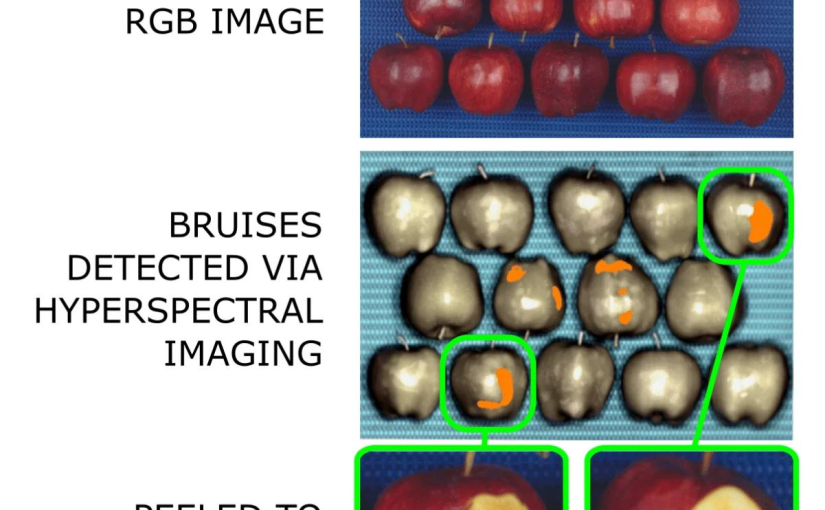
Hectre is developing hyperspectral imaging technology that analyses light across many wavelengths, including wavelengths invisible to the human eye. Researchers hope this approach will eventually help identify internal defects and measure characteristics such as maturity, starch content and firmness.
The technology is still under development, so it would be premature to claim that shoppers can already scan an apple and receive an exact sweetness score. Nevertheless, the research represents an exciting step towards more intelligent fruit assessment.
For New Zealand, it also demonstrates how a country traditionally recognised for agricultural production can develop technology with global applications.
How Can a Camera See Inside an Apple?
An ordinary smartphone camera captures visible light. It records colours such as red, green and blue and combines them to produce an image.
Hyperspectral imaging takes a different approach.
Instead of looking at only the colours people can see, a hyperspectral camera measures how an object reflects light across numerous wavelengths. Different materials interact with light in different ways, creating patterns that can reveal information about their physical and chemical characteristics.
An apple may appear perfectly red on the outside, but its internal condition could tell a completely different story.
It might be less mature than expected, have an internal defect or possess a texture that makes it unsuitable for long-term storage.
By analysing these light patterns and comparing them with carefully collected reference measurements, researchers can train computer algorithms to recognise meaningful differences.
This is where artificial intelligence becomes important.
The camera collects information, while the software interprets patterns and turns complicated measurements into useful results. Eventually, a consumer-friendly system could translate this information into straightforward descriptions such as sweet, firm, ripe or best eaten soon.
The process would make advanced scientific measurements easier for ordinary shoppers to understand.
Of course, sweetness is only one part of the experience. Aroma, acidity, texture and personal preference also influence whether someone enjoys an apple.
A scanner would not necessarily predict everyone’s favourite flavour perfectly, but it could help reduce some of the uncertainty involved in choosing fresh produce.
Could Your Smartphone Become a Personal Fruit Expert?
The most exciting possibility is bringing fruit-scanning technology into everyday shopping.
Imagine a future supermarket where shoppers use a dedicated scanning station or compatible smartphone accessory to check individual pieces of fruit.
Instead of relying entirely on appearance, customers could access additional information about the produce they are considering.
A family buying apples for children’s lunchboxes might prefer sweeter varieties. Someone preparing an apple pie might choose firmer fruit that holds its shape during cooking. Another shopper might simply want an apple that is ready to eat immediately.
A scanning system could potentially make these decisions easier.
There are several ways such a system might work.
First, a smartphone could connect to a compact optical sensor that analyses reflected light. Second, supermarkets could install scanning devices near their fresh-produce sections. Third, future smart packaging could contain information about a batch’s maturity and quality, allowing shoppers to access details through a QR code.
However, a normal photograph taken with an ordinary phone camera would not automatically provide reliable measurements of internal sugar levels. Specialised optical hardware, calibration and validated software would still be needed.
Developing affordable equipment would also require careful engineering. Portable diagnostic devices used during research and product development often rely on a dependable test equipment battery to keep measurement systems operating when engineers work away from fixed laboratory power supplies.
That kind of portable testing capability could become increasingly useful as agricultural researchers evaluate new optical sensors in orchards, packhouses and supermarkets.
Why This Matters for Kiwi Supermarkets
New Zealand supermarkets sell apples in many varieties, sizes and grades. Yet shoppers often face the same familiar problem: two apples can look almost identical while tasting surprisingly different.
This uncertainty can influence purchasing decisions.
Someone who buys a bag of apples expecting them to be sweet may feel disappointed if several turn out to be sour or mealy. Another customer might avoid trying an unfamiliar variety simply because they cannot predict its flavour.
More detailed quality information could help retailers create a better shopping experience.
For example, a supermarket might offer a simple digital display showing whether a particular batch is best suited for fresh eating, lunchboxes or baking.
Customers could also compare different varieties without needing to become fruit experts.
For local retailers, this could improve product selection and help reduce complaints about inconsistent quality. Better information might also make it easier to match fruit with customer preferences.
There is another important opportunity: reducing food waste.
Fruit that is perfectly suitable for eating should not be discarded simply because its appearance is less attractive. Likewise, fruit with internal quality problems could be identified earlier, before it spends weeks in storage or travels across international markets.
Technology that improves these decisions could benefit both businesses and consumers.
The Bigger Opportunity for New Zealand Apple Growers
The benefits of intelligent fruit scanning extend far beyond supermarket shopping.
New Zealand’s apple industry contributes more than NZ$1 billion annually to the national economy, according to the government announcement supporting Hectre’s research programme.
Exporting fruit over long distances presents a difficult challenge. Apples harvested in New Zealand may need to remain in storage and travel through complicated international supply chains before reaching overseas consumers.
A fruit’s appearance at harvest does not always reveal how well it will maintain its quality months later.
This is why internal quality information could be so valuable.
If a packhouse can identify fruit that is likely to store well, it may be able to make better decisions about which apples should be exported, which should be sold locally and which should enter processing channels.
For example, a batch of apples with excellent appearance but hidden internal defects could create problems after shipping. Identifying those issues earlier could reduce unnecessary transport costs and avoidable waste.
For growers, better information could also improve harvesting and storage decisions.
The technology could eventually help New Zealand producers compete through more consistent quality rather than simply increasing the volume of fruit they export.
It also creates opportunities for local engineers, software developers, optical specialists and agricultural researchers.
New Zealand’s agricultural reputation could therefore become closely connected with its ability to develop the technology behind modern food production.
What Happens Inside the Testing Laboratory?
Developing a reliable scanner requires much more than pointing a camera at an apple.
Researchers need to collect thousands of measurements, compare optical readings with traditional laboratory results and train algorithms to recognise meaningful patterns.
For example, a scanned apple might produce a complex collection of light measurements. Researchers then compare those results with measurements of firmness, maturity, starch content and sugar levels obtained through established testing methods.
Over time, the system learns which optical patterns are associated with particular fruit characteristics.
This process requires careful calibration. Different apple varieties, growing conditions and storage environments can influence the measurements.
A scanner trained on one variety might not automatically provide equally reliable results for another.
Laboratory engineers also need dependable electronic equipment to check sensors, measure electrical signals and maintain consistent testing conditions. A portable test equipment battery can support certain diagnostic instruments during field experiments, especially when researchers need to collect measurements in orchards or production facilities without convenient access to mains electricity.
The reliability of these supporting instruments matters because inaccurate reference measurements could affect the quality of the final scanning system.
The research process is therefore a combination of optical science, electronics, software engineering and agricultural expertise.
Hectre’s published development targets include achieving at least 80 per cent detection accuracy in a proof-of-concept algorithm by June 2027, followed by a prototype validated in commercial packhouse conditions by June 2028.
These milestones highlight an important point: impressive demonstrations are only the beginning. A successful product must also work consistently in real agricultural environments.
Could This Technology Change How We Buy Fruit?
If individual fruit scanning becomes affordable and practical, supermarket shopping could become more personalised.
Instead of choosing apples based mainly on colour, size and price, shoppers might eventually be able to filter fruit according to their preferred characteristics.
Someone who enjoys a crisp, sweet apple could search for those qualities. Another person might prefer a slightly tart variety with a firmer texture.
A digital fruit profile could also help consumers discover varieties they have never tried.
This could be particularly interesting in New Zealand, where shoppers have access to a range of locally grown apple varieties.
Retailers might even create interactive displays allowing customers to compare fruit characteristics before purchasing.
However, convenience will be essential. Most people do not want to spend several minutes scanning every apple in a supermarket.
The ideal system would deliver useful information almost instantly, without requiring complicated settings or technical knowledge.
The hardware must also be affordable enough for widespread adoption.
Portable scanning devices will need reliable power management, durable components and accurate sensors. During development, engineers may use specialised measuring instruments supported by a test equipment battery to verify electronic performance and evaluate how different components behave under real operating conditions.
Ultimately, the technology will succeed only if it makes shopping easier rather than introducing another complicated task.
The Challenges Nobody Should Ignore
Despite the exciting possibilities, several obstacles remain.
First, predicting sweetness accurately is difficult. Sugar content is important, but the overall taste of an apple depends on several factors, including acidity, aroma and texture.
Second, different varieties have different characteristics. A measurement that works well for one type of apple may require additional calibration for another.
Third, scanning equipment must operate reliably in busy commercial environments. Dust, moisture, changing temperatures and high processing speeds can all affect performance.
There is also the question of cost.
A sophisticated hyperspectral camera may be suitable for a commercial packhouse but too expensive for an individual household. Researchers and manufacturers will need to find ways to simplify the technology without sacrificing accuracy.
Privacy and data ownership may also become relevant if scanning systems connect to smartphone applications and supermarket accounts.
Consumers should be able to understand what information is collected and how it is used.
Finally, technology should support rather than replace human expertise. Experienced growers still understand their orchards, seasonal conditions and individual varieties in ways that automated systems may struggle to capture.
The best results will probably come from combining agricultural knowledge with advanced measurement tools.
A Future Where Apples Come With Their Own Digital Identity
Imagine buying a bag of apples and finding that each piece has a digital profile containing information about its variety, maturity and expected eating quality.
You could scan one apple before breakfast and discover that it is ready to eat. Later, you could select another for baking because its firmness makes it better suited to a pie.
For New Zealand consumers, that would turn an ordinary supermarket purchase into a more informed experience.
For growers, it could mean better quality control, more efficient storage and fewer perfectly good apples being wasted.
For technology companies, it could open the door to new products combining optical sensors, portable electronics, artificial intelligence and consumer applications.
The next generation of fruit-scanning equipment may also inspire similar technology for kiwifruit, pears, avocados and other produce.
New Zealand already has an international reputation for agricultural innovation. Companies developing advanced fruit-scanning systems show how that expertise can evolve beyond growing and exporting food.
The idea of knowing whether an apple is sweet before taking a bite may still sound futuristic. But the underlying science is already being explored in Auckland.
Perhaps one day, choosing the perfect apple will be as simple as pointing a scanner at it.
And when that happens, the most surprising part of supermarket shopping might be discovering that your favourite fruit has been telling you its secrets all along.