A New Era of Mobile Connectivity for Aotearoa
For many New Zealanders, a reliable mobile signal is something they rarely think about until it disappears. A trip through a remote stretch of the South Island, a walk along an isolated coastal track, or a day working on a rural farm can quickly reveal the limits of conventional mobile networks. When the signal drops, navigation becomes harder, messages may not get through, and contacting family can become a challenge.
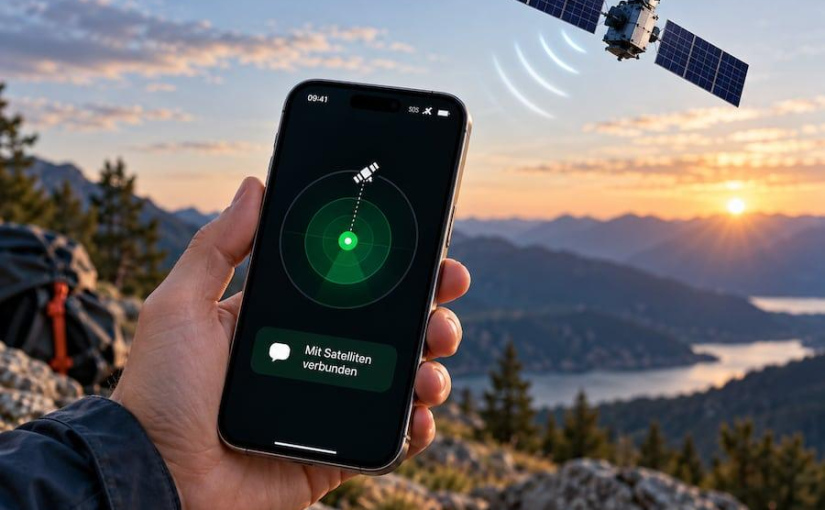
That familiar problem is beginning to change. Direct-to-cell satellite technology is creating new ways for compatible smartphones to communicate in locations beyond the reach of traditional mobile towers. Instead of relying exclusively on ground-based infrastructure, this technology allows specially supported phones to connect directly to satellites in orbit.
For New Zealand, where mountains, coastlines, islands and widely dispersed rural communities make universal connectivity difficult, the development has particular significance. It is not simply another smartphone feature. It could reshape expectations about mobile coverage, outdoor safety and the role of connected devices in everyday life.
The shift is already becoming visible. New Zealand telecommunications providers have introduced satellite-to-mobile services, while the national communications market continues to evolve as satellite broadband and next-generation mobile networks compete to serve customers. The challenge now is to turn technological progress into a dependable experience for ordinary people.
Why Satellite-to-Mobile Technology Matters in New Zealand
New Zealand’s geography makes mobile coverage a persistent infrastructure challenge. Dense urban areas can support extensive networks of towers, fibre connections and other equipment. Remote farms, mountain valleys and isolated coastal settlements are much more difficult and expensive to connect.
Traditional mobile networks depend on signals travelling between phones and nearby cell towers. When a user moves beyond the coverage area, the phone may lose its connection even if the device itself is working perfectly.
Direct-to-cell technology introduces another route. Satellites equipped with compatible communications systems can act as an extension of a mobile network, allowing eligible handsets to communicate when terrestrial coverage is unavailable.
The opportunity is significant for people who regularly travel outside major towns and cities. Farmers could have another way to send messages while inspecting distant parts of a property. Trampers might be able to share their location or communicate with contacts when conventional coverage disappears. Contractors working on infrastructure projects could gain another communications option in isolated environments.
However, satellite connectivity should not be confused with universal, high-speed mobile internet. The features available depend on the provider, handset, software, subscription and satellite visibility. Some services support messaging and selected applications rather than unrestricted browsing or every function available on a conventional 5G network.
Understanding those limits is essential if the technology is to earn public trust.
Satellite Connectivity Is Already Moving Beyond the Experimental Stage
New Zealand’s satellite-to-mobile market has progressed beyond a purely theoretical concept. One NZ introduced its satellite messaging service in December 2024, and Spark launched satellite data and messaging services in April 2026 through its partnership with Starlink.
The development is especially relevant because it brings satellite connectivity into the familiar smartphone experience. Consumers do not necessarily need to purchase a separate satellite handset to access supported features. Instead, eligible existing phones can connect under the appropriate service conditions.
In October 2026, One NZ announced that its satellite network had passed 20 million text messages since launch. The milestone offers a tangible indication that satellite messaging is being used at scale in New Zealand, rather than remaining a demonstration reserved for technology enthusiasts.
For the telecommunications industry, this creates a new competitive landscape. Traditional providers still need to invest in mobile towers, spectrum, fibre backhaul and network upgrades, but satellite partnerships give them another way to extend service into difficult terrain.
The next stage will involve improving compatibility, expanding supported applications and making the transition between terrestrial and satellite connections more seamless. Whether these services eventually support a broader range of everyday smartphone activities will depend on technical development, network capacity and commercial decisions.
What the Technology Means for Everyday Smartphone Users
The most immediate benefit is continuity. People are increasingly dependent on their phones for directions, bookings, digital payments, work communications, photographs and access to important information. Losing connectivity can interrupt far more than a phone call.
Satellite-enabled messaging could help a traveller let family members know that a journey is taking longer than expected. A rural business owner might use supported services to communicate from a location outside normal coverage. Someone exploring a national park could have an additional way to exchange basic information when a compatible service is available.
These possibilities also change how consumers evaluate their devices. Battery endurance, antenna performance, software support and network compatibility all contribute to a phone’s usefulness away from home.
A modern smartphone battery must already support demanding activities such as GPS navigation, photography, streaming and background applications. Satellite communication adds another consideration: the phone may spend time searching for a connection or trying to establish contact in challenging conditions.
Actual energy consumption varies according to the handset, signal conditions, software and type of communication. It would be misleading to assume that satellite connectivity always drains a phone faster by a fixed amount. Nevertheless, users heading into remote areas should treat power management as part of their preparation, rather than assuming that a newer phone will last indefinitely.
The Connection Between Connectivity and Personal Safety
Safety is one of the strongest reasons to pay attention to satellite-to-mobile developments. New Zealand attracts outdoor enthusiasts from around the world, and its landscapes can change dramatically over short distances. Weather conditions, difficult terrain and long travel times can make communication especially important.
For hikers, cyclists, boaters and backcountry workers, a supported satellite messaging feature may provide a valuable additional communication option. It can help users send updates when a conventional network is unavailable, provided they have compatible equipment and a suitable view of the sky.
Yet satellite messaging is not a substitute for a dedicated emergency communications plan. Users must understand precisely what their provider supports and whether emergency calling is available in their circumstances. Satellite text or data availability does not automatically mean that a person can place an emergency voice call through the service.
Before travelling, people should check coverage information, confirm that their phone and plan are eligible, install necessary software updates and learn how to establish a satellite connection. They should also tell someone about their itinerary and expected return time.
A fully charged phone, an appropriate power bank, offline maps and a dedicated emergency beacon where warranted remain sensible precautions. Technology can reduce some communication gaps, but it cannot remove every risk associated with remote travel.
The Smartphone Battery Question Becomes More Important
As smartphones take on more communication responsibilities, reliable power becomes increasingly important. A phone that can reach a satellite is of limited practical value if its charge runs out before the user needs to send a message.
Consumers should therefore think about endurance in the context of their actual habits. Someone who mainly uses a phone in an urban environment may prioritise display quality, camera performance or processing speed. A person who frequently travels through remote regions may place greater value on dependable battery life, efficient navigation and straightforward power management.
A smartphone battery is affected by several interacting factors, including screen brightness, location services, temperature, cellular signal strength and background activity. Poor terrestrial reception can already cause a handset to work harder to maintain a connection. Satellite-related behaviour introduces additional variables, so real-world results can differ considerably between devices and circumstances.
A few practical habits can help. Download maps before leaving areas with reliable internet access. Reduce screen brightness when conditions allow, close unnecessary background activities and carry a power bank suited to the length of the trip. In cold weather, keep the phone within an insulated pocket rather than exposing it unnecessarily to low temperatures.
Consumers should also avoid assuming that battery capacity alone determines endurance. Software optimisation, processor efficiency, display technology and the way a phone manages wireless connections can all influence how long it remains useful.
As satellite services develop, battery performance could become a more visible consideration in smartphone comparisons, particularly among people who depend on their devices for outdoor recreation or rural work.
What Telecommunications Providers Must Get Right
Technology adoption depends on more than the satellite connection itself. Providers must make eligibility easy to understand, explain limitations clearly and ensure that customers can identify which features are available on their particular phones.
Device compatibility is a practical concern. Not every handset supports every satellite service, and imported models may have different software, network configurations or certification status. A phone that works perfectly with one provider’s terrestrial network may not support all the features offered by another provider’s satellite partnership.
Clear pricing also matters. Some customers may receive selected services through eligible plans, while others may need an add-on or different subscription. Providers should explain any restrictions before customers travel beyond normal coverage.
Network capacity is another consideration. Satellite infrastructure serves large geographic areas, but available capacity is not unlimited. Providers must balance demand, service quality and the number of compatible users connecting at the same time.
There is also a wider policy question about resilience. New satellite services can improve connectivity options, but New Zealand still needs strong domestic telecommunications infrastructure. Ground-based networks remain essential for high-capacity communications in towns and cities, while regional providers continue to serve customers whose needs may not be met by a single national solution.
A resilient system will combine technologies rather than assume that one solution can solve every coverage problem.
Privacy, Reliability and the Digital Divide
As connectivity expands, public discussion must address privacy alongside convenience. Satellite-enabled communications still involve telecommunications networks, service providers and the digital systems that process user information.
Consumers should review service terms, understand which applications work over satellite connections and keep their devices updated. They should also use strong authentication and remain alert to fraudulent messages, especially when travelling or dealing with unfamiliar networks.
Reliability deserves equal attention. Buildings, trees, steep terrain and other obstructions can interfere with the clear view of the sky that some satellite services require. Initial connections may take time, and performance can differ from the experience of using a phone in a city centre.
Affordability is another important factor. A new connectivity feature is most useful when the people who need it can access it without facing confusing eligibility rules or unexpected costs. Rural households and small businesses should be able to compare satellite-enabled mobile plans with existing coverage options and choose what best fits their needs.
There is no single answer for every community. Some locations will benefit most from satellite-to-mobile messaging, others from satellite broadband, and many from continued investment in terrestrial mobile infrastructure.
How to Prepare for a More Connected Future
Consumers do not need to replace their phones immediately to prepare for satellite connectivity. A better first step is to understand the capabilities of the device they already own.
Check whether the handset supports the relevant provider’s service, whether a software update is required and whether the current plan includes satellite messaging or data. If purchasing a new phone, compare supported network features alongside conventional specifications such as storage, camera quality and charging performance.
It is also worth reviewing everyday digital habits. Offline maps, downloaded travel information and locally stored emergency contacts remain useful even when a connection is available. A compact power bank can add flexibility, while careful planning helps prevent a device from becoming the only link to essential information.
For people who regularly travel beyond mobile coverage, these preparations should be part of a wider safety routine rather than a substitute for it.
Businesses can take similar steps by reviewing how staff communicate at remote work sites, checking whether equipment is compatible and establishing backup procedures for network outages. In agriculture, tourism, construction and outdoor services, even a limited satellite messaging capability may improve coordination when conventional communications are unavailable.
A New Chapter for Mobile Technology in Aotearoa
Direct-to-cell satellite technology is changing the conversation about where mobile connectivity can work. New Zealand’s recent service launches and the growing use of satellite messaging demonstrate that the technology is becoming a practical part of the country’s communications landscape.
The transformation will not happen overnight. Coverage conditions, handset compatibility, affordability and the range of supported applications will determine how useful satellite services become for different groups of consumers.
Still, the direction is clear. Mobile phones are evolving from devices that depend almost entirely on nearby towers into more flexible communication tools that can draw on multiple types of network infrastructure.
That evolution also makes dependable power, clear safety guidance and informed consumer choices more important. As satellite connectivity becomes a more familiar feature, the best smartphone will not simply be the one with the fastest processor or the most impressive camera. It will be the one that meets the user’s needs when circumstances are less predictable.
For New Zealanders travelling across remote landscapes, managing rural businesses or simply wanting more options when a signal disappears, direct-to-cell technology offers a promising new layer of connectivity. Its greatest achievement may be making the boundaries of mobile coverage less restrictive, while reminding users that preparation and reliable equipment still matter.