New Zealand’s Connectivity Challenge Is Different
New Zealand has a unique relationship with technology. In major cities such as Auckland, Wellington and Christchurch, fast fibre, 4G and 5G networks make staying connected feel almost effortless. Open a map, send a photo, join a video call or stream a programme, and the connection is usually there when you need it.
Travel beyond the cities, however, and the experience can change quickly.
New Zealand’s mountains, forests, coastlines, islands and widely distributed rural communities create difficult conditions for traditional mobile infrastructure. Building towers across every remote valley or stretch of coastline is expensive and, in some locations, physically difficult.
This is why satellite connectivity has become one of the most interesting developments in the country’s telecommunications landscape.
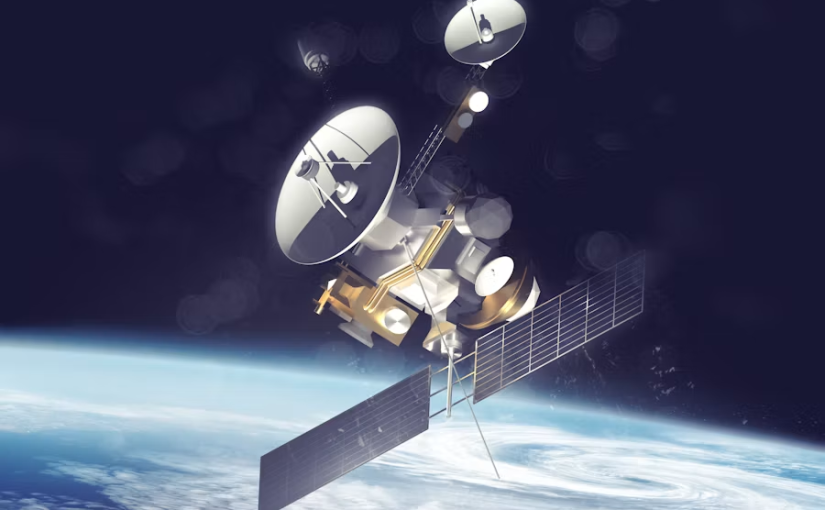
Instead of depending entirely on a nearby mobile tower, newer satellite technologies can connect compatible devices with satellites orbiting hundreds of kilometres above Earth. For New Zealanders who spend time hiking, fishing, farming, travelling or working in remote areas, that could make connectivity far less dependent on geography.
The technology is no longer simply something associated with science-fiction films. It is increasingly becoming part of everyday communications.
From Emergency Backup to Everyday Connectivity
For years, satellite communication was mainly associated with specialist equipment.
People heading deep into the New Zealand backcountry might carry satellite messengers, personal locator beacons or satellite phones. These devices could provide valuable communication when conventional mobile networks were unavailable, but they were additional pieces of equipment that had to be purchased, charged and carried.
The newer generation of satellite-to-mobile services is changing that model.
One NZ has expanded its satellite service beyond basic texting, allowing eligible customers with compatible phones and plans to access selected applications and WhatsApp functions when outside traditional mobile coverage. The service relies on a clear view of the sky and compatible hardware, but the basic concept is remarkably simple: the phone itself can communicate with a satellite network when a conventional mobile tower is out of reach.
That creates an important shift.
Instead of asking consumers to carry a completely separate satellite communication device for every trip, the industry is exploring how existing smartphones can become part of the satellite network.
For everyday users, convenience could be just as important as technical capability.
Why Rural New Zealand Could Benefit
Satellite connectivity is particularly relevant to New Zealand because of the country’s geography.
A farmer working several kilometres from the nearest town may move between areas with strong and weak coverage. A family travelling through a remote region may discover that their phones suddenly have no terrestrial signal. A tramper can leave a populated area and enter a valley where conventional mobile coverage disappears.
These situations are not necessarily unusual.
For businesses, the implications can be even greater. Agriculture, forestry, tourism, transport, construction and outdoor services can all involve workers operating away from dense urban networks.
A connected device can provide access to weather information, maps, messages and other important information without requiring a conventional cell tower nearby.
A modern GPS battery can therefore become part of a much larger conversation about outdoor technology. A GPS device may help users understand their location, record a route or support navigation, while satellite connectivity can potentially help transmit information beyond the reach of terrestrial networks.
The two technologies serve different purposes, but together they illustrate how location technology and communications technology are increasingly becoming interconnected.
Smartphones Are Becoming More Important
One of the most interesting aspects of satellite-to-mobile technology is that consumers may not need to completely change their habits.
The smartphone has already become the central device for navigation, communication, photography, payments and entertainment. Adding satellite connectivity gives it another potential role.
Recent One NZ information shows support for a growing range of iPhone and Android devices, although compatibility depends on the specific model, software and mobile plan. The company also states that users need a clear line of sight to the sky when connecting through its satellite network.
That last point is important.
Satellite connectivity does not mean that a phone suddenly works exactly like it does in the middle of Auckland. Trees, buildings, terrain and other obstructions can affect the connection. Satellite services can also have limitations on applications, capacity and data use.
Nevertheless, the ability to use a familiar smartphone outside conventional coverage represents a significant change in consumer technology.
For many people, the biggest innovation may not be the satellite itself. It may be the fact that the satellite is becoming almost invisible to the user.
Outdoor Recreation Could Be a Major Use Case
New Zealand’s outdoor culture makes satellite connectivity particularly interesting.
From hiking in national parks to boating around the coastline, New Zealanders regularly participate in activities where conventional mobile coverage can become unreliable or disappear completely.
For a tramper following a route, access to digital maps can provide useful situational information. For someone travelling through remote terrain, being able to send a message can provide reassurance. For outdoor businesses, connectivity can potentially make it easier to communicate with staff operating away from cities.
However, technology should not create a false sense of security.
Satellite smartphone connectivity is not a replacement for dedicated emergency equipment in every situation. One NZ itself states that its satellite service is not a replacement for a personal locator beacon or emergency beacon for people travelling in remote areas.
That distinction matters.
A smartphone is a multifunctional consumer device. A dedicated emergency device can be designed specifically for situations where communication and rescue are the priority.
The smartest approach is therefore likely to be layered rather than dependent on a single technology.
Battery Life Becomes More Important Off the Grid
There is another issue that becomes more important as connectivity moves beyond traditional networks: battery life.
In an urban environment, a smartphone can usually be recharged at home, in a car, at work or in a café. Someone spending several days in a remote part of New Zealand may not have that luxury.
Using navigation, GPS, cameras, mobile connectivity and satellite communications can all contribute to battery consumption.
This makes power management a critical part of outdoor technology.
A GPS tracker with a reliable GPS battery can be useful for maintaining location functionality during longer journeys, while a smartphone user may need to carry a power bank or another charging solution.
For hikers, hunters, anglers, farmers and outdoor workers, the question is no longer simply whether a device has the right features. The practical question is how long those features remain available when there is no convenient power outlet nearby.
That is an important consideration as connected devices become increasingly sophisticated.
Satellite Broadband Is Also Transforming Rural Internet
Satellite connectivity is not limited to smartphones.
Low Earth orbit satellite broadband has also become increasingly significant for rural households and businesses. Unlike traditional satellite systems that can rely on higher orbits, LEO networks use large constellations of satellites closer to Earth, helping deliver lower-latency internet services.
The New Zealand Commerce Commission has described LEO satellite services as a major change for rural connectivity. Its 2026 analysis reported that Starlink had grown to account for 27% of rural broadband connections, making it the largest rural broadband provider at that point.
This illustrates the scale of the transformation.
Satellite internet is no longer simply a niche option for people who live exceptionally far from infrastructure. It is becoming part of the broader competition over how rural New Zealand gets online.
For some households, satellite broadband can offer an alternative where fibre or terrestrial wireless infrastructure is difficult to deploy.
The Next Step: More Devices Beyond Phones
The future could involve much more than smartphones.
Satellite connectivity could eventually become increasingly relevant to trackers, vehicles, agricultural equipment, environmental sensors, emergency systems and other connected devices.
Imagine a remote farm where sensors collect information about equipment, weather or livestock. Imagine a boat transmitting its location while travelling far offshore. Imagine a hiking device updating a location record without relying on a conventional mobile tower.
These scenarios point toward a larger technological trend: connectivity is moving from specific places to individual devices.
This is particularly significant for New Zealand because remote areas have traditionally presented a difficult connectivity problem.
A small connected device may not need a massive communications infrastructure on the ground if it can communicate with a satellite overhead.
That could open opportunities for businesses developing products specifically for agriculture, tourism, conservation and emergency response.
New Emergency Communication Technologies Are Emerging Too
Satellite connectivity is also part of a wider effort to improve communications resilience.
In August 2026, New Zealand’s SafetyNet, Hourua and New Zealand Police tested a compact deployable cellular network in the Akatarawa Ranges, an area known for mobile coverage challenges. The system is designed to establish cellular connectivity where normal infrastructure is unavailable or disrupted, with wider testing planned before a proposed nationwide rollout for emergency services.
This development highlights an important point: the future of connectivity is unlikely to depend on one technology.
Satellite networks, mobile towers, fibre, portable networks and dedicated emergency communication devices can complement one another.
For a country exposed to earthquakes, storms, floods and difficult terrain, redundancy can be particularly valuable.
What This Means for Kiwi Consumers
For ordinary consumers, the arrival of satellite-enabled smartphones does not mean everyone needs to immediately change their devices.
Instead, it introduces another factor to consider when choosing technology.
Someone living in central Auckland may rarely need satellite connectivity. A farmer in a rural region, an outdoor enthusiast, a traveller or someone who frequently works away from towns may see much greater practical value.
Consumers should also pay attention to compatibility.
Not every phone supports every satellite service, and functionality can depend on the carrier, plan, operating system and location. One NZ’s current service information, for example, lists specific supported devices and notes that satellite features can vary between models.
Battery capacity, GPS functionality and charging options also remain important.
A device that offers impressive connectivity but runs out of power halfway through a remote trip is not particularly useful.
A More Connected New Zealand, Even Beyond the Towers
Satellite connectivity is changing the definition of what it means to be connected in New Zealand.
For decades, mobile connectivity was fundamentally linked to infrastructure on the ground. If there was no tower nearby, there was a good chance there was no mobile service.
That assumption is beginning to change.
LEO satellite networks, satellite-to-mobile technology and increasingly capable smartphones are creating another layer of connectivity above the landscape. For rural communities, outdoor users and remote businesses, that could make communication more accessible in places where traditional infrastructure has practical limits.
At the same time, consumers will need to understand what satellite services can and cannot do. Coverage does not automatically mean unlimited data, uninterrupted connections or guaranteed emergency communications.
The technology is still evolving.
But the direction is clear: New Zealand is becoming an important real-world testing ground for a future in which smartphones, GPS devices, vehicles and other electronics can remain connected far beyond the reach of conventional networks.
For anyone heading into the mountains, travelling across rural roads, working on a remote farm or exploring New Zealand’s coastline, that future could make the distance between connected and disconnected feel much smaller.
And as satellite connectivity becomes more common, even seemingly simple components such as a reliable GPS battery may become increasingly important to the wider ecosystem of devices helping New Zealanders navigate and communicate beyond traditional network coverage.
The next generation of connectivity may not be about building a tower everywhere.
It may be about making sure the sky can become part of the network.