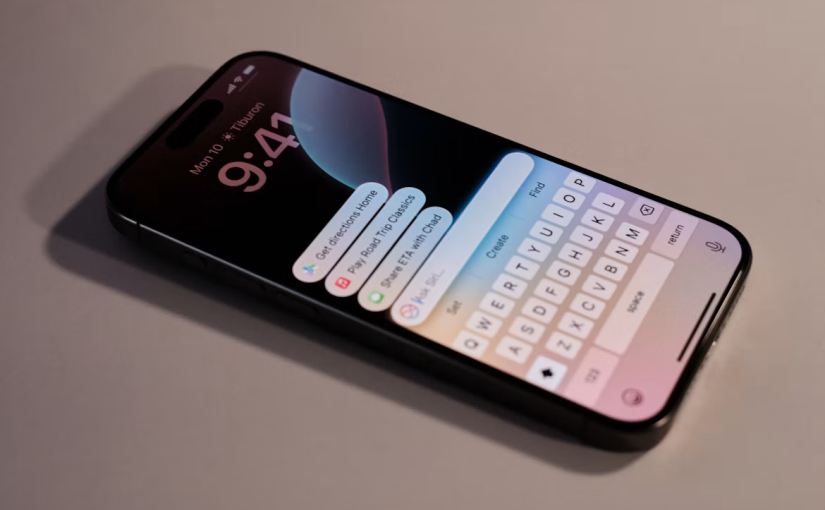
For years, Siri has been a familiar voice inside the iPhone, helping people set alarms, send messages, check the weather and perform simple tasks. But in September 2026, Apple is pushing Siri into a very different era. With iOS 27 now available and the introduction of Siri AI, Apple is turning its voice assistant into a more context-aware tool designed to understand what users are doing and help them across different apps and everyday situations.
For New Zealand iPhone users, this change arrives at an interesting time. Smartphones have become central to everything from communication and navigation to banking, entertainment, photography and work. At the same time, New Zealand consumers are increasingly interested in how artificial intelligence can make technology more useful without making everyday digital life more complicated.
The arrival of Siri AI could therefore represent more than another software update. It could change how people interact with their iPhones.
Siri Moves Beyond Simple Voice Commands
Traditional Siri works best when users give it a straightforward instruction. Asking Siri to set a timer, make a phone call or play music is relatively simple because each request has a clear outcome.
Siri AI is designed around a broader concept. Instead of simply responding to isolated commands, the assistant can use context to understand what a person is trying to accomplish.
That difference could be particularly useful in everyday situations.
Imagine a person in Auckland preparing for a busy morning. Instead of opening several apps individually, they could potentially ask Siri to help organise information from messages, calendar events, maps and other apps. A user planning a weekend trip could ask for information related to reservations, directions and schedules without manually jumping between multiple screens.
Apple’s new software updates place greater emphasis on Apple Intelligence and more capable interactions across the company’s ecosystem.
The goal is not simply to make Siri talk more. It is to make the assistant understand more.
Why This Matters for New Zealand Users
New Zealand has its own everyday technology habits and challenges. People may move between large cities such as Auckland, Wellington and Christchurch and more remote communities where reliable connectivity can be particularly important.
A smarter digital assistant could make routine tasks easier when users are travelling, commuting or managing several responsibilities at once.
Consider navigation as an example. A person driving across Auckland may already rely on their iPhone for directions, messages and music. A more context-aware Siri could potentially reduce the need to manually switch between these functions.
The same idea applies to work.
A small business owner might receive a message from a customer, check a calendar appointment and prepare a reminder within the same workflow. Instead of treating each task as a separate command, an AI-powered assistant could help connect the information.
This could make the iPhone feel less like a collection of individual apps and more like one integrated personal tool.
The Importance of Battery Life in an AI-Heavy iPhone
More intelligent smartphone functions also raise an important practical question: how much power will increasingly sophisticated features require?
Modern iPhones already perform demanding tasks such as high-resolution photography, video recording, gaming, navigation and wireless communication. Adding more AI processing creates another layer of workload.
For users who rely heavily on Siri AI throughout the day, battery performance becomes an important part of the overall smartphone experience. A capable iPhone battery is therefore not simply about getting through a day of calls and messages. It can also support the growing number of computational tasks that people expect their phones to handle.
This becomes especially relevant for New Zealanders who spend significant time outdoors, travel between regions or use their phones heavily for navigation and photography. Running out of power at the wrong moment can turn a useful digital assistant into an unavailable one.
Apple’s latest iPhone generation also places attention on performance and battery improvements. The iPhone 18 Pro and iPhone 18 Pro Max were introduced in September 2026, adding new hardware alongside the company’s latest software platform.
Privacy Will Be Just as Important as Intelligence
As Siri becomes more capable, privacy becomes a bigger part of the conversation.
A simple voice command such as asking for a weather forecast does not require much personal context. But an assistant that understands messages, schedules, photos or information displayed inside apps potentially has access to much more sensitive information.
That is why Apple’s approach to privacy will be closely watched by consumers.
Apple has positioned Apple Intelligence around a combination of on-device processing and Private Cloud Compute for more demanding tasks. The company says its architecture is designed to protect personal information while allowing more advanced AI capabilities.
For New Zealand consumers, the practical question is straightforward: what information is being processed, where is it processed, and what control does the user have?
These questions are likely to become more important as AI assistants become a normal part of smartphones.
Siri Could Change the Way People Search
Another major change could involve search.
For many years, finding information on an iPhone has meant opening Safari, entering keywords, scanning results and deciding which page appears useful.
Conversational AI changes that process.
Instead of thinking about the exact words to type, users can describe what they need in ordinary language. A person might explain a problem, ask for options or request a summary rather than performing a traditional keyword search.
This could be particularly useful on a small smartphone screen.
Typing long queries on a phone can be inconvenient, especially when someone is walking, travelling or multitasking. Voice interaction provides another way to communicate with technology.
For younger users who already interact naturally with conversational AI, this could become increasingly normal.
Everyday Photography Could Become More Intelligent
Photography is another area where Siri and Apple Intelligence could have an impact.
New Zealand offers an enormous variety of photographic environments, from urban streets and coastal landscapes to mountains, lakes and hiking trails. iPhones are already widely used as everyday cameras because they combine portability with increasingly advanced imaging systems.
The latest generation adds more photography capabilities, while iOS 27 introduces AI-powered tools for working with images.
This could eventually make photo management much easier.
Instead of searching through hundreds of images manually, users could potentially describe what they are looking for in natural language. Someone returning from a South Island road trip, for example, might want to find particular landscape photos, screenshots or travel information stored on the phone.
The more accurately an assistant understands context, the less time users may need to spend navigating menus.
AI Could Make the iPhone More Accessible
One of the less discussed possibilities is accessibility.
Voice interaction can be particularly useful for people who find traditional touch-based interfaces difficult or inconvenient. A more capable assistant could potentially help users complete complicated sequences without requiring them to navigate multiple menus.
This could make advanced smartphone features easier to access.
Instead of learning where a particular setting is located, a user could explain what they want to accomplish. The assistant can then become an additional interface between the person and the operating system.
That is an important shift.
Technology has traditionally required users to understand how software works. AI assistants increasingly aim to understand how people communicate.
New Zealand Businesses May Also Benefit
The impact of Siri AI is not limited to personal smartphone use.
Small businesses are an important part of New Zealand’s economy, and many owners manage customer communication, appointments, marketing and administration from mobile devices.
A smarter assistant could help reduce repetitive digital tasks.
For example, a business owner could use an AI assistant to organise information from incoming messages, prepare reminders or manage routine scheduling. The value may not come from one spectacular feature but from saving a few minutes repeatedly throughout the day.
Over weeks and months, those small savings could become meaningful.
The challenge will be ensuring that AI-generated actions remain accurate and that users retain control over important decisions.
Not Every iPhone Will Offer the Same Experience
One important detail for New Zealand buyers is hardware compatibility.
The arrival of iOS 27 does not mean that every iPhone will necessarily receive every advanced AI capability. Apple’s more demanding intelligence features depend on newer hardware, meaning owners of older devices may receive the operating-system update while missing some of the most advanced functions.
This creates an interesting upgrade question.
Consumers may no longer choose a smartphone only because of its camera, display or processor. AI capability could become another major factor.
That could influence how New Zealand shoppers think about upgrading.
Someone with an older iPhone may decide that a new model is worthwhile because of the combination of AI functions, camera improvements, performance and battery life rather than any single feature.
Battery Health Could Become More Important
As smartphones become more capable, battery health remains a long-term consideration.
AI features, high-quality cameras, bright displays, navigation and gaming can all contribute to intensive daily use. Users who keep their phones for several years may therefore pay closer attention to battery capacity and charging habits.
A healthy iPhone battery can make a significant difference to the practical usefulness of an older device, particularly for people who depend on their phones throughout a working day.
This matters in New Zealand because smartphones are often used well beyond traditional communication. They can function as maps, cameras, entertainment devices, payment tools, workstations and emergency communication devices.
When one device performs so many jobs, dependable power becomes part of the overall experience.
The iPhone Is Becoming More Like a Personal Assistant
The biggest change brought by Siri AI may not be one particular command or feature.
It is the gradual disappearance of the boundary between the user and individual apps.
In the past, users learned which app to open for each task. Messages were for communication, Maps was for navigation, Photos was for pictures and Calendar was for appointments.
AI creates the possibility of a different model.
The user explains the goal, and the system helps determine which tools are needed.
That could make smartphones easier for beginners while simultaneously making them more powerful for experienced users.
For New Zealanders, this could mean an iPhone that feels increasingly useful during travel, work, study and everyday life.
What Comes Next for New Zealand iPhone Users
The arrival of Siri AI is only one step in a much broader transformation of smartphones.
Apple has already expanded Apple Intelligence into multiple parts of its ecosystem, while the latest iOS release brings more advanced Siri functionality to compatible devices.
The next stage will likely be defined by how well these features work in real-world situations.
Can Siri understand New Zealand accents naturally? Can it handle local terminology? Can it reliably connect information across different apps? Can it perform useful tasks without creating privacy concerns? And can the experience remain reliable when users are travelling away from fast networks?
Those questions will matter more than flashy demonstrations.
For everyday consumers, technology is valuable when it quietly solves problems.
A New Chapter for Everyday Smartphone Use
For New Zealand iPhone users, 2026 could mark an important transition from voice-controlled smartphones to genuinely AI-assisted devices.
Siri is no longer simply about asking the weather or setting an alarm. The new generation of Apple Intelligence features is designed to understand context, work across apps and make the iPhone more useful in everyday situations.
At the same time, consumers will need to think about privacy, compatibility, battery life and whether new AI functions genuinely improve their daily routines.
As these capabilities develop, the iPhone battery will remain one of the less glamorous but essential parts of the experience. The smartest phone in the world is only useful when it has enough power to be there when people need it.
For New Zealand users, the future of the iPhone may therefore be defined by a combination of intelligence, privacy, reliability and endurance. Siri AI is opening the door, but how people actually use that door will determine what the next generation of smartphones becomes.