A New Chapter for New Zealand Farming
New Zealand has always been a country where agriculture matters. From dairy farms and sheep stations to vineyards, orchards and horticultural operations, the primary sector plays a major role in the country’s economy and international reputation. But farming in 2026 is facing a very different set of challenges from those of previous generations.
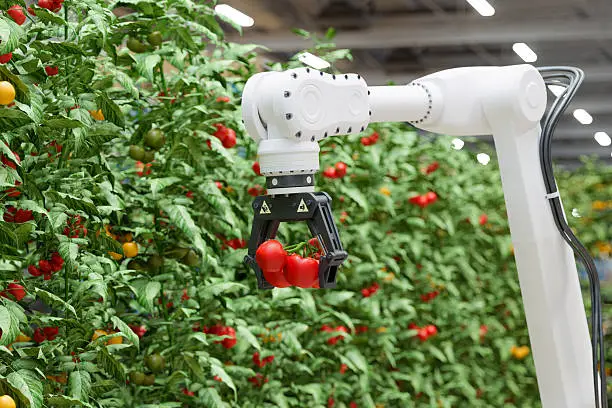
Farmers are under pressure to improve productivity while dealing with changing weather patterns, rising operating costs, labour shortages, environmental expectations and growing demand for high-quality food. At the same time, technology is moving rapidly into rural areas. Artificial intelligence, smart sensors, satellite imagery, connected machinery, robotics and automated livestock systems are no longer futuristic ideas. They are increasingly becoming practical farming tools.
New Zealand’s Ministry for Primary Industries describes smart farming as the use of digital technology to optimise plant and animal growth, manage livestock remotely, use water and fertiliser more efficiently, monitor pests, predict weather impacts and support longer-term decision-making.
The big question is no longer whether technology belongs on a farm. It is whether smart agriculture can genuinely help farmers produce more with fewer resources.
From Experience-Based Farming to Data-Driven Decisions
For generations, New Zealand farmers have relied heavily on experience. A farmer can often recognise changes in pasture, animal behaviour or soil conditions simply by looking at the land. That knowledge remains extremely valuable.
Smart agriculture does not replace that experience. Instead, it adds another layer of information.
A modern farm can collect data from soil sensors, weather stations, GPS equipment, cameras, livestock wearables and satellite systems. Instead of checking a large paddock manually, farmers can receive information about moisture, temperature, pasture growth or animal activity through digital platforms.
This changes the way decisions are made.
Imagine a farmer preparing to irrigate a field. Rather than watering the entire area because the weather forecast looks dry, sensors can identify which parts of the field actually need water. A connected system can then help determine when irrigation should begin and how much water is required.
The result is not simply more technology. It is potentially less waste.
AI Is Moving Closer to the Farm
Artificial intelligence is becoming one of the most interesting developments in New Zealand agritech.
AI can analyse enormous amounts of information much faster than a person can. In agriculture, this could include weather data, satellite images, soil conditions, animal activity, pasture growth and historical farm records.
New Zealand’s Ministry for Primary Industries is already supporting projects involving AI-powered agricultural tools. One current project aims to develop an AI agent that can help optimise greenhouse-gas emissions, productivity and profitability across dairy and beef pastures while supporting earlier farmer decision-making.
That is significant because it shows how AI is moving beyond simple automation. The goal is not merely to make a machine perform a task. The goal is to help farmers decide what task should be performed, when it should happen and where resources should be used.
AI is also being explored in livestock research. AgResearch has used AI to analyse livestock CT scan data and identify traits associated with areas such as feed efficiency and methane emissions. Its wider research programme includes thermal imaging, hyperspectral imaging and ultrasound to investigate animal health and meat quality.
For New Zealand, this could become particularly important because the country’s agricultural advantage increasingly depends on producing high-value products efficiently and sustainably.
Smart Sensors Could Change How Farmers Monitor Animals
One of the most promising areas of smart agriculture is livestock monitoring.
A farmer cannot physically observe every animal every minute of every day. Sensors and wearable devices can help fill that gap.
AgResearch is investigating future dairy farming systems using sensors that can monitor animals’ temperature and activity levels. The objective is to understand what an animal experiences throughout the day and use that information to provide insights into its wellbeing.
This could allow farmers to identify unusual behaviour earlier.
For example, if an animal becomes less active than normal, a digital system could flag the change for further investigation. The farmer can then decide whether the animal needs attention instead of discovering the problem much later.
Connected livestock technology also creates another challenge: keeping electronic devices operating reliably in remote environments. A collar, sensor, tracker or monitoring unit may spend weeks outdoors, exposed to rain, dust, temperature changes and physical movement.
That makes a dependable electronic device battery an important but often overlooked part of smart farming.
The intelligence of a sensor means little if the device repeatedly loses power.
Virtual Fencing Shows What Connected Farming Can Look Like
New Zealand is also attracting international attention for livestock technology.
Virtual fencing systems use connected devices and digital boundaries to help farmers manage animals without relying entirely on traditional physical fences. New Zealand-based agtech company Halter has become one of the most visible examples of this trend, with its AI-enabled livestock technology attracting major investment and international expansion interest in 2026.
The concept is fascinating because it combines several technologies at once: livestock wearables, location information, software, communications and data analysis.
Instead of treating technology as a separate tool, the farm becomes a connected system.
This could reduce some physical infrastructure requirements while giving farmers more flexibility over where animals graze. It could also help farmers manage land in ways that were previously difficult or labour-intensive.
However, connected livestock systems also need reliable communications and power. A wearable device cannot simply be treated like a smartphone. It has to work outdoors, remain lightweight and operate for long periods.
Again, battery performance becomes part of agricultural productivity.
Precision Weed Control: Less Chemical, Less Waste
Another exciting direction is precision crop management.
Traditional weed control can require large amounts of labour, machinery and chemical inputs. Smart systems are beginning to offer a different approach.
New Zealand’s Ministry for Primary Industries is supporting a project involving Carbon Robotics’ LaserWeeder technology. The system combines advanced cameras, artificial intelligence and precision lasers to identify and eliminate weeds without relying on conventional chemical treatment. The project is intended to evaluate performance, costs and potential returns for New Zealand growers.
The idea sounds almost like science fiction: a machine moves through a field, identifies individual weeds and targets them precisely.
But the underlying principle is simple.
If technology can identify exactly what needs to be treated, farmers may not need to treat everything.
That could mean lower input use, reduced waste and potentially more precise crop management.
For horticulture, where labour and input costs can be significant, such technologies could become increasingly attractive.
Satellites Are Giving Farmers a New View of the Land
Smart agriculture does not stop at ground level.
Satellite data is becoming another important source of agricultural information. Farmers can use remote sensing to understand pasture conditions, vegetation changes, water patterns and other characteristics across large areas.
This is particularly useful in New Zealand, where farms can cover enormous distances.
A farmer cannot inspect every square metre of land every day. Satellite imagery can provide a broader picture and help identify areas that deserve closer attention.
New Zealand’s primary-sector research has highlighted the growing role of satellite data alongside GPS, remote sensors and smart devices. These technologies can support remote stock and pasture management and improve the efficiency of water, fuel, fertiliser and other resources.
The real opportunity comes when these systems communicate with one another.
Satellite data can identify a change. A drone can inspect it more closely. A ground sensor can provide additional information. AI can analyse the combined data. Finally, the farmer can make the decision.
That is the foundation of a truly connected farm.
Producing More Does Not Necessarily Mean Using More
The phrase “produce more with less” can sound contradictory.
Agriculture has traditionally associated higher production with greater inputs: more fertiliser, more water, more machinery, more labour or more land.
Smart agriculture challenges that assumption.
The goal is precision.
Instead of applying the same amount of water everywhere, farmers can target irrigation. Instead of treating an entire field, machines can target individual weeds. Instead of checking every animal manually at the same frequency, sensors can identify animals requiring closer attention.
This approach could make agricultural production more efficient without simply increasing resource consumption.
It may also help New Zealand respond to environmental pressures.
The government has committed more than NZ$400 million over four years to accelerate research and development of technologies designed to reduce agricultural emissions while protecting production and profitability.
That combination is crucial.
Farmers cannot be expected to adopt expensive technology simply because it is environmentally friendly. The technology must also make economic sense.
The Hidden Challenge: Powering a Connected Farm
There is one issue that receives far less attention than AI or robotics: power.
A smart farm may contain dozens or even hundreds of electronic devices. Sensors can monitor soil moisture. Cameras can watch crops. GPS devices can track machinery. Wearables can monitor livestock. Communication equipment can transmit information from remote paddocks.
All of these systems need energy.
In urban environments, plugging in a device is easy. On a remote farm, it can be much harder.
Some sensors may need to operate for months without maintenance. Others may need to survive harsh weather and temperature changes. Livestock devices must remain lightweight while providing enough power for continuous monitoring.
Consequently, battery technology becomes an important part of agricultural innovation.
A reliable electronic device battery can help remote sensors remain operational for longer periods, reducing maintenance visits and preventing gaps in data collection. For farmers, that reliability can be just as important as the software running behind the device.
The future of smart agriculture will therefore depend not only on smarter algorithms but also on better hardware.
Connectivity Will Be Just as Important as Intelligence
A smart device is useful only if it can communicate.
New Zealand’s geography creates a particular challenge. Farms can be remote, mountainous or spread across large areas. A sensor that works perfectly in a laboratory may face very different conditions in the real world.
This means agricultural technology needs reliable connectivity, efficient power management and rugged hardware.
The combination of low-power sensors, wireless communications, satellite services and edge computing could become increasingly important.
Instead of sending every piece of information to a distant data centre, some devices may process information locally. This can reduce communication requirements and potentially allow faster responses.
For example, a livestock monitoring device might detect an unusual movement pattern locally and send only an alert rather than transmitting every second of raw sensor data.
That approach could save both energy and bandwidth.
What Could the Farm of the Future Look Like?
Picture a New Zealand dairy farm several years from now.
Before sunrise, an AI system has already analysed overnight weather information, pasture conditions and livestock activity. It recommends moving a group of animals to a particular paddock.
A farmer checks the recommendation on a tablet.
Meanwhile, soil sensors have identified that another area does not need irrigation. A drone is inspecting a section of crops where satellite imagery detected an unusual change. A robotic system is checking weeds between rows.
The farmer is still making decisions, but the decisions are supported by information that would have been impossible to collect manually.
This is perhaps the most important point about smart agriculture.
The future does not necessarily mean farms without people.
It could mean farms where people have better information.
Will Smart Farming Work for Every New Zealand Farmer?
Despite its potential, smart agriculture is not a magic solution.
Technology costs money. Farmers need training, technical support and reliable connectivity. Devices can fail. Software can become outdated. Different systems may not always work well together.
There are also questions about data ownership and privacy. If a farm generates huge quantities of information, farmers need to understand who controls that data and how it can be used.
Adoption will therefore depend on whether technology solves genuine problems rather than simply adding complexity.
The most successful products are likely to be those that save time, reduce costs, improve animal welfare, increase productivity or help farmers meet environmental requirements.
A More Efficient Future for New Zealand Agriculture
New Zealand has a unique opportunity.
Its agricultural sector already has generations of practical knowledge, strong export markets and a growing technology ecosystem. Smart farming can combine those strengths with artificial intelligence, sensors, robotics, satellite imagery and automation.
Current projects supported by New Zealand’s primary-sector agencies show that this transition is already happening. AI pasture tools, livestock monitoring, automated weed control and digital farming research are moving technology closer to everyday agricultural operations.
The most exciting part is that these technologies do not have to replace traditional farming knowledge.
Instead, they can amplify it.
A farmer who knows the land can use satellite data to see changes earlier. A livestock expert can use wearable sensors to identify unusual behaviour. A grower can use computer vision to target weeds more precisely.
Smart agriculture is ultimately about making better decisions with better information.
For New Zealand, producing more with less may not require dramatically expanding farms. It may require making every litre of water, every kilogram of fertiliser, every hour of labour and every hectare of land work harder.
And behind every sensor, camera, wearable and connected machine will be the same basic requirement: dependable technology that keeps working when the farm never stops.
That is why the future of New Zealand agriculture may be shaped not by one revolutionary machine, but by thousands of small electronic devices quietly collecting information, making connections and helping farmers turn data into action. In that future, the humble electronic device battery could be just as important to productivity as the AI algorithms receiving all the attention.