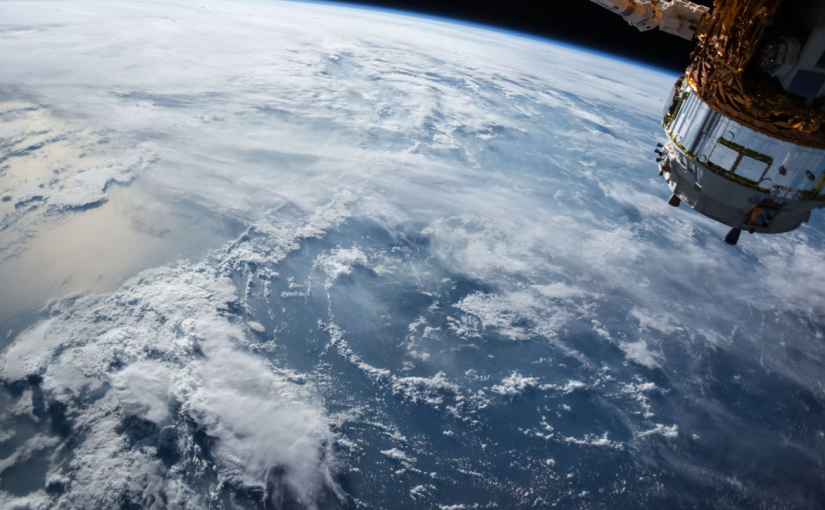
New Zealand has long been associated with spectacular landscapes, agriculture, tourism, and a relatively small domestic market. Yet a different image of the country is becoming increasingly difficult to ignore: New Zealand is turning into an important testing ground for space technology.
From rocket launches on the North Island to satellite development in Auckland and Christchurch, the country’s technology ecosystem is moving beyond traditional software and consumer products. The latest momentum comes from a growing group of companies developing spacecraft, satellite systems, autonomous technologies, and new ways to manufacture products in orbit.
One of the most striking recent developments is the rapid progress of Auckland-based Outlier Space. The company has raised US$7.35 million in pre-seed funding to develop a reusable platform designed to take research and manufacturing payloads into microgravity and eventually return them to Earth. Its debut mission is planned for 2028.
For New Zealand, this is more than another startup funding story. It raises a bigger question: could space technology become one of the country’s next major technology industries?
From Rocket Launches to a Broader Space Economy
When people think about New Zealand and space, Rocket Lab is probably the first name that comes to mind. Its launch activities helped demonstrate that a country far from the traditional centres of the global aerospace industry could build serious launch capabilities.
But the next stage is not simply about putting rockets into orbit.
New Zealand’s emerging space ecosystem increasingly includes satellite technology, propulsion, Earth observation, autonomous systems, advanced manufacturing, scientific research, and commercial services. This broader ecosystem could ultimately be more important than launch infrastructure alone.
Outlier Space is a good example of this shift. Instead of focusing only on getting a spacecraft into orbit, the Auckland company is developing an autonomous, reusable platform capable of carrying research and manufacturing payloads into microgravity before bringing them back to Earth. Potential customers include pharmaceutical, biotechnology, and advanced-materials companies.
That concept could change how people think about space.
Space would no longer be simply a destination for satellites or astronauts. It could become a manufacturing environment where companies conduct experiments that are difficult or impossible to reproduce on Earth.
Why Microgravity Could Become a Business Opportunity
Microgravity may sound like something reserved for government space agencies, but commercial interest is growing.
In a microgravity environment, materials behave differently. Fluids, biological systems, crystals, and other substances can respond in ways that are difficult to replicate under normal gravitational conditions.
For pharmaceutical companies, this could potentially create new research opportunities. For advanced-materials companies, it could provide a different environment for testing and manufacturing. For biotechnology businesses, it could open new possibilities for experiments.
This is where New Zealand startups could find an unusual advantage.
The country does not need to compete directly with the largest aerospace economies on every front. Instead, it can focus on specialised technologies where relatively small teams can move quickly.
That strategy fits New Zealand’s broader startup culture. A company does not necessarily need to build an enormous rocket factory to participate in the space economy. It could develop a specialised propulsion system, satellite component, autonomous navigation technology, sensor, software platform, or research vehicle.
The result could be a much wider technology ecosystem than the public image of “New Zealand space” might suggest.
What Recent Investment Says About the Market
Money is often one of the clearest indicators of whether investors believe an emerging technology has commercial potential.
The recent funding activity surrounding New Zealand space technology is therefore significant. Outlier Space announced a US$7.35 million pre-seed round in July, led by GD1, to support development of its commercial microgravity research and return platform.
The wider New Zealand investment environment is also showing signs of renewed interest in technology. Auckland venture capital firm GD1 announced a NZ$56.7 million first close for its latest fund in August, with a target of NZ$150 million.
This matters because space technology usually requires patience.
A consumer app can potentially reach customers within months. A spacecraft may take years to design, test, launch, operate, and recover. Investors therefore need to believe that the eventual market can justify the long development cycle.
The fact that New Zealand startups are attracting capital for ambitious aerospace projects suggests investors increasingly see opportunities beyond traditional software.
The Hidden Technology Inside Every Spacecraft
Space technology also has an interesting connection with consumer electronics.
A modern spacecraft is essentially an extremely specialised electronic system. It relies on computers, sensors, communications equipment, power-management systems, cameras, navigation hardware, data storage, and countless electronic components.
The environment, however, is far less forgiving than a living room or office.
A smartphone can be charged overnight. A spacecraft cannot simply be plugged into a wall when its power runs low. A laptop can be restarted if something goes wrong. A satellite may have to continue operating autonomously for months or years.
That makes energy management particularly important.
The development of advanced consumer electronics battery technology can indirectly influence the wider electronics ecosystem by encouraging improvements in energy density, charging efficiency, thermal management, and battery monitoring.
Although spacecraft require specialised power systems rather than ordinary consumer batteries, the underlying engineering challenges are surprisingly familiar. Engineers still need to ask how much energy a system can store, how efficiently it can use that energy, and how reliably the power source will perform over time.
Why Batteries Matter Even in the Space Economy
Power is one of the fundamental constraints of any electronic system.
On Earth, users rarely think about it. A smartphone can be recharged at a café. A laptop can be connected to a charger at home. A wireless device can be replaced when its battery becomes inconvenient.
In space, energy becomes a mission-critical resource.
Satellites may rely on solar panels to generate electricity while batteries store energy for periods when sunlight is unavailable. Every electronic component has to be designed around a carefully managed power budget.
That creates an interesting technological bridge between the consumer electronics market and aerospace.
Research into lighter materials, better energy storage, improved battery-management electronics, and more efficient processors can benefit multiple industries. The relationship is not necessarily direct, but the engineering principles overlap.
For New Zealand’s growing space sector, this broader electronics ecosystem could become increasingly important as spacecraft become more autonomous and computationally powerful.
New Zealand’s Geographic Advantage
New Zealand’s geography may also help its space ambitions.
The country is remote, has relatively low population density in many areas, and already has experience with specialised aerospace infrastructure. Rocket Lab’s launch complex on the Māhia Peninsula demonstrated that New Zealand could support commercial orbital launch operations. The country has also developed a broader aerospace ecosystem around launch, research, and advanced engineering.
Its location in the Southern Hemisphere provides another potential advantage.
As satellite operators increasingly demand global coverage, Earth observation data, communications, climate monitoring, and other services, access to different orbital and geographic perspectives becomes valuable.
New Zealand does not need to become the world’s largest space power.
It may be more realistic—and potentially more profitable—to become exceptionally good at a handful of specialised technologies.
The Rise of Reusable Space Hardware
One of the most interesting themes in the current space industry is reusability.
Traditional spacecraft were often designed for a single mission. After completing their jobs, they were discarded or left in orbit.
That model becomes increasingly expensive as the number of commercial missions grows.
Reusable hardware changes the economics.
Outlier Space is developing a platform intended to provide scalable access to microgravity while returning payloads safely to Earth. The company describes its system as autonomous and reusable, with the potential to support research and manufacturing applications.
If technologies like this become commercially viable, customers could potentially conduct experiments, recover their products, analyse the results, and repeat the process.
That creates something much closer to a normal industrial supply chain—but one that includes space.
What This Could Mean for New Zealand Jobs
A successful space industry would not only create jobs for rocket scientists.
It could create opportunities for software developers, electrical engineers, mechanical engineers, data scientists, materials specialists, manufacturing technicians, cybersecurity professionals, battery engineers, robotics experts, and communications specialists.
Universities could become more closely connected with commercial aerospace research. Startups could recruit graduates who previously would have looked overseas for specialised careers.
That could be particularly valuable for a country that has historically faced challenges retaining highly skilled technology workers.
A stronger domestic technology ecosystem could give talented New Zealanders another reason to build their careers at home.
From Space Technology to Everyday Electronics
The influence could also move in the opposite direction.
Technologies developed for demanding aerospace environments sometimes eventually influence products and systems used on Earth.
The reason is simple: space forces engineers to solve difficult problems.
How do you make electronics operate reliably with limited power? How do you reduce weight without sacrificing performance? How do you make hardware survive extreme conditions? How do you communicate with a machine that may be thousands of kilometres away?
These questions can produce innovations with applications far beyond spacecraft.
For example, advances in sensors, robotics, satellite communications, navigation, imaging, and energy management can eventually contribute to commercial and consumer technologies.
Even improvements in consumer electronics battery design can benefit from the same broader push toward greater energy efficiency and smarter power management.
A New Chapter for Kiwi Innovation
New Zealand’s space ambitions are particularly interesting because they represent a change in the country’s technology narrative.
The country does not have the population or industrial scale of the United States, China, or Europe. But scale is not always the decisive factor in emerging technology.
Speed, specialised expertise, international partnerships, and the ability to focus on a narrow technical problem can sometimes matter more.
The recent funding of Outlier Space is a strong example. A relatively young New Zealand company is attempting to build technology for a global market rather than limiting itself to domestic customers. Its proposed platform could eventually serve companies in pharmaceuticals, biotechnology, materials science, and other industries around the world.
That global ambition could become one of the defining characteristics of New Zealand’s next technology wave.
The Challenge: Turning Excitement Into a Sustainable Industry
There is still a long road ahead.
Space technology is expensive, technically difficult, and highly regulated. A successful funding round does not guarantee a successful mission. Hardware must survive testing, launch, operation, and—where applicable—re-entry.
New Zealand also needs enough skilled workers, investment capital, research infrastructure, and international partnerships to support companies as they move from early-stage prototypes toward commercial operations.
The biggest challenge may be maintaining momentum.
A few successful startups can attract headlines. A genuine industry requires dozens or hundreds of companies, suppliers, researchers, investors, and customers working together.
That is why current developments are worth watching closely.
Could New Zealand Become a Space-Tech Hub?
The answer is not yet clear, but the ingredients are becoming increasingly visible.
New Zealand already has launch experience, aerospace companies, engineering talent, research institutions, and a growing startup community. Recent investment in companies such as Outlier Space adds another important ingredient: private capital willing to support ambitious space technology.
The next question is whether these individual successes can connect into a larger ecosystem.
If they do, New Zealand could develop a distinctive position in the global space economy—not by trying to copy the biggest aerospace nations, but by specialising in technologies where innovation and agility matter.
That could mean reusable spacecraft, microgravity manufacturing, satellite systems, autonomous vehicles, advanced propulsion, Earth observation, or space-based research.
And the implications could reach much further than rockets.
As electronic devices become increasingly powerful, connected, and autonomous, energy efficiency will remain one of the central engineering challenges. The same pressure that drives better consumer electronics battery technology on Earth can also encourage new thinking about power systems for sophisticated machines operating far beyond it.
Looking Beyond Earth
For decades, New Zealand’s technology story was often told through the lens of agriculture, tourism, and services.
That story is changing.
Today, Kiwi engineers and entrepreneurs are looking toward orbit, microgravity, autonomous spacecraft, and advanced manufacturing. Recent investment activity suggests that international investors are paying attention, while companies such as Outlier Space are attempting to turn ambitious ideas into commercial businesses.
The most exciting part is that this may only be the beginning.
The future of New Zealand space technology may not simply be about sending more objects into space. It could be about building an entirely new generation of machines that can work there, manufacture there, conduct research there, and return valuable products to Earth.
For a small country at the bottom of the Pacific, that is an extraordinarily ambitious idea.
But perhaps that is exactly what makes New Zealand’s emerging space-tech story so compelling: the country’s next major technology opportunity may not be waiting on the ground at all.
It may be waiting above it.