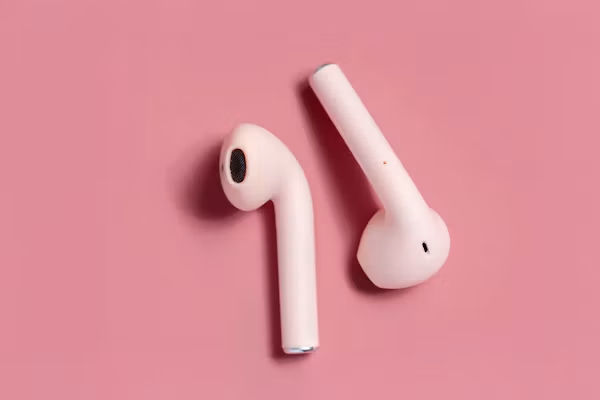
For years, wireless earbuds were mainly judged by a few familiar questions: How good do they sound? How comfortable are they? How long can they play music before needing a charge?
That checklist is changing quickly.
In 2026, wireless audio is moving into a much more interesting phase. Earbuds and headphones are becoming miniature computing devices, combining artificial intelligence, adaptive noise cancellation, better microphones, health-related features and increasingly sophisticated controls. Industry developments showcased at CES 2026 highlighted a broader move toward high-fidelity sound, immersive listening, open-ear designs and smarter wearable audio.
For New Zealand consumers, this evolution is particularly relevant. Wireless headphones are no longer limited to music on the bus or a podcast during a walk. They can become tools for commuting, remote work, study, gaming, travel and everyday communication.
The interesting question is no longer whether wireless earbuds can sound louder. It is whether they can become genuinely more useful.
From Music Players to Personal Technology
The biggest change happening in wireless audio is the shift from passive listening to intelligent assistance.
Modern earbuds can already do far more than reproduce sound. Features such as adaptive noise cancellation can respond to changing surroundings, while voice-processing technology can improve call clarity in noisy environments. AI is also increasingly being used for personalised audio tuning and more responsive voice experiences.
Imagine walking through a busy Auckland street while listening to a podcast. Instead of manually changing the volume or noise-control setting, your earbuds could recognise that your surroundings have become louder and adjust accordingly.
The same principle could work in a café, on a train or during a video meeting.
This makes wireless audio increasingly similar to other smart consumer electronics. The device is no longer simply waiting for instructions. It is trying to understand what the user is doing and respond automatically.
AI Is Changing What Headphones Can Do
Artificial intelligence is becoming one of the most talked-about technologies in personal audio.
One reason is simple: headphones sit close to the user’s ears and face, making them an ideal platform for microphones, voice assistants and contextual computing. A pair of earbuds can potentially hear commands, analyse environmental sounds and communicate with a smartphone without requiring the user to reach for a screen.
The result could be a more natural relationship between people and their devices.
For example, a user might ask for a quick summary of a conversation, translate a phrase while travelling or receive assistance during a phone call. Some emerging audio products are already moving toward AI-powered transcription and other intelligent functions.
For New Zealanders who travel between cities, work remotely or communicate with international clients, these capabilities could become more useful than another small improvement in maximum volume.
Noise Cancellation Is Becoming More Intelligent
Active noise cancellation, or ANC, has already transformed premium headphones. However, the next stage is not simply making outside sounds quieter.
The goal is making noise control more adaptive.
A commuter may want strong noise cancellation while sitting on public transport but still need awareness of nearby announcements. Someone working from a busy café may want to reduce background conversations without completely isolating themselves from their surroundings.
This is where intelligent audio processing becomes important.
Instead of choosing between “noise cancellation on” and “noise cancellation off”, future headphones can increasingly adjust the listening experience according to the environment. Industry forecasts also point toward AI-driven headphones that optimise audio based on surroundings and listening situations.
That approach fits the way people actually use headphones. New Zealand consumers do not live in a single acoustic environment. A quiet home office, a windy coastal walk and a crowded airport all demand different listening settings.
Open-Ear Audio Offers a Different Idea
Not everyone wants to block the outside world.
That is helping open-ear headphones and earbuds attract more attention. Rather than sealing the ear canal, these products allow users to remain more aware of their surroundings while listening to audio.
This can be appealing for people who walk, cycle, work outdoors or simply prefer hearing what is happening around them.
At CES 2026, open-ear designs were among the technologies attracting attention, with manufacturers exploring ways to combine environmental awareness with better sound quality.
For a country with a strong outdoor lifestyle, this concept has obvious appeal. A person heading out for a walk may want music or a podcast without feeling completely disconnected from traffic, other pedestrians or the natural environment.
The challenge is finding the right balance between awareness and audio quality.
Battery Life Still Matters
Despite all these futuristic features, one basic issue has not disappeared: headphones still need power.
In fact, smarter headphones may make battery performance even more important. Advanced ANC, multiple microphones, wireless connectivity, voice processing and AI functions can all increase the demands placed on a small battery.
That means consumers are likely to pay closer attention to charging time and long-term battery performance when choosing their next device.
A pair of headphones might have outstanding sound quality and impressive AI features, but those benefits become less useful if the device constantly needs to be recharged.
This is why the quality and condition of a headphones battery can have a major influence on the everyday experience. Battery capacity, charging behaviour and battery health can determine whether a device remains convenient after months or years of regular use.
What Happens When the Battery Gets Older?
Rechargeable batteries naturally lose capacity over time. A pair of wireless headphones that once lasted through an entire workday may eventually need charging much sooner.
For users, this can create a frustrating situation. The headphones themselves may still sound excellent, connect reliably and have perfectly usable controls, yet reduced battery performance can make the entire product feel outdated.
That raises an important question about the future of consumer electronics: Should people replace an otherwise functional device simply because its battery has aged?
The answer may increasingly depend on repairability.
Some newer headphones are beginning to put greater emphasis on replaceable batteries and easier repair. For example, the Sennheiser Momentum 5 Wireless has been highlighted for its user-replaceable battery, reflecting growing interest in repair-friendly product design.
For consumers concerned about electronic waste, this could become an important selling point.
Better Batteries Could Make Smarter Headphones More Practical
Battery technology may therefore become one of the less visible but most important areas of innovation in wireless audio.
Manufacturers want longer listening times without making headphones heavier. They also want faster charging without creating excessive heat or reducing long-term battery life.
That is a difficult engineering problem because consumers increasingly expect everything at once: high-quality audio, powerful ANC, multiple microphones, Bluetooth connectivity, smart features and all-day comfort.
A premium wireless headphone that lasts dozens of hours between charges can be much more practical than one that requires daily charging.
For consumers comparing products, advertised battery life should therefore be considered alongside real-world usage. ANC, volume level, Bluetooth behaviour and other functions can affect actual runtime.
When an older device begins struggling to hold a charge, replacing the headphones battery may also become an option worth investigating before replacing the entire product.
Wireless Audio Is Becoming a Productivity Tool
The rise of remote and flexible work has also changed how people use headphones.
A headset is no longer just entertainment equipment. It can be a work tool.
For someone working from home in Wellington, Auckland or Christchurch, a good pair of wireless headphones can handle video meetings, music, phone calls and focused work throughout the day.
Microphone quality is therefore becoming just as important as speaker quality.
Recent audio products are putting greater emphasis on voice isolation and microphone processing, with some new models using multiple microphones and dedicated processing chips to improve call clarity in noisy surroundings.
This is an important shift. Consumers may increasingly ask not only “How does this sound?” but also “How do I sound to other people?”
The New Zealand Lifestyle Creates Interesting Demands
New Zealand’s geography and lifestyle make versatility particularly valuable.
Someone might use the same headphones while commuting in Auckland, working from home, travelling between cities, exercising outdoors and relaxing with a film at night.
That means a single pair of headphones may need to perform across very different environments.
Comfort becomes crucial during long listening sessions. Noise cancellation matters in busy places. Awareness matters outdoors. Battery life matters when travelling. Microphone quality matters during work calls.
The best products are therefore not necessarily the ones with the longest specification sheet. They are the ones that solve the most everyday problems without becoming complicated.
Premium Features Are Moving Down the Price Range
Another interesting development is the gradual spread of once-premium technologies.
ANC, transparency modes, multipoint connectivity and increasingly sophisticated audio processing are no longer restricted to the most expensive headphones.
As competition increases, consumers can expect manufacturers to compete on combinations of features rather than basic wireless connectivity alone. The broader wireless audio market continues to be driven by improvements in Bluetooth, noise cancellation, spatial audio and battery efficiency.
This could be good news for New Zealand shoppers.
Rather than spending heavily on a flagship model simply to obtain one advanced feature, consumers may increasingly find mid-range products offering a surprisingly complete package.
That also means shoppers need to look beyond marketing language and consider which features they will actually use.
The Importance of Repair and Longevity
There is another trend that could become increasingly important: keeping electronics in use for longer.
A headphone purchase may seem relatively small compared with a smartphone or laptop, but replacing wireless audio devices repeatedly can still contribute to electronic waste.
If a product has good sound quality, comfortable construction and reliable connectivity, a worn battery should not necessarily mean the end of its useful life.
A replaceable headphones battery could extend the working life of a device and make repair a more attractive alternative to replacement.
This idea fits into a wider consumer electronics conversation around durability, repairability and sustainability.
For New Zealand consumers, it could eventually become another factor in purchasing decisions alongside sound quality and price.
What Will the Next Generation Look Like?
The most exciting possibility is that headphones could become a genuine interface between people and artificial intelligence.
Instead of constantly looking at a phone, users could interact with digital assistants through their headphones.
A pair of earbuds might recognise commands, provide directions, summarise information, translate speech or adjust audio automatically. At the same time, improved microphones and environmental processing could make conversations clearer.
The technology is moving in that direction, but there is still a long way to go.
Consumers will expect these features to work reliably without draining the battery, creating privacy concerns or making headphones uncomfortable.
The winners will likely be products that make advanced technology feel almost invisible.
The Real Upgrade Is Intelligence
Wireless headphones are entering an interesting new era.
The biggest improvement may not be louder speakers or more dramatic bass. Instead, it may be the ability to understand context.
A smart pair of headphones should know when the user needs quiet, when they need awareness, when they are speaking to someone and when they simply want to enjoy music.
For New Zealand consumers, that could make wireless audio more useful across work, travel, study, entertainment and outdoor activities.
Battery performance will remain part of that equation. The smartest headphones in the world are not particularly helpful when they run out of power at the wrong moment.
As wireless audio continues to evolve, consumers should therefore look at the complete experience: sound quality, comfort, connectivity, intelligent features, repairability and long-term battery performance.
The future of headphones is not simply about hearing more.
It is about making personal audio smarter, more adaptable and more useful in everyday life.