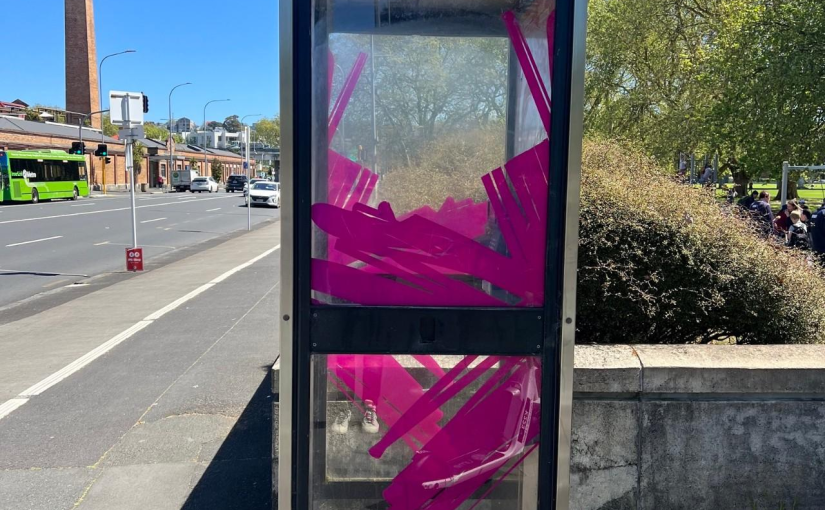
The End of an Era on New Zealand’s Streets
For generations of New Zealanders, the public phone booth was a familiar part of everyday life. Whether it stood outside a shopping centre, beside a suburban road or near a rural community facility, it offered a simple way to contact family, arrange transport or ask for help when no personal phone was available. Today, that familiar landmark is approaching the end of its journey.
Spark New Zealand confirmed on 16 October 2026 that it would abandon its proposal to replace traditional public phone booths with modern kiosks offering free calls, Wi-Fi and mobile phone charging. The company said it had been unable to secure the agreements needed to progress the proposal in Auckland, making a nationwide rollout commercially unviable. The remaining booths are expected to be physically removed over 2027 and 2028, subject to council requirements.
The announcement represents more than the disappearance of an ageing telecommunications service. It highlights how rapidly personal devices, mobile networks and digital services have transformed everyday communication in Aotearoa. It also raises an important question: what happens to people who still depend on public access to communication when the infrastructure they rely on disappears?
Why Spark’s Modernisation Plan Failed
Spark had explored a different future for its public phone network. Rather than simply maintaining the existing booths, the company proposed installing modern alternatives with free calling, wireless internet and charging facilities for mobile devices.
The proposed kiosks were intended to provide public value without charging users or relying on public funding. Digital advertising was expected to generate the revenue needed to support their operation. Similar facilities exist in international cities, while comparable free services in Australia have supported millions of calls, including emergency calls.
However, the business model depended on securing the necessary approvals and agreements. Spark said it could not reach the arrangements required to move forward in Auckland. Without the ability to roll out the network nationwide, the investment no longer made commercial sense.
The situation also revealed differences between Spark and Auckland Council over the process for approving the proposal. Spark said the proposed revenue-sharing arrangement would not be cost-effective. Auckland Council, meanwhile, said it had not made a decision to block the plan and that no formal application had been submitted for the proposed commercial advertising structures.
The disagreement demonstrates a familiar challenge in modern infrastructure projects. A service may offer public benefits, but its success can depend on regulatory approval, land access, commercial incentives and cooperation between multiple organisations.
For New Zealand, the immediate result is clear. The proposed combination of free calls, Wi-Fi and charging facilities will not be delivered through Spark’s planned replacement network.
The Decline of Public Telephones
Public phone booths have been disappearing for years as mobile phones become more affordable and widely available. Spark reported that call volumes across its fixed-line phone booth network declined by nearly 70 per cent between 2018 and 2022. Around 90 per cent of booths were used for less than three minutes per day on average.
The network has consequently become increasingly difficult to justify as a conventional telecommunications service. Traditional booths depend on ageing equipment and copper connections that are being retired. Maintaining older hardware can become expensive when replacement parts are scarce and usage continues to fall.
At the same time, consumers have moved towards communication tools that are more convenient and versatile. A smartphone can make calls, send messages, access maps, handle banking and connect users to emergency information. For many people, a public phone booth is no longer an essential part of their daily routine.
Yet declining usage does not mean the service has become irrelevant to everyone. A phone booth might be used infrequently across an entire month but still prove invaluable during a personal emergency. This difference between average demand and essential availability is at the heart of the debate surrounding the network’s closure.
What the Disappearance Means for Vulnerable Communities
The people most likely to notice the loss of public phone booths may be those who have the fewest alternatives.
Some New Zealanders cannot reliably afford a mobile phone plan. Others may experience unstable housing, financial hardship or limited access to electricity and internet services. Visitors can also find themselves without a working phone when a device is lost, damaged or out of charge.
For these groups, a public telephone is more than a nostalgic piece of street furniture. It can provide a direct connection to social services, banks, support organisations and emergency assistance.
Spark has acknowledged that public booths can be an important lifeline for people without reliable access to a mobile phone or the internet. The company has also said it remains open to reconsidering modernisation if circumstances change.
The challenge is to ensure that the transition towards digital communication does not leave these users behind. Community organisations, local councils and public service providers may need to examine where people can obtain assistance when they cannot access their own devices.
Libraries, community centres and other public facilities may help fill some gaps, but they cannot automatically replace a telephone that is available on a street at any hour. Their opening hours, locations and access arrangements differ.
New Zealand’s experience therefore raises a wider policy question: should essential communication access depend entirely on private device ownership, or should communities retain some form of publicly accessible alternative?
Smartphones Have Become the New Everyday Infrastructure
The decline of phone booths reflects the growing importance of smartphones in modern life. A single device now performs tasks that once required several separate products, from portable music players and cameras to navigation systems and communication terminals.
This convergence has changed consumer expectations. People increasingly want devices that remain connected throughout the day, work across different services and can be relied upon when travelling or dealing with an unexpected situation.
As a result, battery performance has become an important consideration in consumer electronics. A phone may have advanced cameras, fast connectivity and sophisticated applications, but its usefulness falls sharply when it runs out of power.
The role of a consumer electronics battery is therefore closely connected to the broader transition away from fixed public communication infrastructure. Users depend on portable devices for access to information, work, transport, payments and personal contacts. Reliable power helps keep these functions available when people are away from home.
However, device ownership does not guarantee uninterrupted access. A damaged charging port, an ageing battery, a forgotten charging cable or a long period without electricity can still leave someone disconnected. The loss of public charging facilities could make these practical problems more noticeable for people who spend extended periods outdoors or travel through areas with limited services.
Why Public Charging Matters in a Mobile-First Society
Spark’s abandoned proposal was notable because it would have combined communication services with free mobile charging. Even though the plan will not proceed, the idea highlights a genuine need in an increasingly mobile society.
Charging access is useful in transport hubs, shopping districts, libraries, public buildings and other shared spaces. It can help travellers, students, delivery workers and people who rely on their phones for daily tasks.
The effectiveness of public charging, however, depends on more than the presence of a power outlet. Facilities must be accessible, maintained and designed with security in mind. Users should be able to understand whether a charging connection supplies power only or also supports data transfer.
People can reduce some risks by carrying their own charging cables, using reputable charging accessories and avoiding unfamiliar data connections when charging devices in public. A portable power bank can also provide a useful backup, although it must be charged in advance and adds weight to a bag.
The consumer electronics battery has become central to this experience because battery capacity, charging speed, device efficiency and battery condition all influence how long people can remain connected. For consumers, understanding these factors can make the difference between a phone that lasts through a busy day and one that requires constant access to a power socket.
Still, individual preparation cannot solve every access problem. Public infrastructure has traditionally served people who cannot easily provide every essential resource for themselves. As phone booths disappear, New Zealand has an opportunity to consider whether alternative charging and communication facilities should be available in locations where they can deliver the greatest community benefit.
The Copper Network Transition Adds Another Layer
The phone booth decision is also linked to the retirement of New Zealand’s traditional copper telecommunications infrastructure. Spark has said that around 90 per cent of its booths have already been disconnected from copper, while the remaining physical structures are expected to be removed during 2027 and 2028.
Copper networks supported generations of landline communication, but telecommunications providers have increasingly shifted towards newer technologies. Fibre broadband and mobile networks can deliver capabilities that traditional copper infrastructure was not designed to provide.
This transition brings important benefits. Modern networks can support faster data transfer, improved digital services and more flexible ways to connect homes and businesses. Maintaining outdated infrastructure indefinitely would be difficult when usage is falling and equipment is reaching the end of its useful life.
However, replacing a network technology is not the same as replacing every service that depended on it. A copper line can be retired as part of a national infrastructure programme, while the need for affordable emergency communication remains.
That distinction matters in rural communities and locations where mobile coverage, reliable electricity or affordable internet access may not always be available. The best replacement for an old service will depend on local circumstances rather than assuming every resident has the same connectivity options.
The Role of Mobile Networks and Digital Inclusion
New Zealand’s communications landscape is increasingly built around mobile connectivity. Smartphones provide access to messaging, online banking, government information, digital identification and a wide range of essential services.
For most consumers, this arrangement is convenient. Yet digital inclusion involves more than whether a mobile network exists. People also need suitable devices, affordable plans, dependable electricity, accessible interfaces and the skills required to use online services safely.
A person may have mobile coverage but still lack enough prepaid credit to make a call. Another may own a phone but struggle to use online forms. Someone else may depend on a device with an unreliable battery or limited storage.
These differences matter because services that move online can unintentionally create new barriers. When traditional access points disappear, public agencies and service providers should consider whether people can still reach support without having to purchase new technology or maintain a costly connection.
The consumer electronics battery is only one part of this larger picture, but it illustrates the practical dependencies behind digital access. Modern communication relies on working devices, usable power sources and functioning networks. If any one of these fails, the benefits of digital technology can quickly become unavailable.
What Consumers Can Expect Over the Next Two Years
Spark’s announcement does not mean every remaining booth will disappear immediately. The company says the physical removal programme will continue over 2027 and 2028, in line with council requirements.
During that period, residents may see booths gradually removed from streets and public areas. Spark has also stopped selling and reordering new phone card stock as the network is phased out.
For most smartphone users, the change may have little effect on everyday routines. They already rely on mobile devices and internet-based communication. For people who occasionally use public phones, however, it will be worth identifying alternative ways to make calls and access help before local facilities disappear.
Travellers can prepare by checking mobile coverage, carrying a charging cable and maintaining sufficient battery power. People who depend on a phone for navigation, transport bookings or emergency contact may benefit from carrying a charged power bank.
Households can also review whether older devices remain dependable. If a phone loses charge unusually quickly, shuts down unexpectedly or struggles to hold power, its condition may deserve attention. A healthy battery and sensible charging habits can help maintain reliability, although battery replacement decisions should follow the device manufacturer’s safety guidance.
At the community level, the transition creates an opportunity to identify where public charging points, accessible phones or other forms of connectivity support would be most useful. The answer may differ between central Auckland, smaller towns and remote areas.
A Lesson in Designing Technology Around People
The end of New Zealand’s phone booths is a reminder that technological progress is not simply a matter of replacing old equipment with newer products. Infrastructure must also reflect how people live, what they can afford and what happens when their personal technology fails.
Spark’s modernisation proposal attempted to bridge the gap between a declining traditional service and a more connected future. Its failure shows how complicated it can be to combine commercial advertising, public access, council approvals and a nationwide business model.
There is no guarantee that another company or public agency will introduce an equivalent service. For now, the focus will shift towards existing mobile networks, private devices and whatever alternative support communities can provide.
The long-term challenge is to ensure that convenience for the majority does not become exclusion for a minority. Smartphones have transformed communication, but not everyone enjoys the same access to devices, connectivity or charging facilities.
New Zealand’s disappearing phone booths may soon become a memory of another era. Their departure should nevertheless encourage a practical conversation about digital inclusion, public infrastructure and the services people need when technology does not work as expected.
The future of communication will almost certainly be more mobile, connected and digitally integrated. The important question is whether that future will remain accessible to everyone, including those who cannot always rely on a charged phone in their pocket.