A New Soundtrack for the Next Generation of Gaming
Gaming audio has changed dramatically over the past few years. For many players in New Zealand, headphones have traditionally been the easiest way to experience detailed game sound without disturbing everyone else in the house. But Sony is now offering another option with its new PlayStation Pulse Elevate wireless speakers.
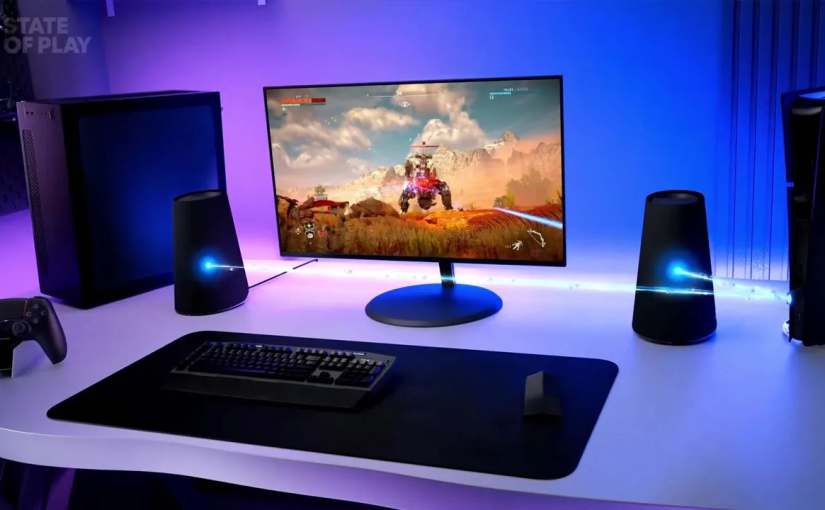
Designed for PS5, PC, Mac and PlayStation Portal, Pulse Elevate represents Sony Interactive Entertainment’s first wireless speaker system for desktop gaming. The speakers combine planar magnetic drivers, built-in woofers, PlayStation Link wireless connectivity and an integrated microphone with AI-enhanced noise rejection. They can also connect to Bluetooth devices, making them useful beyond gaming.
For New Zealand gamers, this is an interesting development at a time when gaming setups are becoming more flexible. A bedroom desk, home office, lounge room or compact apartment can all become a gaming space, and players increasingly expect their accessories to work across several devices.
Pulse Elevate is scheduled to launch on November 12, 2026, with a recommended US price of US$219.99. Sony has also confirmed a rechargeable battery designed to provide up to 12 hours of portable play.
From Headsets to Speakers
Headsets remain a major part of modern gaming, but they are not perfect for every situation.
Some players do not want to wear headphones for several hours. Others may already spend much of their working day wearing earbuds or headsets and prefer something more open when they start gaming in the evening.
This is where Pulse Elevate takes a different approach.
Instead of placing the audio directly beside the ears, the two wireless speakers create a stereo sound field around the player. Sony says the speakers use studio-inspired planar magnetic drivers together with built-in woofers to reproduce a broad range of frequencies. On compatible PS5 games, the system can also take advantage of Tempest 3D AudioTech.
That could make a noticeable difference for players who want to hear environmental details while remaining aware of what is happening around them.
For example, a gamer playing an atmospheric adventure title might hear footsteps, distant environmental sounds and music coming from different parts of the soundscape rather than simply receiving everything through a headset.
The result is not necessarily about replacing headphones. Instead, it gives gamers another way to build a more flexible audio setup.
Why Wireless Audio Matters
One of the most interesting parts of Pulse Elevate is its use of PlayStation Link.
Sony designed PlayStation Link as a low-latency wireless technology for compatible PlayStation audio accessories. According to Sony, Pulse Elevate uses PlayStation Link to provide low-latency, lossless wireless audio across compatible devices.
For gaming, latency matters.
A fraction of a second can change how a game feels, especially in competitive shooters, racing games and action titles. If a sound arrives noticeably after an on-screen event, the experience can feel disconnected.
Pulse Elevate is designed to avoid that problem by keeping the wireless connection focused on gaming performance.
The speakers can also connect to Bluetooth devices. That means a player could use them for music, video or calls without limiting the speakers to a single gaming platform. Sony says Pulse Elevate can work with PS5, PC, Mac, PlayStation Portal and mobile devices, depending on the connection method.
For New Zealand households where one desk may serve as a gaming station, study area and home office, this flexibility could be particularly useful.
A Portable Gaming Speaker With a Battery
The rechargeable battery is another major difference between Pulse Elevate and traditional desktop speakers.
Most desktop speakers are designed to stay beside a monitor and remain connected to a power source. Pulse Elevate takes a more flexible approach. Each speaker has a built-in rechargeable battery, and the included charging docks are designed to make returning to a desktop setup straightforward.
Sony says the speakers can provide up to 12 hours of portable sound, although actual battery life can vary depending on usage, settings and environmental conditions.
This makes battery performance an important part of the product’s appeal.
For anyone researching a Sony bluetooth speaker battery, the key point is that Pulse Elevate is not simply another permanently plugged-in desktop speaker. Its internal rechargeable power system is part of the design concept.
The same consideration applies to other wireless audio products. As speakers become more portable, battery capacity, charging habits and long-term battery performance become increasingly important factors for consumers.
Designed for PS5 and PlayStation Portal
Pulse Elevate is particularly interesting because it sits between conventional desktop audio and portable gaming.
At a desk, the speakers can sit beside a PS5 or computer monitor. Away from the desk, they can be moved and used with PlayStation Portal through PlayStation Link or with mobile devices through Bluetooth. Sony’s official product information specifically highlights this combination of desktop gaming and portability.
This could fit naturally into the way many New Zealand gamers use their consoles.
A player might begin a game in the living room, move to a bedroom or office later, and then use a phone with the same speakers for music or video.
The speakers therefore become more than a gaming accessory. They can potentially become part of a wider personal entertainment system.
That versatility is increasingly relevant as gaming itself becomes less tied to a single screen.
AI Comes to the Microphone
Audio quality is only one part of the Pulse Elevate experience.
Sony has also integrated a microphone into the right speaker. The microphone includes AI-enhanced noise rejection, which is designed to reduce unwanted background noise during voice communication.
This is an important feature for players who frequently use voice chat.
Traditionally, gamers have relied on headsets because the microphone is positioned close to the mouth. A desktop speaker system has a different challenge: the microphone is farther away, while the speakers themselves are producing sound.
Sony’s approach is to use noise-rejection technology to separate the player’s voice from unwanted audio.
For someone playing in a home office, shared bedroom or living area, this could make headset-free communication more practical.
It also reflects a wider trend in consumer electronics. AI is no longer limited to image generation or smartphone assistants. Noise suppression, voice processing and real-time audio enhancement are becoming increasingly common in everyday devices.
More Than a Gaming Accessory
Another reason Pulse Elevate stands out is that it is not restricted to game audio.
Because the speakers support Bluetooth, they can also be used with compatible smartphones and other devices. Sony positions them for games, music, movies and shows, giving them a broader role in a desktop entertainment environment.
Imagine a typical evening.
A New Zealand user finishes work at a desk and wants to listen to music. Later, the same person launches a PS5 game. After gaming, they might switch to a movie or video on another device.
A speaker system that can handle these activities without requiring a complete change of equipment can make the setup feel much simpler.
This is where the concept becomes more interesting than simply asking whether a gamer needs another pair of speakers.
The bigger question is whether one wireless audio system can replace several smaller accessories.
Battery Life Will Become Part of the Conversation
As wireless speakers become more portable, battery life will naturally become a bigger part of the buying conversation.
A speaker can have excellent drivers and wireless connectivity, but a weak battery experience can limit its usefulness.
For consumers researching a Sony bluetooth speaker battery, several practical considerations are worth keeping in mind. Usage volume, wireless connection type, charging frequency and environmental conditions can all affect real-world runtime.
Sony’s advertised figure of up to 12 hours gives users a useful reference point, but it should not be interpreted as a guaranteed runtime for every situation. Sony itself notes that individual battery life can vary.
This is especially relevant for portable gaming.
A user playing for a few hours at a time may rarely think about charging. Someone using the speakers throughout the day for music, calls and gaming will have a different experience.
The charging docks are therefore an important part of the overall design rather than simply an accessory.
The New Zealand Gaming Setup Is Getting More Flexible
The traditional gaming setup was relatively simple: a television, a console and a controller.
Modern gaming spaces look very different.
Players may have a PS5, gaming monitor, laptop, smartphone, wireless headset, portable console and multiple streaming services. A single desk may be used for gaming, study and work.
That makes flexibility increasingly valuable.
Pulse Elevate fits into this shift by offering multiple connection methods and a portable design. Sony’s hands-on testing also highlighted how the speakers could move between different parts of a home while remaining useful for gaming, calls and music.
For New Zealand consumers, the appeal may therefore depend less on whether they already own desktop speakers and more on how often they move between devices and locations.
Someone with a fixed gaming room may have little need for portability.
Someone gaming from a shared apartment, home office or bedroom could see much more value in it.
What Makes Pulse Elevate Different
Several features separate Pulse Elevate from ordinary Bluetooth speakers.
First, it is built specifically around gaming. Second, PlayStation Link is designed to deliver low-latency wireless audio. Third, the speakers include planar magnetic drivers and woofers. Fourth, the system includes an integrated microphone with AI-enhanced noise rejection. Finally, rechargeable batteries allow the speakers to move away from their charging docks.
These features create a product that sits somewhere between a gaming headset, desktop speaker system and portable Bluetooth speaker.
That positioning could make it particularly interesting to consumers who do not want their gaming accessories to perform only one job.
At the same time, the product’s success will depend on how well these features work together in everyday use.
What New Zealand Gamers Can Expect
Pulse Elevate is scheduled to launch globally on November 12, 2026. Sony has confirmed Midnight Black and White versions, although availability of the White model varies by market.
For New Zealand gamers, local pricing and availability will be important details to watch as the launch approaches.
The broader trend is already clear, however.
Gaming audio is moving beyond the traditional headset. Wireless connectivity, AI-powered microphones, portable batteries and multi-device support are becoming increasingly important in the design of gaming accessories.
For users researching a Sony bluetooth speaker battery, Pulse Elevate provides an interesting example of how battery-powered audio hardware is evolving. The battery is no longer simply a technical component hidden inside a speaker. It directly affects where the device can be used, how long it can remain away from a charger and how flexible the overall gaming experience becomes.
A New Direction for PlayStation Audio
Pulse Elevate arrives at an interesting moment for gaming hardware.
Players are no longer restricted to a television and a controller. Portable play, remote gaming, PC gaming and mobile entertainment are increasingly connected. Audio has to follow that same direction.
Sony’s new speakers attempt to do exactly that.
With PlayStation Link, Bluetooth, planar magnetic drivers, integrated microphones and rechargeable batteries, Pulse Elevate combines several trends that are shaping consumer electronics in 2026.
For New Zealand gamers, the most interesting question may not be whether speakers can replace gaming headsets. Instead, it may be whether the next generation of gaming accessories can give users the freedom to choose how, where and when they play.
If Pulse Elevate delivers on that promise when it arrives in November, it could become one of the more distinctive additions to the PlayStation accessory ecosystem this year.