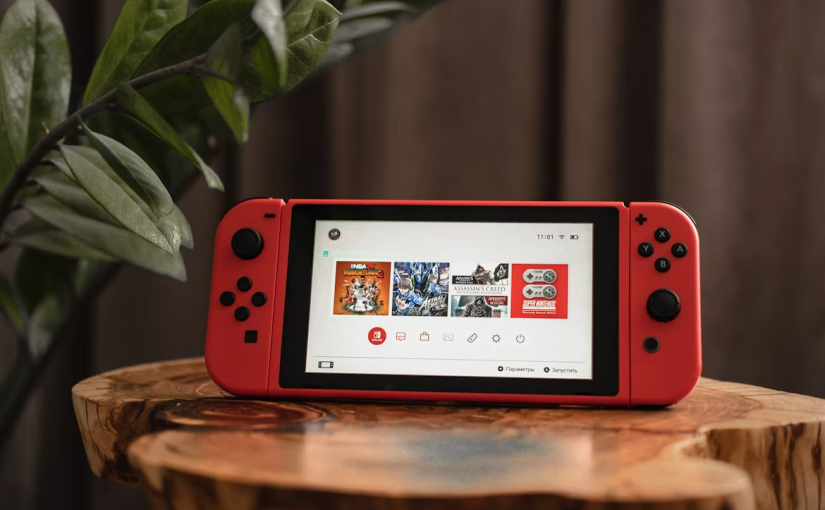
For gamers across New Zealand, portable gaming is entering another interesting chapter. Nintendo has been steadily expanding the Nintendo Switch 2 ecosystem, and September 2026 has brought a fresh wave of announcements, software updates and upcoming games that are keeping the platform firmly in the spotlight.
The latest Nintendo Direct highlighted a wide selection of games coming to Nintendo Switch 2 and Nintendo Switch, including Metroid Ravenous, Kirby and the World Beyond, Final Fantasy VII Revelation, Monster Hunter Wilds and Tomb Raider: Legacy of Atlantis. Nintendo has also announced new developments around major franchises such as The Legend of Zelda.
For New Zealand players, the appeal is not simply about having more games. It is about how the Switch 2 fits into everyday life. From gaming during a long trip to playing at home on a television, the hybrid format continues to make portable gaming unusually flexible.
A Busy September for Nintendo Switch 2
Nintendo has given Switch 2 owners plenty to talk about this month. The company released system software version 23.0.0 in September, adding several features designed to improve the overall experience.
One of the most interesting additions is variable refresh rate support in TV mode. When compatible software and a compatible television are used together, the display can adjust its refresh rate according to the game’s performance. Nintendo has also introduced a Handheld Mode Boost option, giving players another way to manage how compatible Nintendo Switch software performs when playing on the go.
These changes may sound technical, but they matter because Switch 2 is designed around flexibility. New Zealand gamers can move between handheld, tabletop and TV gaming without needing three separate devices.
That flexibility becomes even more important as the software library grows.
New Games Are Giving Players More Reasons to Pick Up the Console
Nintendo’s September Direct demonstrated just how broad the Switch 2 library is becoming. Instead of relying entirely on familiar Nintendo franchises, the platform is attracting major third-party releases as well.
Upcoming games highlighted by Nintendo include Final Fantasy VII Revelation, Monster Hunter Wilds and Tomb Raider: Legacy of Atlantis. There are also new Nintendo projects such as Metroid Ravenous and Kirby and the World Beyond.
For New Zealand gamers, this wider selection could make the console more appealing to different types of players.
A fan of traditional Nintendo adventures might be interested in Kirby or Zelda. Someone looking for a larger action RPG experience could turn toward Monster Hunter or Final Fantasy. Meanwhile, players who enjoy classic franchises are getting updated versions and new entries that take advantage of the newer hardware.
The result is a portable system that is becoming less dependent on one particular type of gaming experience.
Handheld Gaming Fits the New Zealand Lifestyle
One reason portable consoles remain attractive is simple: people do not always play games at home.
New Zealand has a relatively small population spread across a large geographic area. Travel between cities can involve long road trips or flights, and many people spend significant amounts of time away from their main gaming setup.
A handheld console can turn that downtime into gaming time.
Instead of sitting in front of a television for every session, players can pick up the Switch 2, continue a game and put it back down when they reach their destination. This is particularly useful for RPGs, adventure games and other titles where players may want to make progress in short sessions.
The growing Switch 2 library makes this flexibility more valuable. A console becomes more useful when it can offer different experiences depending on where and how someone wants to play.
Battery Life Still Matters in Portable Gaming
There is one part of the handheld experience that technology cannot completely ignore: battery life.
A powerful display, faster processor, wireless connectivity and demanding games all place pressure on a portable console’s battery. For players who spend several hours away from a wall outlet, remaining battery percentage can become just as important as storage space or screen quality.
This is why a reliable Nintendo game console battery remains an important consideration for long-term portable gaming.
Battery behaviour can vary depending on brightness, wireless connections, game intensity, temperature and system settings. A graphically demanding title can naturally put more load on the hardware than a lightweight game.
For New Zealand players travelling between regions, this can be particularly relevant. A gaming session that begins at home might continue during a journey, at a café, in a hotel or while waiting for transport.
The more people use a console as a genuinely portable device, the more important power management becomes.
Nintendo’s Software Updates Are Making the Hardware More Flexible
Nintendo’s latest system update shows that the company is not treating Switch 2 as a finished product that simply sits on a shelf.
Version 23.0.0 introduced several changes, including improvements to GameChat, virtual game card settings, system transfer features and accessibility options. The update also added TV-mode VRR support and Handheld Mode Boost.
These additions may appear unrelated, but together they show a broader trend.
Modern consoles increasingly behave like connected consumer electronics rather than traditional game machines. Software updates can add functionality after the hardware has already been purchased.
That means the experience of owning a console can change over time.
For New Zealand consumers, this is especially interesting because the value of a device is no longer determined entirely on launch day. New features can make an existing console more useful months or years after purchase.
The Zelda Effect Continues
Few Nintendo franchises generate as much attention as The Legend of Zelda, and 2026 is an especially notable year for the series because Nintendo is celebrating its 40th anniversary.
Nintendo has announced a Zelda-focused anniversary programme, including an anniversary edition of The Legend of Zelda: Ocarina of Time for Nintendo Switch 2 as well as additional related products and events.
For Nintendo fans in New Zealand, this adds another layer of interest to the Switch 2 ecosystem.
Zelda has historically been one of Nintendo’s strongest reasons to own its hardware. Anniversary content can attract long-time players who remember earlier Nintendo systems while also introducing younger gamers to classic titles.
The combination of nostalgia and newer technology is powerful. Players can revisit familiar worlds while experiencing them on a modern portable platform.
The Importance of Longer Gaming Sessions
As games become larger and more technically ambitious, players may spend significantly more time with individual titles.
A modern RPG can involve dozens of hours of exploration. Strategy games can encourage long sessions. Multiplayer games can make players return every day.
That creates a practical question: how well can a portable console support these habits?
Power management becomes part of the overall gaming experience.
A healthy battery allows players to focus on the game rather than constantly searching for a charger. Conversely, a battery that no longer performs as expected can make a portable console feel much less convenient.
This is why Nintendo game console battery considerations can become increasingly relevant as Switch hardware ages and players keep their consoles for longer periods.
The battery is not the most visible component of a gaming system, but it directly affects the defining feature of a hybrid console: portability.
Gaming and Travel Go Hand in Hand
New Zealand’s geography gives portable gaming a particularly practical role.
Whether someone is travelling between Auckland and Wellington, heading south toward Christchurch or taking a holiday somewhere away from home, carrying a portable console can be easier than carrying a full gaming setup.
A handheld system can fit into a backpack and provide entertainment without requiring a television.
That also explains why accessories matter. A compact charging solution, protective case, comfortable headphones and sufficient storage can all improve the travel experience.
But none of those accessories can compensate for a battery that cannot hold enough charge.
For frequent travellers, paying attention to battery condition is therefore part of maintaining the overall usefulness of a portable console.
A Growing Ecosystem Beyond Nintendo Games
Another major development is the increasing variety of software arriving on Switch 2.
The September 2026 announcements demonstrate that Nintendo’s platform is attracting games from outside its traditional first-party catalogue. Upcoming releases cover action, adventure, RPG, horror and cooperative experiences.
This matters because a broader software library can change who considers a Nintendo console suitable for their gaming needs.
Previously, some players might have viewed Nintendo hardware mainly as a platform for Mario, Zelda, Pokémon and other Nintendo-owned franchises.
The expanding Switch 2 catalogue creates a different picture.
Players can increasingly treat the console as a general-purpose gaming platform that also happens to offer Nintendo’s distinctive first-party experiences.
Battery Care Becomes Part of Long-Term Ownership
For anyone who intends to keep a handheld console for several years, battery care deserves attention.
Heat is one factor worth watching. Portable electronics generally operate best when they are used and stored within appropriate temperature conditions. Excessive heat can affect electronics and battery performance over time.
Charging habits also matter. Players should use appropriate charging equipment and follow the manufacturer’s guidance rather than relying on questionable accessories.
If a console eventually develops noticeably reduced runtime, unexpected shutdowns or unusual charging behaviour, the issue should be assessed carefully rather than assuming that every problem is caused by software.
For owners thinking about long-term use, Nintendo game console battery performance is ultimately part of the larger question of how long a portable gaming system remains convenient.
What Comes Next for New Zealand Gamers
Nintendo’s current momentum is likely to keep Switch 2 in the conversation throughout the remainder of 2026.
The combination of new games, system updates and major franchise anniversaries gives players several reasons to keep checking the platform.
The upcoming Mario Kart World bundle is also scheduled to arrive on 29 October in Australia and New Zealand, timed for the summer period, and includes a Switch 2 console, a Mario Kart World download code and a three-month Nintendo Switch Online membership.
That timing is particularly interesting for New Zealand, where the summer holiday period can be an important opportunity for family entertainment and travel.
A portable console can fit naturally into that environment.
Portable Gaming Is Becoming More Than a Convenience
The latest Nintendo developments show that portable gaming is no longer simply about shrinking a home console.
It is becoming a different way of interacting with games.
Players can start a game on the television, continue it in handheld mode and take it with them when they leave home. Software updates can improve the experience months after purchase. New games can expand the audience. Better display technologies can make the transition between handheld and TV modes smoother.
For New Zealand gamers, that combination of flexibility and increasingly ambitious software makes the Switch 2 an interesting part of the country’s wider consumer electronics landscape.
And as people spend more time gaming away from the wall outlet, battery performance will remain an important part of the conversation.
The most exciting part is that Nintendo’s current momentum is not only about what players can buy today. It is also about how the platform continues to evolve.
With new games arriving, major franchises celebrating milestones and system software gaining new capabilities, portable gaming is once again becoming one of the most dynamic parts of the consumer electronics market in New Zealand.