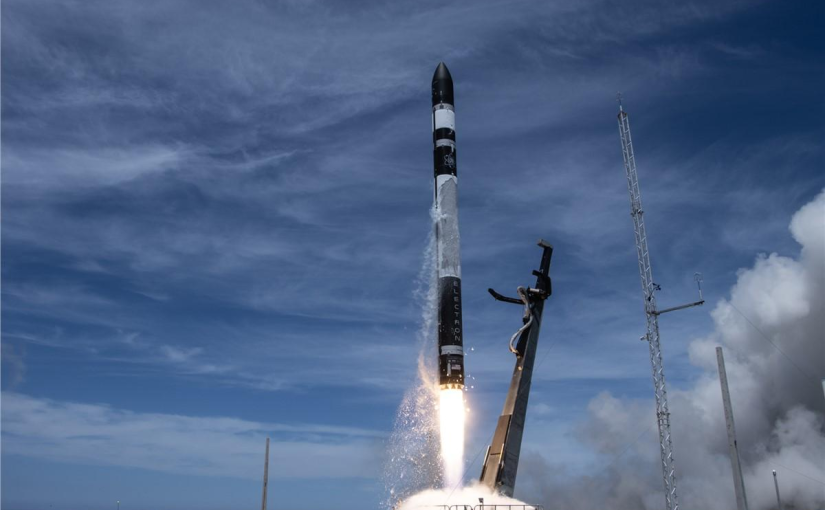
New Zealand Takes a Bigger Role in the Global Space Race
New Zealand is becoming an increasingly important player in the global space industry, demonstrating that a relatively small country can make a significant contribution to one of the world’s most advanced technology sectors. At the centre of this progress is Rocket Lab, the space company founded by New Zealand engineer Sir Peter Beck, which operates its Electron launch vehicle from the Māhia Peninsula on the North Island’s east coast.
The company’s growing launch programme reflects a broader transformation in the space industry. Satellites are no longer used exclusively by national governments and major scientific institutions. Businesses, universities, environmental researchers and communications providers increasingly depend on spacecraft for everyday services, from monitoring weather patterns to improving maritime safety.
This changing market creates opportunities for New Zealand. Its geographic position, established aerospace expertise and access to dedicated launch infrastructure provide a foundation for participating in the international commercial space economy.
Recent developments have reinforced that position. Rocket Lab secured a major commercial launch agreement with Japanese Earth-observation company Synspective in September 2026, while its Electron programme continues to serve customers seeking dedicated access to orbit. Meanwhile, the development of the larger Neutron rocket highlights the company’s ambitions beyond small-satellite launches.
For New Zealand, the question is no longer simply whether it can launch rockets. It is how the country can turn its growing space capabilities into lasting technological, economic and scientific benefits.
Electron Demonstrates the Value of Dedicated Satellite Launches
Rocket Lab’s Electron rocket has become a central part of its business and an important feature of New Zealand’s space industry. Designed primarily to carry small satellites into orbit, Electron offers customers an alternative to waiting for space on larger rockets that transport many payloads together.
Dedicated launches can be particularly valuable when a satellite operator needs a specific orbital destination, a carefully planned deployment schedule or greater control over mission timing.
These considerations matter for commercial satellite constellations. Operators often deploy several spacecraft over time to expand coverage, replace ageing equipment or improve the resolution of their services. A reliable launch provider can help them coordinate these deployments with their wider business plans.
Rocket Lab’s September 2026 agreement with Synspective, covering 20 Electron launches, illustrates this demand. Synspective operates synthetic aperture radar satellites that can collect useful Earth-observation data even when ordinary optical imaging is limited by cloud cover or darkness.
Such capabilities have applications in disaster assessment, infrastructure monitoring, urban development and environmental analysis. For a country like New Zealand, which must manage changing weather conditions, remote communities and extensive coastal areas, satellite-derived information can be particularly valuable.
The success of these missions also demonstrates why commercial spaceflight increasingly depends on repeatable engineering and carefully managed operations rather than occasional headline-making launches.
Why Māhia Matters to New Zealand’s Space Economy
Rocket Lab Launch Complex 1 on the Māhia Peninsula is more than a launch site. It is a strategic piece of infrastructure connecting New Zealand’s engineering capabilities with international demand for space services.
Its location provides access to suitable launch trajectories, while its dedicated facilities allow Rocket Lab to prepare and operate Electron missions for customers around the world. Each mission involves a coordinated process involving vehicle preparation, payload integration, launch operations, tracking and post-launch confirmation.
Launch activity also creates opportunities for supporting industries. Aerospace engineering, software development, electronics manufacturing, precision components, testing services and technical consulting can all contribute to the wider space supply chain.
The benefits extend to education and skills development. Students interested in physics, robotics, computing and engineering can see how these disciplines connect to real missions. Universities and research organisations may also find opportunities to collaborate with industry on new technologies and specialist equipment.
However, the value of a launch facility cannot be measured only by the number of rockets leaving the ground. Long-term success depends on developing local expertise, building strong supplier relationships and ensuring that investment translates into broader economic opportunities.
For regional communities, the challenge is to balance the benefits of a growing high-technology industry with practical considerations such as road access, environmental management, employment opportunities and the temporary restrictions required during launch operations.
Satellites Deliver Benefits Far Beyond Space
The spacecraft deployed by Electron missions are designed to perform tasks that have a direct influence on life on Earth.
Earth-observation satellites, for example, can monitor changes in coastlines, vegetation, agricultural land and urban infrastructure. Radar-equipped spacecraft can collect information in conditions that make conventional optical imaging difficult, helping analysts maintain observations across a wider range of weather conditions.
Other satellites support communications, navigation, scientific experiments and the Internet of Things. These services help connect devices that may be separated by considerable distances, including equipment operating at sea, in remote agricultural areas or across large industrial sites.
For New Zealand, these applications have practical importance. Farmers can use satellite information alongside ground-based sensors to understand changing conditions across their properties. Emergency management teams can use Earth-observation data to assess affected areas after severe weather. Maritime operators can draw on satellite-enabled services to improve situational awareness.
None of these capabilities depends on launch technology alone. A complete system requires spacecraft, sensors, communications links, ground stations, data-processing platforms and trained specialists.
The increasing use of satellite services therefore creates demand for a broad range of electronic systems, including compact computers, navigation equipment, radio-frequency components and specialised monitoring instruments.
These devices must often operate under demanding conditions, making reliability, energy efficiency and careful testing essential throughout their development and operational life.
The Electronic Systems Behind Every Successful Mission
A rocket launch attracts attention because of its size, speed and dramatic ascent. Yet much of the technology that makes a mission possible is far less visible.
Modern spacecraft contain electronic systems responsible for navigation, attitude control, communications, data collection and power management. Ground-based teams rely on computers, tracking equipment and communications systems to monitor mission progress and respond to unexpected conditions.
Many of these systems must operate with limited opportunities for physical maintenance. Once a satellite reaches orbit, replacing a failed component may be impractical or impossible. Engineers therefore place considerable emphasis on component selection, redundancy, thermal management and testing before launch.
Power design is particularly important. Satellites typically combine solar arrays with onboard energy storage, allowing their electrical systems to continue operating when sunlight is unavailable or when short periods of higher power demand occur.
On the ground, engineers also use portable instruments and diagnostic equipment to inspect electronics, test connections and verify system performance. The electronic device battery can be an important component in this supporting environment, providing portable power for compatible instruments used during preparation, maintenance and field operations.
Its performance must match the equipment’s requirements, including voltage, capacity, operating temperature and expected runtime. Selecting a suitable power source is therefore a technical decision rather than simply a matter of choosing the largest available capacity.
As space programmes become more complex, reliable supporting electronics remain an essential part of the overall mission architecture.
New Zealand’s Growing Space Technology Ecosystem
Rocket Lab’s progress is taking place alongside wider efforts to strengthen New Zealand’s space technology sector.
Government initiatives, university research and private-sector innovation are helping develop expertise in satellite engineering, aerospace materials, software, remote sensing and advanced manufacturing. The Kiwi Space Activator programme is one example of efforts to support emerging space technologies and help promising ideas move towards practical applications.
International collaboration is another important feature of the sector. Space missions frequently involve customers, researchers, suppliers and engineering teams from multiple countries. These relationships can expose New Zealand businesses to demanding technical standards and new commercial opportunities.
The country’s space industry also benefits from the overlap between aerospace and other high-technology sectors. Skills developed for spacecraft can be relevant to robotics, communications, precision manufacturing, autonomous systems and specialised electronics.
Nevertheless, growing the ecosystem requires more than attracting launch contracts. Businesses need access to skilled workers, research facilities, investment and customers willing to support technology development over several years.
Smaller suppliers may also need to demonstrate that their products meet strict reliability requirements before becoming part of an aerospace supply chain. This can involve extensive testing, documentation and quality-control procedures.
For New Zealand, sustained investment in these foundations could help ensure that the economic benefits of space activity extend beyond a single company and contribute to a wider culture of technological innovation.
Neutron and the Next Stage of Rocket Lab’s Ambitions
While Electron remains central to Rocket Lab’s launch operations, the company is also developing Neutron, a larger rocket designed to serve a different segment of the launch market.
Neutron is intended to carry larger payloads and support missions that would be less suitable for Electron. Its development reflects growing demand for launch services capable of supporting larger spacecraft and satellite constellations.
However, the programme has encountered technical challenges. In October 2026, Rocket Lab announced that Neutron’s first launch would move from its previous late-2026 target into 2027 following a manufacturing issue involving a carbon-composite structure in the first stage.
The delay illustrates a fundamental reality of aerospace engineering: developing a new launch vehicle involves substantial technical risk, and structural components must satisfy demanding safety and performance requirements.
Rather than treating a revised schedule as proof that the wider programme has failed, it is more useful to consider what the process reveals about the difficulty of introducing new launch technology. A careful inspection, manufacturing adjustment and additional testing can be essential to establishing the confidence required for flight.
Neutron’s eventual performance will matter for Rocket Lab’s future growth, but Electron continues to provide the company with an established platform for serving the small-satellite market.
For New Zealand, both programmes illustrate the importance of combining innovation with disciplined engineering and realistic development timelines.
Sustainability and the Challenge of Responsible Space Growth
The expansion of commercial space activity also raises environmental and regulatory questions.
Rocket launches require careful management of airspace, maritime areas and nearby roads. Temporary restrictions around launch operations help protect the public and ensure that vessels, aircraft and vehicles remain clear of designated safety zones.
Spacecraft themselves present additional challenges. Satellite operators must consider orbital debris, collision risks, spacecraft end-of-life plans and the long-term sustainability of increasingly crowded orbital environments.
Earth-observation missions can contribute to environmental monitoring, but the space industry must also manage the environmental effects associated with manufacturing, launches and ground infrastructure.
New Zealand has an opportunity to support responsible growth by maintaining effective regulation, encouraging transparent operational practices and strengthening collaboration between industry, researchers and public authorities.
Public communication is important as well. Residents near launch facilities need timely information about operational schedules, access restrictions and safety procedures. Clear communication can help communities understand both the opportunities and the practical consequences of hosting space infrastructure.
A competitive space sector will need to demonstrate not only technical performance, but also a commitment to responsible operations.
Reliable Power Supports the Wider Space Industry
As the number of satellites and supporting systems increases, demand will continue to grow for dependable electronic equipment on Earth as well as in orbit.
Portable testing instruments, field communications devices and diagnostic tools can help engineers inspect hardware and confirm that systems meet their specifications. The electronic device battery used in compatible equipment must provide dependable performance under the conditions for which that equipment was designed.
Temperature, storage conditions, charging practices and the age of a battery can all affect its useful service life. Organisations operating specialist equipment therefore need clear maintenance procedures and appropriate replacement schedules.
Power reliability also matters for the wider infrastructure supporting satellite services. Ground stations, network equipment and data-processing facilities need suitable backup arrangements to reduce the risk of interruptions.
The electronic device battery is only one part of this wider picture, but it illustrates how relatively small components can support the operation of sophisticated technological systems.
For suppliers, this creates an opportunity to provide well-documented, dependable products that meet the specifications of their intended applications. For operators, careful procurement and maintenance can help reduce avoidable interruptions and protect investments in expensive equipment.
A Stronger Future for New Zealand Space Technology
Rocket Lab’s expanding launch programme demonstrates how New Zealand can participate in a global industry built around advanced engineering, international partnerships and rapidly evolving technology.
Electron has established a role in the small-satellite launch market, while new commercial agreements highlight continuing demand for dedicated missions. Neutron’s development, although subject to further technical work and a revised schedule, represents another potential stage in the company’s ambitions.
The broader opportunity lies in the ecosystem surrounding these activities. Research, specialist manufacturing, electronics, software, satellite data and skilled employment can all contribute to a stronger domestic technology sector.
Realising that opportunity will require patient investment, high engineering standards, responsible environmental practices and continued attention to the needs of local communities.
New Zealand does not need to become the world’s largest space power to make a meaningful contribution. By building on its existing capabilities and focusing on reliable, specialised services, the country can continue to earn a place in the international space economy.
The next chapter will be determined not simply by how many rockets launch from Māhia, but by how effectively New Zealand turns each technological milestone into lasting scientific, economic and practical benefits on Earth.