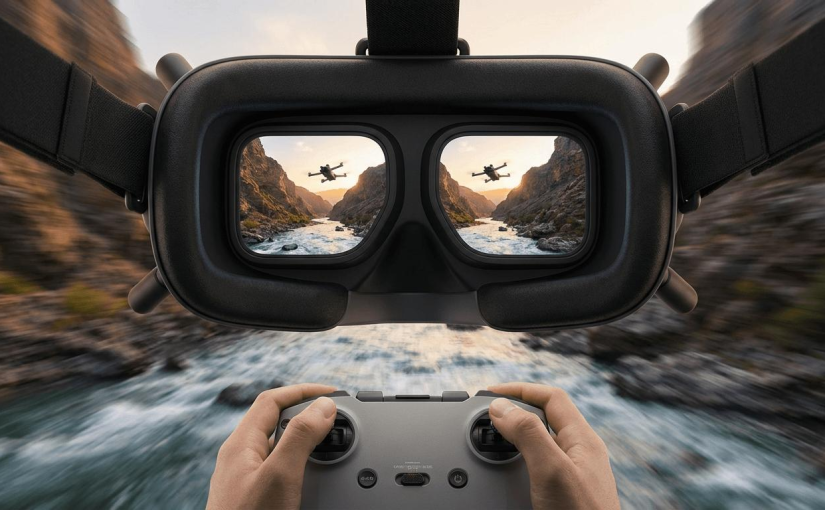
A New Kind of Weekend Adventure Is Taking Off
Imagine standing in an open field on a sunny weekend morning. You put on a pair of goggles, pick up a small controller and suddenly find yourself looking through the eyes of a flying machine. A few seconds later, you are racing between obstacles, skimming past trees and navigating tight turns at impressive speed. It feels less like operating a drone and more like playing a futuristic video game in the real world.
This is the excitement of first-person-view (FPV) drone flying, a hobby that is attracting attention from technology enthusiasts, gamers, photographers and adventure seekers.
New Zealand is particularly well suited to this kind of experience. From open countryside and coastal landscapes to dedicated drone racing communities, Aotearoa offers plenty of inspiration for people interested in exploring the possibilities of small flying machines.
What makes FPV drones so fascinating is the combination of technology and physical skill. Unlike traditional remote-controlled aircraft, FPV drones send live camera footage directly to a pilot’s goggles. The pilot can therefore experience the flight from the aircraft’s perspective, making every movement feel immediate and immersive.
As drone technology becomes more accessible, an interesting question emerges: could flying these miniature machines become one of New Zealand’s most exciting weekend activities?
What Makes FPV Drones Feel Like Real-Life Video Games?
The defining feature of an FPV drone is its live video transmission system. A small camera mounted on the aircraft captures footage and sends it wirelessly to a screen or headset worn by the pilot.
Instead of looking at a drone from the ground, the operator sees what the drone sees. This creates an entirely different relationship between the person and the machine.
A conventional camera drone is often used to capture photographs or smooth aerial videos. FPV drones, however, are designed to provide a more immediate flying experience. Many models can accelerate quickly, change direction sharply and perform impressive manoeuvres.
The result resembles a combination of a racing simulator and an outdoor adventure sport.
Pilots can practise flying through gates, navigating narrow courses and making precise turns. Every obstacle becomes a challenge, while every successful manoeuvre feels like completing another level in a game.
There is also a steep learning curve. New pilots must develop an understanding of speed, altitude, momentum and orientation. A movement that looks simple on a screen can become surprisingly difficult when performed in the air.
For people who enjoy gaming but want something more physical and hands-on, FPV flying offers an interesting alternative.
New Zealand’s Drone Racing Community Is Getting More Exciting
FPV flying is not just an individual hobby in New Zealand. The country already has organised communities where enthusiasts can learn, practise and compete.
Drone Racing Wellington is one example. Its community welcomes pilots with different experience levels and organises regular practice days and racing events.
The 2026–2027 racing season is particularly interesting. Round Three is scheduled for 7 November 2026 at Tokomaru Domain, with pilots expected to arrive in the morning before racing begins.
Christchurch also has an established presence through Redzone Drone Racing. Together, these communities demonstrate that FPV racing is developing beyond isolated hobby groups.
The national scene gives enthusiasts opportunities to share equipment knowledge, discuss custom drone builds and learn from experienced pilots.
For newcomers, this community aspect can be just as appealing as the technology itself. Rather than trying to understand every technical detail alone, beginners can meet people who already know how to configure aircraft, practise flying techniques and prepare for competitions.
It also makes the hobby more social. A weekend spent flying can become an opportunity to meet friends, exchange ideas and enjoy a little friendly competition.
From Small Racing Drones to Electric Flying Cars
One of the most exciting developments connected to FPV technology is its relationship with larger electric aircraft.
A particularly interesting example is Airspeeder, an electric flying vehicle racing project that aims to bring the excitement of motorsport into the air.
In October 2026, Airspeeder announced the first three pilots for its five-team international series. Among them was New Zealand drone racing champion Seth Moore, who will represent Airspeeder New Zealand.
This is an exciting connection between local FPV talent and the future of electric aviation.
Flying a small racing drone and operating a much larger electric racing aircraft are obviously different challenges. However, skills such as spatial awareness, fast decision-making and understanding how an aircraft responds to control inputs can provide a valuable foundation.
For New Zealand technology enthusiasts, the development also demonstrates that drone racing is connected to a much bigger industry.
The same broader technological ideas behind small unmanned aircraft are relevant to aerial photography, industrial inspection, autonomous systems and advanced aviation research.
What begins as a weekend hobby could therefore introduce people to a much wider world of engineering and aviation.
The Technology Hidden Inside a Tiny Flying Machine
An FPV drone may look relatively simple from the outside, but several sophisticated components work together to make the experience possible.
The camera is one of the most recognisable parts. It captures the pilot’s view and provides the visual information needed to navigate obstacles and maintain control.
The flight controller acts as the aircraft’s central electronic brain. It processes information from onboard sensors and translates the pilot’s commands into adjustments to the motors.
Electronic speed controllers regulate motor speed, allowing the drone to accelerate, slow down and change direction. The motors and propellers then work together to generate the thrust needed for flight.
Video transmission equipment is equally important. A reliable connection helps ensure that the pilot receives a clear and responsive image.
Modern FPV equipment can also include digital video systems, GPS modules, onboard recording capabilities and telemetry displays.
These technologies are especially interesting because they demonstrate how much computing and engineering can fit into a relatively small aircraft.
For people who enjoy building their own gadgets, customising an FPV drone can be almost as entertaining as flying it. Enthusiasts can experiment with different frames, cameras, motors and software configurations to create an aircraft that suits their preferred flying style.
Why Battery Technology Matters During Every Flight
There is one component that every drone pilot needs to understand: the battery.
FPV racing drones are designed to deliver considerable power from compact energy storage systems. Their motors may need to respond rapidly to changes in throttle, especially when accelerating out of corners or climbing over obstacles.
This makes energy performance an important part of the overall flying experience.
The drone battery influences how long an aircraft can remain in the air, how much power it can deliver and how its weight affects flight performance.
Many FPV racing drones use lithium polymer (LiPo) batteries because they offer a useful combination of relatively low weight and high power output. Different voltage levels, capacities and discharge ratings are available, allowing pilots to choose configurations suited to their aircraft.
However, a larger capacity does not automatically mean a better flying experience. Additional battery weight can affect acceleration, manoeuvrability and overall handling.
Pilots therefore need to consider the balance between flight duration and performance.
Battery condition also matters. Damaged or swollen packs should not be used, and charging should always follow the manufacturer’s instructions with suitable equipment and supervision.
For beginners, understanding basic battery specifications is an important step towards becoming a confident and responsible drone pilot.
Could FPV Drones Make New Zealand’s Outdoor Adventures More Exciting?
New Zealand’s landscapes provide an obvious attraction for people interested in aerial photography and recreational flying.
From dramatic coastlines to mountain scenery, the country offers plenty of opportunities to appreciate the outdoors from a different perspective.
FPV technology can make these experiences especially engaging. Rather than simply capturing a distant landscape, a pilot can create dynamic footage that follows a carefully planned flight path.
For example, a creative filmmaker might use a suitable camera drone to capture sweeping coastal scenery, while an FPV enthusiast could practise controlled movements in an authorised open flying area.
The possibilities extend to tourism content, outdoor storytelling and social media videos.
However, an important distinction exists between racing drones and camera drones. Racing models are generally built for speed and agility, while filming-focused aircraft prioritise stability, image quality and smoother movement.
Not every drone is suitable for every activity.
New Zealand also has specific restrictions concerning public spaces, private property and conservation land. Flying over public conservation areas may require Department of Conservation permission, and local council rules can apply to parks and reserves.
The most exciting footage is never worth compromising the safety of other people, wildlife or aircraft.
The Skills That Separate Beginners From Experienced Pilots
Although FPV drones can look incredibly fast and complicated, beginners do not need to master advanced racing techniques immediately.
The best starting point is often a simulator.
FPV flight simulators allow users to practise using a controller while viewing a virtual aircraft’s camera perspective. They can learn basic movements, understand how the drone responds to inputs and become familiar with different flying environments.
This is useful because FPV controls can feel quite different from ordinary video games.
For example, many racing pilots use a control arrangement that requires them to manage throttle, pitch, roll and yaw simultaneously. Developing coordination between these movements takes practice.
After becoming comfortable with a simulator, beginners can explore suitable entry-level equipment and seek advice from local drone clubs.
It is also worth learning how to perform basic pre-flight checks. Pilots should inspect propellers, confirm battery condition, check radio connections and make sure the aircraft is operating correctly.
Small habits can make a significant difference to reliability and safety.
As skills improve, pilots can gradually move towards more demanding courses, sharper turns and competitive racing.
Choosing the Right FPV Equipment for a Weekend Hobby
The market offers several types of FPV drones, and choosing the right one depends on what a person wants to achieve.
Tiny whoop drones are popular among beginners because their compact size makes them suitable for learning in appropriate controlled environments. Many have protective propeller guards that help reduce the risk of damage during minor collisions.
Freestyle drones are designed for more dynamic flying, including flips, rolls and other aerial manoeuvres. They often have a stronger emphasis on power and responsiveness.
Racing drones are built around speed, agility and precise control. Their lightweight frames and powerful motors are designed to help pilots navigate competitive courses as quickly as possible.
There are also larger camera-equipped FPV systems that combine immersive flying with video production.
Before buying equipment, New Zealand consumers should consider product availability, compatibility, warranty support and replacement parts. A cheaper aircraft may initially seem attractive, but access to spare propellers, motors and batteries can become important over time.
The drone battery should also be selected according to the aircraft manufacturer’s specifications. Voltage, connector type, physical dimensions and discharge requirements all matter.
Buying a battery simply because it has a higher capacity can create compatibility or performance problems.
A sensible equipment choice is one that matches the pilot’s experience, intended use and budget.
Safety and New Zealand’s Drone Flying Rules
The excitement of FPV flying comes with responsibilities.
In New Zealand, drones are aircraft, and recreational pilots must follow the relevant Civil Aviation Authority requirements.
Under the standard Part 101 framework, operators generally need to keep their aircraft within visual line of sight, fly during daylight unless an applicable exception applies, remain below 120 metres above ground level and give way to all other aircraft.
Permission is also important. Operators must obtain the necessary consent before flying over people or private property, and additional restrictions may apply around airports, controlled airspace and public conservation land.
FPV goggles create a particular challenge because the pilot is viewing the camera feed rather than directly watching the aircraft.
Under the applicable visual-line-of-sight requirements, an observer may be needed to maintain unaided visual contact with the drone and communicate with the pilot. Simply wearing goggles does not remove the operator’s responsibility to comply with aviation rules.
Pilots should check current CAA guidance and relevant AirShare information before flying.
The safest approach is to practise in an appropriate location, away from people, roads, wildlife and restricted airspace.
Responsible flying protects the hobby’s reputation and helps ensure that more people can enjoy drone technology in the future.
Could Drone Racing Become the Next Big Gaming Trend?
The relationship between gaming and real-world technology is becoming increasingly interesting.
Virtual racing simulators already allow people to experience motorsport from home, while FPV drones offer a similar sense of immersion through physical flying.
Both activities reward practice, precision and quick reactions.
They also appeal to people who enjoy customising equipment. A gamer might spend hours improving a racing simulator setup, while an FPV enthusiast might experiment with different motors, frames and camera systems.
In New Zealand, the existence of organised racing communities provides a foundation for further growth.
Schools, technology clubs and community organisations could introduce drone-related activities that combine programming, electronics and practical engineering.
There may also be opportunities for local events that bring together gaming, technology and outdoor entertainment.
Imagine a weekend festival where visitors can try virtual FPV simulators, watch experienced pilots compete and learn how different aircraft are assembled.
Such experiences could make drone technology more accessible to people who have never considered trying it.
The Sky Is Only the Beginning
FPV drones are changing how people think about remote-controlled aircraft. What once seemed like a specialist hobby has developed into an exciting combination of gaming, engineering, photography and competitive sport.
For New Zealanders, the growing local racing community and the international opportunities emerging for Kiwi pilots make this an especially interesting time to explore the technology.
The appeal is easy to understand. A small aircraft, a controller and a pair of goggles can create an experience that feels completely different from ordinary gaming.
There is a learning curve, equipment to understand and safety guidance to follow, but these challenges are also part of the attraction.
Whether someone wants to race through a course, create spectacular aerial videos or simply discover a new weekend hobby, FPV drones offer plenty of possibilities.
Perhaps the next great gaming adventure will not happen on a television screen at all. It might begin in an open field, with a pair of goggles, a small flying machine and the excitement of seeing the world from a completely different perspective.