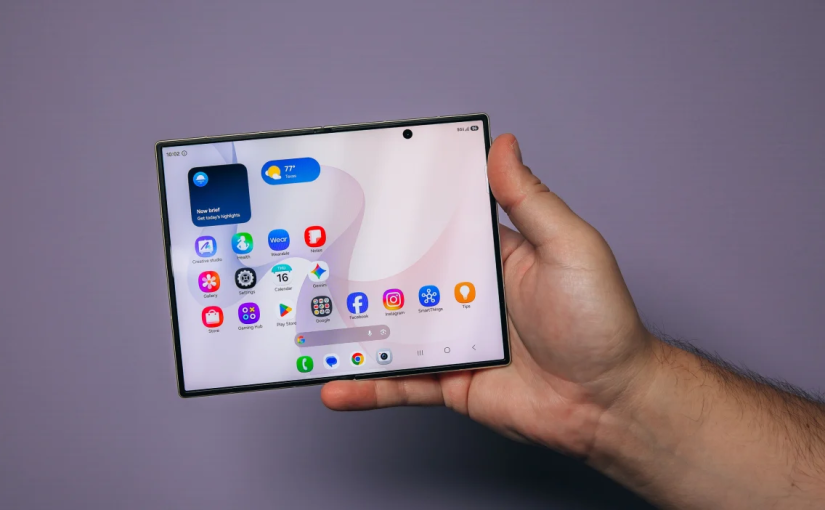
A New Chapter for Foldable Phones in New Zealand
Foldable smartphones have been evolving for years, but September 2026 has brought a major change to the conversation. Apple has now entered the foldable smartphone market with the iPhone Duo, putting one of the world’s most recognisable smartphone brands directly into a category where Samsung has already built a strong presence.
For New Zealand consumers, the timing is particularly interesting. The local technology market is relatively small compared with the United States, China or larger Asian markets, but New Zealanders are enthusiastic users of smartphones, mobile photography, streaming services, social media and connected devices. A new generation of foldable phones could therefore influence how people think about premium smartphones, productivity and mobile entertainment.
Apple’s iPhone Duo has attracted international attention with its foldable design, while Samsung is continuing to promote the Galaxy Z Fold8 as an established option in the category. Apple’s New Zealand pricing has also become part of the discussion, with the iPhone Duo starting at NZ$4,199 according to 1News.
The competition is no longer simply about specifications. It is becoming a battle over how consumers imagine the future of the smartphone.
Apple Finally Enters Samsung’s Territory
Samsung has spent years developing foldable smartphones, giving the company considerable experience with flexible displays, hinges, multitasking and large-screen mobile designs.
Apple’s arrival changes the market dynamic. The iPhone Duo combines a conventional smartphone form when closed with a much larger internal display when opened. Apple describes it as its largest iPhone display in a foldable design, with a 48MP dual-camera system and A20 Pro chip.
For consumers who have never owned a foldable phone, Apple’s approach could make the category more familiar. Many iPhone users already understand the company’s software ecosystem, accessories and services. Moving to a foldable iPhone could therefore feel less like switching to a completely different type of device and more like upgrading within an existing ecosystem.
That could matter in New Zealand, where consumers often use their phones for banking, navigation, communication, photography, entertainment and work throughout the day.
Samsung Has a Head Start
Samsung’s advantage is experience.
The Galaxy Z Fold series has been developing since the early years of modern foldable smartphones. The Galaxy Z Fold8 continues that product line with a large 7.6-inch foldable display and Snapdragon 8 Elite Gen 5 processor, alongside Galaxy AI features.
That history gives Samsung an important position in the market. It has already had years to refine the hardware concept and demonstrate how a large folding phone can function as both a communication device and a compact productivity machine.
For New Zealand professionals, this is one of the most interesting aspects of the Galaxy Z Fold8. A larger screen can make it easier to review documents, manage email, browse websites, edit photos or work with multiple applications without carrying a tablet.
Apple is now asking consumers whether it can offer a similar experience while maintaining the simplicity associated with the iPhone.
The Real Difference May Be the Software
Hardware specifications are easy to compare. The more complicated question is how each phone feels after several months of everyday use.
Foldable phones are not simply larger smartphones. Their software needs to adapt to different screen sizes and orientations. A user may begin reading an email on the outside screen, open the phone and continue on the larger display, then switch to another application.
Samsung has had considerable time to develop this style of multitasking. Apple is entering the category with its own approach to foldable software and the broader iOS ecosystem.
For New Zealand users, practical software features could become more important than raw processing power. Someone working between Auckland and Wellington, for example, might use a foldable phone to manage messages, maps, documents and video calls while travelling. A university student could use the larger screen for research, notes and entertainment.
The winning experience will ultimately depend on how naturally those activities fit into everyday life.
Battery Life Becomes More Important
Foldable displays create an interesting battery challenge. A larger internal screen can consume more energy, while the compact body places limits on how much battery capacity manufacturers can physically include.
That means battery efficiency is becoming an increasingly important part of the premium smartphone conversation.
The iPhone Duo is designed around all-day battery performance, while Apple is also using its latest-generation silicon and power-management technologies to balance performance with energy consumption.
For people researching replacement components or long-term device ownership, an iPhone battery can also become an important consideration. Battery health naturally declines over time, and high-performance smartphones can place significant demands on their power systems.
The same principle applies to Samsung’s foldable devices. A samsung smartphone battery has to support demanding displays, mobile processors, cameras, wireless connectivity and intensive multitasking.
For New Zealand consumers who regularly spend long days outdoors, travel between cities or use navigation and mobile data heavily, battery reliability can be just as important as screen size.
Photography Could Be Another Battleground
New Zealand is an unusually attractive environment for smartphone photography.
From the beaches of Northland to the Southern Alps, Milford Sound and the volcanic landscapes around Rotorua, there are countless situations where people want to capture high-quality photographs without carrying a dedicated camera.
Apple has positioned the iPhone Duo with a 48MP dual-camera system, while the Galaxy Z Fold8 continues Samsung’s focus on advanced mobile photography.
The foldable form factor itself could also create new possibilities. A partially folded phone can potentially act as its own stand, making hands-free photography and video recording more convenient.
That could be useful for travellers, families and content creators across New Zealand.
However, cameras also place significant demands on battery power. Extended video recording, high-resolution photography and bright displays can quickly consume energy. This makes efficient hardware design increasingly important.
When users eventually need to consider an iPhone battery for a device that has been heavily used for photography and video, battery condition may be just as relevant as camera specifications.
A More Interesting Competition for New Zealand Buyers
The competition between Apple and Samsung is particularly interesting because the two companies approach smartphones differently.
Apple emphasises integration between hardware, software and its wider ecosystem. Samsung offers a broader range of Android devices and has spent years experimenting with foldable designs.
For consumers, that means the decision is not simply about choosing between two screens.
An iPhone user may already own an Apple Watch, AirPods, MacBook or iPad. A Samsung user may use Galaxy Buds, Galaxy Watch, Galaxy tablets and other Android-compatible products.
The smartphone can therefore become the centre of a much larger technology ecosystem.
This is important in New Zealand because premium smartphones are significant purchases. Consumers may keep their devices for several years, making compatibility with existing technology and long-term software support meaningful considerations.
Samsung’s New Zealand Marketing Adds a Local Twist
Samsung’s response to Apple’s foldable launch has even included a distinctly New Zealand element.
Samsung Mobile New Zealand promoted the Galaxy Z Fold8 using a local man named Tim Cook, who happens to share the same name as Apple’s CEO. The playful campaign attracted international attention after Apple entered the foldable category.
The campaign illustrates how smartphone competition is increasingly becoming a cultural conversation rather than a purely technical one.
Instead of simply comparing processor speeds and camera specifications, brands are competing for attention through humour, social media and localised advertising.
For New Zealand consumers, seeing an international technology rivalry adapted to a local audience makes the launch feel much closer to home.
What Happens to Traditional Smartphones?
The arrival of another major foldable manufacturer does not mean traditional smartphones are disappearing overnight.
Many consumers still prefer a conventional design because it is familiar, generally lighter and often less expensive. A standard smartphone also has fewer moving parts and does not require users to adjust to a different screen format.
Foldables instead appeal to people who want more screen space without carrying a tablet.
This distinction could become increasingly important as prices, durability and battery efficiency improve.
If foldable phones become easier to manufacture and more accessible, they could eventually move beyond the premium market. But for now, the price of devices such as the iPhone Duo means they remain a significant investment for many shoppers.
What Should New Zealand Consumers Watch Next?
The most interesting development may not be which company sells more foldable phones. It may be how quickly consumers discover new reasons to use them.
A foldable phone could become a mobile office, entertainment screen, camera, navigation device and communication hub in one package.
At the same time, manufacturers will need to keep improving durability, battery longevity, charging speeds, hinge technology and software optimisation.
Battery technology will remain a particularly important part of this process. As screens become larger and smartphones become more powerful, consumers will continue to expect devices to last through long working days, travel, gaming, photography and streaming.
A samsung smartphone battery therefore represents more than a replacement component. It is part of the broader conversation about how long a premium smartphone can remain useful.
The Foldable Future Is Getting Real
Apple’s arrival has made foldable smartphones much harder to dismiss as a niche experiment.
Samsung already has years of experience in the category, while Apple’s entry brings enormous attention to the format. In New Zealand, the competition gives consumers more choice at the premium end of the smartphone market and creates new questions about what a phone should actually be.
The Galaxy Z Fold8 and iPhone Duo represent two different approaches to the same basic idea: a smartphone does not necessarily have to remain the size of a traditional smartphone.
For New Zealand technology enthusiasts, the next few years could be particularly interesting. As foldable displays become more refined, software becomes more adaptable and batteries become more efficient, the line between smartphone and tablet may continue to disappear.
The real test will happen outside launch events and advertising campaigns — in cafés in Auckland, offices in Wellington, university campuses in Christchurch, airports, hiking trails and homes across the country.
That is where consumers will decide whether foldable smartphones are simply an exciting premium category or the next major stage of mobile technology.