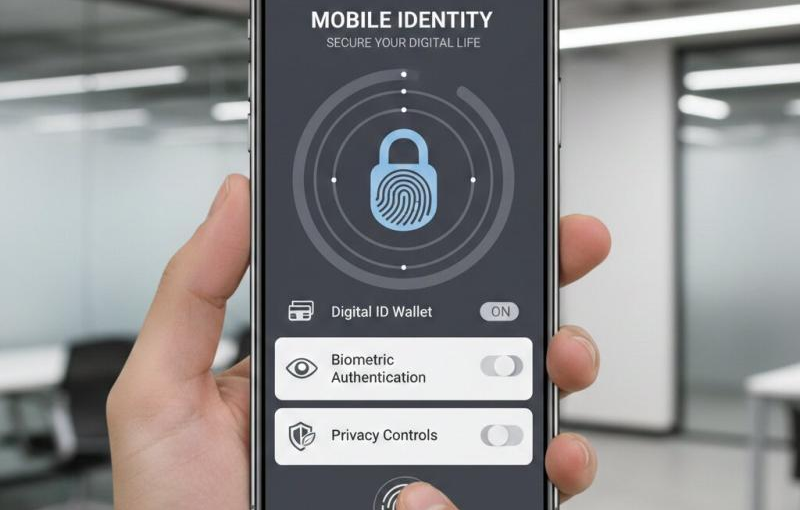
A New Era of Digital Identity for New Zealand
Imagine arriving at a hotel reception in Auckland, proving your age at an event in Wellington, or confirming your professional qualifications at a job site without searching through your wallet for a collection of plastic cards and paper documents. Instead, you reach for your phone, approve a secure request, and share only the information required.
This is the promise behind New Zealand’s evolving digital identity landscape. In October 2026, the government’s Govt.nz app and its digital wallet are drawing attention as accredited digital credentials are expected to become progressively available. The initiative represents an important step towards making everyday government services more convenient while giving individuals greater control over their personal information.
Rather than introducing a compulsory national identity card, the digital wallet allows people to store eligible credentials on their own devices and choose when to use them. The government says participation is voluntary, meaning traditional documents remain an option for people who prefer them.
For a country where digital services play an increasingly important role in everyday life, this development raises an exciting question: could the smartphone become the most useful identity tool New Zealanders carry?
What Is the Govt.nz Digital Wallet?
The Govt.nz app is designed to provide easier access to government information, services and other useful functions. Its digital wallet extends that experience by providing a place to store accredited digital credentials, including eligible identity documents, licences and qualifications as they become available.
The distinction between a digital photograph of a document and an accredited digital credential is important. A photograph may be easy to copy, alter or misuse. An accredited credential, by contrast, can be digitally verified to establish that the information comes from a trusted issuer and has not been tampered with.
New Zealand’s Digital Identity Services Trust Framework establishes requirements for accredited digital identity services. The framework is intended to provide consistent safeguards for privacy, security and the handling of personal information.
According to official government guidance, credentials stored in the Govt.nz wallet remain on the user’s device, protected through encryption and device security features. Users must approve requests to share information rather than automatically handing over their full identity details.
The government expects credentials to be introduced progressively, so availability will depend on which organisations have completed the necessary development and accreditation processes. The wallet’s long-term usefulness will therefore depend not only on the technology itself but also on how many organisations accept it.
Why This Matters to Everyday Kiwis
Digital identity might sound like a technical government project, but its real value will be measured in ordinary situations.
Consider a young person attending an age-restricted event. Instead of presenting a document that contains their full name, address, photograph and date of birth, an appropriate digital credential could establish that they meet the age requirement without revealing unnecessary information.
A tradesperson could eventually use an eligible digital qualification to demonstrate that they hold the required credentials for a particular job. Someone renting a car might be able to present an accredited digital driving credential, provided the relevant service accepts it.
These examples illustrate how digital identity could reduce friction in daily transactions. They also demonstrate why digital credentials must be widely recognised before they can replace many of the practical functions served by physical documents.
For businesses, digital verification could reduce the need to photocopy identity documents, retain sensitive information or manually inspect paperwork. For customers, it could mean fewer forms, faster checks and less personal information left behind in company systems.
However, convenience should not be confused with universal acceptance. Organisations will need compatible verification tools, appropriate procedures and staff who understand how to use them. The transition will take time, even if the underlying technology works smoothly.
Privacy Takes Centre Stage
One of the strongest arguments for digital credentials is the possibility of sharing less personal information, rather than simply sharing it faster.
Traditional identity checks often reveal more information than a transaction requires. Showing a full driving licence to prove that someone is over 18, for example, can expose a residential address and date of birth even when neither detail is relevant.
Digital credentials can support a different approach known as selective disclosure. Under this model, a person can provide a verified answer to a specific question without necessarily revealing the complete underlying document.
New Zealand’s official digital identity guidance describes this privacy-focused approach as a central benefit of accredited credentials. The user can review the information requested and approve the disclosure.
The distinction matters because personal information can become vulnerable whenever organisations collect and retain copies of identity documents. Reducing unnecessary collection may also reduce the amount of sensitive data available to attackers if an organisation experiences a security breach.
Nevertheless, digital systems do not eliminate every privacy risk. Users still need to understand what they are approving, recognise legitimate verification requests and avoid sharing information through unofficial applications or suspicious websites.
The quality of privacy protection will depend on both the system’s technical safeguards and the way organisations implement it in practice.
Smartphone Security Becomes More Important
As digital identity becomes more closely connected to mobile devices, the security of the phone itself takes on greater importance.
The Govt.nz wallet relies on device-level security measures, including supported biometric authentication. Depending on the device, this may involve fingerprint recognition or secure three-dimensional facial recognition. Devices must also meet the app’s security requirements.
That means an older phone without current security updates may be less suitable for sensitive digital services. Consumers should check whether their operating system continues to receive security patches and whether the device supports the required authentication features.
Basic precautions remain essential. A strong device passcode, automatic screen locking, regular software updates and caution around suspicious links can help reduce the likelihood of unauthorised access.
People should also understand what happens if their phone is lost or stolen. According to government guidance, wallet credentials are encrypted and protected by the device’s security controls. If necessary, users can work with the relevant credential issuer to re-establish their credentials.
These protections are reassuring, but they do not make careful device management optional. A smartphone that contains identity credentials, banking applications, personal messages and work accounts deserves the same attention as any other important personal asset.
The Overlooked Role of Battery Life
There is another practical consideration behind the shift towards smartphone-based identity: a digital wallet is only useful when the user can access it.
Imagine trying to confirm your identity at a transport counter, collect a rental vehicle or enter an event after spending the day navigating unfamiliar streets. If your phone has run out of power, the convenience of a digital credential may disappear at precisely the moment you need it.
This is where everyday device maintenance becomes relevant. A healthy smartphone battery helps keep essential applications available throughout the day, particularly for people who rely on navigation, mobile payments, messaging and authentication tools while travelling.
Battery performance is affected by several factors, including device age, screen brightness, background applications, network conditions and temperature. Users can improve everyday reliability by installing software updates, reviewing battery usage and carrying a suitable power bank when travelling for long periods.
Digital identity does not necessarily require a constant internet connection for every in-person verification scenario. Government guidance says accredited credentials can support offline use in appropriate circumstances. However, that does not remove the need for a functioning device, sufficient power and compatible verification equipment.
For consumers considering an older handset, battery condition and ongoing software support should therefore be part of the same purchasing decision. A phone that lasts all day but no longer receives security updates may not be a good choice for sensitive digital services. Equally, a secure, up-to-date device that repeatedly shuts down because of poor battery health can create practical difficulties.
Will Digital Credentials Replace Physical Documents?
Not immediately, and perhaps not in every situation.
New Zealand’s digital wallet is intended to offer another way to prove identity and qualifications, rather than force everyone into a single digital system. Physical documents remain important for people who do not own compatible smartphones, prefer paper-based services or encounter organisations that have not adopted digital verification.
Accessibility is a particularly important consideration. Older adults, people with disabilities, residents in areas with limited connectivity and people who cannot afford a supported smartphone must not be disadvantaged by the expansion of digital services.
Keeping alternative options available will help ensure that convenience for digitally confident users does not become an obstacle for everyone else.
There is also a difference between making a credential available and making it universally accepted. A digital driving credential, for example, is useful only when the relevant authority or business can verify it and recognises it for the intended purpose.
The most realistic future is therefore likely to involve several methods working together: physical documents, established online verification services and accredited digital credentials stored on mobile devices.
Over time, broader adoption could make digital verification a familiar option across more industries. But the pace of change will depend on public confidence, participating organisations and the practical benefits users experience.
What Businesses Need to Consider
For New Zealand businesses, digital identity presents both an opportunity and a responsibility.
Retailers, hospitality operators, rental companies and employers may benefit from faster verification processes. Businesses that routinely check age, identity or qualifications could eventually spend less time handling physical documents and storing copies of sensitive information.
However, adopting digital credentials requires more than downloading an application. Organisations need to determine which credentials are valid for their purposes, acquire compatible verification tools and train employees to recognise successful and unsuccessful checks.
They must also establish clear procedures for situations in which a customer cannot use a digital credential. A failed scan, incompatible device or unavailable credential should not automatically be treated as evidence of wrongdoing.
Data protection should remain a priority throughout implementation. Businesses should avoid collecting information they do not need and should ensure that any identity data they retain is handled appropriately.
For smaller New Zealand enterprises, the challenge will be finding a balance between modernising customer service and keeping costs manageable. If verification becomes simpler and less expensive, digital identity could prove particularly useful for businesses that lack the resources to operate complicated identity-management systems.
Trust Will Determine the Future
Technology alone cannot make digital identity successful. Public trust will be just as important as encryption, biometrics and secure verification.
People need to understand what information is being requested, why it is needed and how they remain in control. They should also have confidence that a digital credential cannot be used to track their activities without their knowledge.
New Zealand’s framework provides an important foundation by setting standards for accredited services and their handling of personal information. Independent assessment, clear explanations and effective complaint processes will remain essential as more credentials become available.
Government agencies and participating businesses will also need to communicate clearly about which credentials are supported and how people can use them. Confusing instructions or inconsistent acceptance could undermine confidence, even when the technology is functioning correctly.
Public education will matter, too. People should be able to distinguish the official Govt.nz app from imitation applications and understand that legitimate identity verification should not require them to disclose passwords or surrender control of their devices.
Trust is built through repeated experiences in which a service works as expected and treats users fairly. Digital identity will need to demonstrate those qualities in everyday settings, not merely in technical demonstrations.
What New Zealanders Should Do Now
For consumers interested in preparing for wider digital credential adoption, a few straightforward steps can help.
First, check that your smartphone runs a supported operating system and receives regular security updates. If your phone is no longer supported, consider whether it is time to upgrade before relying on it for sensitive services.
Second, enable the supported biometric authentication and a strong passcode. Avoid sharing your unlock code, and be cautious about installing applications from unofficial sources.
Third, explore the official Govt.nz app and its wallet setup instructions. Credentials are being introduced progressively, so check the government’s current guidance to see what is available and whether it applies to your circumstances.
Finally, maintain a practical backup plan. Keep physical documents where appropriate, understand how to contact credential issuers and avoid assuming that every organisation already accepts digital credentials.
A well-maintained phone is also part of that preparation. Monitoring smartphone battery health, keeping a charging cable handy and using a reputable power bank can help prevent a flat device from interrupting an important task.
For people who use their phones heavily, it may also be worth reviewing background activity and charging habits. These small steps can make daily mobile use more reliable without requiring expensive accessories or an immediate handset replacement.
A More Convenient Digital Future, With Choice
New Zealand’s government digital wallet signals a broader shift in how people may prove who they are. Instead of repeatedly presenting full physical documents, users could increasingly rely on credentials that are securely stored on their own devices and shared only when needed.
The potential benefits are significant: quicker transactions, less unnecessary data collection and more control over personal information. But success will depend on accessibility, business adoption, reliable verification and sustained public confidence.
For consumers, the smartest approach is to prepare without rushing. Keep devices secure, maintain good charging habits and follow official guidance as credentials become available. If your phone is becoming unreliable, assessing its overall condition — including its smartphone battery — is a sensible part of deciding whether it remains suitable for essential digital services.
The future of identity in New Zealand will not be determined by technology alone. It will depend on whether digital credentials make everyday life genuinely easier while preserving the privacy, choice and trust that people expect from essential public services.