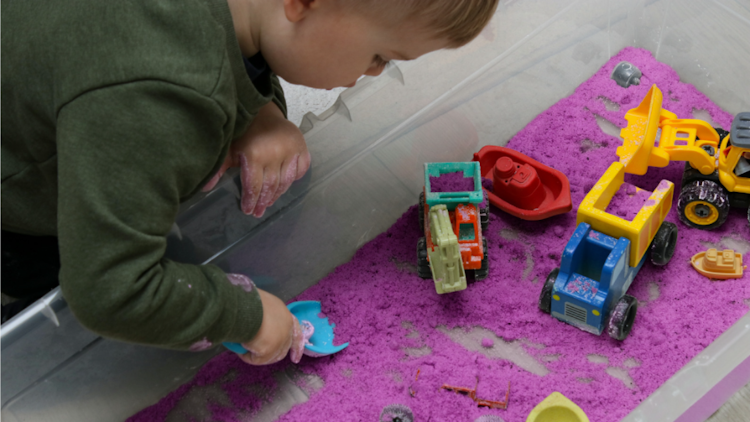
A Childhood Favourite Turns Into a National Safety Concern
For generations of New Zealand children, playing with coloured sand has been an ordinary part of growing up. From kindergarten activities and backyard sandcastles to creative craft projects during the school holidays, these colourful materials have traditionally been associated with fun, imagination and learning. Parents rarely think twice before purchasing a brightly packaged product from a familiar retailer.
However, a disturbing investigation has raised serious questions about how much confidence New Zealanders should place in the products they bring into their homes.
A report published by Consumer NZ on 25 November 2026 reveals that more than eight tonnes of asbestos-contaminated coloured play sand were sold in New Zealand over the past decade. Despite the scale of the problem, not a single business has faced a regulatory penalty over the contaminated products, according to the organisation.
The findings have reignited debate about consumer protection, corporate responsibility and the effectiveness of New Zealand’s product safety regulations. More importantly, they have highlighted a troubling reality: products intended for children can reach shop shelves without undergoing the independent safety checks many families assume are already in place.
For parents, teachers and childcare providers across Aotearoa, the issue is no longer simply about a particular batch of coloured sand. It is about whether the country’s existing system can reliably protect children from hidden dangers in everyday products.
How Did Asbestos End Up in Children’s Play Sand?
The contamination problem is particularly concerning because the products involved were not manufactured using an obviously dangerous ingredient.
Coloured play sand is generally produced by crushing natural rocks collected from quarries. Although most suitable rock materials can be processed for consumer use, some geological formations contain naturally occurring asbestos veins. If contaminated material enters the manufacturing process, potentially hazardous fibres can end up in products marketed for children’s activities.
Tremolite asbestos was identified in several coloured sand products sold in New Zealand. Unlike a warning printed on a package, the contamination cannot necessarily be recognised through ordinary visual inspection. A bag of affected sand may look completely normal to a parent purchasing it from a supermarket or discount retailer.
The discovery itself was unexpected. An Australian laboratory identified unfamiliar fibres during routine work and arranged further specialist testing. Subsequent findings attracted the attention of asbestos experts, eventually prompting concerns about products available in both Australia and New Zealand.
The investigation demonstrated how easily a serious product safety issue can remain undetected when there is no compulsory testing system operating before products reach consumers.
It also raised questions about whether existing import controls and supplier assurances are sufficient in an international marketplace where products can pass through multiple manufacturers, distributors and retailers before reaching New Zealand households.
Kmart Recalls and the Questions Behind the Response
The issue became a major public concern in November 2025, when asbestos contamination was identified in coloured play sand products sold by Kmart and other retailers.
The first voluntary recall notices were published through the Ministry of Business, Innovation and Employment (MBIE) in November 2025. Since then, numerous recalls have affected play sand, decorative sand, craft materials and other consumer products containing sand.
One particularly controversial aspect involved the wording used in some recall notices.
Customers were told that the likelihood of asbestos fibres becoming airborne was low, with some notices suggesting that fibre release was unlikely unless the sand was crushed or pulverised. However, independent research subsequently raised questions about those assurances.
WorkSafe had also informed Kmart that the material could be considered friable because it could be crumbled by hand. The agency indicated that specialist asbestos removal procedures were required.
In July 2026, research led by Auckland University of Technology (AUT) further demonstrated that asbestos fibres could become airborne during simulated play involving some of the tested materials.
These findings created an uncomfortable contrast between the reassurance offered to consumers and the uncertainty acknowledged by technical experts.
For families, the central concern is straightforward: when a retailer discovers that a children’s product may contain asbestos, how should the danger be communicated, and who should independently verify the advice?
A recall should provide clear, scientifically supported instructions. Consumers should not have to interpret conflicting assessments or determine for themselves whether a potentially hazardous product is safe enough to remain in their homes.
Parents Should Not Have to Become Product Safety Investigators
Perhaps the most frustrating aspect of the contaminated sand controversy is the burden placed on ordinary families.
Parents purchase children’s products because they trust that retailers and manufacturers have fulfilled their responsibilities. They generally do not have access to specialist laboratories, asbestos experts or detailed international supply-chain information.
Yet the situation has left some families facing difficult decisions about household cleaning, disposal, relocation and potential exposure.
Christchurch parents Elle Chrisp and David Dingwall experienced this first-hand after purchasing contaminated play sand for their twins. Following a lengthy dispute with Kmart, the couple received a significant victory at the Disputes Tribunal in August 2026.
The Tribunal ordered Kmart NZ to reimburse them $15,185.42 for expenses associated with asbestos testing, relocation, replacement household items and property remediation.
The decision was an important development for consumers seeking compensation after purchasing unsafe goods. It also demonstrated that families may have legal options under New Zealand’s Consumer Guarantees Act when products fail to meet acceptable quality and safety standards.
However, individual compensation cases cannot replace effective government regulation.
Not every family has the financial resources, time or confidence to pursue a lengthy dispute. Many parents may not even know that they have purchased an affected product.
The wider question is why consumers must undertake so much investigative work after a dangerous product has already entered the market.
A genuinely effective consumer protection system should prevent foreseeable hazards before they become household problems.
New Zealand’s Product Safety System Faces a Bigger Test
Consumer NZ’s investigation points towards a fundamental weakness in the country’s approach to product regulation.
New Zealand’s existing framework places significant responsibility on businesses to ensure that the goods they sell are safe. However, this approach does not mean every consumer product undergoes compulsory independent testing before entering the market.
For many product categories, regulators rely on businesses to comply with applicable safety requirements, while enforcement and recalls often take place after problems have been identified.
This model can become particularly challenging when products are imported from overseas.
New Zealand’s relatively small domestic market relies heavily on international manufacturing networks. A single product may involve raw materials from one country, manufacturing in another and distribution through several different suppliers before arriving in a local retail store.
The growing popularity of online shopping adds another layer of complexity. International marketplaces allow consumers to purchase inexpensive toys, craft supplies and household products directly from overseas sellers, sometimes making it difficult to identify who is ultimately responsible for product safety.
The contaminated sand investigation illustrates the consequences of relying too heavily on trust when supply chains are complicated and independent testing is limited.
It also raises questions about coordination between government departments. Product safety, workplace health, public health and border enforcement involve different agencies, but consumers need a coordinated response rather than fragmented advice.
When responsibility is divided between several organisations, there is a risk that important questions remain unanswered.
Why Toys and Everyday Children’s Products Deserve Greater Attention
The controversy has particular significance for the wider children’s products industry.
Toys are not simply entertainment products. They are objects that children regularly touch, carry, share and sometimes put in their mouths. Their design and materials must account for the behaviour of young users, who cannot always recognise potential hazards.
For example, parents purchasing an electronic toy may pay attention to its appearance, durability, age recommendation and toy battery specifications. They may also check whether small components are securely enclosed and whether the product has appropriate safety information.
However, the play-sand scandal demonstrates that visible product features and ordinary packaging claims do not necessarily reveal every potential chemical or material hazard.
A product can look attractive, carry reassuring descriptions and be sold through an established retailer while still presenting an unexpected safety concern.
This is why safety assessments should cover more than the obvious mechanical or electrical risks. Materials used in toys, craft kits, decorative products and children’s learning activities also deserve appropriate scrutiny.
Manufacturers and importers should maintain reliable records showing where materials originate, how they are processed and whether relevant safety requirements have been satisfied.
Retailers, meanwhile, should not treat supplier declarations as a substitute for meaningful due diligence.
The same principle applies when consumers purchase products online. Clear identification of manufacturers, responsible importers and safety documentation can help establish accountability when something goes wrong.
Mandatory Testing: A Step Forward, but Is It Enough?
Following growing public concern, the New Zealand Government introduced an important regulatory response in October 2026.
The Unsafe Goods (Consumer Sand Products) Notice 2026 introduces mandatory pre-sale asbestos testing for specified consumer sand products, including certain toys and decorative, artistic and craft products.
The requirements take effect on 1 February 2027 and will remain in place for 18 months.
Under the new rules, covered products must have appropriate testing documentation from an accredited laboratory. Testing requirements apply to different product variants, including certain toys where sand is enclosed but could become accessible if the product is damaged or misused.
The Commerce Commission and New Zealand Customs Service will be responsible for enforcing the notice.
This represents meaningful progress because it shifts some responsibility towards demonstrating product safety before goods are offered for sale.
Nevertheless, the measure has limitations.
First, it focuses on specified products containing sand rather than establishing a comprehensive testing framework for every category of consumer goods.
Second, an 18-month notice is a temporary measure. Long-term protection will depend on whether the Government develops broader regulatory arrangements and provides the agencies responsible with sufficient resources.
Third, laboratory testing is only effective when suppliers provide representative samples, maintain reliable documentation and respond appropriately when problems are identified.
The new rules therefore need to be supported by meaningful inspections, effective penalties and clear enforcement responsibilities.
Otherwise, New Zealand risks addressing one highly visible contamination problem without fixing the wider weaknesses that allowed it to happen.
The Christmas Shopping Season Brings New Questions
The timing of the latest developments is particularly important as New Zealand approaches the Christmas shopping season.
November and December are among the busiest periods for retailers, with families purchasing toys, craft kits, educational materials and gifts for children.
Consumer NZ has already warned shoppers to avoid products containing coloured play sand during the 2026 Christmas shopping season because the mandatory testing requirements will not take effect until February 2027.
The warning gained further attention following the detection of tremolite asbestos in the orange sand included in Faber-Castell’s Plant & Grow Woodland Forest terrarium kit.
The product demonstrates why consumers should look beyond the main description on a box. A craft or gardening kit may contain materials that shoppers do not immediately associate with traditional play sand.
For households, a sensible approach is to check current recall information, pay attention to product descriptions and avoid purchasing affected coloured sand products.
Parents should also remember that a product being available through a well-known retailer does not automatically establish that every component has undergone independent testing.
Retailers can help by providing clear recall information, removing affected products promptly and making refunds and safety instructions easy to access.
What Needs to Change to Restore Consumer Confidence?
The contaminated play sand controversy should be treated as an opportunity to rethink how New Zealand protects consumers.
Consumer NZ has called for a properly coordinated and adequately resourced product safety system, stronger enforcement and greater clarity about the responsibilities of businesses and government agencies.
These recommendations deserve serious consideration.
One priority should be introducing stronger independent testing requirements for high-risk products, particularly those designed for children under three years old.
Another should be improving supply-chain transparency. Importers and manufacturers should be able to identify the origin of materials and demonstrate that appropriate safety checks have been completed.
The Government should also ensure that recall notices contain independently verified information. Businesses should not be able to determine how serious a potential health hazard is without appropriate scientific oversight.
Penalties are equally important. If businesses can repeatedly fail to meet safety obligations without meaningful consequences, the deterrent effect of existing laws may be limited.
Finally, New Zealand needs better coordination between regulators. Customs, MBIE, WorkSafe, the Ministry of Health and other relevant organisations should have clear procedures for sharing information and responding to emerging product hazards.
International examples show that stronger product safety systems are achievable. The European Union, for instance, has established broader consumer product safety requirements, including stronger traceability and obligations for businesses placing products on the market.
New Zealand does not necessarily need to copy another country’s entire regulatory framework. However, it should examine which approaches can be adapted to its own market and resources.
A Safer Future for New Zealand Families
The story of eight tonnes of contaminated play sand is about much more than an isolated product recall.
It exposes the gap between what consumers believe happens before a product reaches a shop shelf and what the regulatory system actually requires.
New Zealanders reasonably expect children’s products to meet appropriate safety standards. They should not have to become laboratory investigators, legal experts or supply-chain specialists simply to make everyday purchasing decisions.
The upcoming mandatory testing requirements are an encouraging development, but they should mark the beginning of broader reform rather than the end of the conversation.
For businesses, the lesson is that customer trust depends on more than attractive packaging, competitive prices and familiar brand names. Genuine responsibility means understanding product materials, checking suppliers and responding transparently when safety concerns emerge.
For policymakers, the challenge is to create a system that identifies risks before families are exposed to them.
And for parents, the immediate priority is to stay informed about recalls and follow official safety guidance, particularly when purchasing craft materials and children’s products this Christmas.
Children should be free to explore, create and play without their families having to worry about invisible hazards hidden inside ordinary products.
That should not be an ambitious expectation. It should be a basic promise of living in a country where consumer safety genuinely matters.