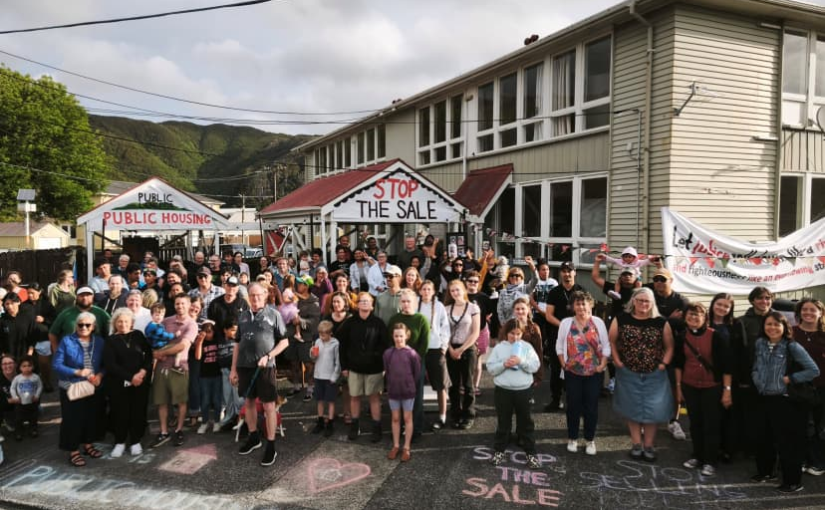
A Housing Sale That Has Divided an Entire Community
For many people, a house is more than four walls, a roof and a place to sleep. It represents stability, security and the possibility of building a better future. For communities that have relied on public housing for generations, losing homes can feel like losing a piece of their identity.
That is the emotion currently surrounding a controversial public housing sale in Lower Hutt, near Wellington. The decision by Kāinga Ora to put a substantial group of properties on Manderson Grove in Fairfield on the market has sparked anger among local residents, housing advocates and community leaders.
The proposed sale involves 29 properties along Manderson Grove, representing approximately 80 bedrooms. The properties are being marketed to investors, developers and potential land bankers, with the sale deadline set for 8 December 2026.
For residents and campaigners, the issue goes far beyond a property transaction. They see the proposed sale as another example of public housing assets disappearing at a time when affordable accommodation remains difficult to secure.
The emotional reaction reflects a growing question across New Zealand: should publicly owned land be sold when so many families are still waiting for somewhere affordable to live?
339 Households Are Waiting for Public Housing
One statistic has become central to the debate.
According to Ministry of Social Development housing register figures for September 2026, 339 households in Lower Hutt were waiting for public housing.
That number gives the controversy a much more personal dimension. Behind every household on the waiting list are people dealing with rising living costs, uncertain rental arrangements and the constant pressure of finding a suitable home.
For some families, the problem is finding a property that fits their budget. For others, it is securing accommodation that is close enough to schools, employment, healthcare and existing support networks.
Housing insecurity can affect almost every aspect of daily life. Children may have to change schools when families move. Parents can struggle to maintain stable working arrangements. Older residents may find it particularly difficult to leave familiar neighbourhoods and rebuild their support networks elsewhere.
Local church leaders have also highlighted the human consequences. St David’s Anglican Church has supported people experiencing homelessness and housing difficulties, including individuals sleeping rough in the surrounding community.
For these community organisations, the public housing debate is not an abstract argument about property values. It is something they encounter through everyday conversations with people who need help.
This explains why the proposed Manderson Grove sale has attracted such strong opposition.
Why Manderson Grove Has Become a Symbol of the Housing Debate
Manderson Grove is not simply another collection of properties appearing in a real estate advertisement.
The street contains homes that have formed part of the local public housing landscape for many years. Their presence has helped provide accommodation for people who might otherwise struggle to find a secure place in the private rental market.
Now, with almost an entire street being offered for sale, residents and housing campaigners fear that an important community resource could disappear.
The properties are being marketed by Bayleys, with prospective purchasers able to consider individual properties or the wider holding. The advertising highlights opportunities for redevelopment, investment and land banking.
That language has become another source of frustration.
Critics argue that describing publicly owned residential land as an investment opportunity sends the wrong message when hundreds of local households are waiting for housing assistance.
They are concerned that the land could ultimately benefit private developers rather than remaining available for public housing.
Michelle Ducat, representing Hutt Valley Public Housing Futures, has questioned where the proceeds will go and whether the sale will genuinely increase the overall supply of social housing.
Her concern raises an important distinction: replacing existing houses is not necessarily the same as increasing the number of homes available to people who need them.
If 29 properties disappear and fewer replacement homes are delivered, the community could end up with less public housing capacity.
Kāinga Ora Says Older Properties Need Replacing
Kāinga Ora has defended the proposed sale, arguing that the Manderson Grove properties are no longer fit for purpose.
The agency says the transaction forms part of a wider programme to renew and improve its housing portfolio. The intention is to sell properties that are unsuitable for its current requirements and reinvest the proceeds into new, modern social housing.
According to Kāinga Ora’s Greater Wellington regional director, Sarah Willson, the money generated from the sales will be reinvested in new homes within the same region.
From the agency’s perspective, maintaining older housing indefinitely may not always be the most effective way to provide suitable accommodation.
Ageing properties can require significant maintenance. Some may have layouts that are difficult to adapt to modern household needs, while others may not offer the accessibility, insulation or facilities expected of contemporary homes.
Replacing older buildings with better-designed housing could potentially improve living conditions and create opportunities for more efficient land use.
There is also a wider question about how housing agencies manage limited resources. Money tied up in properties that require extensive repairs cannot necessarily be used immediately to develop new accommodation.
However, the central challenge is proving that selling existing public housing will produce a better outcome for the people who rely on it.
Residents want more than a general promise of reinvestment. They want clear information about the number of replacement homes, their location, construction timetable and eventual availability.
The Land Banking Controversy
The phrase land banking has become particularly controversial in the Manderson Grove debate.
In simple terms, land banking involves purchasing land and holding it for an extended period, often while waiting for its value to increase or for future development opportunities to emerge.
For investors, large connected land holdings can be attractive because they may provide greater flexibility than purchasing individual properties.
A developer could potentially combine several sites, redesign the layout and pursue a larger residential project, subject to planning requirements and other approvals.
From a housing supply perspective, redevelopment is not automatically a negative outcome. A site currently occupied by older houses could potentially accommodate a greater number of modern homes.
However, campaigners worry about what happens if development is delayed or the properties are purchased primarily for investment purposes.
If land is held without meaningful construction activity, the community may lose access to existing public housing without receiving additional accommodation in return.
This is why campaigners are questioning the decision to make the properties available to private buyers in the first place.
The disagreement highlights a broader issue facing New Zealand’s property market: private investment can contribute to housing development, but public land also has a social purpose that cannot always be measured through its sale price.
Residents Are Turning Protest Into Community Action
Opposition to the sale has moved beyond online discussions and political statements.
Community members have organised activities at Manderson Grove to draw attention to the proposed disposal of the properties.
A family-friendly community picnic was held on 25 November, turning the street into what organisers described as an outdoor living room. Residents were encouraged to bring picnic blankets, food and banners, while activities included banner painting and community participation.
An overnight vigil and a community breakfast on 26 November were also organised as part of the campaign.
The events reflect a deliberate attempt to show that the street still has a community identity, even as the properties are being prepared for sale.
Rather than allowing the discussion to remain focused on real estate listings and development opportunities, organisers want people to see the neighbourhood as a place where housing needs, relationships and local history matter.
Hutt Valley Public Housing Futures has called for the sale to be halted, the land to remain in public ownership and discussions to take place with the incoming government about alternative public housing options.
The campaign also raises questions about accountability during a politically sensitive period following the election.
For residents, decisions involving large areas of public land should involve transparent explanations and meaningful opportunities for community participation.
What Makes a Good Public Home in Modern New Zealand?
The controversy also provides an opportunity to consider what public housing should look like in the coming decades.
Simply keeping every older house is not necessarily the answer. New Zealand needs homes that are warm, dry, energy-efficient and suitable for different household sizes.
Good housing should also consider everyday safety.
For example, smoke alarms are an essential feature of residential safety. A functioning alarm can provide an early warning when smoke is detected, giving occupants valuable time to respond.
Regular checks are important, including ensuring that the correct alarm battery is installed where the alarm uses a replaceable battery. Residents should follow the manufacturer’s instructions and replace batteries when required.
This is a relatively small part of maintaining a home, but it illustrates a much bigger principle: safe housing involves more than providing a roof over someone’s head.
Insulation, ventilation, electrical safety, accessible entrances and reliable heating all contribute to the quality of a residential environment.
For families living in public housing, these features can make a substantial difference to everyday wellbeing.
When older properties are replaced, the opportunity should be used to improve these standards rather than simply change ownership.
A modern social housing programme should also consider the needs of disabled residents, older people, families with young children and individuals who require additional support.
The goal should be to create homes that remain suitable for the people living in them over the long term.
Housing Pressure Is Bigger Than One Street
The dispute in Lower Hutt reflects wider pressures throughout New Zealand.
Housing affordability has become a major concern for households across the country. High rental costs, the difficulty of saving for a deposit and limited access to affordable accommodation have made housing security an increasingly important political issue.
Wellington and the wider Hutt Valley are not immune.
For households on lower incomes, even a relatively small increase in rent can put pressure on food budgets, transport expenses and other essential spending.
Families may also face additional challenges when trying to find accommodation close to employment opportunities or public transport.
In this environment, public housing plays a role that private rental markets cannot always fulfil.
It provides a more secure housing option for people who face significant barriers to finding suitable accommodation elsewhere.
This does not mean every existing public property must remain unchanged forever. Rather, it means decisions about selling public assets should be assessed against the actual housing needs of the surrounding community.
If a public housing site is sold, residents deserve clear answers about what replaces it and how long that process will take.
Without those answers, promises of future construction may do little to reassure people facing housing difficulties today.
Why Transparency Matters More Than Ever
One of the most important issues emerging from the Manderson Grove controversy is public confidence.
People want to understand how decisions about publicly owned land are made, particularly when those decisions affect communities experiencing housing shortages.
Kāinga Ora says the money will be reinvested into new social housing in Greater Wellington. That commitment is important, but campaigners want greater clarity about how it will work in practice.
Will the replacement homes be built in Lower Hutt? How many properties will be delivered? Will they provide enough accommodation to compensate for the existing housing stock? When will residents be able to see the results?
These are reasonable questions, especially when the housing register already demonstrates significant demand.
Transparency also means explaining why particular properties are considered unsuitable and whether refurbishment, staged redevelopment or partnerships with community housing providers were properly considered.
The public deserves to know whether selling an entire street is the best available option or simply the most straightforward financial decision.
In a country where housing remains one of the most persistent social and economic challenges, trust in public institutions matters.
The Future of Manderson Grove Is Still a Community Question
As the 8 December sale deadline approaches, the debate over Manderson Grove is becoming a test of how New Zealand balances public assets, housing investment and community needs.
For Kāinga Ora, the proposed sale represents an opportunity to modernise its housing portfolio and redirect money towards newer properties.
For campaigners, it represents a potential permanent loss of public land at a time when local housing demand remains high.
Both sides are discussing the future of housing, but they are approaching the issue from different starting points.
The agency is focusing on the condition and future value of its housing assets. Residents are focusing on the people who need homes now and the importance of retaining land for public benefit.
There is also a practical question about how any future redevelopment will be delivered. Modern housing could offer more accommodation, better facilities and improved safety, but those benefits will only matter if the homes are actually built and remain accessible to the people who need them.
For residents, the emotional attachment to Manderson Grove is not simply nostalgia. It reflects the belief that a community should have a meaningful say in what happens to the places that have supported its residents for generations.
The phrase ‘like your heart’s been ripped out’ captures that feeling particularly well. When homes disappear, the consequences can extend far beyond the people who once lived inside them.
They can affect neighbours, local organisations, schools and the wider network of support that makes a community function.
A future redevelopment should also preserve the importance of basic household protection. Checking smoke alarms, maintaining the correct alarm battery and ensuring that safety equipment remains functional should be part of the wider commitment to providing quality homes.
Ultimately, the Manderson Grove dispute is about more than whether old houses should be sold or replaced. It is about what public housing is supposed to achieve.
Should public land primarily be treated as a financial asset, or should it remain a long-term resource for communities facing housing insecurity?
As Lower Hutt residents continue to make their voices heard, that question deserves serious attention from housing officials, policymakers and the wider New Zealand public.
The final outcome will matter not only to the people of Manderson Grove, but also to other communities watching similar decisions unfold across the country.