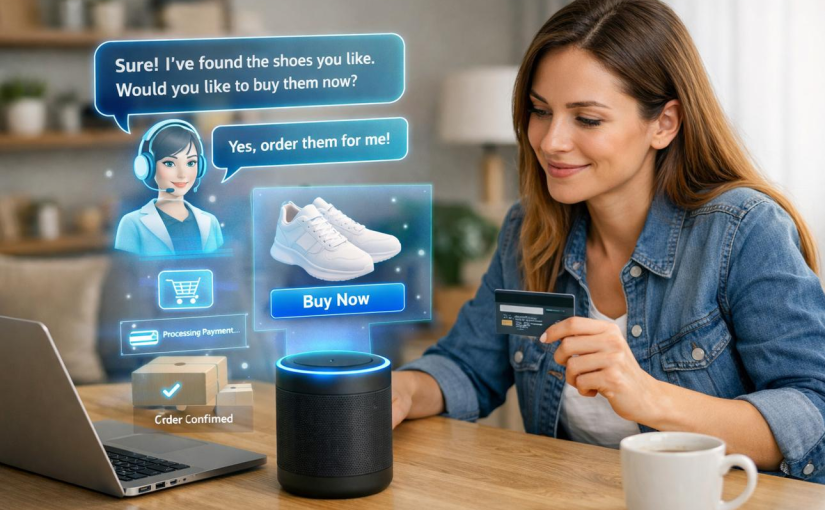
Artificial intelligence is rapidly changing the way people shop. From comparing smartphones and laptops to finding cheaper household appliances, AI-powered chatbots and shopping assistants are becoming an increasingly familiar part of everyday life. For many New Zealand consumers, asking an AI tool which product offers the best value can seem easier than spending hours reading reviews and comparing retailers.
However, convenience comes with a growing problem: what happens when AI gives the wrong advice?
An AI shopping assistant might recommend a product based on outdated specifications, invent customer reviews, overlook important safety information or direct shoppers towards a questionable online store. In some cases, consumers may not even realise that the information influencing their purchasing decisions was generated automatically.
The issue has become particularly relevant in New Zealand following the Commerce Commission’s November 2026 guidance on the use of artificial intelligence by businesses. Its message is straightforward: companies cannot escape their legal responsibilities simply because an algorithm or chatbot made the decision.
As AI becomes more involved in online shopping, the question is no longer whether consumers will use it. The bigger question is who will take responsibility when its recommendations cause financial losses or lead people to make poorly informed decisions.
AI Shopping Assistants Are Becoming Part of Everyday Life
Online shopping has already transformed how New Zealanders purchase consumer electronics. Instead of visiting several physical stores, shoppers can compare prices, check product specifications and read customer feedback from their phones or computers.
AI is taking this experience a step further.
Modern shopping assistants can interpret complicated questions, recommend products according to individual budgets and explain the differences between competing models. Someone looking for a new smartphone, for example, might ask an AI chatbot to compare camera performance, storage capacity, screen quality and battery life.
The technology can also help shoppers identify devices that suit particular lifestyles. A student might prioritise affordability and portability, while someone working remotely may care more about processing power, connectivity and battery endurance.
These recommendations can save time, especially for people who are unfamiliar with technical specifications. Even relatively small details, such as comparing a smartphone battery‘s expected performance with the charging requirements of a particular device, can influence a purchasing decision.
Yet AI systems do not necessarily understand every product as accurately as their confident answers suggest.
Some tools rely on information that may be incomplete, outdated or incorrectly interpreted. Others generate responses using patterns in their training data rather than verified information about products currently available in New Zealand.
For consumers, the difference between a helpful recommendation and a misleading one is not always obvious.
New Zealand’s Commerce Commission Sends a Clear Message
The debate gained new urgency on 18 November 2026, when New Zealand’s Commerce Commission released guidance explaining how existing competition and consumer protection laws apply to businesses using artificial intelligence.
The guidance makes an important distinction: the Commission is not regulating AI technology itself, but businesses must still follow the laws governing their commercial activities.
Under the Fair Trading Act 1986, companies must not mislead consumers or provide false or deceptive information about the products and services they sell.
This responsibility does not disappear when a business uses an automated system.
For example, if an electronics retailer operates an AI chatbot that incorrectly tells customers a laptop has twice the advertised storage capacity, the retailer cannot simply blame the software. The business remains responsible for the information it provides in its commercial activities.
The same principle applies to AI-generated advertising, product descriptions, promotional offers and customer recommendations.
The Commission also highlights the importance of reviewing AI-generated content, regularly testing customer-facing systems and maintaining records that support commercial claims.
This is a significant development for New Zealand’s digital marketplace. It signals that businesses should treat AI oversight as part of their normal management responsibilities rather than assuming that automated technology operates outside existing consumer protection rules.
When AI Recommends the Wrong Electronics
Consumer electronics are particularly vulnerable to inaccurate shopping advice because products often have complicated technical specifications.
A smartphone may have several storage configurations, different regional versions and varying network compatibility. A laptop might be advertised with multiple processor options, while two products that look almost identical may have significantly different performance capabilities.
AI shopping tools can sometimes combine specifications from different versions of a device or present information from an older product generation as though it were current.
Imagine a New Zealand shopper asking an AI assistant to recommend a smartphone under NZ$800. The system suggests a particular model and claims it supports a feature that is only available on a more expensive version.
The consumer purchases the phone and later discovers that the advertised capability is missing.
Another example involves replacement accessories. A chatbot might recommend a charging product that is not suitable for a particular device or incorrectly describe the compatibility of a replacement smartphone battery.
These situations demonstrate why technical accuracy matters. Even when an AI response sounds convincing, consumers should not assume that every specification has been independently verified.
Retailers also have a responsibility to ensure that the information presented through their websites and sales channels is accurate.
Fake Reviews and AI-Generated Product Endorsements
Customer reviews have become one of the most influential parts of online shopping. Many New Zealanders rely on ratings and personal experiences before purchasing expensive electronics.
Unfortunately, generative AI makes it easier to create large volumes of convincing but entirely fictional reviews.
A questionable online retailer could use automated tools to produce dozens of positive comments describing a smartphone as reliable, a wireless headset as exceptionally comfortable or a laptop as offering outstanding performance.
The reviews might include realistic names, detailed descriptions and different writing styles. To an ordinary shopper, they could appear genuine.
AI can also generate realistic photographs, videos and audio recordings that make it seem as though a celebrity, technology reviewer or social media personality has recommended a product.
New Zealand’s Commerce Commission specifically identifies fake reviews and endorsements as potential consumer protection problems.
Under the Fair Trading Act, businesses must not falsely represent that someone has endorsed or approved a product. Reviews should also reflect genuine customer experiences rather than fabricated praise.
For shoppers, this means that an impressive five-star rating should not automatically be treated as proof of quality.
Checking reviews across independent platforms, looking for detailed descriptions and paying attention to repeated or unusually similar comments can help identify suspicious patterns.
Personalised Pricing Could Make Shopping Less Transparent
Another concern is the growing use of AI to personalise prices, discounts and promotional offers.
Online retailers can analyse customer behaviour, browsing history and purchasing patterns to understand what individual shoppers might be interested in buying.
This information can be used to tailor recommendations and advertising. However, it may also influence which prices or promotional offers different consumers see.
Consider two people searching for the same pair of wireless headphones. One shopper might receive a discount advertisement, while another sees a different promotion.
Personalisation is not automatically illegal. Businesses can use customer information to create more relevant shopping experiences. However, the overall presentation of prices, savings and offers must not mislead consumers.
A countdown timer suggesting that a discount is about to disappear, for example, could create unnecessary pressure if the promotion is not genuinely time-limited.
The Commerce Commission has also drawn attention to manipulative marketing practices, including digital designs that make it difficult to reject an offer or encourage people to purchase without properly considering their choices.
For New Zealand consumers, transparency should matter just as much as the final price.
Who Should Be Held Accountable?
Determining responsibility can become complicated when several organisations are involved in an AI-powered shopping experience.
The retailer may provide the product information, a technology company may supply the chatbot, and a third-party platform may display the recommendation.
Nevertheless, the Commerce Commission’s November guidance provides an important starting point.
When a business uses AI in its commercial activities, it remains responsible for complying with applicable consumer and competition laws. It cannot automatically transfer that responsibility to the software provider.
This does not mean that every inaccurate AI response creates an automatic legal violation. The circumstances, the nature of the representation and the parties involved still matter.
However, businesses should not use uncertainty about AI-generated information as an excuse for failing to protect customers.
Technology providers also have an important practical role. They should develop more reliable systems, communicate limitations clearly and provide businesses with tools to identify incorrect or potentially misleading outputs.
Retailers, meanwhile, should verify product claims before allowing automated assistants to present them as facts.
The most effective approach requires cooperation across the entire digital shopping environment.
What New Zealand Retailers Need to Do Differently
For businesses, the new guidance creates a clear reason to review how AI is being used across their operations.
Simply installing a chatbot is not enough. Companies need to understand what information it accesses, how recommendations are generated and whether its responses could influence consumer decisions.
First, businesses should regularly check AI-generated product descriptions and advertising claims. Information about prices, technical specifications, product performance and compatibility should be verified before publication.
Second, customer-facing chatbots should be tested against realistic shopping questions. Retailers should examine whether their systems invent product features, recommend unavailable products or provide misleading information about refunds and warranties.
Third, businesses should establish clear procedures for correcting mistakes. If a customer receives incorrect advice, there should be a practical way to contact a real employee and resolve the problem.
Training is equally important. Employees responsible for marketing, online sales and customer service need to understand that existing consumer protection obligations continue to apply when AI is involved.
For electronics retailers, particular attention should be paid to compatibility information. Claims about chargers, accessories and replacement smartphone battery products should be based on reliable technical documentation rather than unverified automated suggestions.
These safeguards may require additional investment, but they can also reduce complaints, protect brand reputation and build long-term customer confidence.
How Consumers Can Protect Themselves
Although businesses carry important legal responsibilities, New Zealand shoppers can also take practical steps to reduce the risk of being misled.
One of the simplest precautions is to treat AI recommendations as a starting point rather than a final purchasing decision.
If an AI assistant recommends a particular smartphone, consumers should compare the specifications with the manufacturer’s product information and check whether the exact model is available in New Zealand.
Shoppers should also be careful with unfamiliar online retailers. A professional-looking website does not necessarily prove that a business is legitimate.
Before entering payment information, consumers should check the retailer’s contact details, physical address, returns policy and reputation. Unexpectedly large discounts and pressure to purchase immediately deserve extra scrutiny.
For expensive products, it is also sensible to compare information from several independent sources rather than relying on one chatbot.
When an AI system provides a particularly important claim, such as a device’s compatibility, warranty coverage or expected performance, shoppers should ask the retailer to confirm it in writing.
Keeping screenshots of recommendations, product descriptions and advertisements can also be useful if a dispute arises later.
What Happens When an AI Recommendation Causes a Loss?
New Zealand consumers are not without protection when an AI-assisted shopping experience goes wrong.
The Fair Trading Act protects consumers against misleading and deceptive conduct by businesses. The Consumer Guarantees Act 1993 also provides important protections when goods purchased for personal use fail to meet applicable guarantees.
For example, if a retailer makes misleading claims about a device’s capabilities, consumers may have grounds to raise a complaint under the relevant consumer laws.
If the product itself is faulty or does not meet the guarantees required by the Consumer Guarantees Act, the consumer may also be entitled to an appropriate remedy.
Anyone concerned about potentially misleading commercial conduct can report the issue to the Commerce Commission. Useful supporting evidence includes screenshots, website addresses, advertisements, emails and records of conversations with the retailer.
The Commission’s November 2026 guidance also outlines potential penalties for breaches of the Fair Trading Act: up to NZ$200,000 for an individual and NZ$600,000 for a business. These are maximum penalties, not automatic fines for every incorrect AI response.
Consumers should remember that an AI platform’s own terms of service do not necessarily remove a retailer’s obligations under New Zealand law.
Trust Will Become the Most Important Part of AI Shopping
AI has enormous potential to improve online shopping in New Zealand. It can make complicated product comparisons easier, help consumers discover suitable devices and reduce the time spent searching through hundreds of listings.
But convenience alone cannot create a trustworthy marketplace.
As more retailers introduce automated shopping assistants, consumers will increasingly expect accurate information, transparent recommendations and meaningful support when something goes wrong.
The same expectations apply whether someone is purchasing an expensive laptop, a smart home device or a replacement smartphone battery.
New Zealand’s Commerce Commission has made its position clear: businesses cannot avoid their legal responsibilities simply by allowing AI to make decisions on their behalf.
The next challenge will be turning that principle into everyday business practice.
For retailers, that means building proper oversight into their AI systems. For technology companies, it means improving accuracy and transparency. For consumers, it means using AI intelligently while continuing to question information that influences important purchasing decisions.
Ultimately, the future of AI-powered shopping will depend on more than smarter algorithms. It will depend on whether New Zealand consumers can trust the recommendations they receive and whether businesses are prepared to stand behind them.