From Kitchen Gadget to Everyday Essential in New Zealand
Not long ago, an air fryer was considered a convenient alternative to a deep fryer. People bought one mainly because they wanted crispy chips, golden chicken nuggets and roasted vegetables without filling a pot with oil. Today, however, the humble countertop appliance is becoming something much more ambitious. Some models can roast, bake, grill, dehydrate and even coordinate different cooking zones through smartphone applications.
Across New Zealand, where busy households are constantly looking for practical ways to make everyday cooking easier, air fryers have become a familiar sight. From compact apartments in Auckland to family kitchens in Christchurch and Wellington, these appliances are changing how people prepare weeknight dinners.
The latest generation is introducing features that sound increasingly futuristic. Wi-Fi connectivity, touchscreen controls, cooking presets, dual drawers and transparent cooking chambers are turning a relatively simple appliance into a miniature kitchen technology platform.
But there is an interesting question behind all this innovation: do households actually need so many cooking modes, or are manufacturers making kitchen appliances more complicated than they need to be?
Why Kiwi Households Have Embraced Air Fryers
New Zealanders have plenty of reasons to appreciate appliances that make cooking quicker and more convenient. Work schedules, school activities, sports commitments and everyday household responsibilities can leave surprisingly little time for preparing dinner.
An air fryer offers an attractive solution. Instead of waiting for a large conventional oven to heat up, users can often prepare smaller portions in a compact cooking chamber. A basket of kumara chips, a few pieces of chicken or some roasted seasonal vegetables can be ready without turning dinner into a major production.
The appeal is particularly noticeable among smaller households. Couples, flatmates and people living alone may not want to heat an entire oven simply to prepare one meal. A smaller appliance can make more sense when cooking for one or two people.
Families also appreciate the convenience. Parents can prepare after-school snacks, teenagers can learn basic cooking skills, and everyone can enjoy food that is crispier than something reheated in a microwave.
New Zealand’s Consumer NZ has highlighted the growing range of air fryer designs and features in its 2026 coverage. Its buying guidance also encourages shoppers to consider capacity, cleaning requirements, safety functions and actual cooking performance rather than simply choosing the appliance with the longest feature list.
This is an important distinction. A kitchen gadget becomes genuinely useful when it fits naturally into everyday routines.
The Wi-Fi Air Fryer: Is Your Dinner Really Ready for an App?
One of the more unusual developments is the arrival of connected air fryers.
Some newer models allow users to monitor cooking progress through smartphone applications. Depending on the appliance, owners may receive notifications, adjust settings, browse recipes or select cooking programmes without constantly standing beside the kitchen bench.
At first glance, this sounds like a brilliant idea.
Imagine preparing dinner after returning from work. You put vegetables and chicken into the air fryer, select a cooking programme and monitor the remaining time from your phone while preparing a salad. Instead of repeatedly opening the drawer, you can check the cooking status through an application.
Voice control is another interesting addition. Connected appliances can work with compatible smart-home assistants, making it possible to manage certain functions using spoken commands.
However, there is a practical limitation. An air fryer cannot automatically prepare ingredients that have not been placed inside it. Being able to start a cooking programme remotely does not mean dinner will magically appear when you arrive home.
There are also safety considerations. Cooking appliances should not be treated like lights or entertainment systems that can be switched on without supervision. Users should follow manufacturer instructions and avoid leaving an operating appliance unattended simply because an application offers remote controls.
For many Kiwi households, a connected air fryer will be most useful when its technology improves monitoring and convenience rather than adding unnecessary complexity.
Dual Drawers Are Changing the Way Families Prepare Dinner
Perhaps one of the most practical innovations is the dual-drawer air fryer.
Traditional models usually have a single cooking basket, meaning different foods may need to be prepared one after another. This can be frustrating when dinner includes chicken, vegetables and potatoes that require different cooking temperatures.
Dual-zone models attempt to solve this problem.
One drawer can cook chicken while another prepares kumara wedges. Some appliances allow users to set different temperatures and cooking durations for each compartment, while synchronisation functions help both sides finish at approximately the same time.
For a busy family, this can make a meaningful difference.
Imagine a typical New Zealand evening. One child has football training, another needs to finish homework, and the adults are trying to organise dinner before everyone gets hungry. Instead of coordinating several separate cooking sessions, a dual-drawer appliance can handle multiple parts of the meal simultaneously.
Larger models are also becoming increasingly interesting. Some have flexible compartments that can be combined into a larger cooking area, allowing users to prepare bigger dishes when necessary.
Nevertheless, bigger is not always better.
A large appliance occupies valuable bench space, and households with limited kitchens may prefer a smaller model. Buyers should think about the amount of food they regularly prepare rather than choosing the largest capacity available.
More Than Chips: Can One Appliance Replace Several Kitchen Gadgets?
Manufacturers are increasingly promoting air fryers as multifunctional cooking devices.
Depending on the model, additional programmes may include baking, roasting, grilling, reheating, dehydrating and slow cooking. Some products combine air-frying functions with pressure cooking or other cooking technologies.
This creates an interesting possibility for New Zealand households: one appliance could potentially replace several less frequently used kitchen gadgets.
For example, a family might use an air fryer to prepare roasted vegetables during the week, bake small desserts on weekends and dehydrate fruit when seasonal produce is plentiful.
Kiwis who enjoy growing vegetables or shopping at local farmers’ markets may particularly appreciate the ability to experiment with different ingredients.
A basket of apples can become homemade dried fruit snacks. Fresh vegetables can be roasted with olive oil and herbs. Leftover pizza can regain some of its crispness without becoming disappointingly soft in the microwave.
However, having ten cooking modes does not automatically make an appliance ten times more useful.
A manufacturer may advertise numerous programmes, but users might regularly rely on only three or four. The real question is whether those programmes deliver consistently good results.
For anyone considering an upgrade, actual cooking performance should remain more important than the number of buttons on the touchscreen.
The Energy Bill Question: Can an Air Fryer Save Money?
Electricity costs are an important consideration for households throughout New Zealand.
The Electricity Authority reported in August 2026 that average electricity prices increased by 6.8% across households and small businesses during the first half of the year. This helps explain why consumers are paying closer attention to how everyday appliances use electricity.
Air fryers are frequently promoted as energy-efficient alternatives to conventional ovens. There is some logic behind this claim: their smaller cooking chambers generally heat up quickly, and they can be convenient for preparing relatively small meals.
However, the savings depend on what is being cooked.
If someone wants to prepare a small portion of roasted vegetables, using a compact air fryer may be more practical than heating a full-sized oven. But preparing several large dishes over multiple batches could change the calculation.
Cooking time, appliance wattage, food quantity and electricity tariffs all influence the final cost.
For New Zealand consumers, the best approach is to compare actual energy consumption rather than assuming that every air fryer automatically reduces power bills.
The timing of electricity use may also matter. Some households have access to electricity plans with different rates during peak and off-peak periods. Understanding these plans can help people make better decisions about when to operate energy-intensive appliances.
Ultimately, an air fryer should be viewed as a potentially useful tool for managing cooking time and energy consumption, not as a guaranteed solution to rising household expenses.
Transparent Cooking Chambers Are Bringing a New Twist
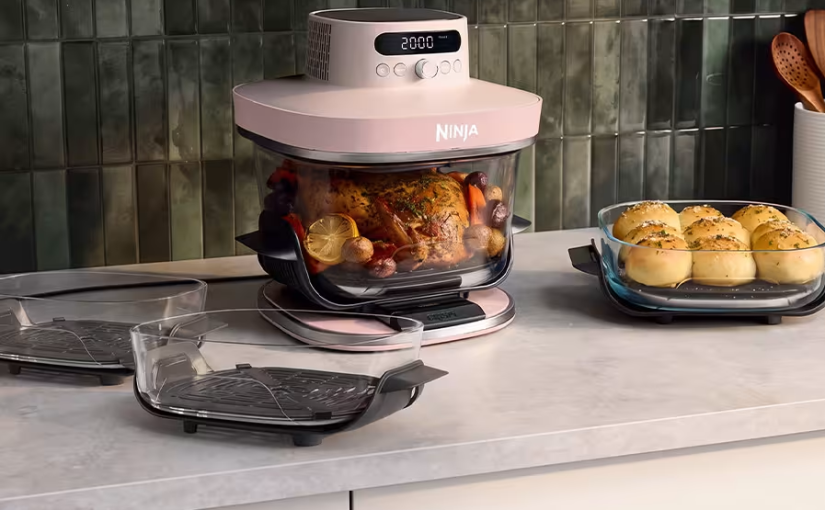
Another interesting trend is the growing attention given to glass air fryers.
Traditional appliances generally hide food inside an opaque drawer. Users need to pull out the basket to check whether chips are golden or chicken has reached the desired level of doneness.
Transparent designs offer a different experience.
A glass cooking chamber allows people to observe food as it cooks, making it easier to see browning and avoid repeatedly opening the appliance.
This is more than a cosmetic change. Opening a cooking chamber can interrupt the cooking process, while a viewing window provides a convenient way to monitor progress.
Glass also has some practical advantages. Depending on the design, a removable glass container may be easier to inspect and clean than certain conventional baskets.
Of course, buyers should still consider durability, weight, handling and cleaning instructions. Glass can become very hot, and users need to follow the manufacturer’s guidance when removing or washing cooking components.
For households that value both appearance and practicality, these designs could become an attractive alternative to traditional countertop appliances.
The Hidden Technology Inside a Modern Air Fryer
Although the cooking basket receives most of the attention, the technology inside an air fryer is what determines how well it performs.
At its core, an air fryer uses an electric heating element and a fan to circulate hot air around food. This creates a compact convection cooking environment that can produce crisp surfaces with relatively little added oil.
Temperature sensors, electronic controllers and programmed cooking cycles help regulate the process.
More advanced models may also feature digital displays, wireless connectivity, internal lighting and additional sensors.
These functions rely on several electronic components working together. The control panel communicates with the appliance’s internal electronics, while the heating system and fan perform the physical cooking work.
This also explains why the reliability of internal electronic components matters.
The consumer electronics battery category is relevant to the broader discussion of modern connected kitchen devices, particularly when considering the wider ecosystem of smartphones, wireless accessories and portable digital controls used alongside smart appliances.
Most conventional countertop air fryers, however, operate directly from household mains electricity rather than relying on rechargeable batteries. Buyers should therefore pay attention to electrical safety, build quality and manufacturer support when choosing a model.
Cleaning Is Still the Feature Nobody Should Ignore
There is one area where even the smartest air fryer cannot completely rescue its owner: cleaning.
A beautiful touchscreen does not make greasy cooking residue disappear.
Some models have removable baskets, dishwasher-safe accessories and non-stick surfaces designed to simplify maintenance. Others feature multiple racks, internal shelves or complicated components that can take longer to clean.
This matters because convenience is not just about how quickly dinner is prepared. It is also about how much work remains afterwards.
Imagine buying an expensive multifunctional appliance only to discover that cleaning around its heating element and fan is awkward. Suddenly, those extra cooking modes may feel much less exciting.
Consumer NZ’s 2026 air fryer coverage has highlighted cleaning as an important issue, alongside the popularity of glass designs and more versatile cooking functions.
Before purchasing, shoppers should check whether the cooking basket can be removed easily, whether accessories are dishwasher-safe and how the manufacturer recommends cleaning the interior.
A simple design that is easy to maintain may provide more everyday value than an appliance packed with impressive but rarely used features.
Choosing the Right Air Fryer for a New Zealand Kitchen
With so many models available, choosing the right appliance can feel surprisingly complicated.
The first consideration should be household size.
A single person or couple may find a compact model perfectly adequate, while a larger family could benefit from a bigger capacity or dual cooking zones.
The second consideration is the type of food being prepared. Someone who mainly makes chips, vegetables and reheated leftovers probably does not need an appliance with an enormous collection of advanced programmes.
People who enjoy baking, roasting and experimenting with different recipes may find multifunctional models more appealing.
Third, consider the physical dimensions. New Zealand kitchens vary considerably, and countertop space can be limited in apartments, rental properties and smaller homes.
Noise is another factor worth checking. The cooling fan is essential to the cooking process, but some appliances may be more noticeable than others in an open-plan living area.
Finally, compare warranties, spare parts availability and customer support. A kitchen appliance is a regular-use purchase, so long-term reliability deserves attention.
The consumer electronics battery market also illustrates a broader shift in consumer expectations: people increasingly want their electronic products to be reliable, convenient and compatible with their everyday digital routines. Smart kitchen appliances are part of that larger movement, even when their primary power source remains a conventional electrical connection.
Are Smart Air Fryers Actually Worth the Extra Money?
The answer depends on how people cook.
For someone who uses an air fryer several times a week, features such as dual drawers, accurate temperature control and easy-to-clean accessories can provide genuine value.
For another person who simply wants to make a quick serving of chips after work, a basic model may be more than enough.
Wi-Fi connectivity is appealing, but it should not become the main reason for purchasing an appliance. A well-designed cooking system with straightforward controls may be more satisfying than a complicated product that requires an application for every small task.
New Zealand shoppers should also avoid assuming that the most expensive model will deliver the best results. Independent testing, real customer feedback and practical specifications are more useful than marketing promises.
The consumer electronics battery category is another reminder that modern household technology is becoming increasingly interconnected. From smartphones used to control appliances to wireless kitchen accessories, reliable electronic products are becoming part of the everyday cooking experience.
Nevertheless, technology should make life easier rather than turn a simple dinner into a software management exercise.
The Future of Kitchen Technology Is About Convenience, Not Complexity
Air fryers have evolved considerably from their early reputation as machines that simply make healthier chips.
Today’s models are exploring connected controls, flexible cooking compartments, transparent chambers and increasingly versatile cooking programmes. These developments reflect a wider change in consumer electronics: people want products that can perform several useful tasks without occupying an entire room.
For New Zealand households, the appeal is especially practical. Families want faster dinners, students want simple meals, apartment residents want compact appliances, and people watching their household budgets want to understand the real cost of everyday cooking.
Yet the most successful air fryer may not be the one with the biggest screen or the longest list of cooking modes.
It may simply be the one that makes a busy Tuesday evening easier, cooks a delicious batch of kumara chips and can be cleaned without turning the kitchen into another weekend project.
The next stage of kitchen technology will probably bring even more connected features and clever cooking functions. But one thing is unlikely to change: when dinner is ready, people care much more about how the food tastes than how many smart features their appliance has.