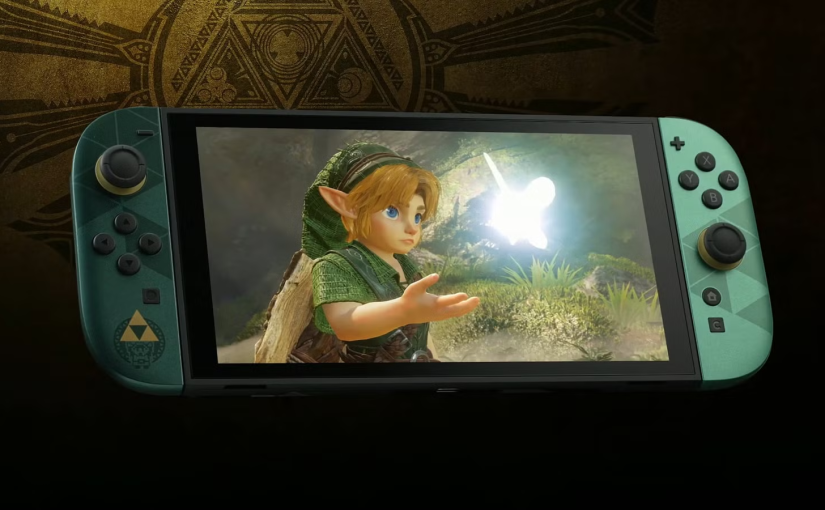
For Nintendo fans in New Zealand, 2026 is turning into a particularly interesting year for gaming. The Nintendo Switch 2 has moved beyond its launch period and is building a broader library, while one of Nintendo’s most recognisable franchises is entering a major anniversary moment. The Legend of Zelda is approaching its 40th anniversary, and Nintendo has been using the occasion to connect its classic adventures with the capabilities of its latest console.
The timing is significant. New Zealand gamers are not only looking at new releases but also at how older Nintendo experiences are being upgraded for modern hardware. The result is a gaming conversation that combines nostalgia, performance, portability and new ways to explore familiar worlds.
Nintendo’s latest announcements have made Zelda particularly prominent. The company has revealed an enhanced version of The Legend of Zelda: Ocarina of Time for Nintendo Switch 2, scheduled for 5 November, alongside a special Zelda 40th Anniversary Edition Switch 2 console and related accessories.
For players considering the Switch 2 in New Zealand, Zelda is therefore becoming more than another game franchise. It is increasingly part of the identity of the new generation of Nintendo hardware.
Zelda Turns 40 at a New Hardware Moment
The Legend of Zelda has been part of Nintendo’s history since 1986. Four decades later, the series is entering its anniversary year at a time when Nintendo has a much more powerful portable console to showcase.
The upcoming Ocarina of Time release is particularly interesting because it takes one of the most celebrated Zelda adventures and rebuilds the presentation for Switch 2. Nintendo says the game will feature overhauled visuals, fully voiced cutscenes, expanded character dialogue, orchestral music, and reworked camera and movement controls.
That combination gives the anniversary project two potential audiences.
Long-time Zelda fans can return to a familiar adventure with modern presentation, while younger players who never experienced the original Nintendo 64 era can discover one of the franchise’s most important games without needing older hardware.
For New Zealand gamers, the appeal also fits naturally with the Switch 2 format. A large adventure can be played at home on a television or taken elsewhere in handheld mode. That flexibility has always been one of the defining ideas behind Nintendo’s hybrid approach.
A New Zelda Edition Switch 2 Is Coming
The anniversary celebration is not limited to software. Nintendo has announced a Nintendo Switch 2 The Legend of Zelda 40th Anniversary Edition console featuring Triforce-inspired design elements.
The special console is scheduled to arrive on 29 October, ahead of the 5 November launch of Ocarina of Time. Nintendo has also announced anniversary editions of the Switch 2 Pro Controller and a carrying case with screen protector.
There is already evidence of strong interest in New Zealand. PB Tech has listed the Zelda 40th Anniversary Edition Switch 2 at NZ$999 including GST, while The Warehouse has also listed the console for pre-order at NZ$999.99 with a release date of 29 October.
That pricing also highlights an important issue for New Zealand consumers: gaming hardware costs can be affected by international pricing changes and exchange rates. Recent reporting indicates that the standard Switch 2 price in New Zealand has also risen, with NZ$969.95 reported following the September price adjustment.
The anniversary model therefore sits at the intersection of collector appeal, gaming hardware and a broader discussion about the cost of entering the latest console generation.
Why Ocarina of Time Still Matters
It might seem unusual to make a major hardware moment around a game that originally appeared decades ago. Yet Zelda has a unique position in Nintendo’s catalogue.
Ocarina of Time helped establish many conventions associated with modern three-dimensional adventure games. Its combination of exploration, puzzle solving, combat, dungeons and environmental storytelling became a reference point for the genre.
Bringing it to Switch 2 also creates an opportunity to demonstrate how Nintendo can modernise older games without completely removing their historical identity.
The upgraded version is expected to benefit from improved performance and presentation, while the game remains fundamentally rooted in the adventure created decades ago.
For players who already experienced Breath of the Wild or Tears of the Kingdom, this can also provide a fascinating opportunity to look backwards and see how Zelda evolved.
Breath of the Wild and Tears of the Kingdom Still Matter
The Zelda story on Switch 2 does not begin or end with Ocarina of Time.
Nintendo has already released Switch 2 Editions of The Legend of Zelda: Breath of the Wild and The Legend of Zelda: Tears of the Kingdom. These versions offer improved resolution, enhanced textures, smoother frame rates and faster loading times. Tears of the Kingdom also supports the ZELDA NOTES service through the Nintendo Switch App.
That means New Zealand players entering the franchise through Switch 2 have several different generations of Zelda available to them.
They can experience the open-world design of Breath of the Wild, explore the much larger combination of land, sky and underground environments in Tears of the Kingdom, and then travel back to an earlier era with Ocarina of Time.
It creates an unusual situation in which one console can serve as a historical tour through several major stages of Zelda’s development.
Nintendo Is Building a Bigger Switch 2 Library
Zelda is also arriving during a period when the Switch 2 software catalogue is expanding rapidly.
Nintendo’s September release schedule includes titles such as Valheim, RuneScape: Dragonwilds, Fire Emblem: Fortune’s Weave, LEGO Batman: Legacy of the Dark Knight and EA SPORTS FC 27. Dragon Quest XI S: Echoes of an Elusive Age – Definitive Edition is scheduled for 24 September, while Minecraft Dungeons II is scheduled for 29 September.
This matters because the strength of a console is increasingly determined by what players can do with it after the initial purchase.
The Switch 2 is moving into a phase where consumers can choose between Nintendo’s major first-party franchises, upgraded older games and an expanding selection of third-party releases.
Zelda can attract the nostalgic audience, while games such as EA SPORTS FC 27 and Minecraft Dungeons II offer very different experiences.
Battery Life Becomes Part of the Conversation
As more players use the Switch 2 as a portable gaming system, battery performance becomes an increasingly practical consideration.
A console can have an impressive screen and powerful hardware, but handheld gaming still depends on how long the device can operate between charges. Players travelling around New Zealand, gaming during long journeys or spending a weekend away from home may pay particular attention to battery behaviour.
This is where the broader game console battery market becomes relevant. Battery condition can affect how long a portable console remains convenient, particularly for older gaming hardware that has already experienced years of charging cycles.
The issue is not simply about getting the longest possible gaming session. Battery health also affects how predictable a portable gaming experience becomes. A player who expects to spend several hours exploring Hyrule does not want an ageing battery to become the limiting factor.
For Switch 2 owners, sensible charging habits and avoiding unnecessary heat can help preserve the battery over time.
What New Zealand Gamers Should Watch
The Zelda anniversary also points toward a broader trend in the gaming market: classic franchises are increasingly being used to connect generations of hardware.
For New Zealand consumers, that means upcoming gaming decisions may involve more than choosing between consoles. Players may also consider game libraries, portability, accessories, display quality, storage, online services and long-term ownership.
The game console battery is another part of that ownership equation, particularly for anyone maintaining multiple portable systems.
Nintendo’s approach with Zelda demonstrates how a franchise can simultaneously appeal to collectors, longtime players and newcomers. A limited-edition console can attract fans interested in design and memorabilia, while upgraded games can appeal to people who simply want to experience older adventures with modern hardware.
Zelda and the Future of Portable Gaming
The Switch 2 generation is also changing expectations about what a portable console can deliver.
Large open worlds, detailed graphics and sophisticated physics systems are no longer limited to traditional home consoles. Zelda has been one of the clearest examples of this shift.
Tears of the Kingdom demonstrated how Nintendo could build an enormous interactive world around exploration and player creativity. Its Switch 2 Edition adds improved technical performance, while Ocarina of Time is now being reimagined for the same platform.
For New Zealand gamers, this means the boundary between home and portable gaming continues to become less important.
The console can be connected to a television for a large-screen experience and then moved into handheld mode without requiring a completely different gaming ecosystem.
That flexibility is particularly relevant in a country where long-distance travel between cities and regions can make portable entertainment useful.
Looking Beyond the Anniversary
The most interesting part of Nintendo’s current Zelda strategy may be that the anniversary is not being treated as a single product launch.
Nintendo has announced games, hardware, accessories, music events and additional digital features as part of the celebration. The company has also announced a live-action Zelda film scheduled for cinemas worldwide on 30 April 2027.
That gives the franchise a presence well beyond the traditional game release cycle.
For players in New Zealand, the next several months could therefore bring a steady stream of Zelda-related activity. The special Switch 2 hardware, Ocarina of Time, existing Switch 2 editions and future entertainment projects all contribute to a much larger conversation around one of Nintendo’s most recognisable properties.
At the same time, the wider Switch 2 library is becoming increasingly diverse.
A New Chapter for Nintendo Fans in New Zealand
The combination of Switch 2 hardware, Zelda’s 40th anniversary and an expanding game catalogue gives New Zealand’s gaming market plenty to watch.
Ocarina of Time represents Nintendo looking back at its history, while the Switch 2 hardware represents its current direction. Breath of the Wild and Tears of the Kingdom demonstrate how far the franchise has travelled, and the continuing growth of the Switch 2 library shows where Nintendo’s platform is heading next.
For consumers, the decision is ultimately about what kind of gaming experience they want: classic adventures, huge open worlds, competitive sports, cooperative survival games or a mixture of everything.
As the Zelda anniversary approaches, one thing is clear: Nintendo is using one of its most enduring franchises to keep the Switch 2 firmly at the centre of the gaming conversation.
And for players who plan to spend long evenings exploring Hyrule, portability, charging and long-term hardware care will remain just as relevant as graphics and gameplay. A reliable game console battery can be an easily overlooked part of the experience, but for portable gaming, keeping the hardware ready to play is essential.
As Nintendo moves deeper into the Switch 2 generation, New Zealand gamers have a growing library, a major Zelda anniversary and a new wave of hardware to explore. The next chapter of Hyrule may be rooted in Nintendo’s past, but the way players experience it is increasingly shaped by the technology of today.