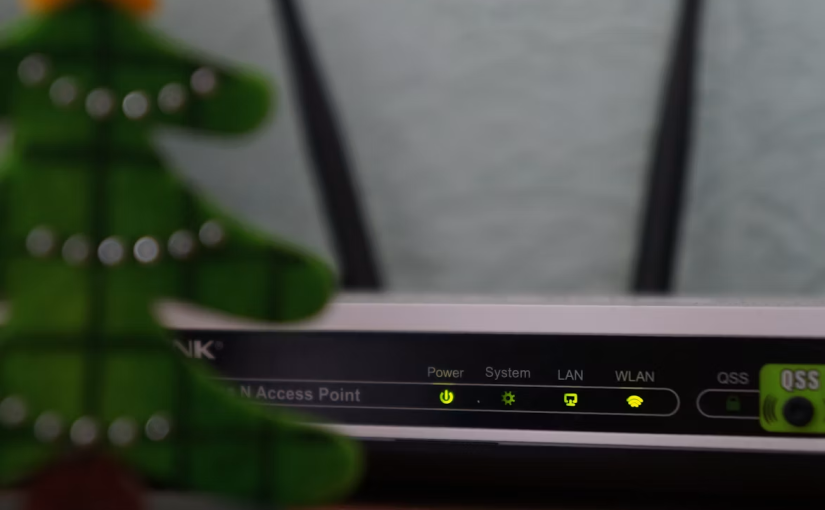
The Router Has Become the New Front Door
For many New Zealand households, the home router is one of those devices that quietly disappears into the background. It may sit beside the television, on a bookshelf, or near the broadband connection, blinking away while phones, laptops, smart TVs and security cameras connect to the internet.
But the humble router has become much more important.
A modern home can contain dozens of connected devices. Smartphones communicate with cloud services, smart speakers listen for commands, televisions stream content, security cameras upload video, gaming consoles connect to online servers, and smart appliances may exchange data without the homeowner even noticing.
The router sits in the middle of all of this activity.
New Zealand’s National Cyber Security Centre has described routers as an important line of defence for home and office networks. If attackers compromise a router, they may potentially gain access to connected devices or use the router as part of a larger network of compromised machines.
This makes router security particularly relevant as artificial intelligence becomes more deeply integrated into everyday technology. AI-powered applications require constant connectivity, while smart-home systems are becoming increasingly dependent on internet services.
The question is no longer simply whether a router provides fast Wi-Fi.
It is whether the router can keep an increasingly connected household safe.
Why AI Is Changing the Home Network
AI is moving from smartphones and computers into almost every part of the digital home.
Voice assistants can understand natural language. Security cameras can analyse movement. Smart displays can identify objects. Home automation systems can learn routines. Some newer devices can process information locally while others depend heavily on cloud-based AI services.
This creates a much more complicated network environment.
A household might have a laptop containing personal documents, a phone holding banking information, a smart doorbell monitoring the front entrance and a television connected to multiple entertainment services. All of these devices may share the same internet connection.
The router therefore becomes a critical security checkpoint.
New Zealand’s official guidance explains that everything entering or leaving a home wireless network passes through the router. Securing it can help prevent unauthorised access and reduce the risk of attackers reaching connected devices.
AI adds another layer to this situation. As more devices become intelligent and continuously connected, homeowners need to think about cybersecurity at the network level rather than protecting every device separately.
That is why the next generation of home routers needs more than impressive Wi-Fi speeds.
Strong Authentication Should Come First
One of the simplest router security improvements is also one of the most important: replacing default login credentials.
Many routers arrive with preset usernames or passwords. If these credentials are predictable or shared across devices, attackers have an easier starting point.
New Zealand’s Own Your Online guidance specifically recommends changing the default router login details. These credentials control access to the router’s administration settings, making them extremely important for protecting the entire home network.
A secure router should make strong authentication easy rather than treating it as an advanced option.
Modern security features can include stronger administrator passwords, multi-factor authentication for management applications, automatic alerts about suspicious login attempts and restrictions on remote administration.
This matters because convenience and security are increasingly connected.
If configuring a secure router is complicated, many households will simply leave default settings unchanged. A well-designed router should guide users through safer configurations during setup instead of expecting them to understand networking terminology.
Automatic Firmware Updates Are Becoming Essential
Router hardware can remain in a home for years.
That creates an important security challenge. New vulnerabilities can appear long after a device is installed, and attackers constantly search for outdated software that can be exploited.
New Zealand’s NCSC recommends keeping router firmware updated because manufacturers release updates to address security vulnerabilities.
For ordinary users, automatic updates are therefore one of the most useful features a router can provide.
A future-focused router should be able to check for security updates automatically, install them with minimal disruption and clearly tell the owner when an important update has been completed.
This is especially useful for busy households. People may remember to update their phones and computers but forget about the small white box sitting beside the modem.
The router should not depend entirely on the homeowner remembering to maintain it.
A Firewall Is More Than a Technical Feature
A firewall may sound like something designed for businesses, but it is highly relevant to households.
A router firewall monitors traffic moving into and out of the home network. It can help block unwanted connections while allowing legitimate traffic to continue.
New Zealand’s Own Your Online guidance recommends enabling the router firewall and ensuring that administrative access is not unnecessarily exposed to the wider internet.
This becomes increasingly important as smart homes become more complex.
Imagine a household with smart lights, cameras, televisions, speakers and connected appliances. If one device develops a security weakness, the router should help limit the ability of an attacker to move deeper into the network.
A strong firewall can act as a barrier between different parts of the digital home.
For consumers, the ideal solution is not necessarily a complicated collection of settings. It is intelligent protection that works quietly in the background.
Network Segmentation Can Protect Smart Homes
One of the most useful features for a modern home router is the ability to create separate networks.
Instead of placing every device on the same Wi-Fi connection, homeowners can create different network environments.
For example, laptops and smartphones could remain on the main network, while smart televisions, cameras and other IoT products could use a separate guest or IoT network.
New Zealand’s Own Your Online guidance specifically recommends using a guest Wi-Fi network for smart devices. If an IoT device is compromised, network separation can help prevent the problem from immediately reaching laptops and phones containing more sensitive information.
This is an increasingly attractive idea as smart-home adoption grows.
A compromised light bulb may seem harmless. A compromised laptop containing financial documents is a completely different problem.
Network segmentation creates an additional layer between them.
What Happens When the Power Goes Out?
Cybersecurity is not the only issue facing modern routers.
New Zealand households also need reliable connectivity during unexpected power interruptions, particularly when internet access supports work, communication, security cameras or smart-home systems.
A router that loses power immediately becomes useless, even if its cybersecurity features are excellent.
This is where backup power can become part of the broader conversation.
For households that depend heavily on continuous connectivity, a suitable wireless router battery can help keep compatible networking equipment operating during a short power interruption. The exact requirements depend on the router’s voltage, current and connector specifications, so compatibility should always be checked before using any replacement or backup power solution.
The security benefit is easy to overlook.
If the router goes offline during an outage, connected security cameras, smart locks and other internet-dependent systems may also lose communication. Maintaining network availability can therefore be part of a household’s overall resilience strategy.
Security Monitoring Should Become Smarter
Traditional router security often relies on predefined rules.
But AI could make home network monitoring considerably more adaptive.
An intelligent router could learn normal household behaviour and identify unusual activity. For example, if a smart appliance suddenly starts communicating with unfamiliar external services at unusual times, the router could flag the behaviour.
Similarly, if an IoT device begins generating an unexpected volume of traffic, the router could temporarily restrict its connection while notifying the homeowner.
This type of monitoring could help bridge the gap between sophisticated cybersecurity tools and ordinary households.
However, AI-powered security must also be designed carefully.
A system that produces endless warnings will quickly be ignored. The best solution would distinguish between genuinely suspicious activity and ordinary household behaviour, presenting important information in simple language.
Instead of saying that an unknown endpoint has generated anomalous encrypted traffic, a router might simply tell the homeowner that a smart device appears to be communicating unusually and ask whether the connection should continue.
That is the kind of security experience consumers can actually use.
Privacy Matters as Much as Protection
Cybersecurity is not only about preventing hackers from entering a network.
It is also about understanding what happens to household data.
Smart devices can collect information about routines, movements, preferences and interactions. Cameras and microphones can potentially gather particularly sensitive information.
As AI systems become more capable, the amount and value of connected data may increase.
Consumers therefore need routers that provide better visibility into network activity.
A good router should make it easy to see which devices are connected, which devices are consuming large amounts of bandwidth and whether unusual connections are occurring.
Privacy controls should also be understandable.
Homeowners should not need advanced networking knowledge to determine whether a particular smart device can communicate with the internet.
The future of home networking should make privacy settings more accessible, not more complicated.
Physical Resilience Still Matters
Cybersecurity discussions often focus entirely on software, but reliable hardware remains important.
Routers operate continuously, sometimes for years without being switched off. They can experience heat, voltage fluctuations, accidental unplugging and general wear.
A well-designed networking system should therefore consider both digital and physical reliability.
For households that require continuous connectivity, backup power can provide another layer of resilience. A properly matched wireless router battery may help maintain network availability during short interruptions, particularly when internet access is important for remote work or home monitoring.
The important point is that backup power should never be treated as a universal solution. Users need to verify voltage, current capacity, connector type and compatibility with their specific networking equipment.
In other words, cybersecurity and reliability should work together.
A perfectly secured router that repeatedly shuts down during power interruptions is not particularly useful when the household depends on it.
New Zealand’s Connected Future Needs Better Router Security
New Zealand is becoming increasingly connected, and the home network is becoming an important part of everyday life.
Remote work, online education, streaming, gaming, smart appliances, security cameras and AI-powered services all depend on reliable internet connectivity.
At the same time, New Zealand’s National Cyber Security Centre has highlighted the risks posed by compromised SOHO routers and IoT devices. In a 2026 advisory, the NCSC and international partners warned about covert networks made up largely of compromised small-office/home-office routers, IoT devices, firewalls and network-attached storage systems.
That development illustrates why router security can no longer be treated as a niche technical issue.
The router is part of the household’s digital security infrastructure.
Consumers should look for equipment that receives long-term security updates, supports strong authentication, provides firewall protection, allows network segmentation and makes suspicious activity easier to understand.
They should also consider resilience.
For homes where internet access is essential, a compatible wireless router battery can provide an additional layer of continuity when mains power is interrupted, provided that the specifications match the networking equipment.
The Router of Tomorrow Should Work Quietly
The best home security technology is often the technology users barely notice.
People do not want to spend their evenings studying firewall rules or analysing network traffic. They want to know that their family, devices and data are protected.
That means future routers need to combine powerful security with simple interfaces.
Automatic updates should happen in the background. Strong authentication should be easy to configure. IoT devices should be separated with a few taps. Suspicious activity should be explained in plain language. Privacy settings should be visible instead of buried inside complicated menus.
AI may help make this possible.
Rather than replacing traditional security features, AI could make them easier to manage by detecting unusual behaviour, prioritising genuine threats and adapting protection to changing network conditions.
The result could be a home router that acts less like a basic networking appliance and more like an intelligent security gateway.
A Small Device With a Big Responsibility
The days when a router was simply the box that made Wi-Fi available are disappearing.
In a connected New Zealand home, the router sits at the centre of phones, computers, entertainment systems, cameras, smart appliances and increasingly intelligent devices. Its security affects almost everything connected to the household network.
That is why consumers should look beyond Wi-Fi speed when choosing networking equipment.
Strong authentication, automatic firmware updates, firewall protection, network segmentation, privacy controls and intelligent monitoring are becoming essential features rather than luxury extras.
And as households become more dependent on digital connectivity, resilience deserves equal attention. For compatible equipment, a correctly specified wireless router battery can help keep the network running during short power interruptions.
The most important lesson is simple: protecting a smart home begins with protecting the network that connects everything together.
For New Zealand households entering an increasingly AI-driven future, the router may be one of the smallest devices in the home—but it could also be one of the most important.