A New Chapter in New Zealand’s Agricultural Technology
New Zealand has built an international reputation for producing high-quality apples, pears, kiwifruit and other fresh produce. Its agricultural industry is not only an important part of the national economy but also a major contributor to the country’s global identity. However, maintaining that reputation requires more than good growing conditions and experienced farmers. It increasingly depends on technology that can identify quality problems before they become expensive export failures.
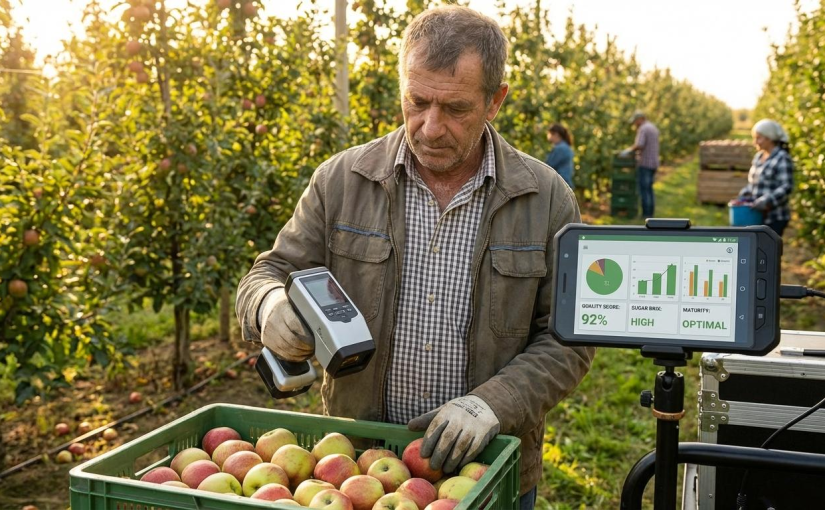
A major development in October 2026 could help address this challenge. Auckland-based agricultural technology company Hectre has opened a new research laboratory worth approximately NZ$5 million, dedicated to developing advanced fruit-scanning technology. The facility will focus on hyperspectral imaging, artificial intelligence and next-generation camera systems designed to examine fruit quality from the inside without cutting the fruit open.
The project represents an important step forward for New Zealand’s agritech sector. Rather than relying entirely on traditional inspection methods, growers and packhouse operators could eventually use intelligent scanning systems to understand the condition of individual pieces of fruit before deciding where they should go.
For an export-driven agricultural economy, this technology could make a meaningful difference to productivity, profitability and international competitiveness.
Why Looking Inside an Apple Matters
At first glance, an apple may appear perfectly healthy. Its skin can have an attractive colour, its shape may meet export standards, and there may be no obvious signs of damage. Yet problems can exist beneath the surface.
Internal browning, excessive softness, inconsistent maturity and other hidden defects can affect the eating experience and shorten the fruit’s storage life. These problems are particularly difficult for exporters because they may not become apparent until the produce has travelled thousands of kilometres.
Traditional quality testing often involves cutting open a small number of apples to examine their internal condition. Although this approach provides useful information, it has several limitations. It destroys the tested fruit, takes time and may not accurately represent the quality of an entire shipment.
A container of apples destined for international markets can contain thousands of individual pieces of fruit. Testing only a small sample creates the possibility that hidden defects will remain undetected.
For New Zealand growers, the financial consequences can be significant. A shipment that arrives in poor condition may need to be discounted, repacked or discarded. Beyond the immediate financial loss, inconsistent quality can also affect relationships with overseas buyers.
This is why non-destructive fruit inspection has attracted increasing attention. If technology can identify internal problems before apples leave a packhouse, businesses will have more opportunities to make informed decisions.
How Hyperspectral Imaging Changes Fruit Inspection
The central technology behind Hectre’s new research programme is hyperspectral imaging.
Unlike ordinary cameras, which capture images using familiar red, green and blue colour channels, hyperspectral imaging collects information across numerous narrow bands of the electromagnetic spectrum. Some of these wavelengths extend beyond what the human eye can see.
When light interacts with fruit, different internal materials absorb and reflect it in different ways. By analysing these patterns, specialised sensors can potentially identify characteristics that ordinary cameras cannot detect.
For example, the technology could help estimate an apple’s maturity, starch content and firmness without removing its skin or cutting it open.
This is an exciting development because internal fruit quality is not always reflected in external appearance. An apple that looks attractive may not necessarily have the texture or maturity required for a particular export market.
By combining hyperspectral sensors with artificial intelligence, researchers aim to develop algorithms that can interpret complex optical information and turn it into useful quality assessments.
The system is still under development, so it should not be regarded as a finished commercial solution. Nevertheless, its potential applications extend beyond apples. Similar techniques could eventually support quality inspection across other fruit varieties and agricultural products.
AI Cameras Could Make Packhouses More Efficient
Hectre is building on an existing foundation rather than starting from nothing.
Its Arc camera technology already helps packhouses assess fruit as trucks arrive from orchards. The system collects information about size, colour and external quality, allowing operators to process large quantities of produce with greater consistency.
The next generation of this technology aims to go further by identifying characteristics hidden beneath the fruit’s surface.
This could change how packhouses organise their daily operations. Instead of depending heavily on manual inspection and limited sampling, workers could receive more detailed information while fruit is entering the processing facility.
For example, apples identified as having a particular maturity level could be directed towards suitable storage conditions. Produce that is ready for immediate distribution could be prioritised, while fruit requiring additional storage time could follow a different processing route.
AI-powered cameras could also help businesses identify quality patterns across different orchards, growing regions and harvesting periods.
Over time, these insights may support better communication between growers, packhouses, exporters and retailers. Everyone involved in the supply chain could make decisions using more consistent information.
However, the real test will be whether the technology can operate reliably at commercial processing speeds, particularly during busy harvesting periods when packhouses handle substantial volumes of fruit.
Why the Project Matters to New Zealand’s Export Economy
New Zealand’s agricultural exports depend heavily on international confidence in product quality.
Apples and pears contribute more than NZ$1 billion to the country’s economy each year, supporting growers, seasonal workers, transport companies, packhouses and regional communities.
Export markets also create demanding expectations. Fruit must survive transportation, storage and distribution while maintaining its appearance, firmness and eating quality.
For shipments travelling to destinations across Asia, Europe and North America, identifying internal defects before departure could become a valuable competitive advantage.
Better inspection technology may help exporters determine which fruit should be shipped immediately, which should be stored and which may not be suitable for particular markets.
These decisions could reduce unnecessary waste and help businesses make better use of their harvested produce.
The benefits would not be limited to large exporters. Smaller growers could also benefit if advanced scanning systems eventually become accessible through shared packhouse services or affordable commercial equipment.
For regional New Zealand, improvements in agricultural productivity can have effects throughout local communities. More efficient operations can support investment, employment and the long-term sustainability of horticultural businesses.
The Growing Importance of Reliable Testing Equipment
Behind every advanced scanning system is a wider network of electronic equipment.
Hyperspectral cameras, optical sensors, industrial computers and automated inspection systems all depend on reliable electronic components. These devices must collect information accurately, process data quickly and continue operating in environments where production schedules can be demanding.
Power reliability is particularly important for portable inspection instruments and specialised diagnostic equipment. Technicians may need to move between different processing areas, inspect machinery or perform measurements away from fixed power supplies.
In these situations, a dependable test equipment battery can help keep portable instruments available throughout inspection and maintenance work.
The same principle applies to the broader agricultural technology ecosystem. Digital thermometers, electrical measurement instruments, portable data loggers and other testing devices may be needed to monitor environmental conditions and verify equipment performance.
As packhouses introduce more automated systems, maintenance teams will also need appropriate testing tools to diagnose electrical problems and check whether sensors are operating correctly.
A suitable test equipment battery can therefore be relevant to the supporting equipment used around modern agricultural facilities, even though it is not necessarily the power source for Hectre’s fruit-scanning cameras themselves.
This distinction matters. Advanced agricultural technology is not simply about installing sophisticated cameras. It also requires dependable infrastructure, maintenance procedures and supporting electronic equipment.
The Challenge of Turning Research Into Commercial Results
Despite the excitement surrounding the new laboratory, developing a successful fruit-scanning system will not be straightforward.
One major challenge is accuracy. Apples vary considerably depending on their variety, growing conditions, harvest timing and storage history. A scanning algorithm must account for these differences if it is to provide useful results across different commercial environments.
Another challenge is processing speed.
A research laboratory offers controlled conditions in which scientists can carefully examine samples and refine their algorithms. A working packhouse is much less predictable. Fruit arrives in large quantities, equipment operates continuously, and staff need information quickly enough to influence processing decisions.
The system must also distinguish between different types of defects without incorrectly rejecting healthy produce.
A false positive could result in perfectly good apples being diverted away from their intended market. A false negative could allow defective fruit to enter an export shipment.
Hectre’s research programme has established measurable milestones. It is targeting a proof-of-concept algorithm with at least 80% detection accuracy by June 2027, followed by a packhouse prototype validated under commercial conditions by June 2028.
These targets will be important indicators of whether the technology can move successfully from scientific research into everyday agricultural operations.
Beyond Apples: Opportunities for Other Agricultural Products
Although apples are the immediate focus, the wider implications of hyperspectral imaging could be much broader.
New Zealand produces a diverse range of agricultural and horticultural products, including kiwifruit, cherries, avocados and other high-value crops.
Different products have different quality requirements. Some need to meet strict maturity standards, while others are particularly sensitive to bruising, internal damage or changes during storage.
If researchers can develop reliable algorithms for multiple fruit varieties, the technology could eventually support a much wider range of inspection applications.
For example, fruit processors may be able to assess internal quality more consistently before products enter cold storage. Exporters could use improved data to make decisions about shipment timing, while growers might gain better insights into harvesting conditions.
The potential applications also create opportunities for New Zealand technology companies. Developing specialised agricultural software, imaging hardware and data-analysis platforms could help local businesses compete in international markets.
In this way, the laboratory is not just an investment in apple inspection. It could contribute to the development of a more sophisticated agricultural technology industry.
Sustainability and the Fight Against Food Waste
Food waste remains a major challenge throughout global agricultural supply chains.
Produce can be lost at multiple stages, including harvesting, grading, storage, transportation and retail distribution. Some losses occur because products do not meet market requirements, while others result from quality problems that are identified too late.
Improved inspection technology could help address part of this problem.
If packhouses can identify internal defects earlier, they may be able to redirect suitable fruit towards alternative markets or processing applications instead of allowing it to become unsaleable.
More accurate quality information could also help businesses manage storage capacity and reduce unnecessary transportation.
For New Zealand, where agricultural exports travel long distances, these improvements could be especially valuable.
However, technology alone will not eliminate food waste. Better packaging, appropriate storage temperatures, efficient logistics and effective communication between supply-chain partners will remain essential.
The most promising approach is to combine intelligent inspection with better operational planning.
The Role of Portable Electronics in Smart Agriculture
The development of AI-powered agricultural systems is also increasing demand for a wider range of electronic devices.
Farmers and agricultural technicians already use smartphones, tablets, GPS equipment, wireless sensors and portable diagnostic instruments to collect information and manage operations.
As these tools become more sophisticated, dependable power management becomes increasingly important.
A technician working across a large orchard or packhouse may need portable measurement equipment for several hours. Devices used for electrical testing, environmental monitoring and equipment diagnostics must remain available when needed.
A high-quality test equipment battery can support the continued use of compatible portable testing instruments, helping technicians perform inspections without constantly searching for a charging point.
Meanwhile, wireless monitoring devices and connected sensors could provide additional information about temperature, humidity and storage conditions.
Together, these technologies illustrate how modern agriculture is becoming increasingly dependent on electronics. The future of farming will involve not only machinery and biological expertise but also data collection, connectivity and intelligent decision-making.
What New Zealand Businesses Should Watch Next
The opening of Hectre’s laboratory is an important milestone, but the coming two years will be more significant.
The first major question is whether the research team can achieve its targeted detection accuracy by June 2027. The second is whether the technology can operate successfully in a commercial packhouse by June 2028.
Businesses should pay particular attention to how accurately the system identifies internal defects across different apple varieties and whether it can maintain performance during busy harvest periods.
Cost will also matter. Even highly advanced technology may struggle to gain widespread adoption if installation, maintenance and operating expenses are too high.
For growers and exporters, the value of the system will ultimately depend on whether better information produces measurable improvements in product quality, efficiency and profitability.
For technology suppliers, the project offers a reminder that agricultural innovation involves more than software development. Reliable cameras, sensors, computers, testing instruments and supporting electronics all contribute to the performance of a complete system.
New Zealand’s ability to develop and commercialise these technologies could create opportunities well beyond its domestic agricultural market.
A Smarter Future for New Zealand Agriculture
Hectre’s NZ$5 million fruit-scanning laboratory reflects a wider shift in New Zealand agriculture. Traditional farming expertise is increasingly being combined with artificial intelligence, advanced imaging and data-driven decision-making.
The possibility of examining an apple’s internal quality without cutting it open could help address a longstanding problem for growers and exporters. More accurate information may support better storage decisions, reduce avoidable waste and strengthen the reputation of New Zealand produce in overseas markets.
There are still important technical and commercial challenges to overcome. The research milestones in 2027 and 2028 will provide a clearer indication of whether the technology can deliver on its promise.
Nevertheless, the direction is significant. As agriculture becomes more connected and automated, investment in electronic equipment, reliable testing tools and intelligent inspection systems will become increasingly important.
For New Zealand, the future of agricultural competitiveness may depend not only on what its farmers grow, but also on how effectively technology helps them understand, protect and deliver the quality of every harvest.