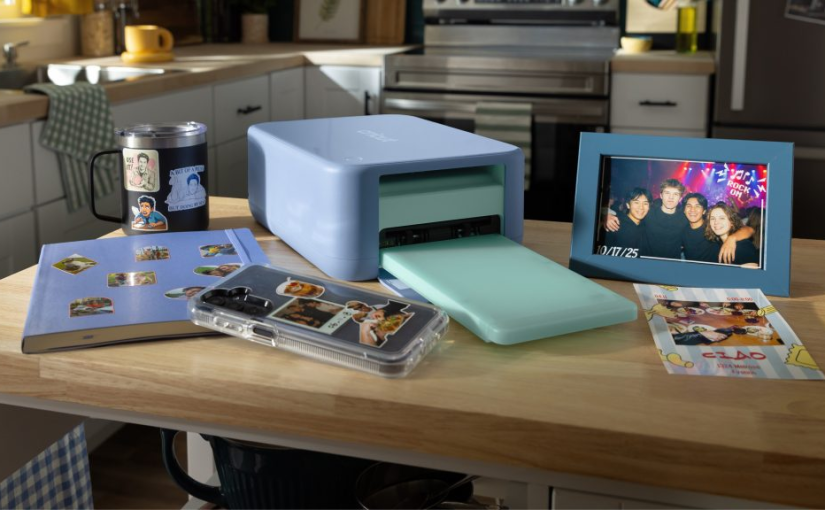
A New Creative Trend Arrives in New Zealand
A photograph on a smartphone can capture a special moment, but what happens when that memory becomes something people can touch, share, and use every day? From personalised laptop decorations to handmade greeting cards, the growing interest in creative technology is giving digital images a new purpose. Cricut StickerPix is entering this space with a product designed to help people turn their favourite photos and digital designs into physical creations at home.
Announced in September 2026, Cricut StickerPix introduces two compact machines: Cricut StickerPix Print and Cricut StickerPix Print + Cut. Both are designed for making colourful stickers, photo prints, labels, and cards, while the Print + Cut model also adds precision cutting for customised shapes. The products became available through selected retailers in Australia and New Zealand from 15 October 2026, bringing this new creative option closer to local consumers.
For New Zealand households, where hobbies, family activities, and small creative businesses can all benefit from flexible equipment, the appeal goes beyond printing pictures. It is about making personalisation easier, reducing the steps between an idea and a finished product, and finding new ways to express individuality.
What Makes Cricut StickerPix Different?
Traditional sticker-making often involves several separate steps. A creator might design an image on a computer, print it using a home printer, apply a protective laminate, and then cut around the design. Although this process offers flexibility, it can require extra materials, workspace, and patience.
Cricut StickerPix brings several of these steps together. Both models use dye-sublimation printing technology and incorporate lamination into the printing process. The result is designed to provide vivid colours and resistance to water, scratches, and fading under normal conditions.
The two models serve slightly different needs. Cricut StickerPix Print uses pre-cut sticker sheets, making it suitable for people who want straightforward sticker production and photo printing. Cricut StickerPix Print + Cut offers additional cutting capabilities, allowing users to create stickers that follow the outline of their designs.
This distinction matters because not every creator needs the same level of flexibility. Someone producing circular stickers for a scrapbook may prefer the simpler model, while an illustrator making character-shaped stickers may appreciate the extra cutting function.
Both devices connect with Cricut Design Space, the company’s creative software platform. Users can work with their own photographs, adjust templates, and explore a library of design resources. Some features, including certain AI-powered tools, may require a paid subscription.
Why New Zealand Consumers May Be Interested
New Zealand has a diverse community of hobbyists, families, artists, and independent sellers. Personalised products can appeal to people who want gifts that feel more thoughtful than mass-produced alternatives.
Consider a family preparing for a birthday party. Instead of ordering large quantities of generic decorations, they could create stickers featuring photographs, names, favourite colours, or themed illustrations. These designs could be used on invitations, party bags, notebooks, and thank-you cards.
Students and university communities offer another potential audience. Personalised stickers can decorate laptops, water bottles, stationery, and study planners, although users should follow the care instructions for the surface on which they apply them.
For people who enjoy scrapbooking, the ability to transform digital photographs into physical prints may also be attractive. A smartphone camera can hold years of family memories, holiday pictures, and everyday moments. Printing selected images turns those files into objects that can be arranged in albums, shared with relatives, or included in handmade gifts.
New Zealand’s outdoor lifestyle provides plenty of inspiration. A collection of photographs from a weekend in Rotorua, a coastal walk near Wellington, or a road trip through the South Island could become a themed scrapbook or a set of travel stickers.
The technology does not replace creativity. Instead, it lowers the practical barriers that sometimes prevent people from turning an idea into a finished project.
A Potential Opportunity for Small Creative Businesses
Personalised products are not limited to household hobbies. They can also form part of a small business, especially for people who sell handmade goods through online marketplaces, social media, local markets, or community events.
A creator might design labels for gift packaging, produce photo cards for seasonal celebrations, or develop small collections of stickers around original illustrations. Because the StickerPix machines are intended for home use, they could offer an accessible way to experiment before investing in larger production equipment.
For example, a small gift business in Auckland might test several packaging designs for locally themed products. A Wellington-based illustrator could experiment with different sticker collections, while a seller in Christchurch might produce personalised photo cards for customers celebrating birthdays or weddings.
The key advantage is flexibility. Instead of committing to a large order, creators can make smaller batches, review customer reactions, and adjust their designs. This can be useful when demand changes between holidays, school events, and different seasons.
However, buying a creative printer does not automatically make a business profitable. Sellers still need to consider material costs, packaging, delivery, marketplace fees, design time, and customer service. They should also check copyright and licensing requirements before using illustrations, photographs, or other protected material in products they intend to sell.
A small device can support experimentation, but the commercial value ultimately depends on the quality of the designs and whether customers want to buy them.
Choosing Between the Two StickerPix Models
The decision between Cricut StickerPix Print and Cricut StickerPix Print + Cut depends largely on what a buyer intends to create.
The standard Print model is smaller and uses pre-cut sticker sheets. It is suited to people who want to produce stickers in predetermined shapes, alongside photo prints, labels, and cards. Its compact dimensions make it easier to accommodate on a desk or craft shelf.
The Print + Cut model is larger and includes a cutting blade. Its main advantage is the ability to cut around customised designs, offering more freedom for illustrated characters, decorative shapes, and distinctive sticker outlines.
New Zealand buyers should compare the complete cost rather than looking only at the machine price. Compatible sticker sheets, photo paper, ink cartridges, software features, and ongoing supplies can all affect the overall expense.
It is also important to check local availability, warranty coverage, delivery costs, and return policies. The New Zealand product range has included bundles at different price points, so the final cost may vary according to the package and included materials.
Before purchasing, consumers should consider how frequently they expect to print. Someone who creates a few greeting cards each month may have very different needs from a small business that regularly prepares orders.
The Importance of Power, Supplies, and Everyday Reliability
Creative equipment is most useful when it fits naturally into an existing routine. A compact machine can save space, but users should still plan where it will sit, how materials will be stored, and how the device will connect to a compatible phone, tablet, or computer.
Cricut StickerPix Print uses an external AC power adapter, while the two models have different connectivity arrangements. Buyers should therefore check the precise specifications of the model they choose rather than assuming that a compact design means cordless operation.
For people who also use portable printers, mobile work equipment, or other battery-powered devices, power planning becomes especially important. Searches for a printers battery may be relevant when investigating battery-backed printing equipment or portable printing setups, but it should not be taken to mean that Cricut StickerPix itself has a replaceable internal battery. The manufacturer lists an external power adapter for the StickerPix Print model.
This distinction helps consumers avoid buying accessories that are incompatible with their equipment. It also illustrates a broader point about technology shopping: a product’s size and portability do not necessarily indicate how it receives power.
Users should follow the manufacturer’s instructions for electrical connections and use compatible accessories. Keeping cables organised, placing the machine on a stable surface, and protecting it from moisture can help create a safer and more reliable workspace.
Bringing Digital Creativity Into Family Life
One of the most appealing aspects of home sticker-making is that it can turn ordinary activities into collaborative projects.
Parents and children can work together on personalised cards, school-project decorations, or family photo albums, provided the equipment is used in accordance with the manufacturer’s age and safety guidance. Cricut states that StickerPix machines are not intended for children aged 12 and younger, so adult supervision and appropriate alternatives are important when planning family activities.
Adults can also use the machines for practical organisation. Personalised labels may help distinguish storage boxes, mark craft supplies, or organise materials for household projects. Photo cards can become small gifts for friends, while themed stickers can add a personal touch to journals and planners.
For people who prefer physical keepsakes to digital galleries, this approach can make photographs feel more meaningful. A collection of images from a family celebration becomes something that can be displayed, exchanged, or revisited without opening a screen.
The creative process can be as valuable as the finished object. Choosing images, adjusting colours, arranging layouts, and testing different designs encourages experimentation and gives users a reason to engage more actively with their own photographs.
How AI Could Change Personalised Printing
Artificial intelligence is also influencing the creative technology market. Design tools increasingly offer assistance with image editing, background removal, templates, and visual effects, helping people who may not have formal graphic-design experience.
Cricut’s Design Space ecosystem includes selected AI-powered capabilities. Depending on the feature, users may be able to simplify parts of the design process or adapt images for a particular creative project.
For New Zealand creators, this could make personalised printing more approachable. A person with a photograph but little experience in editing software may find it easier to prepare an attractive sticker design. A small business owner could also use templates to explore several visual directions before choosing a final layout.
Nevertheless, automated design tools are not a substitute for judgment. Images may need manual adjustments, text can require careful proofreading, and commercial users must ensure they have the necessary rights to the content they reproduce.
There is also a practical question about subscriptions. Buyers should establish which features are included at no additional cost and which require a paid plan before building their workflow around them.
The most useful technology is not necessarily the one with the most advanced features. It is the one that helps people achieve their goals without making the process unnecessarily complicated.
Understanding the Running Costs
A machine’s purchase price is only one part of the ownership decision. Consumables can have a meaningful effect on the long-term cost of producing stickers and photographs.
Cricut StickerPix machines use model-specific materials and ink cartridges. The supplies are not interchangeable between the Print and Print + Cut models, so consumers should confirm compatibility before ordering replacements.
People who regularly produce large numbers of stickers should estimate the cost per finished sheet and account for designs that need to be reprinted. Those creating occasional gifts may care more about convenience and the ability to personalise small quantities.
The same principle applies when researching a printers battery for other printing equipment: buyers should first identify the exact printer model, power requirements, and intended use. Battery compatibility, voltage, connector type, and capacity matter more than a broad product description. StickerPix owners, however, should follow the power specifications for their particular machine instead of assuming a battery accessory is required.
Comparing these costs before buying can help households and businesses avoid unexpected expenses. It also makes it easier to decide whether a dedicated sticker printer is more practical than using an existing printer and separate cutting tools.
Sustainability and More Thoughtful Printing
Personalised printing creates opportunities for creativity, but it also raises questions about material use. Failed prints, unused sticker sheets, packaging, and empty consumable cartridges can add up over time.
A sensible approach begins with planning. Users can preview designs carefully, print test layouts when appropriate, and avoid producing more copies than they need. Small-batch production may also reduce the risk of being left with large quantities of unwanted designs.
Consumers should follow the manufacturer’s guidance for handling and disposing of consumables. Where local recycling options exist, they should check whether specific materials are accepted rather than assuming that every component belongs in household recycling.
For small businesses, thoughtful production can offer practical benefits as well as environmental ones. Reducing waste may lower material costs, while making products to order can help sellers respond more closely to actual demand.
Sustainability is not determined by a single machine. It depends on how equipment, supplies, packaging, and finished products are used throughout their lifecycle.
What Cricut StickerPix Means for New Zealand’s Creative Technology Market
Cricut StickerPix reflects a wider shift in consumer technology: devices are increasingly designed to help people turn digital content into physical experiences.
Smartphones make it easy to capture photographs, while creative software makes it easier to edit them. Compact printing equipment then provides a bridge between digital ideas and tangible products. For households, that may mean more personalised gifts and family keepsakes. For independent creators, it may offer another way to test designs and build a small product range.
The technology is not essential for everyone, and the ongoing cost of compatible materials deserves careful consideration. Still, for people who regularly create stickers, cards, labels, and photo prints, combining several steps in one machine may make the process more convenient.
As these products become available through New Zealand retailers, local consumers can assess their value based on actual needs rather than novelty alone. Comparing the two models, checking supplies, and understanding power requirements will help buyers make informed decisions.
Ultimately, the appeal of Cricut StickerPix lies in a simple idea: digital memories do not have to remain trapped on a screen. With the right tools, they can become thoughtful gifts, creative projects, and products that reflect the people who make them. For New Zealand’s growing community of hobbyists and independent creators, that is a compelling reason to take a closer look at the next generation of personalised printing.
For anyone exploring related printing equipment, a printers battery may be worth investigating only where the specific printer supports battery-powered operation or an appropriate external backup solution. Matching the accessory to the device remains essential.
The future of personalised printing will depend not only on sharper images and smarter software, but also on affordability, accessible supplies, and the freedom to create something genuinely personal.