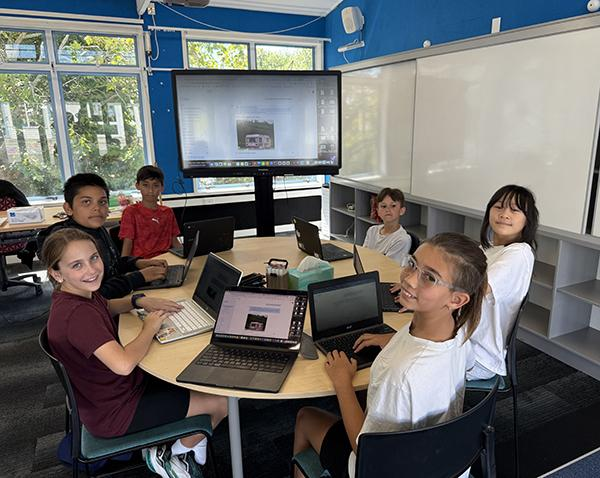
AI Is Changing the Classroom Experience
Digital technology has become an increasingly important part of education in Aotearoa New Zealand. From online assignments and interactive learning platforms to AI-powered study assistants, students and teachers have access to tools that can make learning more flexible, engaging and personalised. Yet the rapid growth of these technologies is raising important questions about privacy, academic integrity, screen time and the long-term cost of maintaining digital devices.
The issue has attracted fresh attention in New Zealand. In July 2026, the Education Review Office (ERO) published research examining how schools are responding to artificial intelligence. Its findings highlighted both the potential benefits of AI and the challenges schools face when developing consistent rules for its use. The report suggests that many schools are still working out how to integrate these tools safely and effectively.
For students, AI can help explain difficult concepts, generate revision questions and organise ideas before an assignment. For teachers, it can support lesson preparation, communication and the development of learning resources. However, technology is most valuable when it strengthens learning rather than replacing the thinking, discussion and independent effort that education is designed to develop.
The challenge for New Zealand schools is therefore not simply whether to adopt new technology. It is how to make digital learning useful, fair and secure for every learner.
The Growing Role of Tablets in Everyday Learning
Tablets have become attractive learning devices because they combine portability with access to a wide range of educational resources. Students can read digital textbooks, annotate documents, watch instructional videos, participate in online discussions and complete assignments without carrying several heavy books.
In classrooms where digital tools are used regularly, a tablet can also support creative projects. Students might record a science experiment, produce a short documentary, create an illustrated presentation or practise a new language with interactive exercises. Teachers can distribute resources quickly and provide feedback without relying entirely on printed worksheets.
For families, the appeal is straightforward. A single device can serve multiple purposes, from schoolwork and reading to communication and entertainment. However, its usefulness depends on more than processing speed, display quality or storage capacity.
Battery performance is particularly important when students move between classrooms, libraries, buses and after-school activities. A reliable tablet battery helps a device remain available throughout the school day, reducing interruptions when charging facilities are limited. For students who depend on digital textbooks or online learning platforms, unexpected power loss can mean losing access to essential resources at an inconvenient moment.
Schools should therefore consider practical reliability alongside purchase price when selecting devices. A tablet that performs well during a demonstration but struggles to last through a normal day may create additional work for teachers and families.
AI Tools Offer Opportunities but Require Clear Boundaries
Generative AI can provide students with explanations tailored to their questions and help them approach unfamiliar subjects from different angles. A learner struggling with algebra, for example, might ask an approved tool to explain the reasoning behind a formula before attempting similar problems independently.
Language learners may benefit from vocabulary exercises, grammar explanations and simulated conversations. Students working on research projects can use AI to generate questions, compare possible approaches or identify topics that deserve further investigation.
These applications can support learning when students remain actively involved. The danger appears when an AI system completes the intellectual work that students are expected to demonstrate themselves.
If a student submits generated answers without understanding them, the finished assignment may look impressive while revealing little about actual progress. Over-reliance can also weaken habits such as checking evidence, constructing arguments and recognising uncertainty.
New Zealand’s Ministry of Education advises schools to establish clear expectations for generative AI use, protect personal information and maintain teacher oversight. It also emphasises that assessment must reflect students’ own knowledge and abilities.
A practical school policy should distinguish between acceptable assistance and inappropriate substitution. Students might be allowed to use AI for brainstorming or feedback in one activity while being required to work independently in another. Explaining these differences is more useful than simply telling students that AI is either good or bad.
Student Privacy Must Come Before Convenience
One of the most important questions surrounding educational AI concerns the information students and teachers enter into digital services.
Schoolwork can contain much more than an essay or a set of mathematics answers. Documents may include a student’s full name, photographs, learning support requirements, health information or details about family circumstances. Uploading such material to an unapproved service can create privacy risks that are difficult to reverse.
The Office of the Privacy Commissioner has published guidance for the education sector on protecting children’s and young people’s personal information. Its advice highlights the need to understand how digital platforms collect, use, retain and disclose information.
Schools should examine whether a provider uses submitted content to improve its models, where information is stored, who can access it and how it can be deleted. They should also consider whether the service is appropriate for the age of the students using it.
The Ministry of Education recommends that users avoid entering personal, confidential or sensitive information into AI tools unless the use has been properly assessed and authorised.
These precautions should apply to teachers as well as students. Using an AI assistant to rewrite a classroom report may appear harmless, but uploading identifiable student records can create a different level of risk.
A safer approach involves approved tools, clear staff guidance and regular discussions about responsible use. Students should also learn that privacy is not merely a technical setting. It is part of respecting classmates, families and the wider school community.
Digital Access and Educational Fairness
Technology can expand learning opportunities, but it can also expose differences between households.
Some families can afford a suitable laptop or tablet, reliable home broadband and paid educational subscriptions. Others may share a single device among several children or depend on mobile data to complete assignments. These differences can affect how easily students participate in digital learning.
Schools need to consider these circumstances before designing activities that assume every learner has uninterrupted internet access or a modern device.
Where possible, schools can provide loan equipment, offer access to school facilities outside normal lessons and ensure that essential resources are available offline. Teachers can also design assignments that do not penalise students for circumstances beyond their control.
Device selection matters here. Durable hardware, manageable repair costs and a reasonable service life can help schools stretch limited budgets. A device that is easy to maintain may offer greater long-term value than one with a lower initial price but frequent reliability problems.
Battery life also deserves attention when schools compare hardware. A dependable tablet battery can help students complete activities without searching for power outlets or carrying chargers between lessons. For schools purchasing devices in large quantities, battery durability, warranty coverage and replacement options should form part of the overall cost assessment.
These considerations are especially relevant when technology is intended to improve access to education rather than create another barrier to participation.
Digital Wellbeing and the Need for Human Interaction
More technology does not automatically produce better learning.
Extended screen use can contribute to tired eyes, reduced physical activity and difficulty maintaining concentration, particularly when schoolwork competes with games, social media and entertainment. Students may also struggle to distinguish focused learning from habitual device use.
Teachers and families can address these challenges through sensible routines. Schools might alternate screen-based activities with handwritten work, group discussions, practical experiments and outdoor learning. Families can establish suitable study spaces and encourage breaks during extended homework sessions.
AI also raises questions about the social side of education. A chatbot can answer a question, but it cannot fully replace the encouragement of a teacher, the exchange of ideas with classmates or the experience of working through a difficult problem together.
For younger learners especially, relationships and direct interaction remain central to educational development. Technology should support those experiences rather than displace them.
Schools can help students develop digital judgement by teaching them to question AI-generated claims, compare sources and recognise when a human conversation is more appropriate than an automated response.
The objective is not to minimise every use of technology. It is to help students become confident, thoughtful users who understand when digital tools are useful and when they need to step away from a screen.
Electronic Waste Is Becoming Part of the Education Technology Debate
As schools expand their use of digital devices, they also face the challenge of managing equipment that becomes damaged, outdated or too expensive to maintain.
Discarded tablets, laptops, chargers and accessories can contribute to electronic waste. These products contain materials that require appropriate handling, and some components may be recoverable through specialised recycling processes.
Frequent replacement can also increase procurement costs for schools and families. Choosing devices that receive software updates for a reasonable period, have accessible repair services and use replaceable components where practical can reduce unnecessary waste.
Battery condition is one part of this decision. Rechargeable batteries gradually lose capacity through normal use, and a device that once lasted an entire school day may eventually need charging much earlier. Before replacing the whole device, schools should investigate whether a professional battery replacement or another repair is safe, practical and economically sensible.
However, battery replacement is not always the right answer. Repair decisions should account for the condition of the device, parts availability, labour costs, software support and applicable safety requirements. Damaged or swollen lithium-ion batteries require particular care and should not be handled as ordinary rubbish.
Schools can also establish collection arrangements with suitable electronic waste and battery recycling providers. Clear processes help prevent obsolete equipment from accumulating in cupboards or entering unsuitable waste streams.
A more sustainable approach to digital learning considers the complete life cycle of a device, from purchase and daily use to maintenance, reuse and responsible disposal.
What Schools and Families Should Look for in Learning Devices
Selecting educational hardware requires a balance between performance, usability, security and affordability. The most expensive device is not necessarily the most suitable, and a specification sheet alone cannot reveal how well a product will work in a classroom.
Schools should begin by identifying the tasks students actually need to complete. Reading, video lessons, online assessments, creative applications and advanced subject software can place very different demands on hardware.
Screen size and weight affect portability, while storage capacity determines how comfortably students can keep files and applications locally. Connectivity is another consideration, particularly for learners who move between home, school and public spaces.
Software support deserves equal attention. Devices should receive security updates for an appropriate period, and the applications selected by schools should meet relevant privacy and safeguarding expectations. Where AI tools are involved, staff should know which services are approved and how student information is protected.
Families should also consider durability, repair access and the availability of suitable accessories. A protective case, dependable charger and clearly understood warranty can make a meaningful difference to everyday use.
For devices used throughout a full school day, battery capacity and real-world endurance should be assessed under realistic conditions rather than relying exclusively on manufacturer estimates. The ability to replace a worn battery, where supported, may also influence long-term ownership costs.
These decisions become easier when schools involve teachers, IT staff, parents and students in the evaluation process. Each group understands different aspects of how devices are used, and their feedback can reveal problems that might otherwise emerge only after a large purchase.
Building a Responsible Digital Learning Culture
New Zealand’s education sector has an opportunity to shape a more thoughtful approach to digital learning. AI tools can help teachers prepare resources and give students additional ways to explore difficult ideas. Tablets and laptops can make information more accessible and support creative work across a wide range of subjects.
Yet successful adoption requires more than buying hardware or introducing another online platform. Schools need clear rules, privacy-conscious procurement, staff training and opportunities for students to develop critical thinking alongside technical skills.
The most effective approach is likely to be gradual and evidence-led. Schools can trial tools, gather feedback, evaluate educational outcomes and adjust their policies as technology changes. They should also communicate openly with parents and whānau so that expectations around AI, privacy and independent work remain clear.
Hardware planning belongs in this wider conversation. Reliable devices, suitable charging arrangements, repairable components and responsible recycling all influence whether digital learning remains practical over time.
The future of education in Aotearoa will not be determined by AI alone. It will depend on how teachers, students, families and technology providers work together to create learning environments that are secure, inclusive and genuinely useful.
A Smarter Future for Digital Education
The questions facing New Zealand schools are not simply about whether students should use AI or which tablet offers the fastest performance. They concern the kind of learning environment the country wants to build.
Technology should help students ask better questions, develop stronger skills and access opportunities that might otherwise be difficult to reach. At the same time, privacy, wellbeing, educational fairness and sustainability must remain central to decision-making.
By setting clear expectations for AI, protecting student information, choosing reliable devices and planning for repair and recycling, schools can capture the benefits of digital learning without ignoring its costs.
The goal is a balanced future in which technology supports teachers, empowers learners and serves the wider school community. When digital tools are selected carefully and used responsibly, they can become a lasting part of better education rather than a distraction from its most important purpose: helping every student learn, think independently and thrive.