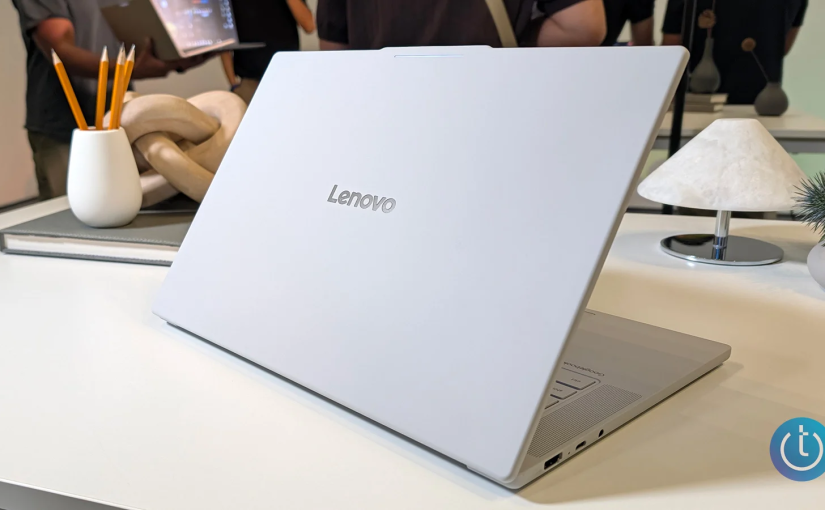
A New Chapter for Lenovo in New Zealand
New Zealand’s laptop market is entering an interesting new phase. For years, consumers have largely chosen between Windows PCs, Macs and Chromebooks, with each platform offering a familiar balance of performance, software and price. Now Google is introducing a new category designed to blur some of those boundaries, and Lenovo is one of the first major manufacturers to step into it.
The Lenovo Googlebook 15 is particularly notable because it combines Lenovo’s laptop hardware with Google’s newer software approach, built around Android integration and Gemini Intelligence. Lenovo introduced the model in late September, while New Zealand technology publication Geekzone reported on its arrival in the local market in early October.
For New Zealand consumers, the timing is significant. Students are returning to intensive study, businesses are increasingly experimenting with AI tools, and households are relying on laptops for everything from streaming and communication to creative work. A laptop that treats artificial intelligence as part of the everyday interface, rather than simply another application, could change what buyers expect from their next computer.
And although AI is the headline feature, battery endurance remains just as important. A powerful laptop is considerably less useful when users constantly need to search for a power outlet. That makes the relationship between performance, efficiency and a dependable Lenovo laptop battery an important part of the Googlebook conversation.
What Makes the Googlebook 15 Different?
The Lenovo Googlebook 15 is not simply another Chromebook with a new name. Google is positioning Googlebook as a new laptop category built around its Android technology stack, Chrome desktop foundations and Gemini Intelligence.
Lenovo’s version uses an Intel Core Ultra 5 processor, with configurations offering up to 32GB of memory and 512GB of storage. It also features a 15.3-inch 2.8K OLED touchscreen with a 120Hz refresh rate and full DCI-P3 colour coverage. The machine weighs approximately 1.29kg, making it relatively light for a laptop with such a large display.
That combination is particularly interesting for New Zealand users who want one machine for several different roles.
A university student might use it for lectures and research during the day, edit photos in the evening and stream video at night. A small-business owner could move between email, documents, video meetings and AI-assisted writing. A creative professional may appreciate the OLED display while still benefiting from a relatively portable design.
Instead of targeting just one group, Lenovo appears to be aiming at users who want a flexible everyday computer.
Gemini Moves Closer to the Centre of the Laptop
Artificial intelligence is the feature that most clearly separates Googlebook from traditional laptop platforms.
Lenovo says the Googlebook 15 has built-in Gemini Intelligence, while Google’s Googlebook platform introduces functions such as Magic Pointer and Rambler. Magic Pointer allows users to activate Gemini-related assistance through the cursor, while Rambler is designed to turn spoken thoughts into more organised written content.
That could be particularly useful in a market such as New Zealand, where many users work across different environments rather than spending every day in a large corporate office.
Consider a small business owner in Auckland preparing a customer proposal. Instead of opening a separate AI service, copying text and switching between browser tabs, the user could interact with AI tools more directly from the laptop environment.
Likewise, a student in Wellington could dictate rough notes after a lecture and use AI assistance to organise them into a cleaner structure.
The bigger change is conceptual. AI is becoming less like a website users visit and more like an interface built into the computer itself.
Android Integration Could Be a Major Advantage
Google is also trying to make the laptop and smartphone feel less like separate devices.
Googlebook is designed to work closely with Android phones, allowing users to continue tasks across devices, access phone files and interact with selected phone applications from the laptop. Google describes the platform as being built around a more seamless connection between Android phones and laptops.
That matters because many consumers no longer think of a laptop as their primary digital device.
The smartphone is often where a message begins, where a photo is taken or where an idea is recorded. The laptop then becomes the place where that information is expanded into a document, presentation, spreadsheet or creative project.
If Googlebook can make that transition feel natural, Lenovo could benefit from a major ecosystem advantage.
For New Zealand households already using Android phones, the appeal may be even stronger. Rather than buying into a completely separate ecosystem, users can potentially build on devices they already own.
Battery Life Still Matters in an AI Laptop
AI may dominate the marketing, but battery life will have a major influence on everyday satisfaction.
Lenovo lists a 70Wh battery for the Googlebook 15 and advertises more than 12 hours of battery life in its launch specifications. The Googlebook product listing also cites up to 13 hours under controlled web-browsing testing, while noting that real-world endurance varies according to settings, network conditions and usage.
That distinction is important.
Battery testing conducted under controlled conditions does not necessarily represent what a New Zealand consumer experiences during a normal day. Screen brightness, video playback, Wi-Fi activity, background applications, AI workloads and multitasking can all affect endurance.
OLED displays can look spectacular, but they can also consume different amounts of power depending on what is displayed. AI workloads can place additional demands on the processor and neural processing hardware. Video calls can simultaneously use the screen, camera, microphones, speakers and wireless connections.
As laptops become more intelligent, power management therefore becomes increasingly important.
For users who spend long periods away from a desk, the condition of a Lenovo laptop battery can eventually become just as important as the processor or display. Battery capacity naturally changes with usage over time, so long-term ownership requires attention not only to performance but also to power health.
Designed for Life Beyond the Office
One of the most interesting aspects of the Lenovo Googlebook 15 is its emphasis on portability.
At roughly 1.29kg, the laptop is light for a 15-inch model. That makes it easier to carry between home, school, university, cafés and workplaces.
This matters in New Zealand because laptop use increasingly happens outside traditional office environments.
A student might move between a campus library and home. A freelancer could work from a café in Christchurch before heading to a client meeting. A small-business owner could travel between Auckland and Hamilton while keeping documents and communications available.
In all of these situations, portability and battery endurance work together.
A lightweight computer with poor battery life can still feel inconvenient. Conversely, a laptop that can remain productive for most of the day without a charger can change how people use it.
That is why maintaining a healthy Lenovo laptop battery becomes particularly relevant for people who intend to keep their Googlebook for several years.
The Display Is Aimed at More Than Basic Productivity
The 15.3-inch OLED touchscreen is another area where Lenovo is trying to move beyond the traditional Chromebook image.
The panel offers a 2.8K resolution, 120Hz refresh rate and 100% DCI-P3 colour coverage. Those specifications put the display closer to what consumers might expect from premium laptops rather than inexpensive web-focused computers.
For everyday work, this means sharper text and a more spacious workspace.
For entertainment, OLED technology can provide strong contrast and rich colours. For creative users, wider colour coverage can also be valuable when working with photographs and other visual content.
However, there is an unavoidable trade-off.
A premium display can increase power consumption, particularly at high brightness and refresh rates. Users who want maximum battery endurance may therefore need to balance visual quality against power savings.
This is another reason why battery management could become an important part of the Googlebook experience.
AI Performance Without Turning the Laptop Into a Science Project
Lenovo says the Googlebook 15 can deliver up to 47 TOPS of performance, combining modern processing capabilities with AI-focused hardware.
For consumers, however, technical performance figures are only useful if they translate into noticeable improvements.
The real test will be whether Gemini functions feel faster and more useful than simply opening an AI website in a browser.
If AI can help organise information, manipulate content, assist with writing and interact with what is already visible on screen, then the laptop becomes more than a conventional computer with an AI shortcut.
This could also influence how future laptops are designed.
Instead of adding increasingly powerful hardware simply to run traditional applications faster, manufacturers may focus more heavily on dedicated processing for AI tasks, improved power efficiency and deeper integration between software and hardware.
The Lenovo Googlebook 15 is therefore interesting not only as a product but also as an early example of where mainstream laptops may be heading.
What New Zealand Buyers Should Watch
The launch also raises practical questions.
First is software compatibility. Early Googlebook coverage has highlighted that Intel-based Googlebooks, including Lenovo’s model, may encounter limitations with some Android applications that were originally optimised for ARM processors. Google is working with developers and chipmakers to improve compatibility, but users with specialised applications should still check support before buying.
Second is pricing.
Googlebook is positioned above the traditional budget Chromebook market and closer to premium Windows laptops and Apple’s MacBook Air territory. That means New Zealand buyers will likely compare not only specifications but also ecosystem, software compatibility, battery endurance and long-term support.
Third is longevity.
A modern laptop can remain useful for many years, but battery performance will naturally become an increasingly important part of that ownership experience. For buyers planning to keep their machine through university or several business cycles, understanding battery health and eventual replacement options is worth considering from the beginning.
A New Competitor in New Zealand’s Laptop Market
The Lenovo Googlebook 15 arrives at a fascinating moment for New Zealand technology consumers.
The laptop is no longer just a machine for typing documents and browsing websites. It is becoming an AI assistant, communications hub, creative workstation and extension of the smartphone.
Google is attempting to redefine the software experience, while Lenovo is supplying the hardware expertise needed to make that vision practical.
The result could be especially compelling for Android users who want a premium laptop without abandoning the ecosystem they already use on their phones.
At the same time, the success of the Googlebook 15 will depend on more than Gemini. Everyday reliability, application compatibility, display quality, portability and battery endurance will ultimately determine whether consumers see it as a genuinely new category or simply another laptop with a new label.
For New Zealand buyers watching the next generation of personal computing, Lenovo’s first Googlebook is therefore worth paying attention to. It represents a shift toward laptops that are more connected, more intelligent and increasingly designed around AI from the ground up.
And as these machines become more capable, one principle remains unchanged: the smartest laptop in the room still needs enough power to get through the day.