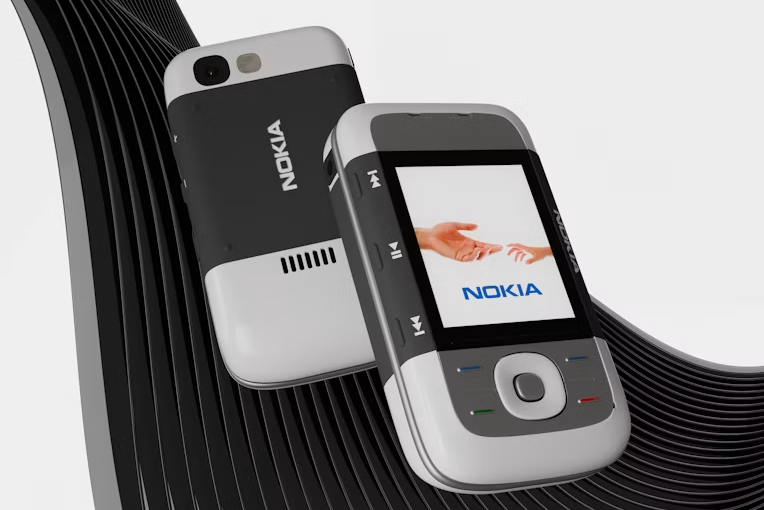
A Major Change for Mobile Users Across New Zealand
For many New Zealanders, a mobile phone is more than a device for making calls. It is a digital wallet, navigation tool, camera, entertainment system, work assistant, and connection to family and friends. That is why changes to the mobile network can affect everyday life far beyond the telecommunications industry.
One of the biggest changes to mobile connectivity in New Zealand has already happened. The country has retired its legacy 2G and 3G mobile networks as operators move customers toward faster and more modern 4G and 5G technology. The three major mobile operators completed their 3G shutdowns by the end of March 2026, while One NZ also completed its 2G shutdown.
For people using newer smartphones, the transition may have happened without them noticing. But for owners of older phones, imported devices, budget models, or phones purchased second-hand, the change can be much more significant.
The important question is no longer simply whether an older phone can connect to a mobile network. Instead, New Zealand consumers need to know whether their phone can make calls, send messages, use mobile data, and access emergency services over the networks that are now available.
Why Did New Zealand Switch Off 2G and 3G?
2G and 3G were important parts of New Zealand’s mobile history. They helped bring mobile communication to a much wider population and made it possible for people to access the internet from phones long before today’s smartphones became standard.
However, mobile usage has changed dramatically.
Modern consumers use smartphones for video streaming, online banking, social media, navigation, cloud services, video calls, gaming, and countless other activities. These applications require much more data capacity than traditional mobile services.
At the same time, 4G and 5G networks can provide faster data connections and greater network capacity. Shutting down older technologies allows telecommunications companies to reuse spectrum and invest more heavily in newer networks.
One NZ said that mobile data usage on its network increased by 18% over the previous year, highlighting how heavily smartphones are now used for everyday activities. The company also said that retiring older networks allows spectrum to be reused for 4G and 5G.
In other words, the 2G and 3G shutdown is not simply about removing old technology. It is part of a broader transformation in how New Zealanders connect to the internet.
Which Phones Are Most Likely to Be Affected?
The first group that needs attention is people who still own genuinely old mobile phones that depend on 2G or 3G.
However, the situation is slightly more complicated than simply checking whether a phone says “4G” on its specifications sheet.
Some older 4G phones can use 4G for mobile data but still rely on 3G for voice calls. This is because voice calling moved to technologies such as VoLTE, or Voice over LTE, after 4G networks were initially introduced.
Consumer NZ has warned that some 4G phones, particularly older, inexpensive, second-hand, or overseas-purchased devices, may not support 4G calling correctly.
This creates an important distinction.
A phone might appear modern because it supports 4G internet access, yet still have problems making ordinary phone calls if it cannot use VoLTE on a New Zealand network.
That is why simply seeing “4G” in the phone’s settings is not always enough.
Overseas and Second-Hand Phones Need Extra Attention
New Zealand consumers increasingly purchase smartphones from international online stores, second-hand marketplaces, or overseas trips. This can provide access to cheaper devices and a wider selection of models.
But network compatibility can be different from one country to another.
A phone designed for another market may support different frequency bands or have different carrier configurations. One NZ notes that some older 4G phones, particularly those purchased overseas or through parallel-import channels, may not support certain frequencies used for coverage in New Zealand.
This can become particularly noticeable in rural areas.
A device might work reasonably well in a city but have weaker coverage elsewhere because it lacks support for a frequency used to extend coverage over longer distances.
For New Zealand consumers, therefore, buying a phone is no longer just about screen size, camera quality, storage, and price. Network compatibility should also be part of the decision.
What About Older Smartphones That Still Work?
One of the most interesting consequences of the network transition is that a phone can be physically functional while becoming unsuitable for modern mobile networks.
Imagine a smartphone that still has a good screen, working camera, responsive buttons, and plenty of storage. Its owner may see no reason to replace it.
That is perfectly understandable.
The problem is that mobile connectivity depends on infrastructure outside the phone itself. A device can remain in excellent physical condition while becoming incompatible with the network environment around it.
This is especially important for people who prefer to keep smartphones for several years.
If an older phone has a healthy smartphone battery, a good display, and enough storage, its owner may naturally want to continue using it. But battery condition alone cannot determine whether the device remains suitable for everyday mobile communication.
Network compatibility, software support, VoLTE capability, frequency-band support, and security updates all matter.
Battery Health Still Matters When Choosing Whether to Upgrade
The 2G and 3G shutdown may encourage some consumers to replace older phones, but that does not mean every older device should immediately be discarded.
Battery condition is one factor worth considering.
A phone with a worn-out smartphone battery may already have noticeably shorter runtime. It might require charging several times a day, shut down unexpectedly, or become inconvenient during travel.
In that situation, replacing the battery can sometimes extend the useful life of a compatible phone.
But if the phone cannot reliably access New Zealand’s current mobile networks, a battery replacement alone will not solve the problem.
This is why consumers should separate two questions: “Is my phone physically healthy?” and “Is my phone technically compatible?”
The first question is about hardware condition. The second is about whether the device can continue to communicate with today’s networks.
Why Emergency Calling Makes This More Serious
For most people, losing mobile data would be inconvenient. Losing the ability to make an ordinary phone call would be much more serious.
But losing access to emergency calling is a different level of concern.
New Zealand’s telecommunications sector specifically warned consumers to check whether their phones could continue making 111 emergency calls after the 3G shutdown. Devices that rely on 3G for voice services may no longer be able to make calls once those networks are retired.
Consumer NZ has also emphasized that internet-based calling services should not be treated as an equivalent replacement for cellular emergency calling.
That makes checking an older phone especially important for elderly users, people living alone, families with children, and anyone who depends heavily on their mobile device for safety.
A smartphone does not need to be the newest flagship model to be reliable. But it does need to work properly on the networks available in the country.
Rural New Zealand Faces Its Own Challenges
Network changes can feel different depending on where someone lives.
New Zealand has large rural and remote areas where mobile coverage can be more challenging than in major urban centres. For these users, compatibility with specific network frequencies can be particularly important.
One NZ says its 700MHz Band 28 network is designed to extend coverage in rural areas and penetrate buildings more effectively in urban environments. However, some older or overseas-purchased phones may not support particular bands.
That means two phones with apparently similar 4G specifications may deliver different experiences.
For rural users, checking network-band compatibility before purchasing a replacement can therefore be just as important as checking the camera or processor.
The Environmental Question: Should Every Old Phone Be Replaced?
There is another side to the discussion that deserves attention: electronic waste.
If a phone still works well, throwing it away simply because it is old is not necessarily the best outcome.
New Zealand has established phone reuse and recycling programmes. Consumer NZ notes that phones can be recycled for free at hundreds of locations, including participating retailers, mobile operator stores, and other collection points.
This creates a better pathway for phones that can no longer meet modern network requirements.
Some devices may be suitable for reuse in other circumstances, while others can be recycled so that valuable materials can be recovered.
For consumers replacing a phone because of network compatibility, responsible recycling is therefore an important final step.
What Should New Zealand Smartphone Owners Do Now?
The most sensible approach is not to panic, but to check.
First, determine whether the phone supports 4G and 4G calling. If it is an Android phone, look for VoLTE or 4G calling settings. If it is an iPhone, check the mobile-network settings and make sure the device and operating system support the required connectivity.
Second, install any available software updates. Updates can sometimes improve network compatibility and enable features required by modern networks.
Third, consider where the phone was purchased. A device bought overseas or through an unofficial import channel may require additional compatibility checks.
New Zealand’s Telecommunications Forum recommends sending the word “3G” by free text to 550 to receive information about a device’s status from the relevant mobile provider.
Finally, if the device is no longer compatible, compare the cost of keeping it with the cost of upgrading.
A New Era for New Zealand Smartphones
The end of 2G and 3G marks a major turning point for mobile technology in New Zealand.
For many people, it will barely be noticeable. Their current smartphones will continue operating through 4G or 5G, and the transition may simply mean faster connectivity and greater network capacity.
For others, particularly owners of older or imported devices, it represents a clear reminder that technology does not exist in isolation.
A smartphone can have a beautiful display, an excellent camera, plenty of storage, and a perfectly healthy smartphone battery, yet still become unsuitable if it cannot communicate properly with the networks supporting it.
That is the real lesson from New Zealand’s 2G and 3G shutdown.
Choosing a phone today is about more than specifications. It is about longevity, network compatibility, software support, battery condition, repairability, and responsible recycling.
As New Zealand continues moving deeper into the 4G and 5G era, smartphones will become even more central to everyday life. The devices people carry in their pockets will continue to evolve, but one thing will remain important: making sure the technology people rely on can keep them connected when they need it most.