We are specialists in quality batteries. We have batteries, chargers and accessories for everything you can think of. Low prices, big inventory, expert advice. Find your battery here!
CES 2025 officially kicks off in Las Vegas on the morning of Tuesday, January 7 and runs through the end of the day on January 10. The “official” dates are specific to when the floor of the Las Vegas Convention Center is open to attendees, and ultimately belie the show’s true duration. A pair of press days kick off Sunday with a few smaller events leading up to a scrum of press conferences on January 6.
Press conferences
AMD(Monday at 11 a.m. PT/2 p.m. ET): AMD has its work cut out for it at CES 2025. Competitor Nvidia has been sucking the oxygen out of every room it graces, as the chipmaker remains at the forefront of the AI boom. So, how will AMD compete with Nvidia’s reported RTX 5000 announcement? The company should show off its own next-gen GPU. As part of an ongoing rebrand, the RDNA 4 cards could arrive as either the RX 8000 or RX 9000 series.
Toyota(Monday at 4 p.m. PT/7 p.m ET): We expect Chairman Akio Toyoda to go all in on Woven City, the carmarker’s “living laboratory.” Our automotive editor Kirsten Korosec adds: “Details are slim about exactly what will be revealed. TechCrunch, which was at the initial announcement in 2020, will be watching to see how startups will be incorporated into Woven City and whether Toyota followed through on its plans to build a fully connected ecosystem powered by hydrogen fuel cells.”
Samsung(Monday at 5 p.m. PT/8 p.m. ET): Samsung’s CES presser is always an odd duck. The Korean electronics giant generally keeps its powder dry when it comes to consumer electronics. After all, it’s expected to announce its latest flagship handset — the Galaxy S25 — toward the end of January. CES 2025 is going to continue the company’s tradition of TVs and appliances. There are also odds and ends like consumer robots that will most likely never see the light of day. Samsung has adopted the tagline “AI for All: Everyday, Everywhere” for the presentation.
Nvidia(Monday at 6:30 p.m. PT/9:30 p.m. ET): Nvidia will no doubt have the biggest CES 2025. After all, the company has pretty much the biggest everything nowadays. The chip giant is sporting a $3.4+ trillion market cap, due largely to its foundational position in the ongoing AI boom. Companies like OpenAI and Meta have purchased Nvidia processors by the boatload, and that’s unlikely to change in the new year. Founder and CEO Jensen Huang will help kick off CES 2025 “with his trademark leather jacket and an unwavering vision,” per Nvidia.
Notable keynotes from the following day include Twitter/X CEO Linda Yaccarino at 1:30 p.m. PT and Delta CEO Ed Bastian at 5 p.m. PT. The latter, notably, will take place at jam band hot spot the Sphere. Both will be available to stream at the officialCES YouTube page.
Trends
The show’shot topicwill almost certainly be the only thing anyone in tech seems to talk about these days: AI. That’s nothing new for CES, of course. The category has been at the forefront for years now, with 2024’s show delivering some of the earliest generative-AI-powered consumer devices.
TheRabbit R1was, perhaps, the most notable from last year’s show. The handheld generated a lot of buzz at the event, though as with other AI devices likeHumane’s AI Pin, the product failed to live up to any expectations.
The subject won’t be limited to this manner of product, however. This year, any product thatdoesn’tmention AI in some form will be in a small minority. As mentioned above, Nvidia and AMD will be going head-to-head on the chip front. Nvidia will be a particular focus, as the chipmaker sets the stage pace for AI in 2025, including the release of the much anticipated GeForce RTX 50 GPU. The company will also touch on other key categories, including robotics and transportation.
AI will grace everything from cars to refrigerators this year. Some applications will prove genuinely useful, but many — if not most — will be a solution in search of a problem. This is always an important thing to keep in mind at an event like CES. It’s a huge show — last year’s eventhosted4,300 companies and nearly 140,000 attendees. There’s a lot of noise, and plenty of AI “applications” exist in attempt to rise above it.
Over the past decade, CES has transformed into one of the year’s top automotive shows. This has primarily been driven by automotive manufacturers’ bids to become bleeding-edge pioneers: Where better to showcase that than the year’s biggest consumer tech show? The 2021 addition of the Las Vegas Convention Center’s West Hall has facilitated that expansion.
Questions remain about whether CES can maintain its status as a major car show. Anecdotally, fewer large names appear to be participating in a meaningful way, including U.S. manufacturers like Ford. This is likely due, in part, to Detroit’s North American International Auto Show returning after a year off. That event is set to kick off January 10, overlapping with CES.
That’s not to say that there won’t be big headlines out of Vegas next week. In addition to Toyota’s participation, Sony’s press conference should once again feature Afeela, the company’s collaboration with Honda. Firms like Hyundai —which now owns Boston Dynamics— will likely showcase its focus on humanoid and other robotics.
Robotics have increasingly become a focus point for CES in recent years. I anticipate most transportation companies discussing the topic, from manufacturing to eVTOLs. The car industry has been the tip of the automated manufacturing spear for years, a fact accelerated by various employment and supply chain crises since the pandemic. Meanwhile, eVTOLs scored a majorFAA winlate last year.
CES continues to be a major launching pad for computer monitors. In fact, Samsung, ASUS, and MSI all announced the addition of“the world’s first” 27-inch 4K OLED monitorswith 240Hz refresh rates. Smart appliances always get a lot of love at the show as well.LG has already revealeda bunch of news on that front. Samsung should follow suit at its press conferences on Monday.
After an extended lull, I anticipate a new wave of smart home devices. Between interoperability through theMatter standard, the explosion of generative AI platforms, and a second wind for smart assistants from Google, Amazon, and Apple, companies will be showcasing how these devices might excel where their predecessors failed.
After its latest hype cycle, extended reality still has a lot to prove. The Vision Pro hasn’t taken off as Apple had hoped, and competitors are struggling to compete with Meta’s ability to subsidize the cost of the Quest. Big names in the space like HTC and Magic Leap have largely pivoted to enterprise applications. Chipmakers like Qualcomm, however, are still very much focused on making a splash.
It’s still investigating what led to Nest products becoming suddenly unhelpful.
What you need to know
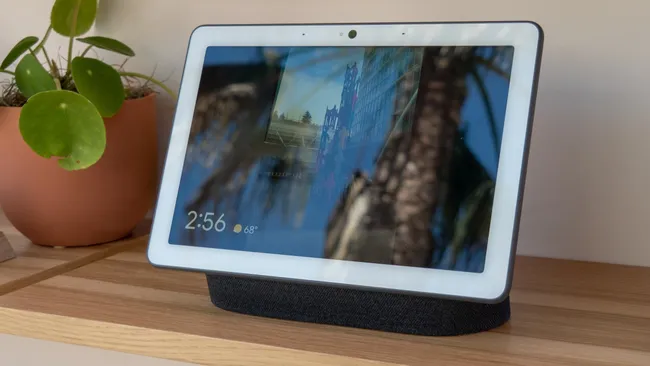
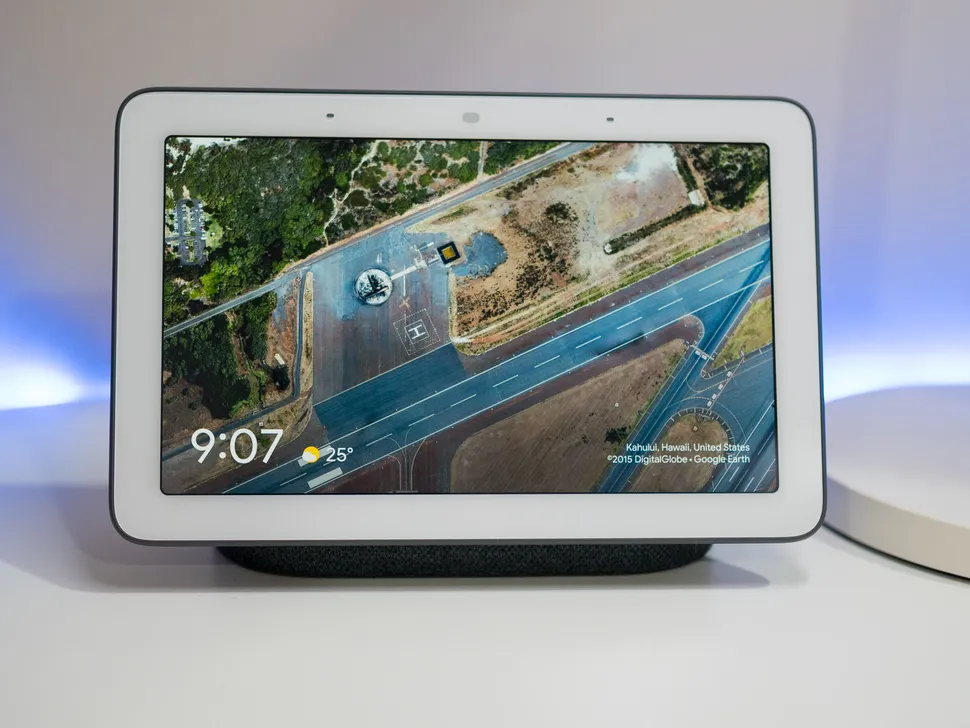
Google Home and Nest products experienced an issue that led speakers and displays to become unresponsive this week.
The problem specifically affected verbal commands, even those as simple as “What’s the weather?”.
Google says the issue should be resolved for most users now, and is investigating what caused the problem.
Google said today it resolved widespread issues withGoogle Homeand Nest products not responding to commands that plagued users for nearly a week. First reported byAndroid Authority, the problems left Home and Nest speakers and displays incapable of answering even the most basic questions, like the time or the weather. The company is still investigating what caused the problems, but confirmed most users shouldn’t experience the unresponsiveness now.
“The team is still investigating the root cause but have resolved the issue, so all users should be up and running now,” a Google spokesperson explained.
The problems, which specifically affected voice commands, can be traced back to at least Dec. 30 as evidenced bypostson Google’s support forum (via9to5Google). Although the Nest Hub displays in particular showed the correct weather and time, the voice assistant requests would hang up when asking for the same information. The displays showed a perpetual loading screen and couldn’t respond to basic requests.
Certain requests, like smart home or media control, were still functional. However, anything that required a Home or Nest speaker or display to fetch a response would fail. Luckily, it appears that the issues are resolved. Android Authority reported that its issues were no longer affecting its units, and Android Central tested that itsGoogle Home HubandNest Hub Maxwere both able to respond to requests.
It’s unclear what caused the speakers and displays to become unable to respond to requests over the last week or so. The bug could be related to how Google Home and Nest products decide which one will respond to requests, assupport posts indicatepeople with multiple speakers or displays were adversely affected.
The best computing devices that Samsung has to offer.
Samsung doesn’t have a massive portfolio of laptops the way others like Dell and HP do, but the handful of models that it does offer are pretty great. There is the best Samsung laptop for everyone, especially with some of the new Copilot+ models it has introduced in 2024.
These laptops tend to be a bit pricey though, with most of them starting at roughly $900. Luckily, deals aren’t uncommon, especially during sale events and major holidays.
Of course, picking the right Samsung laptop for you is going to depend on your own personal needs, but if we had to select one device for most people, the Galaxy Book 4 Pro is still a great choice. That being said, every laptop has its pros and cons, so keep reading to find what is the best Samsung laptop orbest Chromebookthat will fulfill all your needs.
+Very affordable +Fan-less +Snapdragon processor +Plenty of ports, including USB-A
Reasons to avoid
-Battery life isn’t great -Doesn’t match Lenovo IdeaPad Chromebooks
Although it’s a few years old at this point, the Samsung Galaxy Book Go continues to be a solid option if you need an affordable laptop that you can count on. Typically retailing for less than $300, the Galaxy Book Go hits that delicate balance between budget-friendliness and quality specs. The laptop comes with the solid Qualcomm Snapdragon 7c processor built right in, making it fast and entirely fan-less.
The ultra-thin Samsung laptop measures just 14.9mm in height, plus you get a nice 14-inch HD display and a full-size keyboard. Dual Dolby Atmos speakers deliver surprisingly crisp and clear sound quality, plus you get all the ports you need, including two USB-C, one USB-A, a headphone jack, and a microSD slot.
At this price point, don’t expect to be blown away by the performance or battery life, but if you’re looking for a Samsung laptop that’s thin, cheap, and quiet, the Galaxy Book Go is tough to beat.
Audio:AKG Quad Speaker (Woofer Max 5W x 2, Tweeter 2W x 2), Dolby Atmos, 3.5mm jack
Camera:1080p, dual mics
Dimensions:(14-inch) 312.3 x 223.8 x 11.6 mm / 355.4 x 252.2 x 12.8 mm
Weight:2.71 lbs / 3.44 lbs
Reasons to buy
+Intel Core Ultra processors +Super thin and lightweight construction +Plenty of ports +Sturdy construction
Reasons to avoid
-No touchscreen -Expensive
Sleek and lightweight, the Samsung Galaxy Book 4 Pro ticks all of the boxes if you’re looking for a new, do-it-all laptop. It comes with a vibrant 3K AMOLED display and utilizes Intel’s latest Core Ultra processors to deliver consistently excellent performance, regardless of the task.
This latest CPU also features a dedicated co-processor (NPU) for accelerating AI tasks, making it future-ready. Dolby Atmos and AKG speakers provide great sound, and you get plenty of ports on both sides of the laptop, including HDMI, two USB-C ports, amicroSD slot, and even a USB-A port, which is a rarity these days.
Although all of this sounds great as it is, the specs become even more exciting when you consider the laptop’s remarkably thin and lightweight design. The 14-inch version of the Galaxy Book 4 Pro clocks in at just 11.6mm tall and weighs a mere 2.71 pounds, despite the fact that the laptop also boasts a durable, all-metal construction.
The 14-inch model typically retails for around $1,450, while the 16-inch variant is priced at $1,750. Neither option is exactly cheap — plus you don’t get a touchscreen — but if the Book 4 Pro falls within your budget, you’re in for a powerful laptop that should work well for just about anyone.
+The thinnest and lightest Chromebook +Beautiful and massive display +Quick Insert Key is convenient when you find a use for it +Intel’s Raptor Lake chip is a welcome addition +The keyboard is excellent and comfortable to type on +Includes a surprising number of ports
Reasons to avoid
-Limited to one configuration -Might be too expensive for some -Battery life needs to be better -No touchscreen or convertible design -Lacking a fingerprint scanner -Offset keyboard and trackpad isn’t for everyone
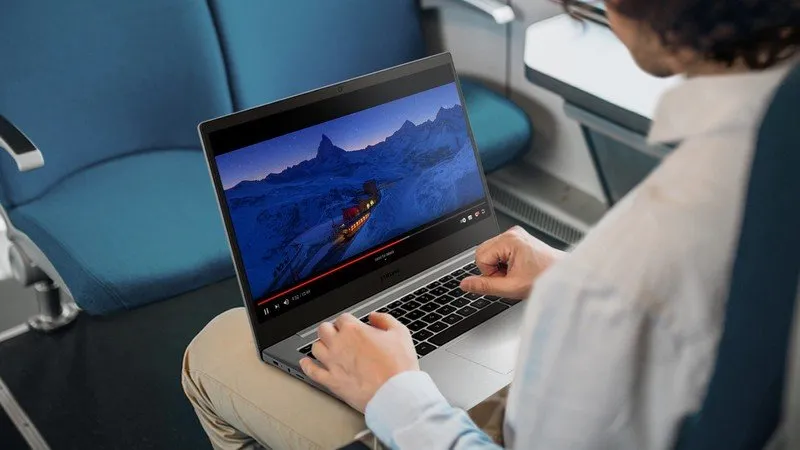
When you’re looking for the best Chromebooks in any category, it’s important to find laptops that have a nice value-to-performance ratio. In other words, Chromebooks don’t need to blow you away with premium performance, they just need to be reliable, versatile, and powerful enough to handle most of your daily tasks. Suffice it to say, the latestSamsung Galaxy Chromebook Plusgets the job done with flying colors.
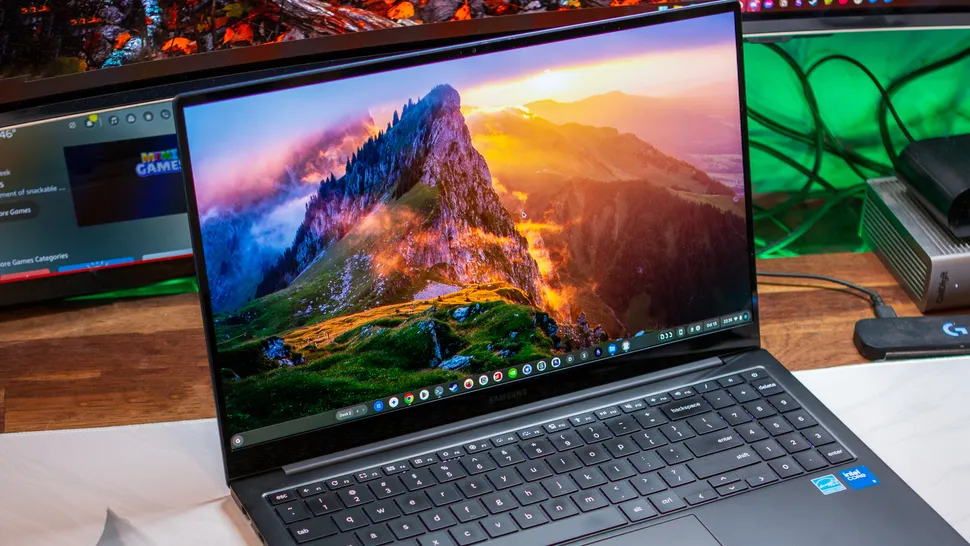
The Galaxy Chromebook Plus features a thin and lightweight design, but it doesn’t compromise on performance. Compared to our previous pick, the Galaxy Chromebook 2 360, the new Chromebook Plus loses the convertible design and touchscreen but I don’t think that should be a deal-breaker. In fact, it gains a gorgeous 15.6-inch AMOLED with slim bezels. The processor is also from the newer Intel ‘Raptor Lake’ series, but there’s just one configuration on offer.
It’s pricier than the outgoing model at roughly $700, but you’re also getting a much more premium experience. We found the keyboard to be excellent for typing, and the Galaxy Chromebook Plus has a surprising number of ports given its slim size. A few annoyances aside, like the lack of a fingerprint sensor and the average battery life, it’s a great package overall. Once you have it in your hands, these are thefirst things to do on your Chromebook.
Best premium laptop
(Image credit: Samsung)
4. Samsung Galaxy Book 4 Ultra
Best premium laptop
Specifications
Display:16.0-inches (16:10), 2880 x 1800
Processor:Up to Intel Core Ultra 9 185H
Graphics:Intel Arc Graphics + Up to Nvidia GeForce RTX 4070
RAM:16GB / 32GB LPDDR5
Storage:1TB NVMe (plus expansion slot)
Connectivity:Wi-Fi 6E, Bluetooth 5.3
Ports:1x USB-A, 2x USB-C, HDMI, microSD, 3.5mm
Battery:76WHr
Audio:AKG Quad Speaker (Woofer Max 5W x 2, Tweeter 2W x 2), Dolby Atmos, 3.5mm jack
If money is no object, you can’t do much better than the Samsung Galaxy Book 4 Ultra. This laptop is the brand’s most premium flagship yet, and it doesn’t disappoint when it comes to unique features and top-of-the-line performance. This laptop brings together all of your Galaxy devices to form a cohesive ecosystem, but that barely scratches the surface of everything the Ultra can do.
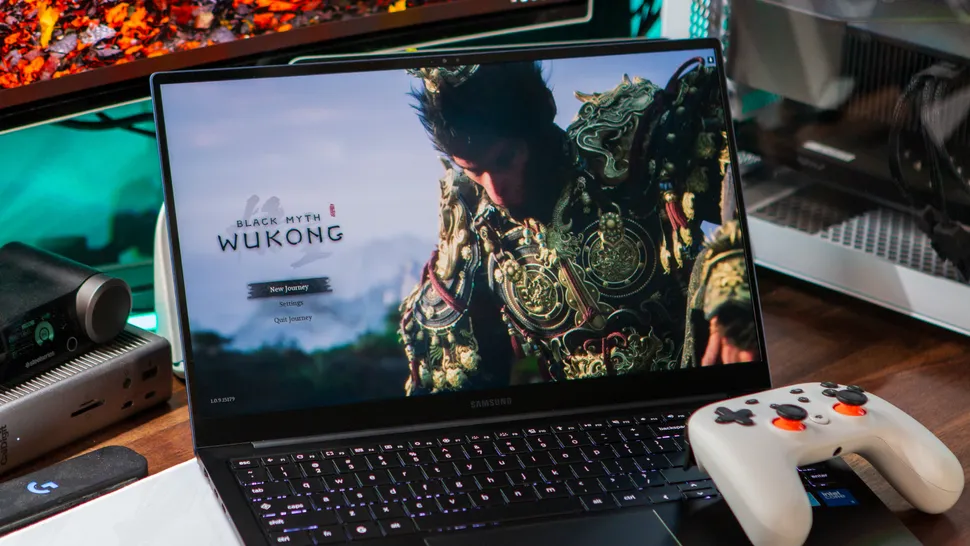
The Galaxy Book 3 Ultra boasts a vibrant 16-inch 3K AMOLED display with a 120Hz refresh rate, plus you get a 1080p webcam with a two-mic system and AKG Quad speakers with Dolby Atmos. It also boasts of the latest Intel Core Ultra processors, but unlike the other laptops in the Book 4 series, the Book 4 Ultra can be kitted with up a Core Ultra 9 processor and up to an Nvidia GeForce RTX 4070 graphics card, making it very powerful for professional content production or even gaming.
Not everything is rosy with the Galaxy Book 4 Ultra, however. With a starting price of around $2,400, the laptop may be out of reach for many people. There’s also no touchscreen or S Pen support. Despite these shortcomings, if you’re already a Samsung user and you want the most premium laptop that the brand has to offer, the Galaxy Book 4 Ultra is certainly worth checking out.
+Convertible design +Touchscreen display is compatible with an S Pen +Thin and lightweight +Large battery capacity
Reasons to avoid
-No smaller display option
The new Galaxy Book 5 Pro 360 comes in at a slightly higher price than the Book 4 Pro 360, but it’sthemodel you should be considering. The main reason being this is a Copilot+ PC, which means you’ll have access to all the exclusive Windows 11 AI features just like the Snapdragon Samsung laptops. The other big reason is that it has Intel’s latest Core Ultra (Series 2) processor which delivers vastly better computational and graphical performance than Series 1.
You’ll also be able to use Samsung’s excellent S Pen which will let you take advantage of the native Windows Ink functionality. But, since this is a Samsung device, the company has baked in the same Air Actions menu that you’ll find on thebest Samsung tabletsand phones. The rest of the specs are similar to the previous model.
The Book 5 Pro 360 only comes in a single display size of 16 inches. It’s a brilliant 3K AMOLED touch panel, but it’s also quite large so it might not be the best choice if you travel a lot. You also get ample RAM and storage, and an excellent set of physical ports. If you want a premium 16-inch Samsung laptop that has most of the features of the Ultra model but with a lower sticker price, the Book 5 Pro 360 fills that need perfectly.
Best Windows on Arm
(Image credit: Samsung)
6. Samsung Galaxy Book 4 Edge 14″
Best Windows on Arm
Specifications
Display:14-inch, AMOLED display (2,880×1,800)
Processor:Qualcomm Snapdragon 8 Elite
RAM:16GB
Storage:Up to 1TB
Connectivity:Wi-Fi 7, Bluetooth 5.3
Battery:61.8WHr
Audio:Quad Stereo Speakers, Dolby Atmos
Camera:2MP
Dimensions:325.4 x 226.4 x 14.9 mm
Weight:3.4 lbs (1.54g)
Reasons to buy
+Impressively slim design +Integrates well with Galaxy AI and Samsung ecosystem +Benefits of Copilot+ AI features +Brilliant 3K AMOLED screen +Snappy performance
Reasons to avoid
-Non-native Windows on Arm apps might have compatibility issues
The Samsung Galaxy Book 4 Edge series of Copilot+ PCs is your best bet if you’re looking for zippy Windows 11 performance, but with the instant reponse that typically comes with Arm-based devices. The Galaxy Book 4 Edge 14″ and 16″ are the premium models with the top-end Snapdragon X Elite SoC and 3K AMOLED displays, while the Galaxy Book 4 Edge 15.6″ is an affordable option with the Snapdragon X Plus SoC and a FHD LED display. In reality, the premium Edge 14″ is often priced lower than the budget Edge 15, which makes it better value.
Our friends over at Techradar.com havereviewedthe 16-inch model, and have praised the portability of this laptop thanks to its super-slim design. The Snapdragon X Elite chip also delivers excellent performance and there’s deep integration with other Samsung devices and Galaxy AI, making it a great addition if you already own one of thebest Samsung phones. The two things going against it are the average battery life and the fact that you could face compatibility issues with apps that aren’t designed to run on Arm natively. While Windows 11’s built-in Prism emulator does its best to run x86 apps on Qualcomm’s silicon, it can be a hit or miss at times.
You get plenty of ports, storage goes up to 1TB, and there’s 16GB of RAM on all the variants. Plus, you get to use all of the exclusive Windows AI features like automatic live captions when watching videos, Windows Studio Effects, Cocreator in Paint, and lots more.
How to choose
Just like any other major device purchase, choosing the best Samsung laptop is going to come down to your budget and individual needs as a user. When you take a look at something like the Galaxy Book 4 Pro or the Galaxy Book 4 Ultra, there’s really no wrong choice, as it just depends on your budget.
With the combination of the latest processors from Intel and an ultra-slim and sleek design, the Galaxy Book 4 Pro makes for an easy choice. This latest version is even more powerful thanks to Intel’s Core Ultra processors. If you have a smaller budget or you simply want something a little different, there are plenty of great Samsung Chromebooks and tablets to choose from. The Galaxy Book Go is an old model now, but it works if all you’ll be doing is basic work like checking mails or watching videos. The Galaxy Chromebook Plus is a good choice for students too, or if you’re someone that primarily uses web apps.
The Galaxy Book 4 Edge series is also an option if you’re looking for a bit more versatility and want to take advantage of all the best Windows 11 AI features. There are multiple models and variants to choose from, that should satisfy most users.
For more serious users who don’t mind loosening the purse strings, the Galaxy Book 4 Ultra is splurge-worthy, offering incredible power for heavy work apps and gaming. If you want something of its similar calibre but at a more approachable price, the Galaxy Book 5 Pro 360 is a great convertible for you to consider.
Here’s the lowdown in the next generation of wireless charging
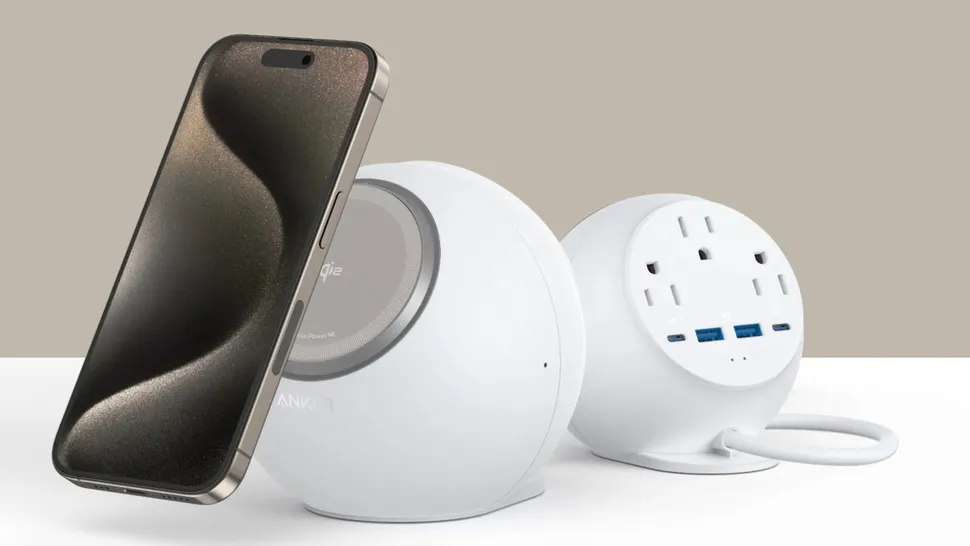
(Image credit: Anker)
Qi2 wireless chargingwas first announcedall the way back inCES 2023, promising that something akin to Apple’s MagSafe would come to Android phones in the near future. So far there hasn’t been much progress in making that promise a reality. But rumor has it that 2025 could be the year that Qi2’s magnetic wireless charging could finally go mainstream.
It’s claimed that Samsung could be including Qi2 on theGalaxy S25series, which may make it the first major Android phone to feature the new technology. Considering Samsung probably won’t be the last phone maker to adopt Qi2, it’s somethingI am very excited about seeing. There’s improvements to wireless charging speed and efficiency, opportunities to exploit the magnets in other ways, and more.
Here’s everything you need to know about Qi2 wireless charging — and why I’m so excited to finally see it arrive.
What is Qi2?
Qi2 wireless charging is the second generation of the Qi wireless charging standard. Like Qi1, which is more or less ubiquitous now, Qi2 was developed as an open standard by the Wireless Power Consortium.
The idea behind Qi2 is to improve upon what wireless charging already offers in a bunch of different ways. This includes adding magnets, with the help ofMagSafedevelopers Apple, while also offering big upgrades to the charging itself. Upgrades like faster speeds, better power efficiency and improved safety. All so that the wireless charging experience is better for everyone involved.
While Qi2 was first revealed by the WPC atCES2023, the standard wasn’t finalized until January 2024. This meant phone makers, barring Apple who had MagSafe, couldn’t implement the technology for at least a year after its initial reveal.
What are the benefits of Qi2?
(Image credit: Anker)
The major benefit to Qi2 is the ring of magnets in the back, positioned around the wireless charging coil. These are designed to connect to other magnets in Qi2 wireless chargers, ensuring that the coils in your device and the charger are perfectly positioned every single time. Anyone that’s ever had to shift their devices around to start wireless charging will know how frustrating that process can be.
That instant positioning also ensures that your phone is able to wirelessly charge more efficiently. Because the coils are in perfect alignment, it means that more power goes into your battery and less power is wasted as a result. Not only does this prevent the lost power turning into heat, which is pretty bad for your phone and battery in high-enough doses, it has the added benefit of speeding up your charging session.
Speaking of which, Qi2 offers noticeably faster charging speeds.Normally Qi1 has a maximum charging speed of 7.5W, which isn’t all that great. Qi2 ups that number to 15W, allowing all Qi2-certified phones to charge at double the speed than before using any Qi2-certified charger.
This speed pales in comparison to some wireless charging speeds, some of which can hit speeds of 80W. However, those speeds are only accomplished by proprietary wireless charging technology, meaning they rely on specialized chargers made by the phone’s manufacturer. Qi2 can’t replace that, but it will ensure faster speeds for all those times where you can’t use the official charger.
Qi2 also offers adaptive charging speeds, which is new for wireless charging, rather than fixed power output. This allows your phone and charger to communicate, ensuring that no unnecessary power is sent through. Not only does this boost efficiency, it’s another feature that helps prevent excess heat build-up. Again, that’s bad for the long-term health of your phone — and potentially a safety hazard.
Finally, the magnets in the back of the phone opens up the opportunity for non-iPhones to use magnetic accessories. Many iPhone-compatible options are on sale and we’ve seen the likes of magnetic phone stands, grips and tripods already. I’ve also seen magnetic wallets, and wireless charging batteries that snap to the back of your phone. Since MagSafe and Qi2 are compatible, it means all those iPhone accessories will work with Qi2 phones.
How is Qi2 different from MagSafe?
(Image credit: Apple)
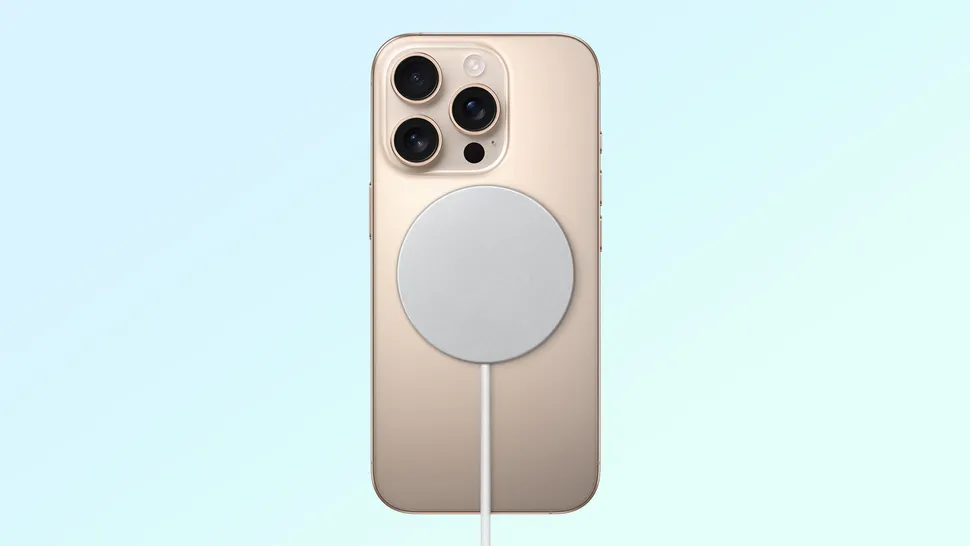
Apple’s involvement in the development of Qi2 means that it bears a striking similarity to Apple’s MagSafe. The two are close enough that a casual observer could consider Qi2 as the “MagSafe for Android phones”. But it’s important to remember that they are not identical.
MagSafe is a proprietary standard owned and operated by Apple, and means Apple can do whatever it likes with it. MagSafe phones are Qi2 compatible, but the opposite isn’t necessarily true.Apple increased MagSafe charging speedsforiPhone 16, allowing up to 25W speeds — so long as you buy the new, faster, MagSafe charger. Slap those same phones onto a Qi2 charger, and the most you’ll get is 15W.
MagSafe also features an NFC chip that can communicate with MagSafe chargers. This allows the phone to remember chargers, and any setting you may have set up. For example, if you have specific Standby mode widgets and settings on one charger, but want things set up differently for another, MagSafe can remember this and act accordingly. Qi2 can not.
MagSafe and Qi2 also have different requirements and certification processes. Typically, Apple is a lot more restrictive about what third-party developers are allowed to do if they want to be certified and able to use Apple trademarks — and that’s before you bring up the associated costs. So expect officially-licensed MagSafe accessories to be more expensive than Qi2.
So while MagSafe iPhones are compatible with Qi2, the opposite isn’t true for Qi2 Android phones. Unfortunately, the lack of Qi2 phones on the market means we don’t really know what happens if you try and charge a Qi2 phone with MagSafe. Android phones can wirelessly charge with a MagSafe charger at Qi1 speeds, so there shouldn’t be an issue of compatibility. We just don’t know if Qi2 phones will get a Qi2 experience or if the charger will default to Qi1.
Which phones actually support Qi2 right now?
(Image credit: HMD)
There aren’t many phones that support Qi2 right now, and the overwhelming majority of them are MagSafe iPhones. Qi2 chargers will still wirelessly charge phones that support Qi1, but your experience will be identical to using an ordinary Qi1 charger — unless you’ve invested in amagnetic phone case that ensures perfect alignment.
Here are all the phone that can charge with Qi2 wireless charging.
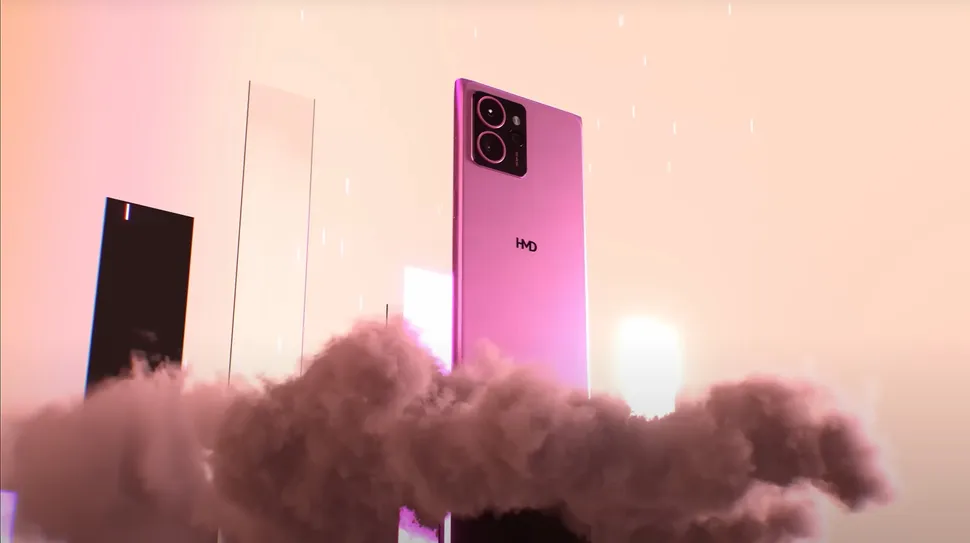
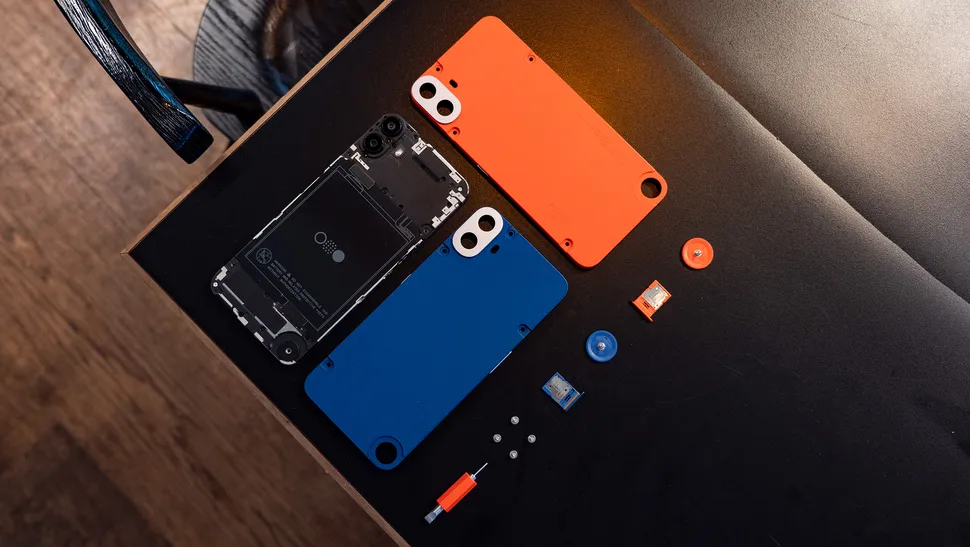
That’s right, currently the only Android phone that supports Qi2 is the HMD Skyline, a mid-range $499 phone that’s been built for DIY repairs. While not a bad phone, it’s certainly not the kind of place you’d expect to see brand new technology debut.
Rumor has it that theSamsung Galaxy S25could feature Qi2, so hopefully this list gets to expand a little bit over the next 12 months. But until that happens, this is what you’ve got.
You can increase your internal storage on these Android phones.
Whether you carry your media library with you, shoot a lot of 4K videos, or are looking to download a few movies ahead of a long commute, having a phone with expandable storage is essential for lots of users.
Thankfully, plenty of options are still available, although most of them are budget phones or mid-rangers with a few compromises here and there. Still, you might be surprised by the quality of the phones I’ve gathered for this guide. Some of these devices may even come with features you didn’t expect, such as 3.5mm headphone jacks and 120Hz displays.
For thebest Android phoneswith expandable storage, all you need is a stellar microSD card and you’ll be all set to store as much data on your device as needed. With theright memory card, you can even store your apps on the external storage.
Main camera:50MP, ƒ/1.8, EIS, 79-degree FoV, Ultra XDR
Front camera:16MP
Battery & charging:5,000mAh, 33W wired charging
Water and dust resistance:Dust and splash resistant
Reasons to buy
+Bright and beautiful AMOLED display +Hardware can be customized +Quick processor +Three years of software updates +Excellent cameras
Reasons to avoid
-No NFC -5G support isn’t great in the U.S. -No headphone jack
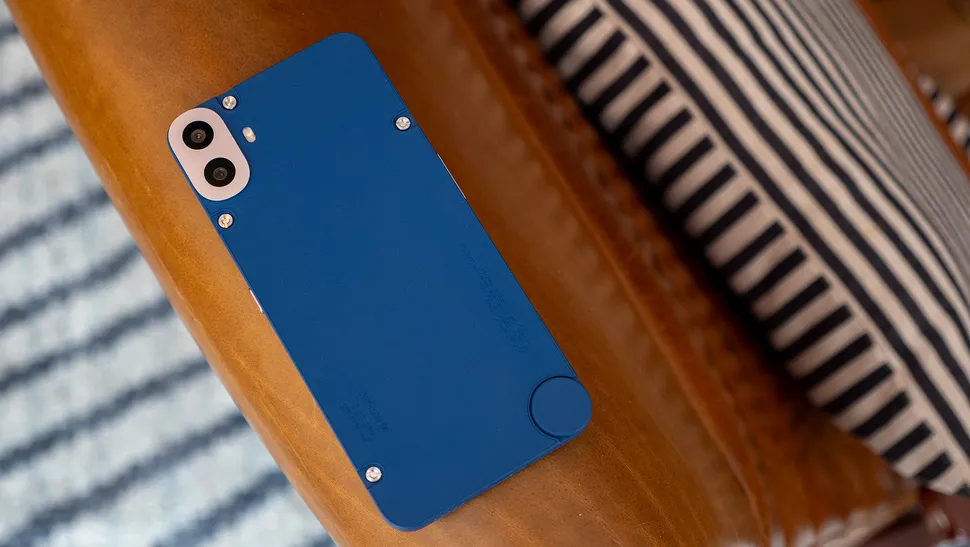
Expandable storage has been relegated mainly to budget-tier phones in the past few years which normally means boring designs with disappointing performance, but withNothing CMF Phone 1, you can get microSD expansion in a phone with a flashy and unique design, great cameras, solid performance, and a nice AMOLED display. With a MediaTek Dimensity 730 SoC you’d be forgiven for thinking performance will struggle, but performance is solid with little lag, and even solid gaming performance. It’s not the fastest chip you can get, but it’s more than powerful enough for average day-to-day usage.
The main 50MP camera on the back and the 16MP front camera both punch above their weight with a responsive app and overall good quality. The battery is also good at 5,000mAh with quick 33W charging. The phone is also set to receive two Android updates with three years of security updates, which is solid for this price.
One thing to keep in mind, especially if you’re in the U.S., is that this phone isn’t really designed for the Big Three carriers, but will work on T-Mobile if you don’t mind a few connection drops here and there. The problem is, that the phone just doesn’t support all of the bands common in North America and is more suited to the European market. Still, if you’re looking for something unique and have a carrier using T-Mobile, the CMF Phone 1 is an impressive device.
+6.5-inch 90Hz AMOLED screen +Samsung’s usual five-year promise regarding updates +5,000mAh battery with 25W fast charging +Decent main camera
Reasons to avoid
-So-so performance -Lacks any IP rating
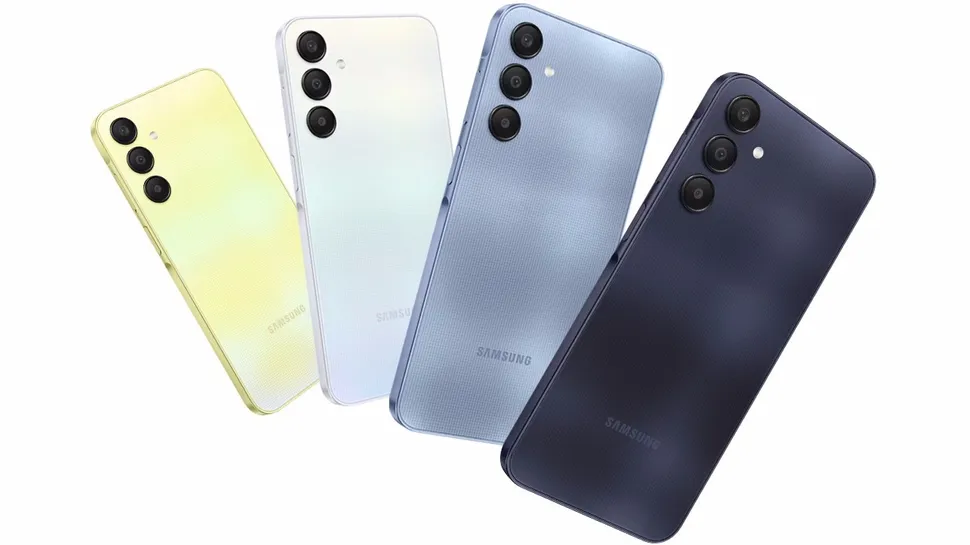
Craving that signature Samsung look and feel but can’t afford much? Don’t worry, the Samsung Galaxy A25 5G is a fine choice when hunting for phones with expandable storage. The Galaxy A25 gives you a FHD+ Super AMOLED panel that measures 6.5 inches wide and has an impressive 120Hz screen refresh rate.
Now this is nearly an entry-level device, but it has just enough going for it that it sits a notch above that banner. For instance, theSamsung phoneis kept alive by a gigantic 5,000mAh cell. You also get a headphone jack and a 50MP main camera, even though it doesn’t hold a candle against the photographic capabilities of the Galaxy S series of Samsung phones.
You get the Exynos 1280 chipset from the oldGalaxy A53 5G, which is okay for everyday usage and light multitasking but stutters during intensive gaming sessions. Still, if you must have acheap Samsungwithin a very tight budget, the A25 5G is a decent option.
+Nice 120Hz OLED screen +Solid camera performance for the price +Outstanding battery and fast charging +Comfortable feel with vegan leather
Reasons to avoid
-Only water-repellent, no IP rating -One platform update -Fingerprint sensor can be slow
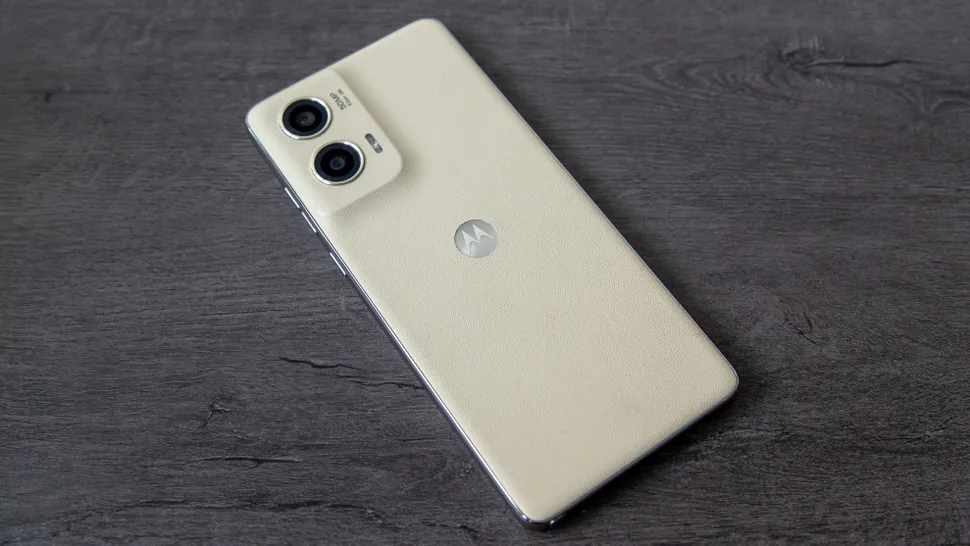
TheMoto G Stylus 5G (2024)is a popular budget phone thanks to its solid performance with a Snapdragon 6 Gen 1 SoC paired with 8GB of RAM. This phone has a nice AMOLED display with up to 120Hz refresh rate and 1,200 nits of peak brightness so you can see it outdoors. This phone comes with a 5,000mAh battery pack that can charge at up to 30W wired and 15W wireless.
The camera system is also solid with a 50MP main shooter and a 13MP ultrawide camera. You can take some nice pictures in good lighting, but keep an eye on storage. You can get it with either 128GB or 256GB of storage, so expanding this phone with a microSD card will be a must for some. It also has a 3.5mm headphone jack so you may also want the storage to hold your favorite music so you can save some data.
This phone ships with Android 14, and its performance is solid, however, Motorola is only planning to give this phone a single Android version update. With phones from Samsung and Google offering much longer support, it’s a bit disappointing that Motorola is sticking to just one. Still, if you don’t mind the older operating system, strong 5G band support makes this a great phone to bring to other carriers.
Memory & storage:12GB RAM, 256GB or 512GB, expandable
Main camera:48MP wide,12MP ultrawide, 12MP telephoto
Front camera:12MP
Battery & charging:5,000mAh, 30W wired charging
Water and dust resistance:IP65/IP68
Reasons to buy
+The Snapdragon 8 Gen 2 is still fast +Strong sub-6 5G support +Water and dust resistant IP65/IP68 +Large 5,000mAh battery with 30W charging
Reasons to avoid
-Expensive -Software support could be better
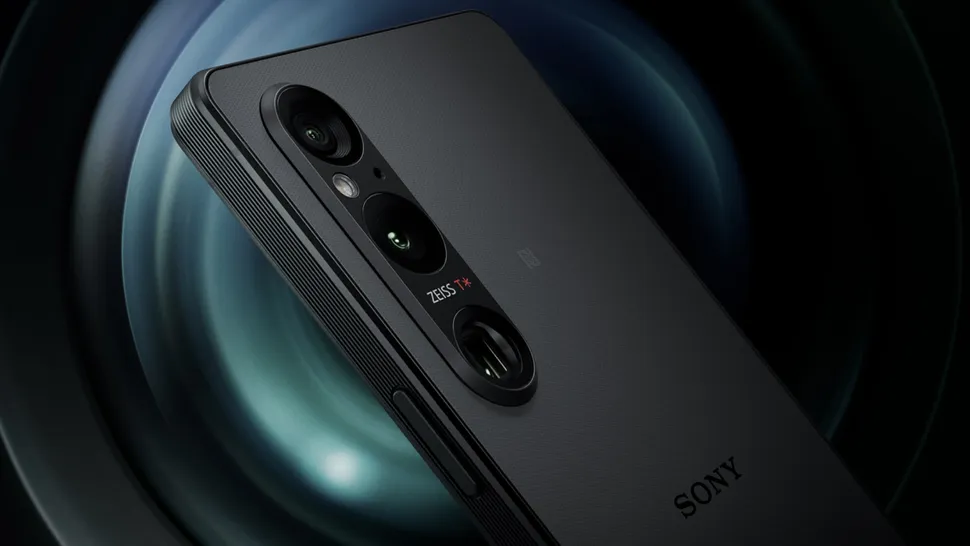
Memory card expansion and 3.5mm headphone jacks have become all but extinct in high-end Androids. Good thing Sony doesn’t seem to be bothered by what the rest of the industry is doing and has release the Xperia 1 V with both. This phone comes with the Snapdragon 8 Gen 2 SoC that was common in flagships from 2023, but it’s still plenty powerful for any app you’ll find on the app store. It’s got 12GB of RAM and ships with 256GB of built-in storage.
Available in either green or black, this is a sleek phone with three cameras on the back. It has a 48MP main cameras with a 12MP telephoto and 12MP ultrawide camera playing backup. Another rarity this phone ships with is a 3.5mm headphone jack. Headphone jacks aren’t necessarily a budget feature and many of the best Sony headphones ever made use a wire, so it’s nice that Sony has kept it around.
Software support could be better on this phone, though it has been updated to Android 14 already. Sony’s phones are often targeted at creators, and if you want to get high-quality video off of your memory card in a hurry, you’ve also got a USB-C 3.2 port with 5Gbps speeds supported.
+Three years of security updates +Superb 50W wired fast charging +120Hz LCD screen feels good +Great build quality
Reasons to avoid
-108MP camera is gimmicky -Only one major platform update
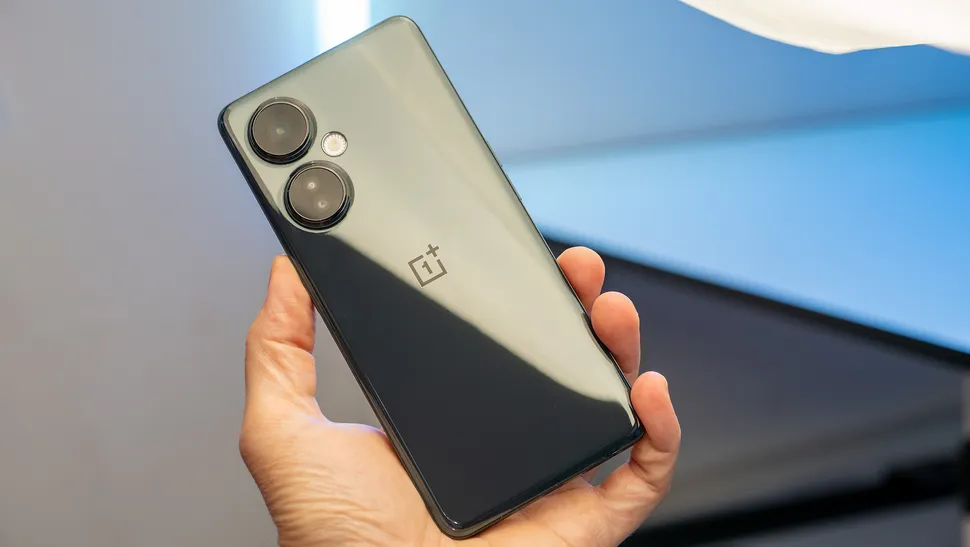
Like so many of the best budget Android phones, theOnePlus Nord N30 5Gsports the 6nm Snapdragon 695 5G chipset. You can insert a microSD card in the slot and add more storage in a jiffy. It’s an oldie, but a goldie.
The Nord N30 5G has a lot of neat features, but the coolest one of them all is the 50W SUPERVOOC charging. Now that’s an incredibly fast charging speed that you certainly won’t find on any other phone with expandable storage.
The 108MP camera sounds amazing, but it’s actually more of a buzzword. As per our testing, the picture quality could be better. You will appreciate the snappy 6.27-inch 120Hz IPS LCD display though.
OnePlus only promises one OS update for this model, but you get three years of guaranteed security updates. Since Android 15 is on the horizon, you won’t get anything beyond Android 14 on the Nord N30. But the phone is still a worthwhile purchase in 2024.
+Low cost or free with a plan +Large 5000mAh battery with 30W charging +Support for 5G on T-Mobile +Repairable with parts at iFixit
Reasons to avoid
-Fairly slow SoC -Not Android 14
HMD, the company that makes Nokia phones, has stayed focused on budget-friendly Androids and it continues to make some of the cheapest new phones available. The G310 is exclusive to T-Mobile carriers in the United States and comes in at well under $200. The Snapdragon 480+ 5G chipset not only gives the phone enough power for social media and messaging apps but also full 5G connectivity on T-Mobile’s sub-6 5G network.
It has a 50MP main camera on the back for decent pictures in well-lit environments. and a 5,000mAh battery that can easily make it to the end of the day. The screen is also a plus with a 6.56-inch IPS LCD running at up to 90Hz. If you like music, you’ve got a 3.5mm headphone jack as well as Bluetooth. You can even repair this phone withparts available at iFixit.
Keep in mind that this phone is only designed to work with T-Mobile, so bringing it to a Verizon or AT&T-based carrier likely won’t work out. Still, for the low price, this phone is a good fit for T-Mobile.
How to choose
With most of thebest Android phonesmoving away from expandable storage, you might think the format is becoming a dying breed, but don’t panic just yet. There are still plenty of great phones with microSD support, though the vast majority of them are budget offerings. Grab some of the best microSD cards, and you’ll be able to expand your storage with ease.
While its limited availability and carrier support mean its not the right pick for everyone, the CMF Phone 1 is a surprisingly great phone, especially when your remember it’s $200. The phone has a quick MediaTek SoC, a strong camera, and solid battery life. With three years of updates planned with two Android updates, this phone punches above its weight in several categories.
In terms of full-blown flagships that offer expandable storage, you’re out of luck with the latest releases. You won’t find a microSD slot in the Galaxy S24 lineup or the Pixel 9 series. You’re better off with mid-range value phones such as the Moto G Stylus 5G (2024) or the OnePlus Nord N30 5G. You’ll find the internals to be solid in both phones, pushing out smooth performance consistently. Both devices are great hits in the camera and battery departments, too.
Not everyone that wants expandable storage is shopping for acheap Android phone. The Sony Xperia 1 V is an expensive phone that’s hard to recommend over the like of Samsung Galaxy and OnePlus, but it’s one of the few high-end phones to keep the memory card expansion around. It also has a 3.5mm headphone jack making it a strong pick for content creators, or headphone enthusiasts.
The TP-Link Wi-Fi 6 Travel router is a pocket-sized router with Wi-Fi 6 power, built-in VPN support, and a USB-C power port for ultimate connectivity.
Verdict The TP-Link AX1500 Wi-Fi 6 Travel Router combines Wi-Fi 6 technology with a portable footprint and advanced security features, making it frictionless and essential for remote workers, travelers, and security enthusiasts.
Pros
+Compact and lightweight
+Wi-Fi 6 support
+Built-in VPN and security features
+USB-Tethering
Cons
-Limited Ethernet ports
-Slow boot-up
These days, my life is full of technology. Depending on the trip, I have my iPhone,Apple Watch, iPad Mini, MacBook Pro, my wife’s iPhone,Kindle, kids’ tablets, and a smart power station or two. That’s a lot of internet-connected gear when on the go. Not only is it annoying to have to put in a new password for whatever location you are at, but it’s also incredibly insecure.
Over the last few years, I have stopped connecting to public Wi-Fi, or Wi-Fi, which is not secure altogether. I’ll frequently tether to my iPhone if I am just on one device. But, when I start pulling out multiple devices or if my iPhone cell service isn’t excellent (I’m looking at you, Verizon), I look for a strong and probably ok public Wi-Fi and connect to it, but not with my devices, with my portable router. I do this, plus a VPN to help ensure that my information stays my information, and this little travel router is how I do it.
Can this tiny travel router compare with thebest Wi-Fi routersout there? I put the pocket-sized TP-Link TL-WR1502X Wi-Fi 6 Travel Router to the test.
TP-Link Wi-Fi 6 Travel Router: Price and Availability
The TP-Link Wi-Fi 6 Travel router is available all over the place. You can find it on the TP-Links website,Amazon, or other retailers. When writing this sentence, the price is $60 for a single unit.
TP-Link Wi-Fi 6 Travel Router: Unboxing and First Impressions
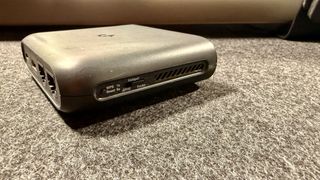
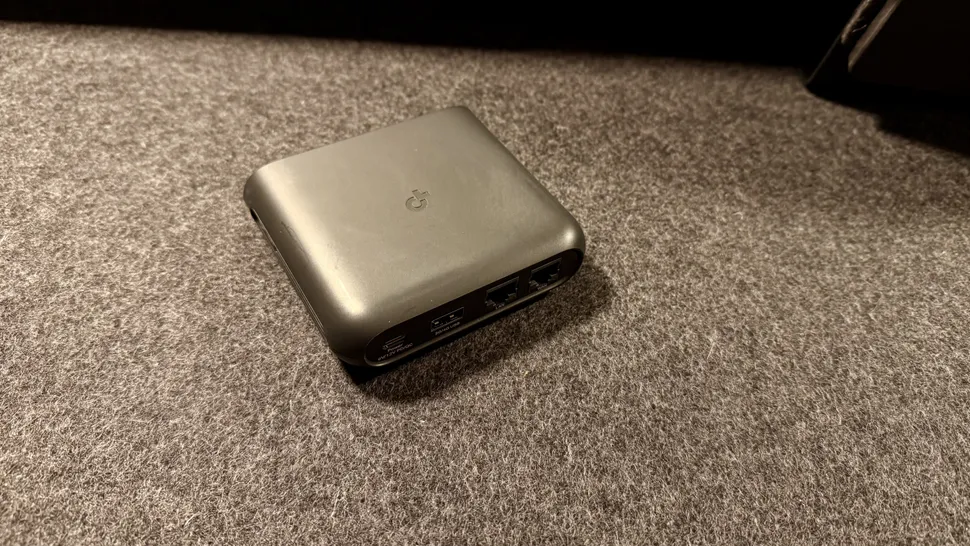
When I opened the box for this router, I immediately noticed how simple everything was. This router seemed too small and too basic-looking to be able to do everything that it was doing. It’s lightweight, with a sleek and durable build. The router, a power adapter, a USB-C cable, a quick start guide, and a simple ethernet cable came in the box.
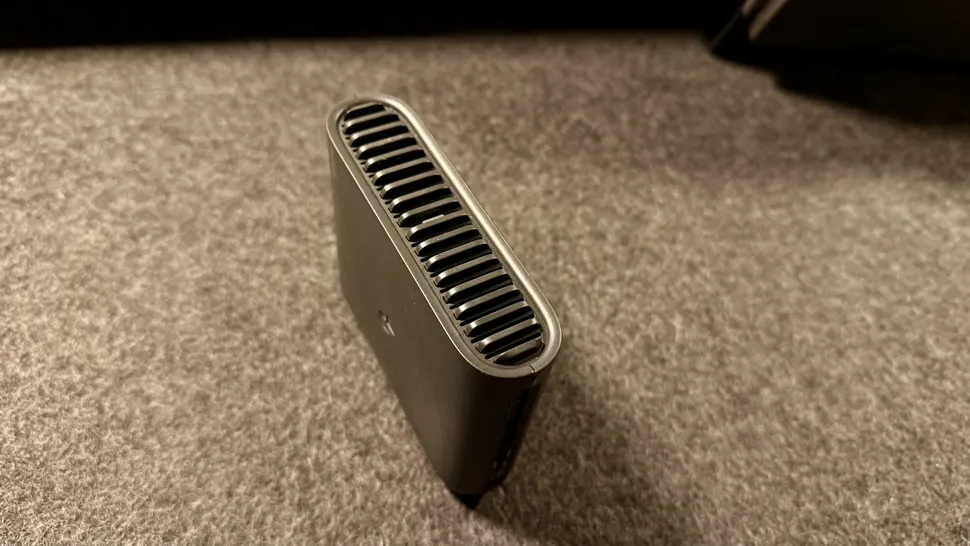
The compact design is easy enough to tuck in any bag, pocket, or jacket. The unit as a whole can fit in the palm of my hand. Right now, I carry it with me daily in my backpack. And I’m particular about what I am willing to put in my backpack, so that’s a big deal for me to tuck it away. I love the matte black finish and the built-in ventilation, as it helps keep the device from overheating.
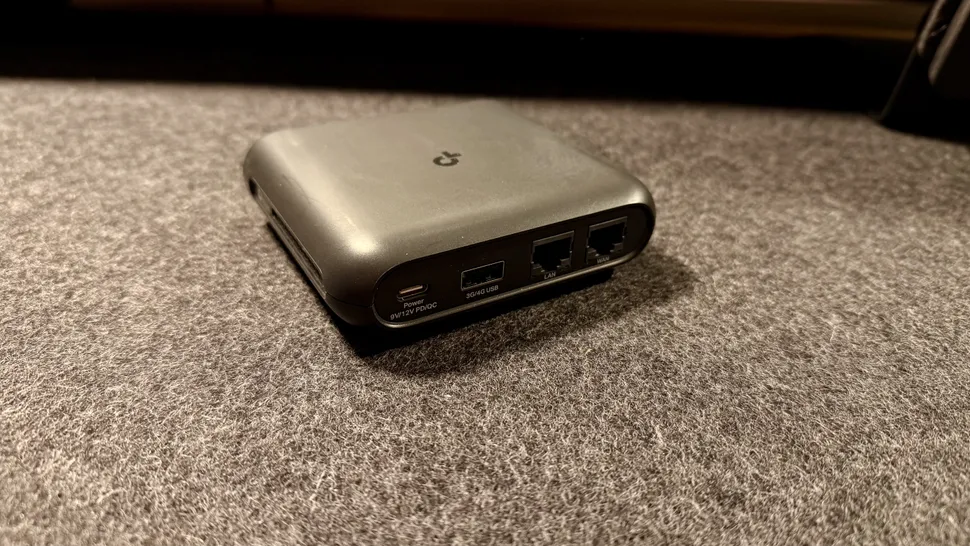
Lastly, the port offering is impressive for a small unit, and the ports are placed great on the device, making it easy to use and work with.
TP-Link Wi-Fi 6 Travel Router: Design and Build Quality
Specs
Wi-Fi:Wi-Fi 6 Speeds:Up to 1.5Gbps Ports:2x Ethernet, 1ssx USB-C for tethering/power, 1x fUSB-A Features:VPN support, WPA3 security, USB tethering
As I have mentioned, this device is incredibly portable. Still, it’s also quite sturdy, making it a great travel companion because I don’t have to worry about it breaking on me. I’ve had this in my everyday carry backpack that goes everywhere with me for the last few months, and I have not had any issues with this getting damaged or slowing down. It keeps working and working great every time.
TP-Link Wi-Fi 6 Travel Router: In use
So far, I have gotten a lot of use out of this little travel router. I’ve had it with me for a few months now and am thrilled to have it. The older I get, and as time goes on, the more and more paranoid I get about my physical and digital security. In the digital world, one of the things I have sworn not to do anymore is to connect to networks that I do not know or do not manage myself. However, sometimes that is the only option. That’s where my travel router comes into play for one of the many use cases I have it for. I can quickly flip a switch and connect to that coffee shop, VRBO, airport, or even airplane Wi-Fi with my router, throw a VPN on, and then connect with my devices. My work and sensitive information, like bank cards and sensitive documents, are accessible through my Macbook. It would be wild for me not to protect it.
Another way that I have been using my travel router is to connect non-apple devices to my iPhone hotspot or direct USB tether. Most of what I have with me on any given day is Apple; however, for the times that I am testing a different laptop, if I have the Nintendo Switch with me, a portable projector if the kids have a gadget or something like that, this makes it super easy to have specific travel Wi-Fi saved on their devices that they can connect to that isn’t just always my phone.
I have noticed smooth and fast connections when using the Wi-Fi, even from a decent distance away. For example, we stayed at a VRBO rental a few weeks back. I did not want to connect to the provided Wi-Fi, so I connected the ethernet cables to my TP-Link Travel router and ran that as a main router for a week. It worked great across the entire home, with all my devices connected. It handled (up to) five iPhones, two MacBooks, eight iPads, two Apple Watches, and a sound machine/night light, all without skipping a beat.
The only gripe I have with this router is that it takes a minute to boot up, so if I am in a hurry, it can be frustrating to wait for it to boot up and get working. However, if that’s my only frustration, that makes for a pretty incredible device.
Attributes
Notes
Rating
Design
Great minimalist design
⭐⭐⭐⭐⭐
Material quality
Quality materials
⭐⭐⭐⭐⭐
Ease of use
Easy to use
⭐⭐⭐⭐⭐
Practicality
Great for most
⭐⭐⭐⭐⭐
Price
Mid price
⭐⭐⭐⭐⭐
TP-Link Wi-Fi 6 Travel Router: Final verdict
The TP-Link AX1500 Wi-Fi 6 Travel RoutWi-Filivers top-tier performance in a travel-friendly package. With its fast speeds, modern security, and versatile features like VPN and USB tethering, it’s a must-have for anyone needing reliable internet access wherever they go. While it’s priced slightly higher than some competitors, its advanced functionality justifies the investment for frequent travelers or remote workers.
It only took the LineageOS team three months to add Android 15 support.
(Image credit: LineageOS)
What you need to know
LineageOS 22.1 is here for over 100 devices, based on Android 15 QPR1, with two new system apps.
Twelve is a new default music player that replaces Eleven, one of LineageOS’ oldest apps.
LineageOS 22.1 supports devices as old as the Pixel 2 series and as new as the Pixel 9 series.
LineageOS, an Android custom ROM project that aims to support both new and old smartphones, is already adding support for Android 15. The teamannounced, that LineageOS 22.1 is rolling out based on the latest Android 15 QPR1. It was able to bringAndroid 15to LineageOS quicker than expected due to the breakthroughs made adapting Android 12 through Android 14, according to the blog post.
“This is far-and-away the easiest bringup cycle from a device perspective we have seen in years,” wrote Nolen Johnson, the developer relations manager for LineageOS, in the blog post. “This means that many more devices are ready on day one that we’d typically expect to have up this early in the cycle.”
Aside from the system improvements brought by Android 15, LineageOS 22.1 includes a few new features and additions. For starters, security patches as recent as November 2024 have been merged to LineageOS 19.1 through 22.1. There are also two new apps: Twelve and Camelot.
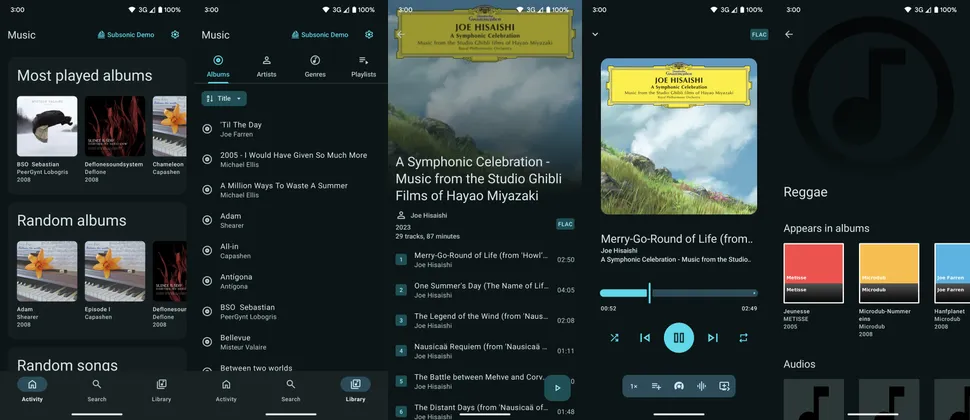
Twelve is a brand-new music player that replaces the prior music player, Eleven. As one of the oldest LineageOS apps, the team explained that it was time for a replacement. Eleven was becoming noncompliant with new Android guidelines due to its older codebase, and Twelve is an improved replacement.
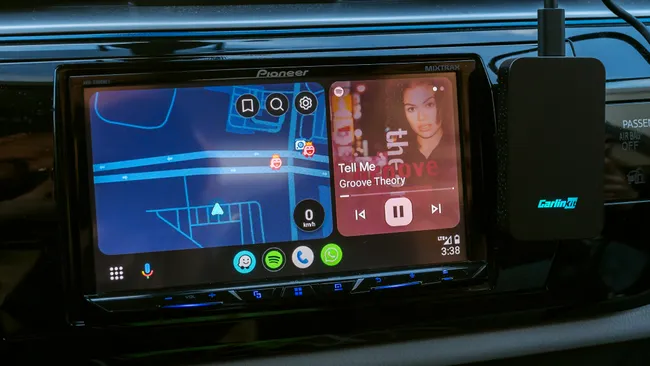
Some of the new app’s highlights include Material You design language and support for tablets and landscape mode. It’ll integrate with major music server protocols, like Subsonic, OpenSubsonic, and Jellyfin. On top of that, there’s better search, improved Android Auto support, and new support for streaming protocols — such as HLS, DASH, and SmoothStreaming.
Camelot is a basic PDF viewer that aims to fill the gap left by LineageOS’ Jelly and WebViews, which can’t open PDF files. It’s described as a simple app based on Google Chrome and Files by Google releases.
LineageOS will use a decimal integer system moving forward to match Android’s quarterly platform releases (QPRs). LineageOS 22.1 is based on Android 15 QPR1, and a future Android 15 QPR2 update would eventually lead to LineageOS 22.2.
Of course, LineageOS is best known for supporting older devices, and support is excellent out of the gate. You can find more information on the LineageOS Wiki, but over 100 devices are eligible for the latest upgrade on day one. That includes older devices like the Google Pixel 2, and newer ones like the Google Pixel 9 series.
Polestar is blending Android Auto right into your Android Automotive ride.
What you need to know
The latest software update for Polestar 2, P3.3.16, brings cool upgrades like HD radio and smoother low-speed driving, with wired Android Auto as the main highlight.
Android Auto integration was a top request from Polestar 2 owners, as revealed by a Polestar rep in a private Facebook group.
The update is rolling out to Polestar 2 models from 2021 onward, available via OTA or service appointments.
Polestar 2 drivers can now enjoy the long-awaited support for wired Android Auto, adding a fresh way to connect your phone and enhance the infotainment experience.
The Polestar 2’s newest softwareupdate, P3.3.16, packs a few nifty upgrades like HD radio and smoother low-speed driving. The highlight, of course, is that wiredAndroid Autois now in the mix, giving drivers the option to blend theirfavorite smartphonefeatures with the car’sAndroid Automotiveoperating system.
As spotted byDroid-Life, a Polestar rep revealed in a private Facebook group that Android Auto integration was one of the most requested features from Polestar 2 owners.
With Android Auto now on board, the Polestar 2 takes its user-friendly approach up a notch, offering seamless connectivity for both major smartphone platforms, alongside the existing CarPlay support.
The Android ecosystem has been getting a number of exciting upgrades this year, including a fresh media player for Android Auto. While Android Auto has been evolving quickly, Android Automotive has been a bit slower to update due to the unique challenges of in-car tech. But now, Polestar 2 owners have something to cheer about with the latest update.
The merge of Android Auto and Android Automotive in the Polestar 2 is a big step forward, giving owners a more flexible and tailored in-car experience by combining the best features of both platforms.
Unlike native Android Automotive, phone-projected Android Auto focuses more on convenience. It makes accessing your personal accounts quicker and simplifies the setup with just a simple USB connection.
This update is rolling out to Polestar 2 models from 2021 onward, arriving via OTA and also available through service appointments.
Polestar 2 owners still waiting for the Android Auto update might need to hang tight. It’s possible the rollout was paused for a bit over the holiday season.
The Garmin Fenix 8 is the most premium Garmin, sporting a more vivid display, voice features, and more.
Garmin Enduro 3
Cheaper, but still formidable
The Enduro 3 is a cheaper option, doesn’t have the AMOLED display option, but will offer better battery life.
TheGarmin Fenix 8and the Garmin Enduro 3 are tough, multisports watches that are built to go the distance when you do.
These watches give you pretty much the best that Garmin has to offer in tracking, training modes, analysis, and smartwatch features too. All while giving you the kind of battery life that wipes the floor with aspiring outdoor smartwatches like theApple Watch Ultra 2and theSamsung Galaxy Watch Ultra.
If you like the sound of the Fenix 8 and the Enduro 3, but can’t choose between the two, which should you go for? We’ve broken down the key differences between the two watches that will help you decide which is the best fit for you.
Garmin Fenix 8 vs Enduro 3: Price and availability
Garmin Fenix 8 vs Enduro 3 comparison
You likely know this already, but these two watches are expensive, so be prepared to shell out big money for them.
Both watches were launched at the same time in August 2024, with the Enduro 3 arriving in one size option just like previous Enduros. If you want an Enduro 3, you can expect to pay$899 for it.
With the Fenix 8, there are multiple sizes and even display options (more on that below) with pricing starting at $999. If you want the biggest Fenix 8 option, that can push the price over$1,000.
The Enduro 3, while still an expensive watch, is the cheaper option by quite a significant amount.
It’s easier to start with the Enduro 3, which as mentioned comes in just one model and size option. It’s got a 51mm polymer case, a titanium bezel, and is partnered up with a nylon strap. It includes a 1.4-inch, 280 x 280 transflective touchscreen display and features Garmin’s latest Power Sapphire lens, giving you an extra battery resource when you’ve exposed that lens to sufficient sunlight during the day.
With the Fenix 8, things get a bit more complicated. First off, you have the option of a Fenix with an AMOLED display or a transflective display with a Power Sapphire lens just like the Enduro 3. There are also more size options to choose from, with the Fenix 8 AMOLED available in 42mm, 47mm, and 51mm sizes. The Fenix 8 with a transflective, solar-powered display is available in 47mm and 51mm versions. That means you can get both Fenix 8 display models in the same size as the Enduro 3’s single case size.
Beyond size and display options, the Fenix 8 AMOLED offers the option of either Gorilla Glass or tougher Sapphire Glass to protect the display against scratches. Opting for the latter does inevitably bump the price up on an already pricey watch.
On the durability front, both the Enduro 3 and the Fenix 8 carry a waterproof rating that makes them safe to submerge in water up to 100 meters depth. In addition to that, the Fenix 8 also features leak-proof, inductive buttons that mean it’s capable of working for recreational diving up to 40 meters depth. If you’re into diving, it’s the Fenix 8 you want.
Last but by no means least, both the Enduro 3 and Fenix 8 include LED flashlights, which are built into the watch case and offer different lighting modes as well as a distress pattern option in case you get into a spot of trouble and need to raise the alarm.
The Fenix 8 and Enduro 3 are essentially giving you the same set of features bar a few things that you won’t find on the Enduro 3.
These are watches that offer Garmin’s latest multiband GNSS support to deliver more accurate outdoor tracking when tracking workouts near tall buildings or in deeply wooded areas. You’ve got Garmin’s latest generation Elevate optical sensor, which notably adds ECG-style tracking. You’re getting largely the same activity tracking modes here, with the Fenix 8 additionally offering a dedicated diving mode thanks to its leak-proof buttons and added depth sensor.
There’s the best that Garmin has to offer in mapping and navigation support across the Enduro 3 and all versions of the Fenix 8 and that includes the ability to upload routes, make use of turn-by-turn and breadcrumb-style navigation. They also offer new features like dynamic round-trip routing. The AMOLED Fenix invariably offers more vivid, colorful maps, but functionality-wise, they operate in the same way as the ones on the Enduro 3.
There are some differences on the smartwatch front with both offering staples like payments, notifications, music players, and access to Garmin’s Connect IQ storefront. The Enduro 3, however, misses out on Garmin’s new voice-enabled features, which you will find on the Fenix 8. That includes the ability to make Bluetooth calls, access watch modes and data using your voice, and the ability to record and geotag voice notes for those moments when a great idea comes to you out on a big hike. Perhaps a not-so-vital miss for most is the Red Shift mode you do get on the Fenix and not the Enduro, which helps to keep a low profile at night while still keeping the screen visible.
Winner: Garmin Fenix 8
Garmin Fenix 8 vs Enduro 3: Performance and battery life
Garmin Fenix 8 vs Enduro 3 comparison
Garmin rarely divulges into the hardware that keeps things running smoothly on its watches, but rest assured, the Fenix 8 and Enduro 3 run nice and slick. Both run on Garmin’s latest operating system. That gives you access to a reworked interface that puts apps and smart features much closer to the workout tracking modes.
Both have 32GB of memory giving you a good amount of room to store things like music, apps, maps, and workouts. Performance-wise there are no complaints when moving around menu screens, launching apps, and waiting for a GPS signal to lock on.
In terms of battery life, we’ve had the 51mm Fenix 8 AMOLED to compare to the Enduro 3 and we’d say battery life has been excellent on both. When using the Fenix 8 AMOLED with the screen set to always-on it can get to up to 13 days. If you don’t keep the screen on at all times it can go up to 29 days. The solar power Fenix 8 can offer 30 days in smartwatch mode The Enduro 3 in contrast can last 36 days in smartwatch mode or 90 days when you fully put its solar powers to optimal use.
When it’s time to put the GPS tracking to good use, the Enduro 3 offers significantly more battery life than the Fenix 8 AMOLED and the same-size Fenix 8 solar model. If you’re just using the standard GPS mode the Enduro 3 offers 120 hours compared to 84 hours on the 51mm Fenix 8 AMOLED or 95 hours on the Fenix 8 solar. When you opt for the best GPS accuracy mode, it’s up to 60 hours on the Enduro 3 versus up to 62 hours on the Fenix 8 AMOLED or 52 hours on the Fenix 8 solar.
Our testing showed that the Enduro 3 pushed closer to a month than the 51mm Fenix 8, but both put in a very good showing. You’re certainly not getting shortchanged with either watch.
Winner: Draw
Garmin Fenix 8 vs Enduro 3: Which should you buy?
Garmin Fenix 8 vs Enduro 3 comparison
Garmin rarely divulges into the hardware that keeps things running smoothly on its watches, but rest assured, the Fenix 8 and Enduro 3 run nice and slick. Both run on Garmin’s latest operating system. That gives you access to a reworked interface that puts apps and smart features much closer to the workout tracking modes.
Both have 32GB of memory giving you a good amount of room to store things like music, apps, maps, and workouts. Performance-wise there are no complaints when moving around menu screens, launching apps, and waiting for a GPS signal to lock on.
In terms of battery life, we’ve had the 51mm Fenix 8 AMOLED to compare to the Enduro 3 and we’d say battery life has been excellent on both. When using the Fenix 8 AMOLED with the screen set to always-on it can get to up to 13 days. If you don’t keep the screen on at all times it can go up to 29 days. The solar power Fenix 8 can offer 30 days in smartwatch mode The Enduro 3 in contrast can last 36 days in smartwatch mode or 90 days when you fully put its solar powers to optimal use.
When it’s time to put the GPS tracking to good use, the Enduro 3 offers significantly more battery life than the Fenix 8 AMOLED and the same-size Fenix 8 solar model. If you’re just using the standard GPS mode the Enduro 3 offers 120 hours compared to 84 hours on the 51mm Fenix 8 AMOLED or 95 hours on the Fenix 8 solar. When you opt for the best GPS accuracy mode, it’s up to 60 hours on the Enduro 3 versus up to 62 hours on the Fenix 8 AMOLED or 52 hours on the Fenix 8 solar.
Our testing showed that the Enduro 3 pushed closer to a month than the 51mm Fenix 8, but both put in a very good showing. You’re certainly not getting shortchanged with either watch.
Winner: Draw
Garmin Fenix 8 vs Enduro 3: Which should you buy?
Garmin Fenix 8 vs Enduro 3 comparison
We’ll start by saying that these are two of the best watches you can take on an adventure. They’ve got rugged, tough designs, high-quality screens, and offer plenty of battery life. Crucially, they deliver on aspects like GPS accuracy, offer some of the best mapping and navigation support you can find on a sports watch and there’s no shortage of features to tap into inside and outside of your adventuring.
If you’re looking for the best value option, go for the Enduro 3. At its core, it has all of the great Fenix 8 qualities for less money. It might not have an AMOLED screen or some of Garmin’s new voice-enabled smarts, but if you care about having access to Garmin’s best features and getting more battery life in between charges, the Enduro 3 will give you that.
If you like the idea of an outdoor watch that feels more like a smartwatch and arguably offers the best mix of those features outside of something like the Apple Watch Ultra 2, then go for the Fenix 8. It’s a fantastic watch with all you could want and more and still manages to deliver great battery life whichever model you go for, and that includes the AMOLED version.
Android 15 has been rolled out to HMD phones now. The HMD Pulse Pro has reportedly become the first Nokia smartphone to receive the Android 15 update, as per a recent report. Initially launched in April, the device is powered by an octa-core Unisoc T606 chipset and originally ran on Android 14.
The newly rolled-out Android 15 update is said to introduce several enhancements to the HMD Pulse Pro, including improved performance, advancements in adaptive battery technology, strengthened privacy and security measures, and a more refined notification management system.
What Does Android 15 Rollout To HMD Pulse Pro Bring To Users?
As reported by NokiaMob, the Android 15 update for the HMD Pulse Pro carries version 2.370 and weighs approximately 3.12GB. The update reportedly focuses on enhancing overall system performance, including faster app launch times, reduced lag, and improved battery management. Additionally, it introduces a smarter power management system designed to analyze user behavior and allocate resources efficiently, thereby extending battery life.
The Android 15 update is also said to bring a more sophisticated notification control system, allowing users greater customization to minimize distractions and focus better by selecting which apps and events can send notifications. Other reported improvements include stricter app permissions, automatic resetting of unused permissions, enhanced data encryption for better security, and the addition of Google’s December Android security patch.
Alongside the HMD Pulse Pro, several other smartphones from the Finnish manufacturer are also expected to receive the update. The following is a list of HMD devices anticipated to be upgraded to Android 15: