Hey nice idea, Apple
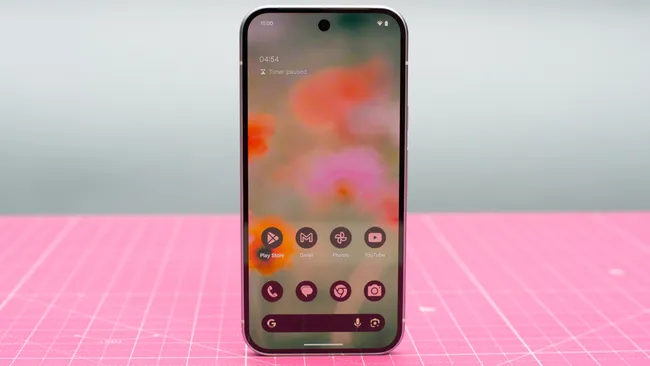
The Pixel 9 will be one of the first phones in line for the new feature
- Android phones are getting a new Motion Cues feature
- The feature should help combat motion sickness when reading in cars
- iPhones recently got a similar feature in iOS 18
If you were paying attention to theiOS 18launch, you may have noticed a new Vehicle Motion Cues feature that promises to help to combat car sickness. There’s now an Android equivalent on the way – and we just got a better idea of how it’s going to work.
The folks over atAndroid Policedid some digging into theGoogle PlayServices code on Android, discovering that the featureGoogleis planning – called, apparently, Motion Cues – is almost ready to be rolled out.
With a few tweaks, the Android Police team was able to get the feature working: You get a simpleMotion Cuestoggle switch, plus anAuto-enable when Drivingoption that has the feature kick in whenever your phone thinks you’re in a car.
As on iOS, the feature puts small black dots at the edge of the screen, which then move to match the motion of the vehicle you’re in. The idea is to remove the disconnect between your body feeling movement and your eyes seeing something fixed and stationary.
>>>GPDX1 Battery for Google Pixel Fold
Coming soon
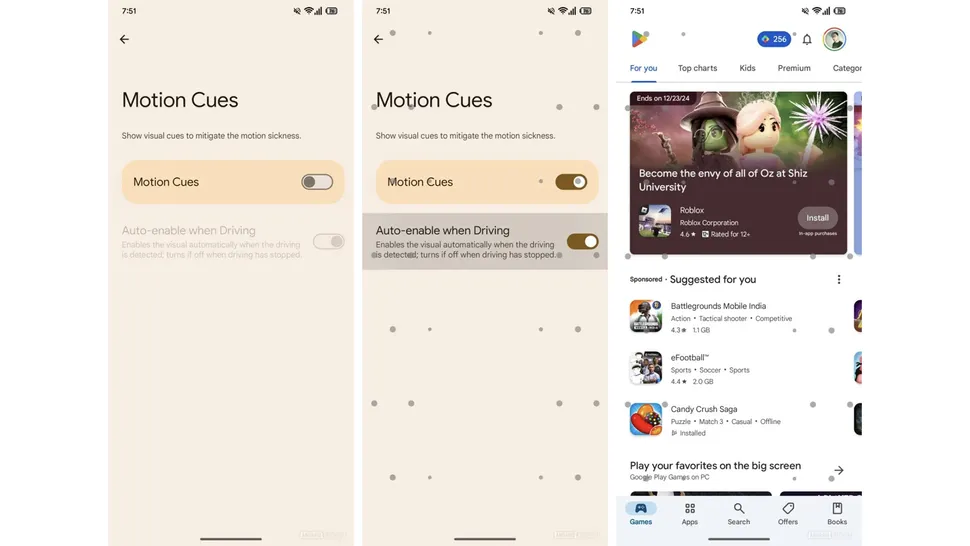
The hidden screens enabled by Android Police(Image credit: Android Police)
Google hasn’t said anything officially yet, so we don’t know when this feature is going to be pushed out – we might not see it untilAndroid 16arrives around mid-2025, though it could also be part of an Android 15 update. The feature wasfirst spotted last month.
When it does turn up, you’ll be able to activate it through the Quick Settings panel, Android Police reports – so with a quick one-finger or two-finger swipe down from the top of the screen you can turn it on and try and ward off any nausea.
Here’s howApple describesits own feature: “With Vehicle Motion Cues, animated dots on the edges of the screen represent changes in vehicle motion to help reduce sensory conflict without interfering with the main content.”
That “sensory conflict” happens when there’s a disconnect between what you see and what you feel, and Motion Cues should help – not just in cars, but in other places where you might get motion sickness (on a boat, for example).