iPhone 16e live updates – Apple’s next-gen budget iPhone is official

Apple’s new-generation iPhone SE is called the iPhone 16e

iPhone 16e

Applehas officially launched the iPhone 16e. The company announced the new budget-friendly iPhone at 11am ET / 8am PT / 4pm GMT on February 19, confirming that the iPhone 16e is a new member of the iPhone 16 family and not, as many suspected, a standalone iPhone SE 4.

The new phone features the A18 chipset, a 6.1-inchOLEDdisplay, Apple Intelligence compatibility, a single 48MP rear camera, and a 12MP front-facing camera. The iPhone 16e also features a notch instead of the Dynamic Island, but it does inherit the Action button from the iPhone 15 Pro and iPhone 16 lines.

Pre-orders for the iPhone 16e begin on February 21, and the device will ship from February 28. It starts at $599 / £599 / AU$999 and comes in either 128GB, 256GB, or 512GB storage configurations.

Follow along as we react to the announcement of Apple’s latest mid-range model, which has discontinued both the iPhone SE (2022) and the iPhone 14.

>>>>>A2312 Battery for Apple iPhone SE (2020) SE2

The latest news

  • Apple has officially announced the iPhone 16e
  • It features the A18 chipset, a 6.1-inch OLED display, a single 48MP rear camera, and a 12MP front-facing camera
  • The iPhone 16e is also compatible with Apple Intelligence
  • The phone features Apple’s first homegrown cellular modem, the C1
  • Pricing starts at $599 / £599 / AU$999
  • Pre-orders begin on February 21; shipping starts on February 28

>>>A2866 Battery for Apple iPhone 14 Pro

20 February 2025 at 06:05

The Samsung Galaxy S25 Edge on display the January 22, 2025 Galaxy Unpacked event.
The Galaxy S25 Edge has two cameras, one less than the Galaxy S25

One Apple product that the iPhone 16e might foreshadow is the rumorediPhone 17 Air. With Samsung launching a super-slimGalaxy S25 Edgelater this year, it is more likely than ever than we’ll see an extra-thin iPhone from Apple to answer the long-running rumors.

With its single high-resolution, wide aperture camera, the iPhone 16e might be a good model for a thin iPhone 17 Air. Cameras add much of the thickness to today’s big phones, so I expect two cameras on an iPhone Air at most, but one great camera with flexible shooting modes, like we see on the new iPhone 16e, would do the trick.

Will the iPhone 17 Air arrive looking like a slimmed-down iPhone 16e? We’ll find out eventually, if the rumors are true.

>>>A2830 Battery for Apple iPhone 14 Pro Max

20 February 2025 at 04:54

Apple iPod nano in white
An Apple iPod nano in white

If the iPhone 16e is drumming up Apple nostalgia for long-time Apple followers, for me it resembles nothing so much as the original (in)Famous iPod nano. I personally loved the nano’s look and design, but it replaced the iPod mini, the most popular iPod of all time (thus far). The iPod mini was bright and colorful, available in pink and blue and green. The iPod nano was sleek and professional, available only black and white.

The iPod nano was the future, of course, with its solid state storage. I might argue that Apple’s incredible investment in the iPod nano and solid state drives drove the price of that technology down faster, and ultimately led to the smartphones and other mobile innovation we have today. It all started with the iPod nano, folks.

So, if the iPhone 16e color options make you sad, they don’t bring me down. They remind me of an important an influential time for Apple, when it shifted from old and fun to innovative and new.

20 February 2025 at 03:50
Future
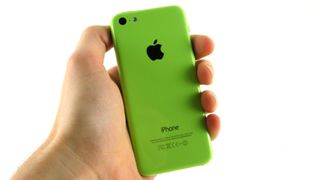
An Apple iPhone 5c in green

Let’s be honest, this is a huge price hike for Apple’s bargain iPhone offering. It’s a big jump over theiPhone SE (2022), which started at $429 / £419 / AU$719, but that phone was also more expensive thanitspredecessor, theiPhone SE (2020), which cost only $399 / £389 / AU$679.

Of course, to be fair to Apple, the original budget iPhone was theiPhone 5c, launched in 2013, and that phone cost $549 / £469 / AU$739 at launch (wow, sorry GBP :-£).

Also, previous budget iPhone models have skimped on the processing power, and therefore the potential longevity with software updates, compared to the base model iPhone of the same year. It’s a very big deal that the iPhone 16e gets an Apple A18 chipset and Apple Intelligence features. Those would have been doubtful for the predicted iPhone SE 4 that did not arrive today.

20 February 2025 at 03:09

iOS 15.4 FaceID Mask

So what does the iPhone 16e get that makes it worth more than the iPhone SE, besides the latest Apple A18 processor? The addition of FaceID is especially interesting. Unlike basic face unlock methods on Android phones, Apple isn’t just using a camera for FaceID. It has specialized hardware that would make it a more expensive proposition for a bargain phone.

FaceID needs an infrared emitter to spray your face with invisible dots (you can see them with an infrared camera). Then it has a special camera to read those dots and make a 3D model of your face, which is much more secure than simply reading a photograph of your face. That’s why banks have long allowed Apple to use FaceID to unlock banking apps, but Android phones usually won’t let you use your face to unlock your bank account.

I’ve used every unlock method, and I’d have to say that Apple’s FaceID is the fastest and most reliable by a wide margin. Whatever sacrifices the iPhone 16e makes, Apple clearly felt the super-fast, secure unlock method was worth the trade for bargain hunters.

20 February 2025 at 02:20

C1, who?
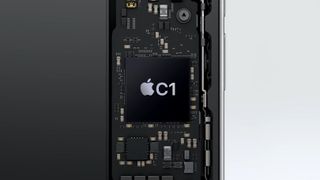
Apple's C1 modem in the iPhone 16e
(Image credit: Apple)

Let’s talk quickly about that C1 modem.

Ever since Appleacquired Intel’s modem business for $1 billion, the company has been racing to build its own modem in a bit to reduce reliance on Qualcomm, which produces the modems for all current iPhone models. Perhaps surprisingly, the iPhone 16e is the first beneficiary of this years-long project.

It’s not yet clear how much better or worse Apple’s C1 modem is versus Qualcomm’s equivalent, but superior battery efficiency could be on the cards for iPhone 16e owners. Indeed, Apple is touting 26 hours of video playback, which is certainly an impressive figure.

20 February 2025 at 01:28
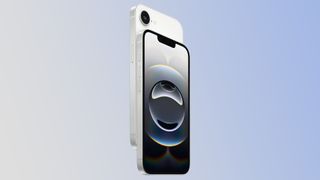
The iPhone 16e on a blue gradient background
(Image credit: Apple)

Here’s the front and back of the new iPhone 16e, which comes in either Black or White (where are the funky colors, Apple?).

20 February 2025 at 01:26

‘Apple is finally simplifying its iPhone lineup’

“Apple is finally simplifying its iPhone lineup, squeezing almost all of it into the 16 family. This is a good thing for people trying to choose and it also means that the distance from a budget iPhone to a Pro one isn’t as great as it used to be. For my money, though, the inclusion of the C1 chip is the most intriguing bit. It isn’t often your most affordable handset gets your newest and maybe most controversial piece of tech.” – Lance Ulanoff, Editor-at-Large

“What would have sold it for me is Apple opting down in terms of computing power to offer a non-AI iPhone alternative, which would cater to a big chunk of consumers who just aren’t bothered about AI et. But then, that’s basically admitting that consumers might not care about Silicon Valley’s latest golden goose.” – Josie Watson, Managing Editor, Lifestyle

“I’ve never noticed Tim Cook’s accent before – isn’t it lovely?” – Becky Scarrott, Audio Editor

Thanks, Becky.

20 February 2025 at 01:19

No MagSafe?!
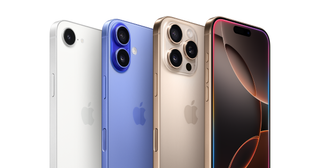
iPhone 16e with the rest of the iPhone lineup
(Image credit: Apple)

A quick look at Apple’s newmodel comparison pagereveals a few frustrating omissions for the iPhone 16e.

The biggest is the lack of MagSafe support. Yes, you read that right:the iPhone 16e will not support MagSafe cases, wallets, and wireless chargers. The phonedoeshave wireless charging capabilities, but only up to 7.5W, which is punishingly slow. There’s also no ultra-wideband (UWB) technology, and the GPU is made up of only four cores (compared to five and six on the iPhone 16 and iPhone 16 Pro Max, respectively).

20 February 2025 at 01:03

‘I think this could be a hit for Apple’

Some more reactions to the iPhone 16e announcement from the batterymap team for you here:

“I like the simple, unfussy design paired with some powerful chips and access to Apple Intelligence. I think this could be a hit for Apple, though the price is a bit high, but I think people will gobble it up.” – Roland Moore-Colyer, Managing Editor, Mobile Computing

“At $599, the iPhone 16e is more expensive than any of us were hoping – but it looks like there’s some serious Apple power under the hood, too. Looking forward to trying this one out, but not sure I’d recommend pre-ordering.” – Jamie Richards, Staff Writer, Mobile Computing

“It’s somehow killed off two phones [the iPhone 14 and previous iPhone SE] without filling the void left by either of them.” – Rob Dunne (aka The Dunnster), VPN Editor

20 February 2025 at 00:40
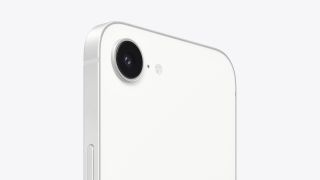
iPhone 16e camera lens
(Image credit: Apple)

Here’s that 48MP camera lens up close. It’s the same ‘Fusion’ camera as you’ll find on the iPhone 16, which Apple claims “has the capabilities of two cameras in one.” That’s because it features an integrated 2x telephoto that lets you zoom in with optical quality. The 48MP Fusion camera lets you shoot 4K video in Dolby Vision, too, which is neat.

20 February 2025 at 00:33

Do the specs justify the price?

Now for those specs…

The iPhone 16e features the A18 chipset, a 6.1-inchOLEDdisplay, Apple Intelligence compatibility, a single 48MP rear camera, and a 12MP front-facing camera. There’s a notch instead of the Dynamic Island, but the new phone does inherit the Action button from the iPhone 15 Pro and iPhone 16 lines.

All told, then, this is a major step up from the iPhone SE (2022), but the iPhone 16e’s $599 / £599 / AU$999 price tag also marks a major increase over that of its predecessor.

20 February 2025 at 00:16

The official iPhone 16e announcement video

Introducing iPhone 16e – February 19 – YouTube20 February 2025 at 00:16
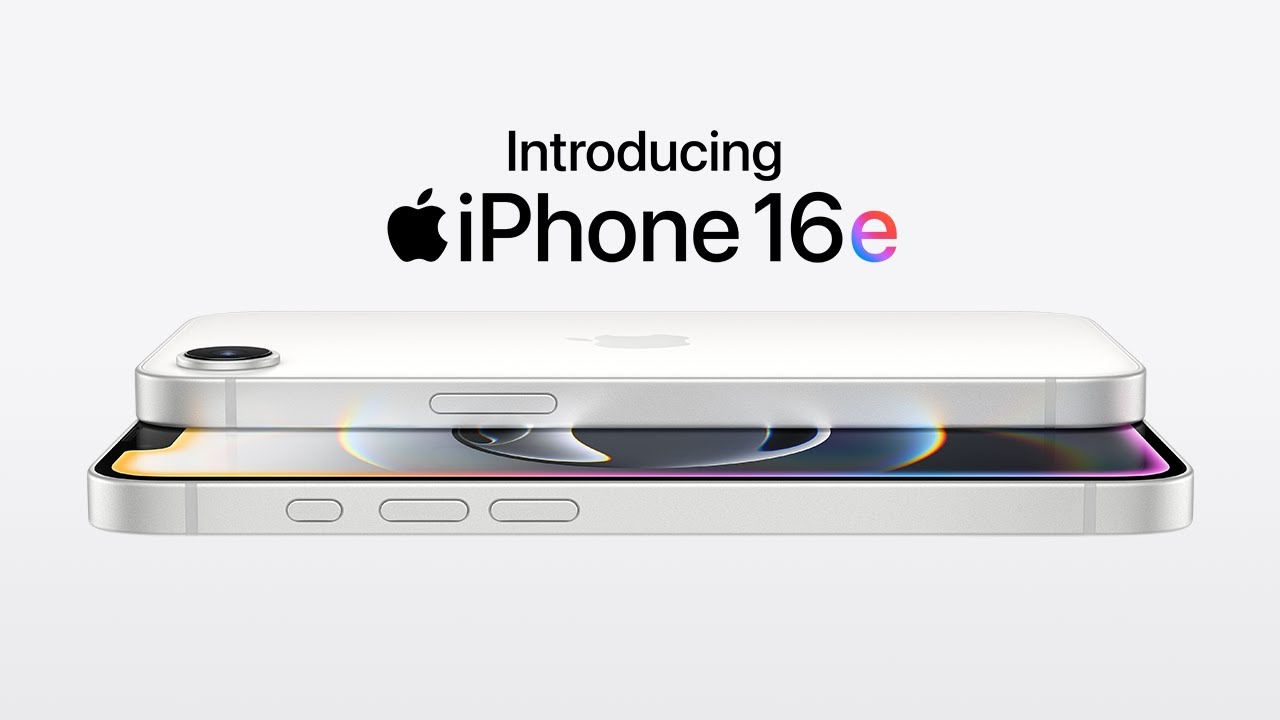
Introducing iPhone 16e - February 19 - YouTube

Watch On

Here’s the official iPhone 16e announcement video, hosted by Tim Cook himself.

20 February 2025 at 00:15

Farewell, iPhone 14 and iPhone SE (2022)
iPhone 16e product page
(Image credit: Apple)

And just like that, the iPhone 14 and iPhone SE (2022) are no more. Apple has removed both models from its website.

20 February 2025 at 00:13
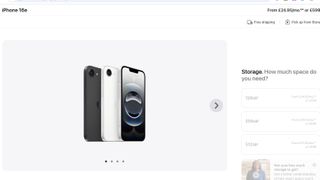
iPhone 16e product listing
(Image credit: Apple)

Here’s the official product page for the iPhone 16e in the UK.

The phone will start at $599 / £599 / AU$999 and comes in either 128GB, 256GB, or 512GB storage configurations. That’s a huge increase on the $429 / £419 / AU$719 starting price of the iPhone SE (2022). Can we really consider this a budget phone?

20 February 2025 at 00:07

The iPhone 16e is official!
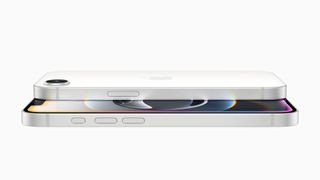
iPhone 16e
(Image credit: Apple)

The iPhone 16e is official!

Appleofficially announced the new deviceon its website at 11am ET / 8am PT / 4pm GMT, confirming that the iPhone 16e is a new member of the iPhone 16 family and not, as many suspected, a standalone iPhone SE 4.

Specs incoming…

19 February 2025 at 23:57

What might the iPhone SE 4 look like?

https://platform.twitter.com/embed/Tweet.html?creatorScreenName=TechRadar&dnt=false&embedId=twitter-widget-0&features=eyJ0ZndfdGltZWxpbmVfbGlzdCI6eyJidWNrZXQiOltdLCJ2ZXJzaW9uIjpudWxsfSwidGZ3X2ZvbGxvd2VyX2NvdW50X3N1bnNldCI6eyJidWNrZXQiOnRydWUsInZlcnNpb24iOm51bGx9LCJ0ZndfdHdlZXRfZWRpdF9iYWNrZW5kIjp7ImJ1Y2tldCI6Im9uIiwidmVyc2lvbiI6bnVsbH0sInRmd19yZWZzcmNfc2Vzc2lvbiI6eyJidWNrZXQiOiJvbiIsInZlcnNpb24iOm51bGx9LCJ0ZndfZm9zbnJfc29mdF9pbnRlcnZlbnRpb25zX2VuYWJsZWQiOnsiYnVja2V0Ijoib24iLCJ2ZXJzaW9uIjpudWxsfSwidGZ3X21peGVkX21lZGlhXzE1ODk3Ijp7ImJ1Y2tldCI6InRyZWF0bWVudCIsInZlcnNpb24iOm51bGx9LCJ0ZndfZXhwZXJpbWVudHNfY29va2llX2V4cGlyYXRpb24iOnsiYnVja2V0IjoxMjA5NjAwLCJ2ZXJzaW9uIjpudWxsfSwidGZ3X3Nob3dfYmlyZHdhdGNoX3Bpdm90c19lbmFibGVkIjp7ImJ1Y2tldCI6Im9uIiwidmVyc2lvbiI6bnVsbH0sInRmd19kdXBsaWNhdGVfc2NyaWJlc190b19zZXR0aW5ncyI6eyJidWNrZXQiOiJvbiIsInZlcnNpb24iOm51bGx9LCJ0ZndfdXNlX3Byb2ZpbGVfaW1hZ2Vfc2hhcGVfZW5hYmxlZCI6eyJidWNrZXQiOiJvbiIsInZlcnNpb24iOm51bGx9LCJ0ZndfdmlkZW9faGxzX2R5bmFtaWNfbWFuaWZlc3RzXzE1MDgyIjp7ImJ1Y2tldCI6InRydWVfYml0cmF0ZSIsInZlcnNpb24iOm51bGx9LCJ0ZndfbGVnYWN5X3RpbWVsaW5lX3N1bnNldCI6eyJidWNrZXQiOnRydWUsInZlcnNpb24iOm51bGx9LCJ0ZndfdHdlZXRfZWRpdF9mcm9udGVuZCI6eyJidWNrZXQiOiJvbiIsInZlcnNpb24iOm51bGx9fQ%3D%3D&frame=false&hideCard=false&hideThread=false&id=1888958601697415177&lang=en&origin=https%3A%2F%2Fwww.techradar.com%2Fnews%2Flive%2Fiphone-se-4-apple-event-feb-2024&sessionId=ccb572b610cdeb34fa082763786049dc44c60e1f&siteScreenName=TechRadar&theme=light&widgetsVersion=2615f7e52b7e0%3A1702314776716&width=550px

See more

We don’t yet know the name of Apple’s new device, but is this its official design?

The above images (or perhaps best-guess renders) shared by leakerMajin Buare the closest thing we have to a peek at the new iPhone SE’s possible design. They certainly line up with previous leaks; the device in question has a notch, a flat metal frame, and a single-lens camera.

There’s also a customizable action button (a nice bonus for a more affordable iPhone). The notch means this should also be the first SE model with Face ID, which is a nice time-saver on my iPhone 16 Pro. If this is all true, it could prove popular – if the price is right…

19 February 2025 at 23:53

The Apple Store is down!

Screenshot of the Apple store website
(Image credit: Apple)

OK, here’s our first big indicator that a product launch is imminent. Apple has closed its online store for maintenance, which is almost always a sign that new devices are on the way.

In this case, Apple has only closed theproduct page for the iPhone SE (2022), which (surprise!) strongly hints that a replacement device is about to be revealed. But will it be the iPhone SE 4, the iPhone SE (2022), or the iPhone 16E? Given Tim Cook’s “family” comment, my money’s on the latter.

19 February 2025 at 23:42

The biggest iPhone SE upgrade rumors
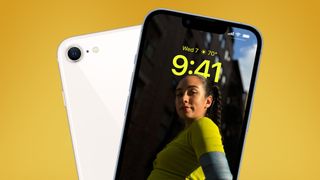
The iPhone 14 and iPhone SE on an orange background
(Image credit: Apple)

As for the iPhone SE 4 specifically, we’re expecting the new device to bring major hardware and software improvements over its now-outdated predecessor. Thebiggest rumored upgrades for the iPhone SE 4are as follows:

  • A bigger, better display: Where the iPhone SE (2022) uses a 4.7-inch LCD panel, its successor is tipped to use a 6.1-inch OLED display running at a resolution of 2532 x 1170 pixels.
  • Apple Intelligence compatibility: The iPhone SE 4 will likely be the cheapest entry point into Apple Intelligence, and therefore one of the best AI phones at its price point.
  • A more powerful camera: The iPhone SE 4 will very likely get a better camera than the almost three-year-old iPhone SE (2022), and the latest rumors point towards a single 48MP rear snapper and a 12MP selfie camera.
  • A longer-lasting battery: The iPhone SE 4 will almost certainly get a larger, longer-lasting battery than that of its predecessor. The latest leaks suggest it’ll be an iPhone 14-style 3,279mAh cell, which will surely bring tangible improvements to endurance.

19 February 2025 at 23:39

What does Apple’s teaser tell us?

https://platform.twitter.com/embed/Tweet.html?creatorScreenName=TechRadar&dnt=false&embedId=twitter-widget-1&features=eyJ0ZndfdGltZWxpbmVfbGlzdCI6eyJidWNrZXQiOltdLCJ2ZXJzaW9uIjpudWxsfSwidGZ3X2ZvbGxvd2VyX2NvdW50X3N1bnNldCI6eyJidWNrZXQiOnRydWUsInZlcnNpb24iOm51bGx9LCJ0ZndfdHdlZXRfZWRpdF9iYWNrZW5kIjp7ImJ1Y2tldCI6Im9uIiwidmVyc2lvbiI6bnVsbH0sInRmd19yZWZzcmNfc2Vzc2lvbiI6eyJidWNrZXQiOiJvbiIsInZlcnNpb24iOm51bGx9LCJ0ZndfZm9zbnJfc29mdF9pbnRlcnZlbnRpb25zX2VuYWJsZWQiOnsiYnVja2V0Ijoib24iLCJ2ZXJzaW9uIjpudWxsfSwidGZ3X21peGVkX21lZGlhXzE1ODk3Ijp7ImJ1Y2tldCI6InRyZWF0bWVudCIsInZlcnNpb24iOm51bGx9LCJ0ZndfZXhwZXJpbWVudHNfY29va2llX2V4cGlyYXRpb24iOnsiYnVja2V0IjoxMjA5NjAwLCJ2ZXJzaW9uIjpudWxsfSwidGZ3X3Nob3dfYmlyZHdhdGNoX3Bpdm90c19lbmFibGVkIjp7ImJ1Y2tldCI6Im9uIiwidmVyc2lvbiI6bnVsbH0sInRmd19kdXBsaWNhdGVfc2NyaWJlc190b19zZXR0aW5ncyI6eyJidWNrZXQiOiJvbiIsInZlcnNpb24iOm51bGx9LCJ0ZndfdXNlX3Byb2ZpbGVfaW1hZ2Vfc2hhcGVfZW5hYmxlZCI6eyJidWNrZXQiOiJvbiIsInZlcnNpb24iOm51bGx9LCJ0ZndfdmlkZW9faGxzX2R5bmFtaWNfbWFuaWZlc3RzXzE1MDgyIjp7ImJ1Y2tldCI6InRydWVfYml0cmF0ZSIsInZlcnNpb24iOm51bGx9LCJ0ZndfbGVnYWN5X3RpbWVsaW5lX3N1bnNldCI6eyJidWNrZXQiOnRydWUsInZlcnNpb24iOm51bGx9LCJ0ZndfdHdlZXRfZWRpdF9mcm9udGVuZCI6eyJidWNrZXQiOiJvbiIsInZlcnNpb24iOm51bGx9fQ%3D%3D&frame=false&hideCard=false&hideThread=false&id=1890068457825394918&lang=en&origin=https%3A%2F%2Fwww.techradar.com%2Fnews%2Flive%2Fiphone-se-4-apple-event-feb-2024&sessionId=ccb572b610cdeb34fa082763786049dc44c60e1f&siteScreenName=TechRadar&theme=light&widgetsVersion=2615f7e52b7e0%3A1702314776716&width=550px

See more

Let’s kick off with a proper look at Apple’s official teaser, which was shared to X on February 13. Tim Cook’s shiny Apple logo doesn’t give a lot away, but the internet has some compelling theories.

Firstly, the tagline “get ready to meet the newest member of the family” does tally with rumors of a new iPhone SE. It’d be part of the iPhone family, but does that also hint at a rebrand? The iPhone SE 3 was simply theiPhone SE (2022)and there have also been rumors that the new model might be called the iPhone 16E.

The circle around the logo could also be hinting at the new SE’s single camera, or the move away from a physical home button. It does also look a lot like an AirTag (potentially theAirTag 2?), but we weren’t expecting to see a new one of those for quite a while yet…
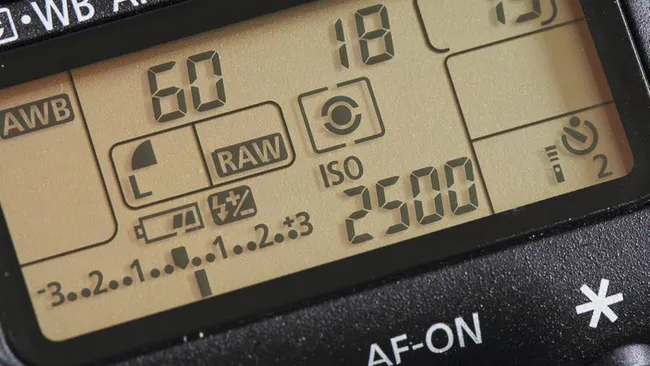

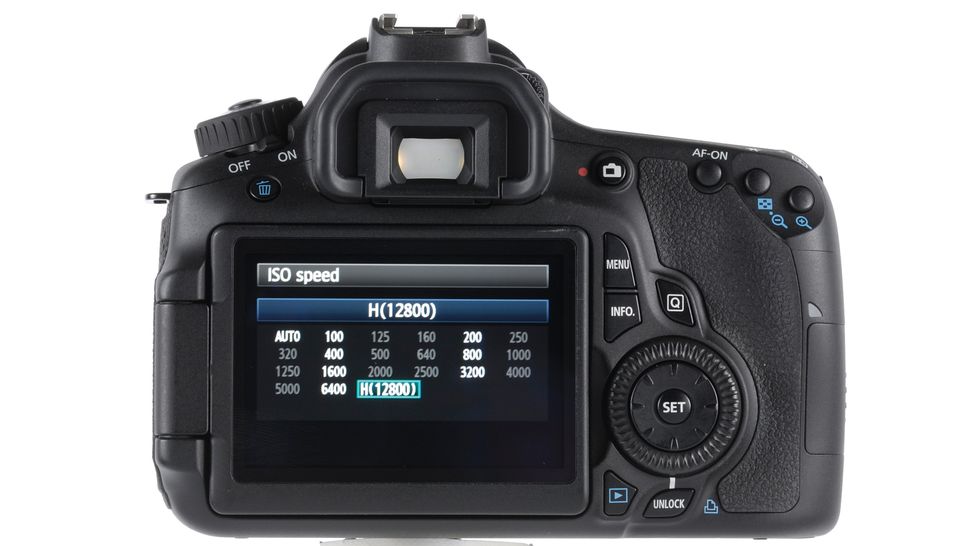
What is ISO in photography?

Okay… exactly what is ISO in photography? This is what it stands for, what the numbers mean and when you should change them

It may be a simple question: what is ISO in photography? However, the answer isn’t quite so straightforward – mainly because it’s a term that originated before digital imaging.

So, let’s rewind: what is ISO in photography in terms of analog shooting?Camera filmcomes in different speeds, with a higher ISO rating equating to a ‘faster’ film – which means it is more sensitive to light, enabling you to use faster shutter speeds than you can with ‘slower’ film.

Using a higher-sensitivity ISO is useful for moving subjects (where faster shutter speeds are required) and particularly for shooting in low light. Thus, ISO forms one corner of theexposure triangle– along withapertureandshutter speed.

Okay, but how is this speed measured? A number of different scales were introduced when film was invented, and two of the best known – the American ASA and German DIN scales – were ultimately brought together to create the standardized ISO system.

Thebest digital cameras, of course, do not use film – but the same ISO scale is still used today to measure the camera’s sensitivity to light. Although the camera’s image sensor cannot be changed the way film can, its sensitivity can be boosted by the camera’s circuitry. This is done with theISO control.

>>>Canon EOS 450D 500D 1000D KISSX2 KISSX3 Replacement Battery

What is ISO in photography? It’s like turning up the volume dial on an old radio when the signal is weak – and the higher you go, the more distortion or noise you get 

What does ISO stand for?

So, we’ve answered “what is ISO in photography”. Butwhat does ISO stand for? ISO is the name of the International Organization of Standardization: a body that creates thousands of agreed standards for a huge range of products, procedures, and practices. ISO isn’t an acronym and doesn’t stand for anything – it simply refers to the Organization.

For the photographer, ISO is simply a set of numbers. The base sensitivity – the lowest native setting – of many digital cameras is ISO100. But is typically increased by pressing the appropriate button, rotating a dial, swiping the touchscreen or changing a menu setting. On some cameras, you may even get a separate ISO control dial.

The scale is such that doubling the ISO number doubles the sensitivity of the sensor. So increasing the ISO setting from 100 to 200 means that, to get the same overall exposure, you can use a shutter speed that is half as long (or twice as fast).

Each doubling of the ISO also increases the sensitivity by a full exposure ‘stop’ – with the typical full-stop ISO scale progressing to 100, 200, 400, 800, 1600 and so on. The top ISO setting varies depending on the age and cost of your camera. Typical maximum settings range from ISO3200 to ISO819,200. Some of thebest low-light camerasare particularly good at handling high ISOs

>>>Canon DC40 DC50 DC51 DC95 Replacement Battery

What is ISO in photography is one question – what ISO actually means is another!

Confusingly, the top ISO settings on some models are hidden and must be enabled using a custom option called ‘ISO Expansion’ or similar. The reason for this is that each time you increase the ISO setting, you also get a small and cumulative decrease in image quality. So, while cameras boast extremely high or low ‘expanded’ ISO sensitivities, you may not want to use them!

Boosting the picture signal also amplifies impurities in the signal known as ‘noise’. This noise shows up as grain and color mottling in the image – and this gets progressively more noticeable the higher the ISO is set.

>>>Nikon D7100 D800E D810 D7200 V1 D7000 D750 Replacement Battery

When to increase the camera’s ISO

You only need to use a high ISO in low light if the camera is handheld, or the subject is moving. With static subjects, and a tripod, you can use the slowest setting – here a setting of ISO100 (Image credit: Chris George)


For low light images where the subject is moving, a higher ISO (here ISO1600) become essential

Some photographers try to resist increasing the ISO at all costs in search of getting the best, grain-free images. However, pumping up the ISO often actually increases image quality overall, as this simple change lets you use a faster shutter speed – thereby eliminating camera shake. A grainy picture is always better than a blurry one!

A higher ISO can also enable you to use a narrower aperture – increasing depth of field, and thus increasing the resolution of a lens – to give you sharper-looking pictures.

Although higher ISO settings are invaluable in low light, they are not essential for all low-light situations, in fact, if you can keep the camera steady, they are often best avoided. If you are using a solid tripod, the slowest ISO setting (ISO100) is usually the best option – as you can then use a longer shutter speed to make up for the lack of light.

Similarly, if you are using flash, high-ISO settings are not needed (although increasing the ISO will increase the effective range of your flash).

>>>Nikon S6600 S3100 S6600 S7000 S2500 S2600 Replacement Battery

What are the types of image noise?

Luminance noise: Traditional monochromatic grain in darker areas (as seen in the wall behind the statue in the detail above right) is typical of luma noise 

Chromatic noise:Low light interior shows chromatic noise in shadows, as seen in the rainbow speckles in the detail

There are two different types of noise found in digital images. Luminance noise shows up as a speckled pattern, like specks of black sand, and is similar to the grain that was found when using high-ISO black-and-white films. Chromatic noise is colored and looks like the rainbow-like sheen when looking at a patch of oil (and is similar in appearance to the blotchy dye patterns that you saw when enlarging high-ISO color films).

It’s important to look at these two types of noise separately – as each can be reduced using different tools during the editing stage. These are often provided as separate noise-reduction sliders by a RAW converter (such as inAdobe Photoshop’s Camera Raw utility). Specialist software, such asDxO Dfine, is particularly useful for reducing noise without sacrificing detail.

So, what is ISO in photography? It’s a whole lot of things – and all of them are important!

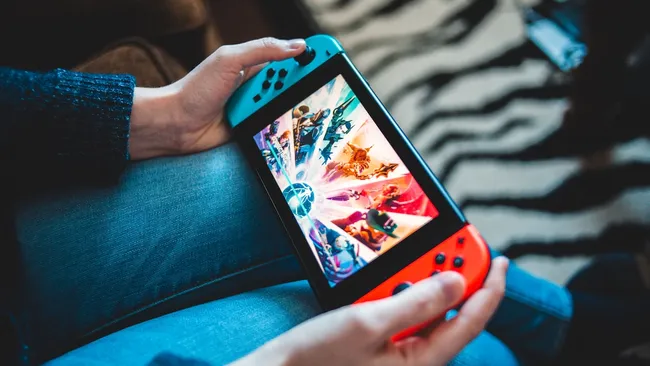
Nintendo is set to discontinue Gold Points rewards a week before the Switch 2 Direct

Is Nintendo planning a replacement?

  • Nintendo is set to discontinue its Gold Points rewards scheme
  • From March 24, 2025, you’ll no longer be able to earn them
  • However, points you earn now will be redeemable for another 12 months

Nintendo has confirmed it will be winding down its eShop Gold Points rewards scheme next month.

The announcement was made over on the officialMy Nintendo website, confirming that the earning of Gold Points will be discontinued on March 24, 2025. At the time of writing, the website is currently returning an error for that page. But an FAQ (sourced byGo Nintendo) provides more details, reading:

“Beginning at 9:30 p.m. PDT on 3/24/2025, users will no longer be able to earn My Nintendo Gold Points. Gold Points will no longer be earned for digital purchases on Nintendo eShop after 9:30 p.m. PDT on 3/24/2025.

“Gold Points will no longer be earned on physical games that release after 3/24/2025. For physical games that released on or before 3/24/2025, Gold Points may still be earned by registering eligible titles within one year from the original release date of the game.

“All earned Gold Points will continue to be valid and redeemable for 12 months after they are issued. Please note that there are no changes to how you redeem the Gold Points you already earned.”

Suspiciously, this is happening about a week and a half ahead of April 2’s scheduledNintendo Switch 2Direct. Nintendo currently hasn’t announced a replacement for the Gold Points rewards scheme, but there is a chance the company could be implementing a new system for when its new console arrives later this year.

>>>WUP-003 Battery for Nintendo Wii U GamePad WUP003 WUP-012

If not, then that’s definitely a shame. Gold Points are a pretty great way of saving cash on digital eShop purchases. Like PlayStation Rewards, Gold Points are added to your Nintendo account after registering a physical game or purchasing a game digitally on the eShop. Over time, this lets players save a substantial amount on thebest Nintendo Switch games.

Nintendo has confirmed that Nintendo accounts will transfer to Nintendo Switch 2, so, could a bigger Nintendo eShop overhaul be on the way? Let’s hope so, because it definitely needs one.

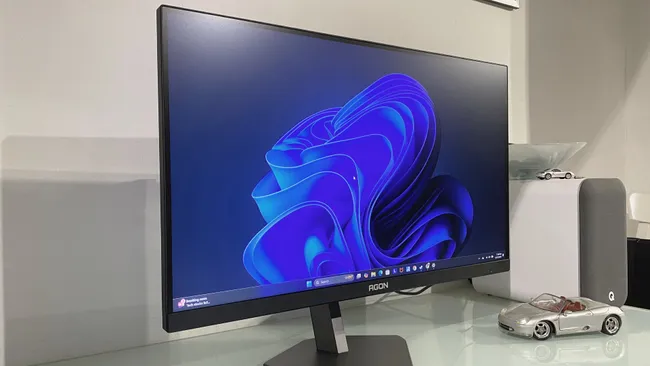
Windows 11 24H2 hasn’t raised the bar for the operating system’s CPU requirements, Microsoft clarifies

Older Intel CPUs are still supported with 24H2, despite some reports claiming otherwise

  • Some reports mistakenly claimed Windows 11 24H2 has dropped support for Intel 8th, 9th, and 10th-gen CPUs
  • Microsoft has made it clear this isn’t the case
  • The confusion arose due to a support document which is correct, but aimed at PC makers, so it only applies to new, not existing, Windows 11 systems

Windows 11hasn’t dropped support for some olderIntelprocessors with its latest incarnation, the (rather problematic) 24H2 update, despite some reports that are floating around claiming this is the case.

Windows Latestbrings this clarification, complete with word fromMicrosoftthat these older Intel 8th, 9th, and 10th-generation processors are still fully compatible with Windows 11 24H2, and nothing has changed in that respect.

So where did this errant idea originate? It came from an official list of supported CPUs for Windows 11, which was indeed very recently updated for the 24H2 release, whereupon the mentioned Intel chips were removed.

However, the key point is that this is a support document that lists processors that are okay to use for laptop and PC manufacturers in their new Windows 11 devices. The text clearly states: “OEMs [PC makers] may use the following CPUs for new Windows 11 devices.”

There’s a clear difference between CPUs recommended to go in new Windows 11 PCs, and chips that are inexisting PCs which are supported by Windows 11. Something has changed in the former case – those mentioned Intel processors are now considered too out of date to be included with a new machine packing 24H2 (even though they’re still technically okay) – but nothing has changed in the latter case with existing devices.

In short, you’ll be fine to upgrade to Windows 11 24H2 if you’re using an Intel 8th, 9th, or 10th-gen chip, there’s no need to worry on that score.

Windows Latest received a clarification direct from Microsoft with a statement that the “requirements haven’t changed” for Windows 11 24H2, and indeed they haven’t been modified since the OS was first released.

In a separate support article elsewhere on the Windows Hardware Development portal, regarding the CPU requirements for Windows 11 which are provided, Microsoft also notes: “Changes to the processors listed do not indicate or impact a customer’s existing Windows support and are intended for OEMs to determine processors which may be used in new Windows devices.”

>>>G3HTA065H Battery for Microsoft Surface G3HTA065H

(Image credit: Shutterstock)

>>>G3HTA062H Battery for Microsoft Surface Book 2nd Generation Keyboard Base

Analysis: It’s easy to see where confusion crept in

That clears up the matter definitively, then. That said, there is something of an oddity in that theWindows 11 system requirements page– the official effort for consumers – links across to a ‘list of approved CPUs’ which is the aforementioned recommendations for OEMs, not consumers.

So, Microsoft could do with tidying up its support literature here, as it’s easy to see how someone might become confused. If you don’t read the full text of the article, you won’t spot the reference to OEMs (and who reads everything these days?).

What are you supposed to do, then, as a consumer wondering about the exact CPU requirements for Windows 11? Well, Microsoft evidently doesn’t want you poring over any lists of supported processors, and instead recommends you run thePC Health Check app– which admittedly is an easy and hassle-free way to see if your computer does indeed support Windows 11. (Also checking for every possible requirement, not just the processor).

I’d still recommend Microsoft cleans up the mentioned support documentation, though, to ensure that any possible confusion is kept to a minimum, because clearly, as this episode illustrates, there’s some room for befuddlement.

I tried this hidden desktop mode on my Pixel 9 Pro XL — Google needs to bring this to all Android phones

It’s one step closer to having a computer in my pocket

I don’t understand why we don’t have computers that fit in our pockets. Oh wait, we do — they’re called smartphones. So why am I still lugging around a laptop every day to work?

This is exactly the reason why I’ve leaned onSamsung DeXso much on my Galaxy phones that support it. There’s no kidding thatDeX is one of the most underrated phone featuresaround, but I really find value in how it sort of replicates the desktop PC experience with its ability to run multiple apps simultaneously whenever I connect my phone to an external monitor. I’ve purposefully left my laptop at home on days when I have to commute to the office thanks to this.

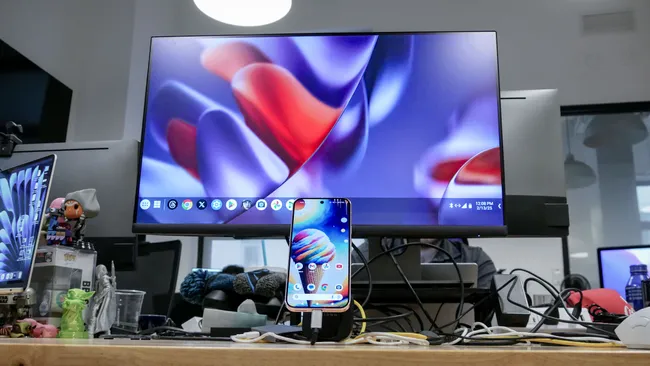
However, I stumbled upon a hidden feature in myPixel 9 Pro XLthat gives me a similar desktop PC-like experience — and I’m stoked about it. After spending a week with it, I hope thatGooglewill make it a native feature for all Android phones.

Not quite as polished as DeX, but usable

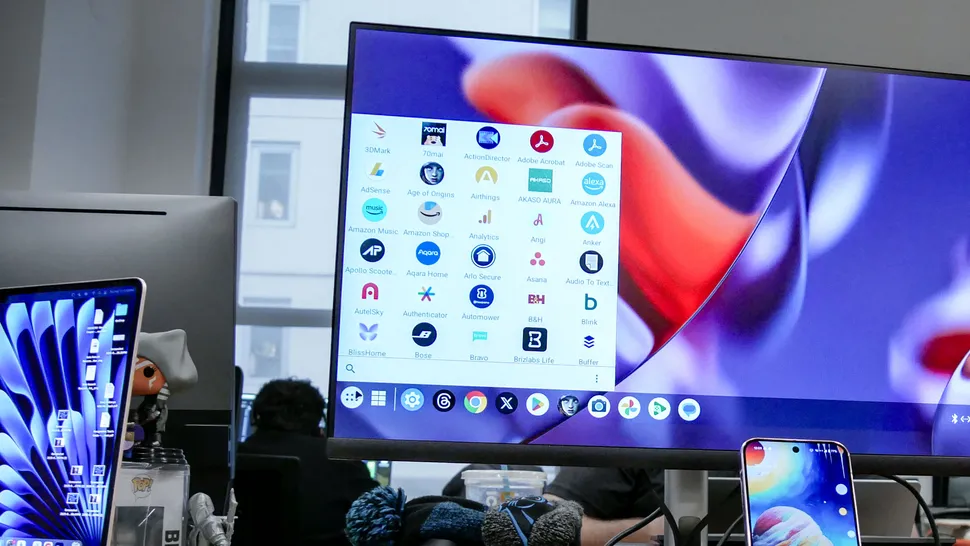
Google’s desktop mode isn’t polished at all, which is why it’s accessible only once developer mode is enabled. Still, it gets the job done for most things I need to do on a daily basis. Once I’ve connected my Pixel 9 Pro XL to my monitor at work (through a USB-C hub, which also has a mouse and keyboard connected to it), Google’s desktop mode launches after I select the on-screen message on my phone to mirror my screen.

Similar to Samsung’s DeX, this desktop-like environment lets me multitask a lot better than on my phone. This is due to how I can run multiple apps simultaneously and resize their respective windows in such a way where I can feasibly run upwards of four apps. Try doing that on any phone! You can’t.

And since this mode lets me use my mouse and keyboard, my productivity is amplified over what I could traditionally do on just my phone. However, I wouldn’t go far to say it would totally replace my laptop. That’s because it can’t quite handle all the stuff I rely on to get my work done. For example, there are severalChromescripts I use for work which aren’t available to me on my phone.

There are also other oddities in the interface, like how it can’t automatically tile windows and how it doesn’t support common keyboard shortcuts (like Alt + Tab for quick switching apps). It’s more of a manual affair with this interface, which is why Samsung DeX feels like a more polished interface.

>>>GWRL2 Battery for Google Pixel 9 Pro Fold

How to access Pixel 9 Pro XL desktop mode

1. Enable developer mode

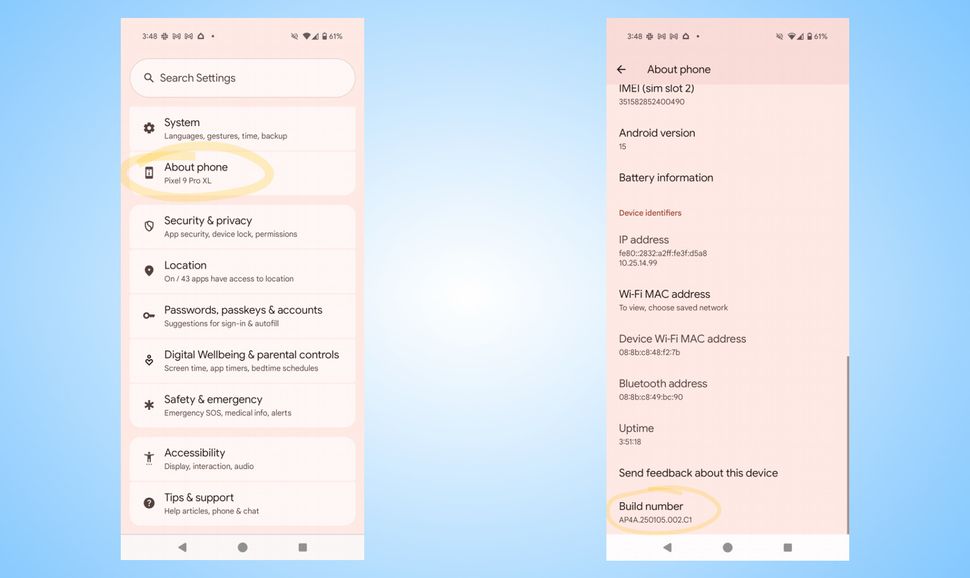
In order to access this hidden mode, you have to enable a few settings hidden in Developer Mode. You just need to head on over to theSettings > About Phone > Build Number, then proceed to taprepeatedlyon the build number until a message appears saying that you’re now a developer.

2. Enable settings for Desktop Mode

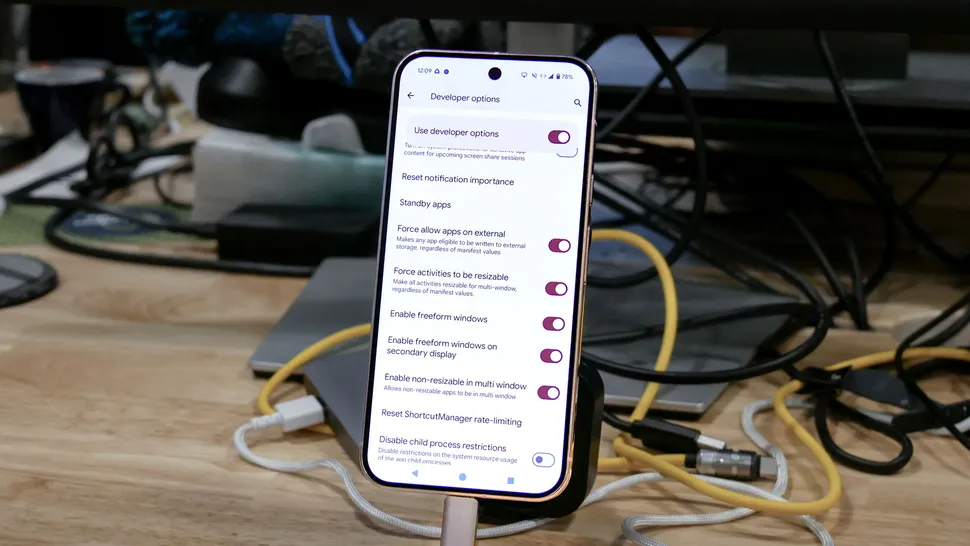
From there, you’ll want to navigate to Settings > System > Developer options. Now scroll down all the way to the bottom of the list and toggle on the following options: Enable Freeform Windows, Force activities to be resizable, Enable freeform windows on secondary display, and Enable non-resizable in multi window.

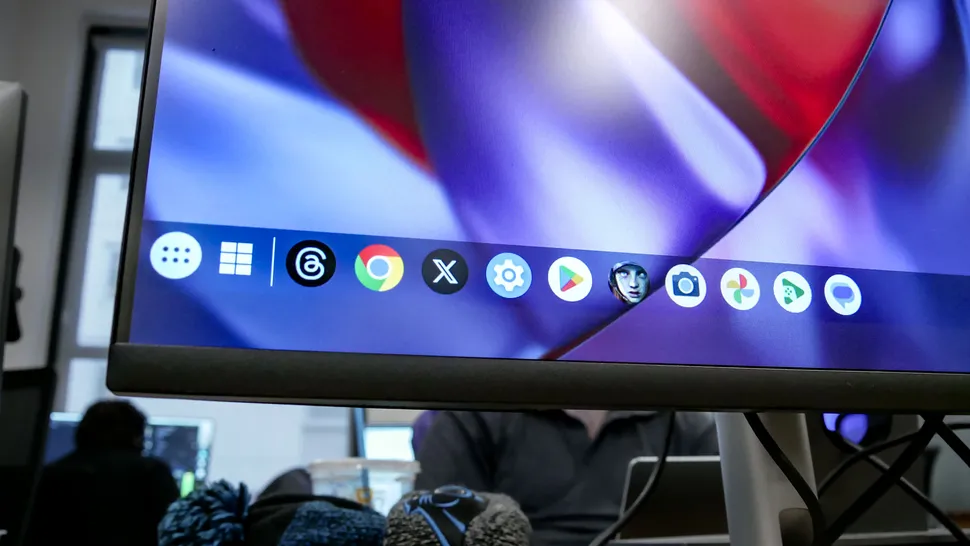
Even though it’s not necessary, I would recommend installing theTaskbar appas well because the native one in the Pixel 9 Pro XL’s desktop mode is broken. There’s a button to access the apps panel, but the home and back functions are strangely hidden. They’re there towards the bottom edge of the panel because those actions happen when I press on those corresponding areas.

Using the Taskbar app allows me to better juggle around all the apps, versus manually relaunching each one from the apps panel whenever I minimize windows.

>>>GDHB7 Battery for Google GDHB7

Bottom Line

Clearly there’s still a lot of work needed before this desktop PC-like interface can convince me it’s just as good as Samsung DeX. Nevertheless, the foundation is here and I hope that Google continues to develop this because I’ve also found out that it supports touchscreen displays.

Google has a long way to go before this desktop mode matches Samsung’s DeX, but making it a native feature for other Android makers to add on to and enhance could make for a worthwhile experience in those times I don’t want to lug around my laptop.

Google Pixel’s hidden music identification feature is broken — and fans aren’t happy

Now Playing may have been busted for months, with no fix in sight

Woman using the Now Playing feature on a Google Pixel phone

(Image credit: Google)

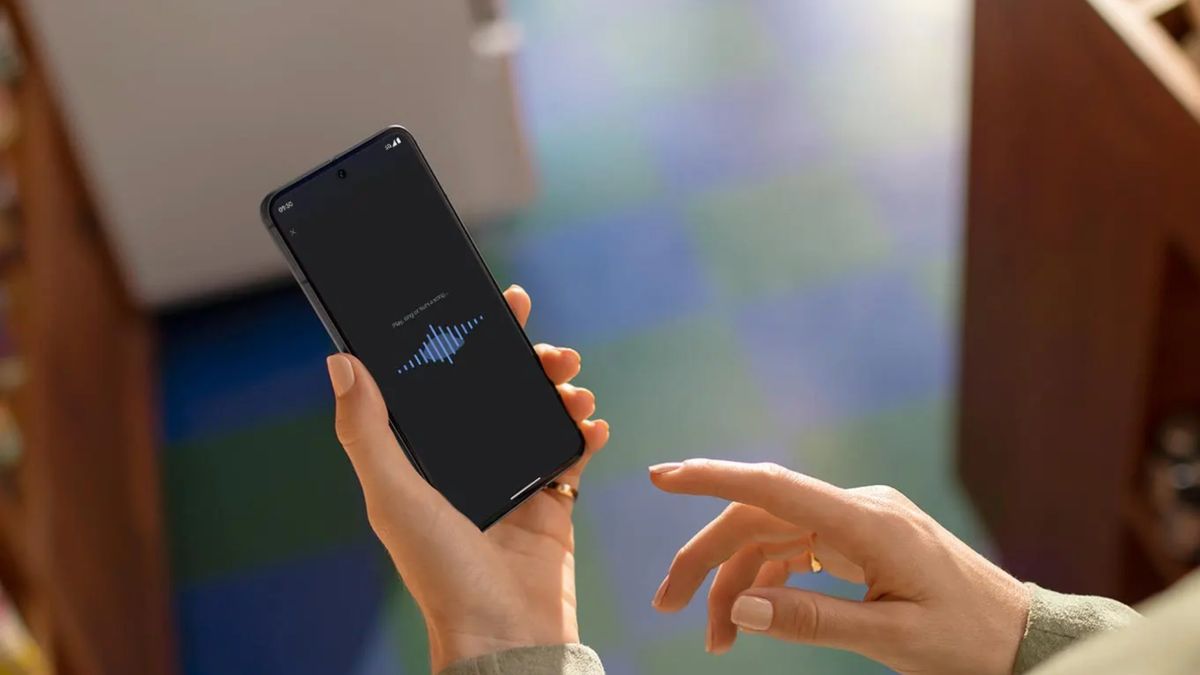
One of the most useful hidden features in Google’s Pixel phones is the “Now Playing” function. When enabled, it can detect any music playing nearby, and display song information on your lock screen. Unfortunately, users are reporting that the feature has been broken for months, with no news on when that might change.

Some Pixel owners have been discussing this issue at great length over onReddit, with the original poster expressing confusion as to why theirPixel 6was only able to recognize two songs throughout a four-hour road trip.

>>>GMSB3 Battery for Google Pixel 6

Others have chimed in with their own experiences, including noting that thePixel 9 Prosuffers the same issues — “horrendously bad compared to earlier iterations.” Another lamented the fact that Now Playing has lost its reliability, and “doesn’t show up half the time,” plus a few choice words we can’t repeat here.

In response to this, one Redditor mentioned that the Now Playing icon is often missing from the lock screen, but songs are still being listed in the history. I’ve never used Now Playing, instead preferring to be old-school with my music identification — opting for apps like Shazam.

But I did give Now Playing a go on my Pixel 9 Pro. It mostly worked, but I will caveat with the fact that it wasn’t perfectly seamless. Not to mention the fact I have no idea how good Now Playing was in the past, which Reddit users clearly do.

What I found was that Now Playing was able to identify big name artists and songs, but struggled with smaller ones — including cover bands that are all the rage on my YouTube feed.

So while my Pixel could identify the likes of AC/DC or The Weeknd, it got a number of smaller YouTubers completely wrong. Assuming it was able to identify them at all. Now Playing was also pretty slow to update, and needed a good 30-60 seconds of music to update the lockscreen.

Granted I’ve only just set the feature up, and only just downloaded Now Playing’s music database to my phone. From what people on variousReddit threadsare saying, the problems only arose after a period of frequent use. Whether Now Playing simply gives up after a while, or if I’m just on a lucky streak, isn’t clear.

Android Authoritynotes that Google did release an update to Android System Intelligence to fix some of the problems last month — promising “bug fixes and improvements to Pixel Now Playing Album Art feature.”

>>>GWRL2 Battery for Google Pixel 9 Pro Fold

However, that doesn’t seem to have fixed the problem. Other users have recommended clearing the System Intelligence cache, which can be done inSettings > Apps > All Apps > Android System Intelligence > Storage & Cache > Clear cache.

If that doesn’t work, then there isn’t much more that can be done until Google tackles the problem with a future update. In the meantime you may just need to rely on other music identification apps like Shazam, or by asking Google Assistant.

Amazon just killed a useful Kindle USB feature – leaving me stuck with less flexibility for ebook downloads and backups

Download & Transfer via USB is going away

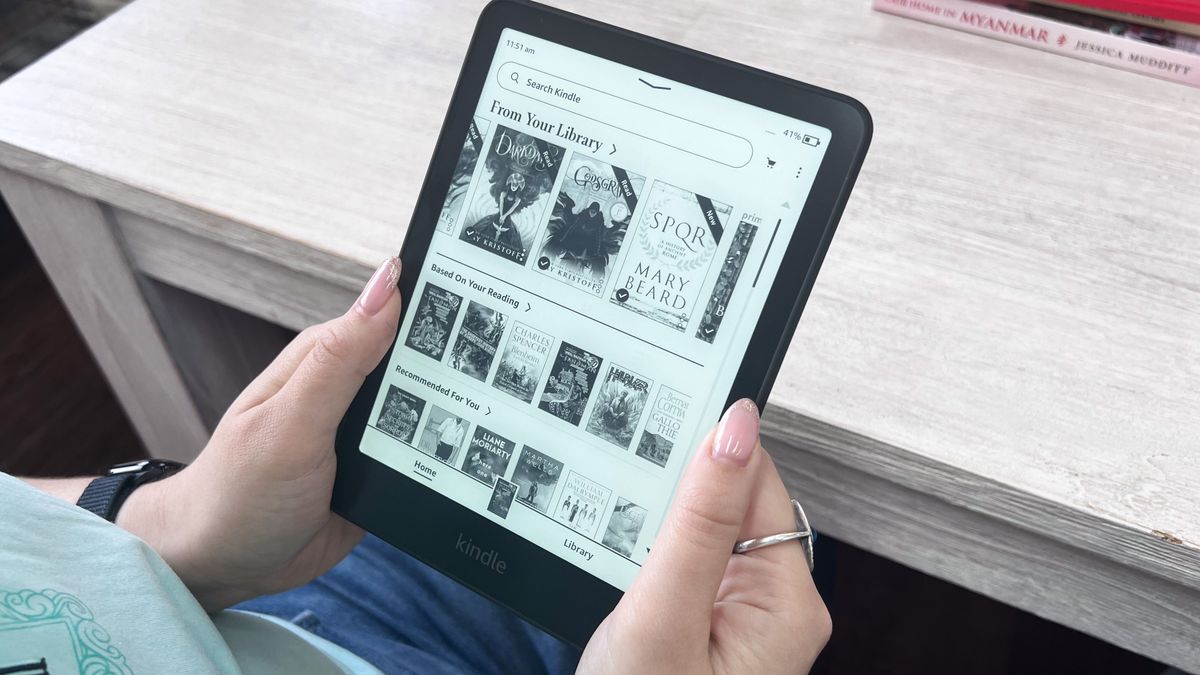
A person holding the Amazon Kindle Paperwhite (2024) with the Home screen displayed

The latest Amazon Kindle Paperwhite


  • Amazon is removing the Download & Transfer via USB option on Kindles
  • The feature hadn’t appeared on the latest models
  • It’s likely that the move is to combat ebook piracy

I’ve owned and loved some of thebest Kindlesin the series sinceAmazonfirst introduced the ereader, but using these devices can feel somewhat restrictive – especially now Amazon is killing off a useful USB file transfer feature.

As reported byThe Verge, the Download & Transfer via USB option is going away on February 26. That means you’ll no longer be able to download ebooks purchased from Amazon, and then move them to yourKindleover a wired USB connection.

The feature isn’t actually available on the latest generation of Kindles, pushed out last year, but all other models are going to be affected. Amazon doesn’t give a reason for the move, but it’s almost certainly to crack down on ebook piracy.

Using fairly simple tools available online, users could download purchased ebooks from Amazon, crack the DRM (Digital Rights Management) protection on them, and send them to other devices or distribute them widely on the web. That will no longer be possible.

>>>26S1028 Battery for Amazon Kindle HD Fire

Less flexibility

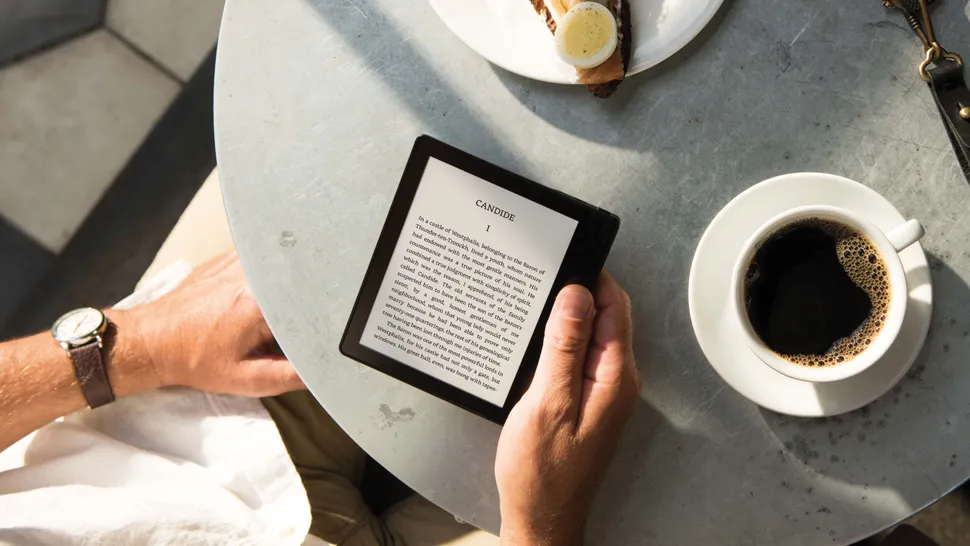
An ebook on the Kindle Oasis

As is often the case, efforts to battle digital pirates means rule-abiding users lose out. This means ebooks can no longer be saved on computers as backups, or moved over without a Wi-Fi connection, which gave Kindle owners some extra flexibility.

It’s worth bearing in mind that Amazon does occasionally remove ebooks from its catalog, or replace them with modified versions. Now more than ever, users are going to be at the whims of what Amazon decides to make available.

You will still be able to move ebooks over via Wi-Fi of course, as well as transfer files to your Kindle via USB and software such as Calibre. It’s specifically the ability to download purchases from the Amazon website to a computer that’s disappearing.

>>>ST32 Battery for Amazon Kindle Paperwhite 5

This also gets closer to fully killing off the older AZW3 format for Amazon ebooks: it’s been replaced by the newer KFX format, which is much harder to crack in terms of its DRM, and which is now used in most situations (except downloads to a computer).

What is an APS-C camera? Why this camera spec is a sweet spot for price and quality

APS-C cameras from the Fujifilm X100VI to the Canon EOS R100 still have a lot to offer

Most camera shoppers look at specifications like megapixels, but there’s a feature that can often be even more important: the type of camera sensor. A popular option is APS-C, a sensor size that balances image quality with price. But, to the novice photographer, that camera spec looks like a confusing alphabet soup that inevitably begs the question, what is an APS-C camera?

An APS-C camera is a digital camera that uses a sensor that’s smaller thana full-frame sensorbut larger thanMicro Four Thirds. This mid-size sensor is the Goldilocks of camera sensors – not too small, but not too expensive either.

The term, which stands for Advanced Photo System Type C, originates from photography’s film era but today is more often used to describe a class of digital cameras. The exact size of the APS-C sensor varies slightly by manufacturer but measures roughly 23mm by 15mm.

>>>EN-EL25 Battery for Nikon Z50 ZFC

This comparison shows how an APS-C sensor compares to full frame, as well as how it crops the image

That’s about 1.5 times smaller than a full-frame sensor. Full frame sensors are considered the standard for professional cameras.

Because APS-C cameras have sensors that are slightly smaller than full frame, the lenses appear to be cropped. Compared to the larger full frame, an APS-C sensor crops off the edges, which is why APS-C cameras are also referred to as crop sensor cameras.

>>>NP-40 Battery for Fujifilm FinePix V10 Z1 Z2 Z3 Z5FD

Why is APS-C better than full frame?

The Sony A6700 on the left has an APS-C sensor while the Sony A7c on the right has a larger full-frame sensor

Most photographers will tell you that the larger the sensor is, the better – and that’s mostly true. A larger sensor will produce less grain and gather more light than a smaller one, among other benefits. But, an APS-C can have some advantages over full frame.

The first is the crop factor. Because APS-C cameras crop the edges off a full frame, the lenses appear to me more “zoomed in” than on a full frame camera. An APS-C camera has a 1.5x crop factor. Many full frame camera lenses will still work on an APS-C camera (provided you purchase the correct mount), but that lens will have a 1.5x cropped view on it when compared to putting that same lens on a full frame camera.

What does that mean? It means that a 50mm lens becomes a 75mm lens on an APS-C camera, which means the photo appears to be taken at a closer distance because those image edges are cropped off. If you are taking pictures of a far away subject, as is often the case with wildlife or sports, that crop factor can actually be an advantage because your lens appears to reach a bit farther.

However, don’t buy a crop sensor camera just for that added reach. Why? Because if you really want that reach, you canuse a full frame camera in crop mode, or crop the images later inLightroomorPhotoshop. You lose some resolution, but by turning the crop mode on a full frame camera on and off you can effectively have the benefits of both full frame and crop sensor from one camera.

The other big advantage of an APS-C camera is the cost. Crop sensor cameras tend to cost less thanfull frame cameras. That’s not always the case, as with entry-level options like thePanasonic Lumix S9compared to the advancedFujifilm X-H2, but for the most part crop sensor cameras cost less.

Another perk? Often APS-C cameras can be more compact than full-frame cameras. Some APS-C cameras with large grips can feel more like full-frame cameras, however.

>>>NP-140 Battery for Fujifilm FinePix S100FS S200FS S200EXR S205EXR

Why is full frame better than APS-C?

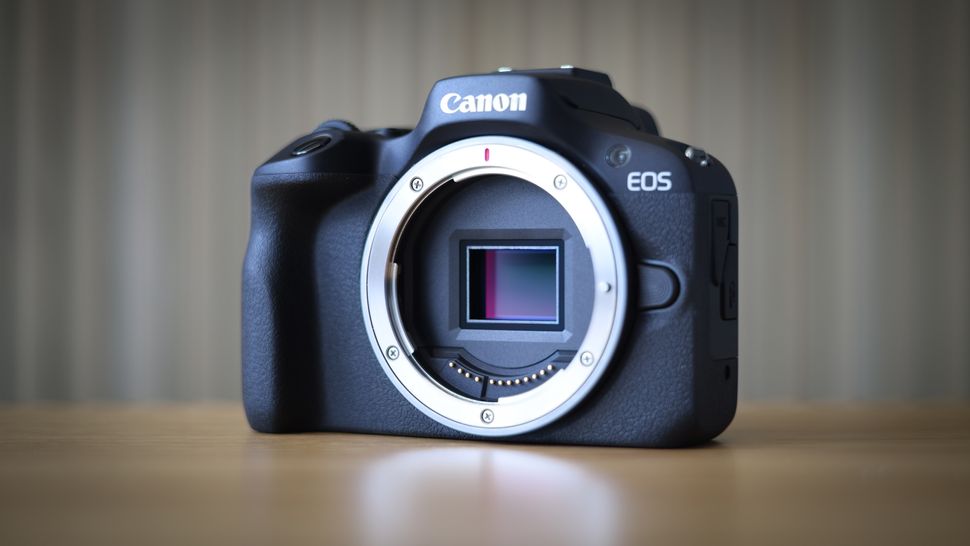
The Canon EOS R100 is a budget-friendly APS-C camera

While APS-C are more affordable and give lenses more reach, the full frame sensor is considered the professional standard. A larger sensor lets in more light, so full frame cameras have an advantage in dark scenarios.

Full frame cameras will also produce more background blur orbokeh. And if you want to take an ultra-wide shot of a landscape, the crop factor on APS-C cameras becomes a disadvantage, cropping off the widest edges, rather than an advantage like with telephoto lenses.

Are APS-C cameras worth it?

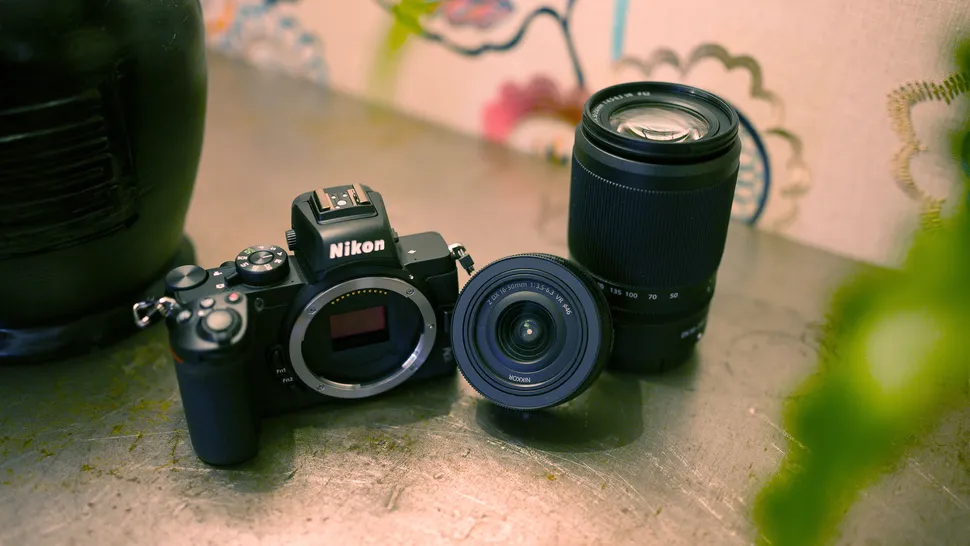
TheNikon Z50is a compact APS-C camera

While full-frame cameras have more light-gathering abilities, the APS-C camera is the sweet spot for many photographers to get a camera at a reasonable price that still takes excellent images. If you want the best possible image quality and have a large budget, you’ll probably lean towards full frame. But if you want the best balance between features and price, you’ll want to consider an APS-C camera.

Many of the best mirrorless cameras are APS-C – and even some popular compact cameras like theFujifilm X100VI. APS-C cameras have more light gathering power than Micro Four Thirds, but tend to cost less than full frame cameras.

While the full frame camera category has more professional cameras, don’t believe the myth that professional photographers have to use full frame cameras. I’m a professional wedding and portrait photographer and I shoot withFujifilmAPS-C cameras. I chose Fujifilm for the colors, and the APS-C sensor is still plenty big enough, especially since I traded my full-frame f/2.8 lens for an f/1.0 and f/1.2 primes so I could compensate for the smaller sensor.

I tried gaming on a Chromebook for a week — and it’s better than I expected

But it still has a long way to go

Let’s be real — nobody buys a Chromebook for gaming. Their true strengths lie in the simplicity and efficiency for workers and students, alongside being good for binge-watching to your heart’s content.

But for playing games? That’s a “no” from me. Even when Google promoted its laptops as being the “ultimate cloud gaming machine” a few years back (thead with Michelle Rodriguezstill runs through my mind), they couldn’t stand up to thebest gaming laptopssporting the latest in gaming-focused specs.

Not even theAcer Chromebook 516 GE($649), which isspecificallymade for gaming, could compete with the raw might of, say, anAsus ROG Zephyrus G14($1,999). Considering their price differences, though, that’s to be expected. But here’s the thing: wouldn’t it be great to play the latest games on a more generally affordable lineup of laptops? Of course, and Chromebooks present that chance.

Since 2011, I’ve seen Google’s laptops evolve — delivering better performance, greater connectivity and now a new category of beefier notebooks: Chromebook Plus. Surely, the best Chromebooks of today could manage to pull off decent gaming performance, right?

Well, that’s what I hoped, and after using a Chromebook as my main way to play games, I can say that the results are mixed. Ultimately, though, I was surprised by what was on offer, even if it still has a long way to go.

>>>C41N2101 Battery for Asus ROG Zephyrus G14 GA402 GA402R GA402RJ

The many ways of gaming on a Chromebook

While these laptops aren’t made for gaming, you might be surprised to know that there are several ways to boot up a game on a Chromebook. There are plenty of compatible gaming apps on the Google Play Store, cloud gaming via Xbox Game Pass Ultimate and GeForce Now and yes, you can alsoinstall Steam on a Chromebook.

Each delivers a variety of titles new and old, fromIndiana Jones and the Great Circleto Grand Theft Auto: San Andreas. Great, the games are here, but the real question is: can a Chromebook handle them?

I booted up aSamsung Galaxy Chromebook Plus, a fine laptop with an excellent 15.6-inch FHD (1920 x 1080) AMOLED display and the following specs: Intel Core i3 100U CPU, Intel Graphics, 8GB DDR5X RAM and 256GB for storage. Not exactly beefy, but it meets the minimum requirements to play Steam on a Chromebook — and that’s enough for me.

I tried playing games in each category, with the Play Store being the easiest — and my most viable — option.

>>>C41N1908 Battery for Asus ROG Zephyrus G14 GA401IU GA401IV GA401IV-BR9N6

All for Android gaming

AsApple continues to make gaming good on Macs, Google has quietly been populating its Play Store on Chromebooks with a strong catalog of Android games. NotResident Evil 4-type good, but more in the classic and addictive, popular titles type of way.

There’s everything from Roblox and Among Us to Dead Cells, Stardew Valley and Loop Hero. There are even all-time classics like GTA: San Andreas, Castlevania: Symphony of the Night and Final Fantasy III 3D Remake. Then there are addictive card-based titles such as Balatro, Slay the Spire and Marvel Snap.

These games may not be high-quality blockbuster hits that we see on Steam, but they’re popular games that I would spend dozens of hours sinking my thumbs into regardless of the gaming device I play them on.

I booted up Balatro first, and it worked like a charm. It’s not exactly a demanding title, and it’s easily playable on many smartphones. Still, seeing as this break-out hit is even on a PS5, you bet this is the kind of game many gamers are checking out, and having this easily playable on a Chromebook is a major bonus.

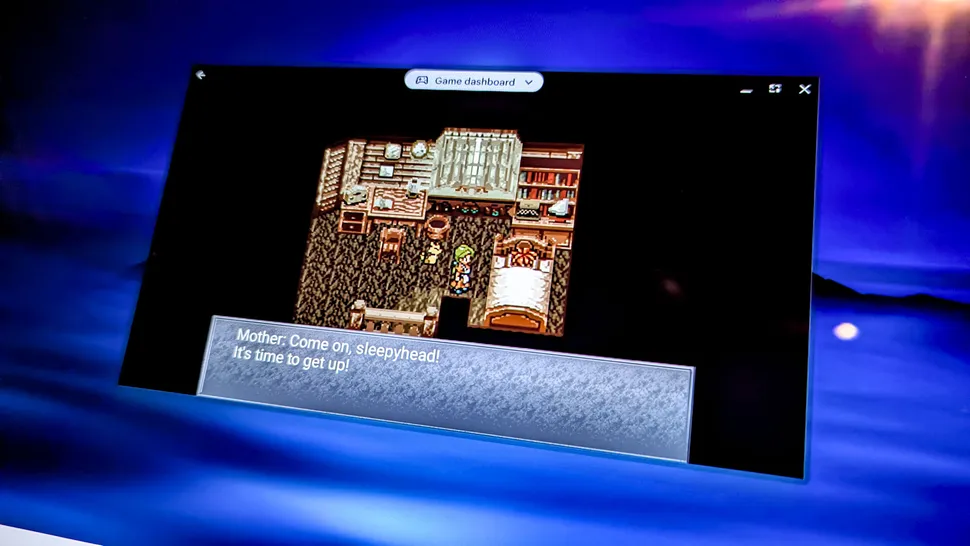
I continued with the low-demanding title streak by playing the all-time classic RPG Chrono Trigger, made way back in 1995. And yes, now a full 30 years later, it can be played on a Chromebook. Hardly a surprise, but it’s an engaging title to play on a Chromebook nevertheless.

Now, I decided to up the stakes a tad. I installed Call of Duty Mobile to see how well the Galaxy Chromebook Plus could handle 3D rendering, but I never got past the launch screen. Every time I opened the app, it would automatically force quit shortly after showing logos for a split second. Even after looking at the minimal troubleshooters online, like reinstalling the app, none of it worked. Apparently, it only works on certain Chromebooks, and one of them isn’t mine.

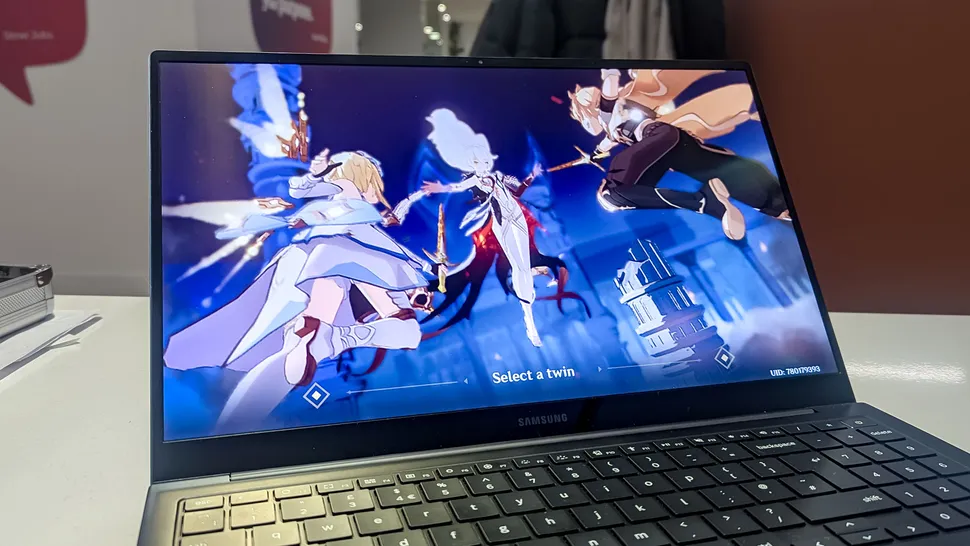
So Genshin Impact it is. Not my general cup of tea, but a popular title fit for any gaming device. Unfortunately, though, to no avail. After what took over an hour to download the game and compile shaders, I was treated to the opening cinematic, where I could also choose my character. Afterward, though, it crashed. After booting it up multiple times, it kept crashing. Of course, this leads me to believe this isn’t made for 3D graphics.

All in all, a Chromebook does have a nice selection of games to play from the Play Store, unless they demand the third dimension. One point of annoyance: Netflix has a great catalog of gaming apps to download that are included in subscriptions. Unfortunately, none of these apps are compatible with Chromebooks, which is a shame seeing as there are games like Dead Cells, Oxenfree, Katana Zero, Into the Breach and more.

>>>C21N2003 Battery for Asus Chromebook Flip CM3 CM3200 CM3200FVA

Cloud gaming highs (and lows)

If it’s the latest AAA titles you want, a Chromebook can provide — but only through cloud gaming. Chromebooks don’t have the specs to pull off premium gaming features like Nvidia’s ray tracing or DLSS 4 to boost frame rates, but they can stream games from a gaming PC that does.

More than anything, this all depends on your internet speeds and Wi-Fi connections. The gamer-ready Acer Chromebook 516 GE even comes with an Ethernet port for uninterrupted streaming. However, with the Galaxy Chromebook Plus’Wi-Fi 6Econnectivity (althoughWi-Fi 7is preferred), along with my home network’s internet speeds (up to 500Mbps), it should be enough to stream games on.

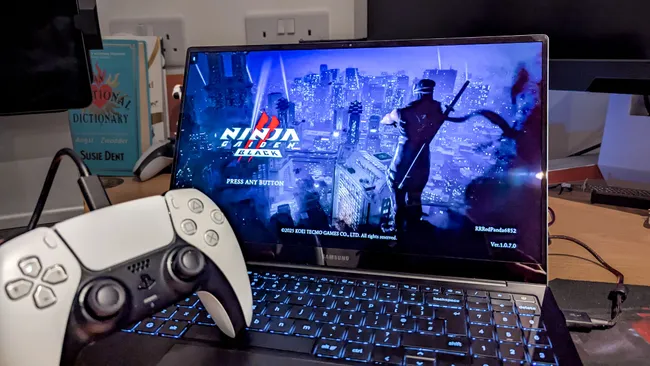
Lo and behold, it is! After using Xbox Game Pass Ultimate in a Chrome browser, I could scroll through a library of top-sellers, and that includes the updated Ninja Gaiden 2 Black. The thing is, these games need a controller to get going. A shame, seeing as there is a perfectly good keyboard here for certain titles, but a PS5 DualSense controller does the trick.

Without any installs, I tried out the latest, upscaled edition of Ryu Hayabusa’s action-packed adventure. At first, visuals and gameplay were super smooth, and I was slicing, dicing and Izuna Dropping enemies without any lag. Then, as the on-screen action got more chaotic with waves of foes, the game dropped quality and stuttered far too frequently. As any fan of the fast-paced action franchise would know, this is not the way to play Ninja Gaiden.

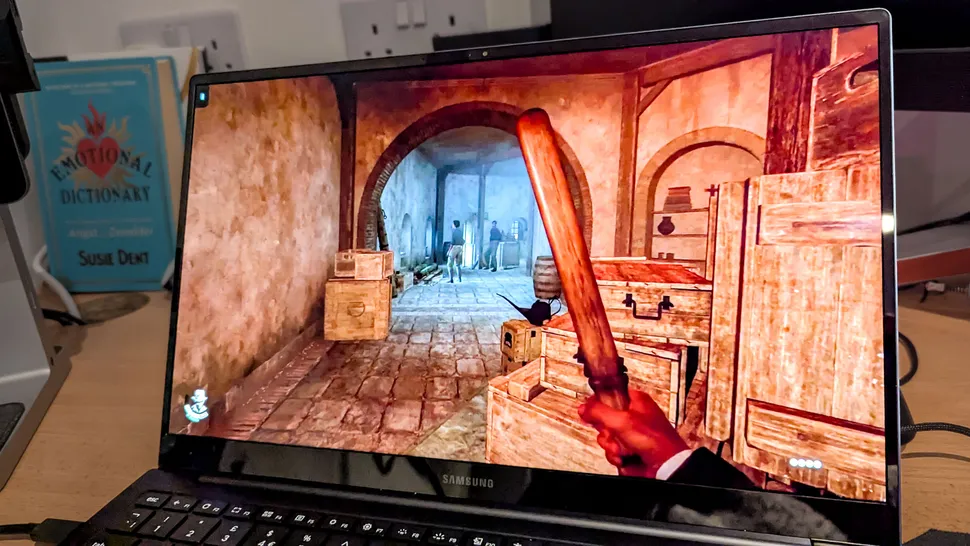
I then tried Indiana Jones and the Great Circle and had a far better time. Perhaps it’s the slower pace of action-adventure’s stealth sections, exploration and combat, but I was able to get through an entire level without any hiccups. A tiny stutter here and there, but nothing game-breaking. That’s genuinely impressive, especially for a laptop that would never be able to handle such a game on its own.

Cloud gaming is a great option for Chromebooks, as Microsoft appears to have put the legwork in to make its cloud gaming a more viable service for gamers over the years. While titles that require minimal input lag aren’t a great match, more slow-paced games, even like Persona 3 Reloaded or Citizen Sleeper. Of course, though, this all depends on your internet speeds.

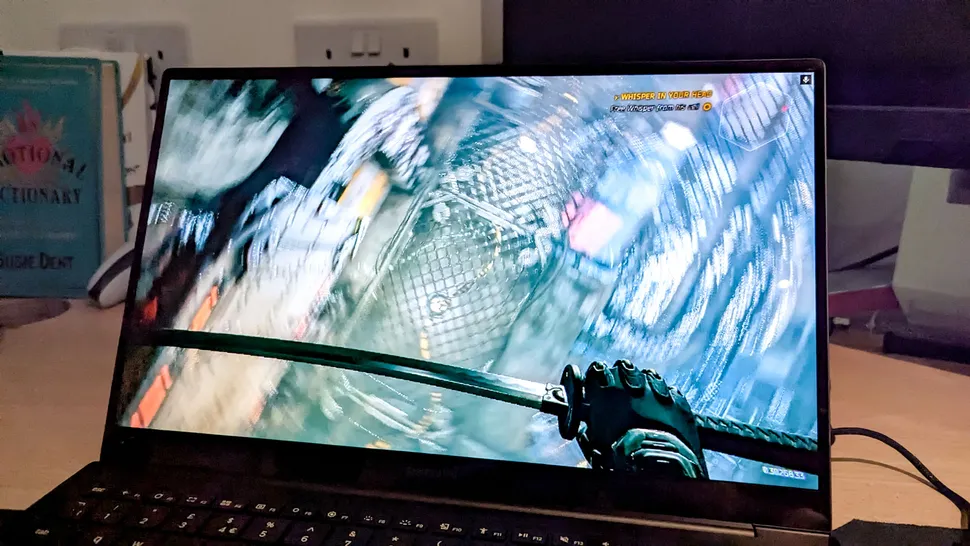
As a quick note: I tried to use Nvidia’s cloud-gaming service GeForce Now as a free user, trying out Ghostrunner. However, not being a paying subscriber myself, I didn’t get the best experience. In fact, it barely ran a few minutes before the directional inputs spun out of control (as evidenced below).

Steam on Chromebooks is a step forward

Steam for Chromebooks has been around for a while now, and even though it’s still in beta, Valve’s gaming client looks good on a Chromebook. It’s easy to install for Chromebooks that meet theminimum requirements, and it’s the full Steam package you’d expect on Windows. There are still a few issues, but overall, you can install and play games from your library as usual.

Well, therightgames. There’s no chance my Chromebook could run the likes of Cyberpunk 2077. I even tried playing one of my favorite titles of 2024, Anger Foot, which doesn’t require demanding specs, and it didn’t stand a chance of getting to the title screen before shutting down.

Instead, I stuck to more 2D indie games, such as Hotline Miami. This worked without a hitch, and gameplay was even snappy and smooth — two things required in this fast-paced top-down shooter.

Using Steam to game on a Chromebook is more trial and error, and depends entirely on the specs of a Chromebook, like any gaming PC. I can’t imagine all games will work, especially ones that push the limits of having 8GB of RAM, but for those classic titles and more pixelated games, Chromebooks can pull it off.

So, this leads back to the all important question…

Is gaming on a Chromebook any good now?

Truthfully, I don’t think gaming on a Chromebook is a terrible option anymore. At one point, I had no faith in what a Chromebook could offer, and couldn’t fathom trying to game on one. Seeing as the main focus of these laptops is for education and workers using web-based applications, gaming hasn’t been a high priority.

However, that doesn’t mean games can’t be played on one. Set your expectations, and you’ll be happily playing popular titles that don’t require an RTX 50-series GPU or equivalent. There are plenty of classic RPGs on the Play Store and Steam worth investing time into, and the latest Chromebooksshouldbe able to handle it all.

Moreover, cloud gaming is better than ever, and if you have a decent internet connection (and a controller), you can game to your heart’s content with the latest titles that come to Game Pass — and there are quite a few.

Will I continue to game on a Chromebook? Unlikely, especially when I have a proper gaming laptop and PS5 at hand. But for those interested in an affordable Chromebook and wondering if it’s possible to game on it, yes, you can. You’ll get a far better experience on a value gaming laptop like theAsus TUF Gaming A14, but if you’re looking to keep things cheap and cheery, Chromebooks aren’t the worst shout.

Apple Pencil vs Logitech Crayon: which should you choose?

We test every Apple Pencil model vs Logitech Crayon to see which is the best iPad stylus.

Apple Pencil vs Logitech Crayon

(Image credit: Apple Pencil vs Logitech Crayon)

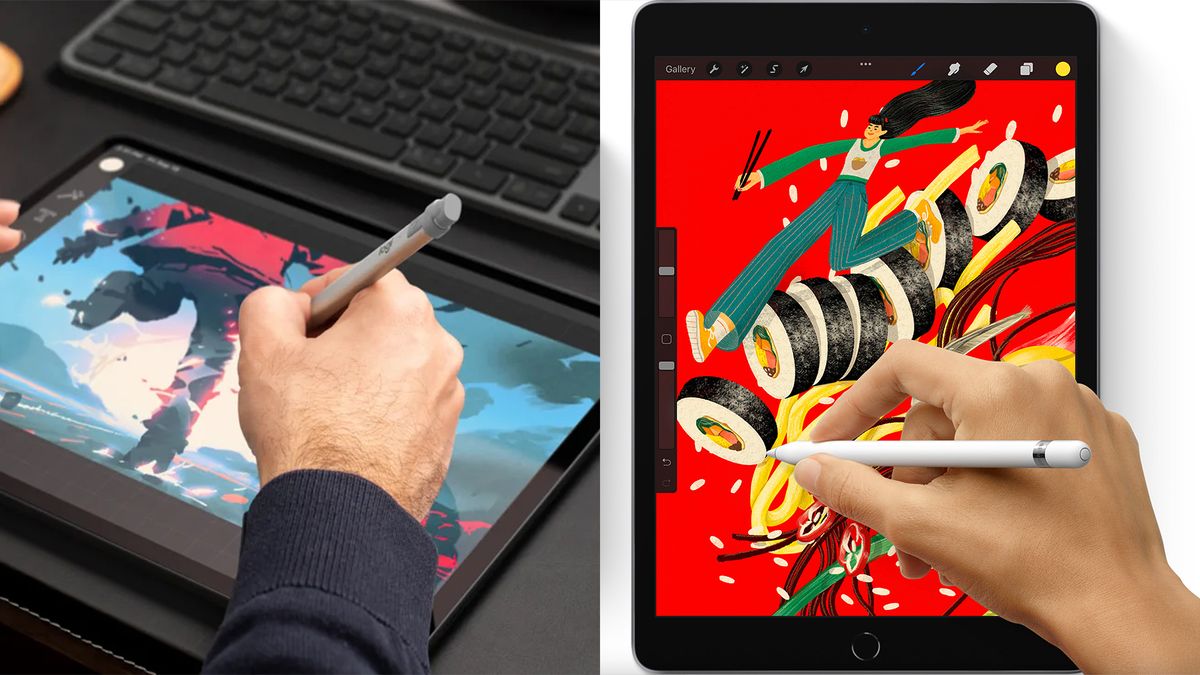
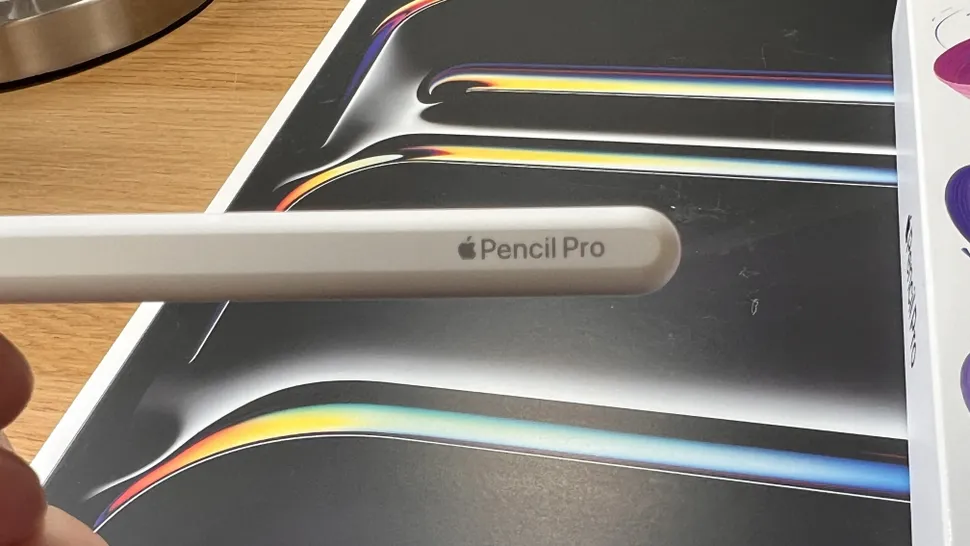
Apple Pencilvs Logitech Crayon – the ultimate battle of the smart styluses, but which is best? While there are a host ofApplePencils to pick from (including this year’s swanky new Apple Pencil Pro) it can be tricky to decide which to pick to accompany thebest drawing tablets, especially when compared to the humble yet powerful Logitech Crayon.

We’ve already reviewed the latest version of theLogitech Crayonand the newApple Pencil Pro, but each has its own unique pros and cons. If it’s compatibility that you’re after, you might require the more mature Apple Pencil 1,2 or USB-C options for older iPad, Air and Mini generations.

>>>A1542 Battery for Apple Magic Trackpad 2 Touchpad

Apple Pencil vs Logitech Crayon: Design

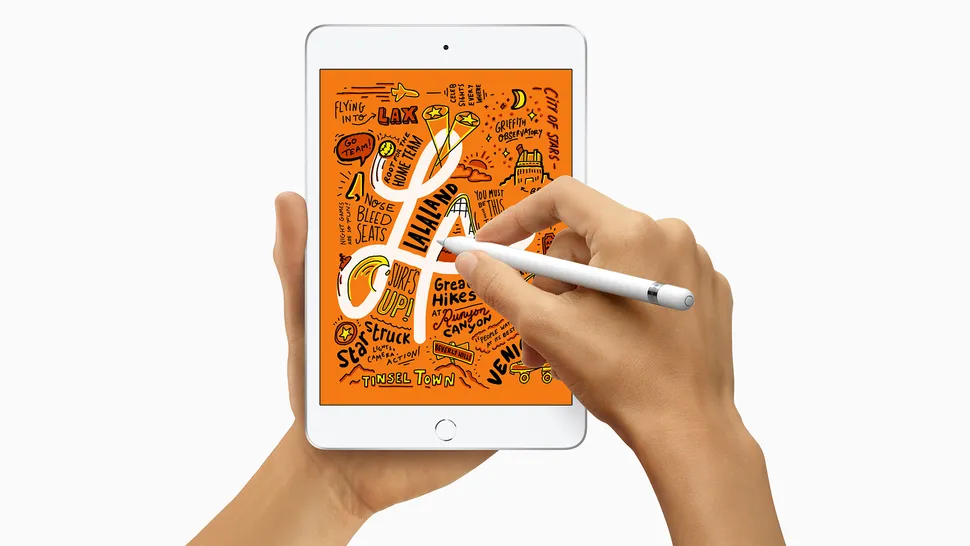
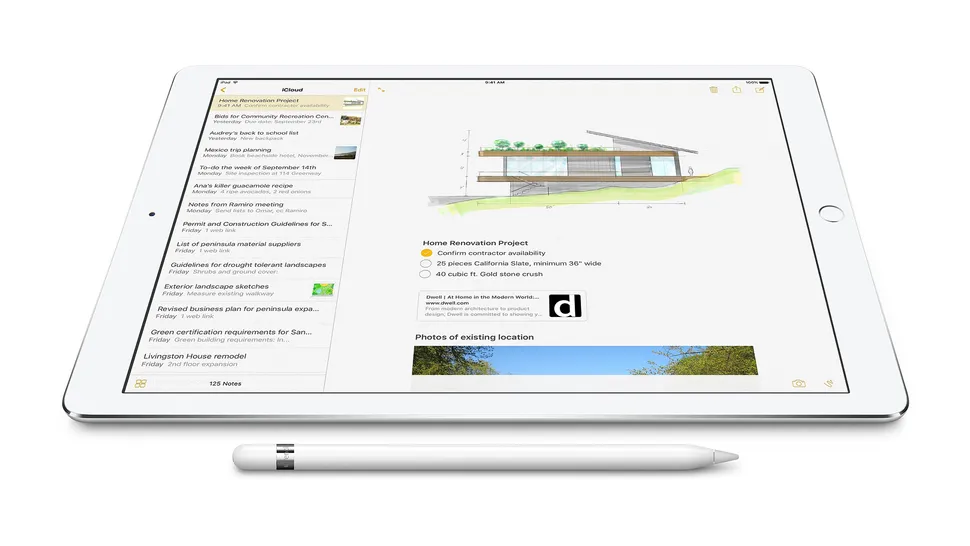
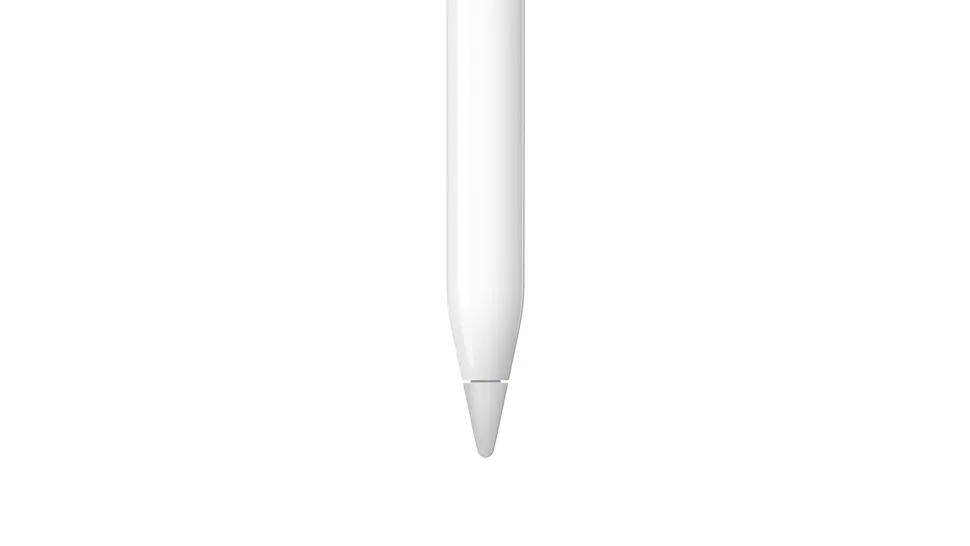
In all of its iterations, the Apple Pencil is an elegant object, designed very much to mimic a designer pencil, even down to its circular design and carefully tapered tip (rather than, say, a stepped lip where the tup enters the pen body, as many designers have lived with perfectly well on styluses for years).

When it comes to the first version, its elegance at times slightly interferes with its practicality, though not in ways that are major problems: to stop it rolling off desks, Apple has weighted it slightly, which is quite clever, but isn’t 100% effective, since enough momentum just overcomes this and it still rolls. And there’s an end cap covering the charging plug that’s held on by magnets, which is fine when writing/drawing with it (and fun to fiddle with), but is still not too hard to pop off and lose.

The Apple Pencil 2 and Apple Pencil Pro both feature a flat edge for magnetic charging, solving the rolling issue. There’s no magnetic cap either, so no risk of losing that.

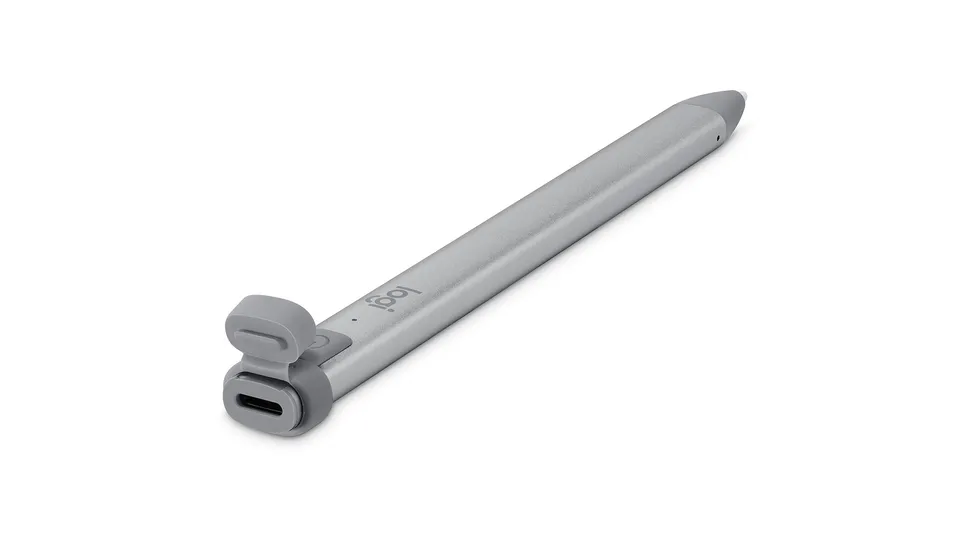
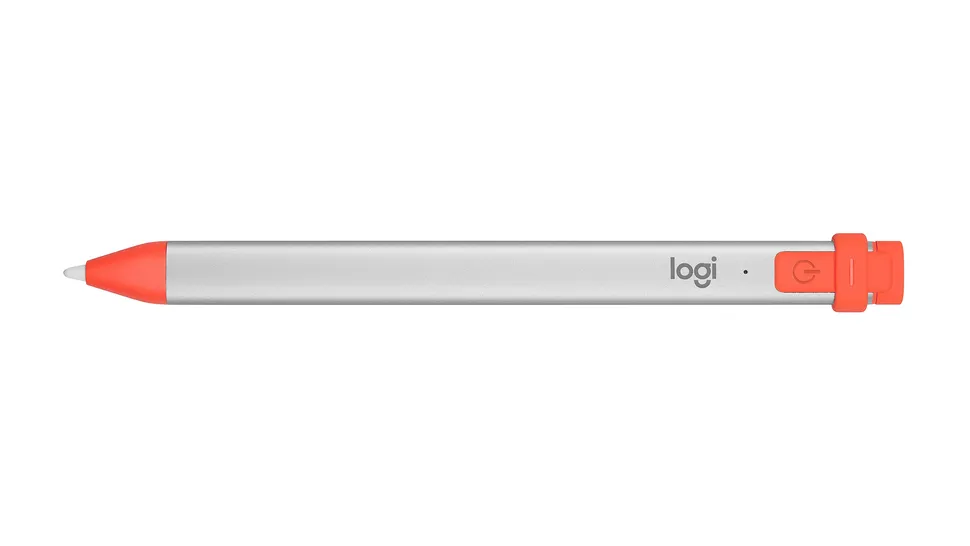
The Logitech Crayon is designed with the classroom in mind as much as work, and it shows – it’s chunkier than the Apple Pencil, it’s squared off so it never rolls (and its cross section is roughly rectangular rather than circular), and it has a flappy plastic cover for its charging port that can’t be lost.

That plastic comes in a choice of fun/kiddy-looking orange on a grey body, or there’s a grey plastic on grey body version that’s actually quite reserved.

The Crayon also appears to be more durable than the Pencil – we’d expect to take being sat on better, or dropped, though we’ve never actually broken a Pencil this way ourselves.

Winner: Apple Pencil 2, Apple Pencil Pro, Logitech Crayon

(Image credit: Apple)
>>>616-0223 Battery for Apple iPod Nano A1137 MA350 MA004

Apple Pencil vs Logitech Crayon: Performance

When it comes to performance, there’s one major difference you need to know about: the Apple Pencil has pressure sensitivity, and the Logitech Crayon doesn’t. The Apple Pencil Pro also boasts added features like barrel roll which allows you to change the orientation of shaped tools, squeeze for easy switching and customisation, and even haptic feedback.

Both styluses write or draw with the same level of precision (technically speaking), and they both include tilt detection, enabling some artistic tool control in that sense. But the Crayon simply doesn’t handle pressure at all, while the Apple Pencil is great for fine-grained pressure sensitivity.

You probably know already whether this is a deal-breaker for you. If you just want to take notes on it, pressure sensitivity isn’t required (though some ink-mimicking notes apps do make use of it for a more natural look) and the Crayon is perfectly functional. If you’re planning to use a stylus for the precision application of effects in photo editing apps, then pressure sensitivity isn’t a requirement.

But for professional art, you need it. That the Crayon draws with the same level of precision as the Apple Pencil doesn’t matter if you can’t control the lines as finely, since you end up drawing so much more crudely, because that’s all the stylus is capable of.

Illustrators looking to do anything more than highly basic outlines should avoid the Crayon and go for the Apple Pencil. For everyone else, you can decide if you want the potential of making use of pressure sensitivity in the future.

Winner: Apple Pencil Pro

Apple Pencil has pressure sensitivity, the Logitech Crayon doesn’t(Image credit: Apple)
>>>616-0343 Battery for Apple iPod Touch 1ST Gen

Apple Pencil vs Logitech Crayon: Ergonomics

Though the Crayon is larger than the Pencil, there’s not too much difference between them ergonomically. The way the Pencil’s size copies real pencils will be a boon for some, but plenty of people will equally prefer a chunker grip that they’ve become used to withWacomstyluses (though the Crayon is still only thick in one dimension, so isn’t quite the same as a big rubbery Wacom grip).

The Apple Pencil 1 has a glossy exterior, which can easily become a little slick with oils from your skin – Apple fixed this with a matte finish on all later models. The Crayon has a more matter-feeling finish, and the extra size helps you to keep a strong grip too.

For those doing fine and precise work, the Apple Pencil is more easily manipulated in tiny ways (and gets in the way of what you’re looking at a little less) so when combined with its pressure sensitivity, it becomes even more the artists’ choice.

But for those who want to be able to take notes or annotate while on the move, the extra grip of the Crayon may be more welcome – though, as we said, it’s not a huge difference. It will be more of a benefit for kids (who are, again, a key audience for the Crayon) lacking as fine motor control as adults.

Winner: Apple Pencil 2, Apple Pencil Pro

For those who want to be able to take notes or annotate while on the move, the extra grip of the Crayon may be more welcome(Image credit: Apple)

Apple Pencil vs Logitech Crayon: Charge

The older generations of Apple Pencil are famous for their slightly ridiculous charging system. With a Lightning connector under the cap, you can plug this into an iPad’s Lightning port to charge from the iPad’s battery.

The 2nd Gen Apple Pencil and Apple Pencil Pro mitigate this stress with seamless wireless charging. Simply place the pencil on the magnetic storage strip and it’ll charge the stylus when it’s not in use. They both boast up to 12 hours of continuous use with storage and charging combined they’ll always be ready to use when you’re on the go.

The 1st Gen Logitech Crayon has a regular Lightning port on it for charging, so you can use the same cable as your iPad without any need for an adapter. The 2nd Gen boasts a USB-C charging port for pairing with newer iPad models which isn’t as seamless as Apple’s wireless charging capabilities. However, the Logitech Crayon has an off button, so you can be sure it’s not wasting battery when it’s waiting in your bag between uses, and it also powers off automatically after 30 mins of non-use.

It gives you around 7.5 hours of charge in total from a full battery – notably less than the Pencil, but it has a triple light system to let you know how charged it is, which is great extra affordance that the Pencil doesn’t have (though you can use Apple’s ‘Battery’ widget on the iPad to check the Pencil’s current levels).

Winner: Apple Pencil 2, Apple Pencil Pro

The Apple Pencil is famous for its slightly ridiculous charging system(Image credit: Apple)

Apple Pencil vs Logitech Crayon: Compatibility

The Logitech Crayon is interesting for compatibility because it works with every single iPad currently available, including the new iPad Pros that work with the 2nd-gen Apple Pencil. It also works with the 10.2-inch iPad, the previous 9.7-inch iPad model with Apple Pencil support, the current iPad mini, and the currentiPad Air.

However, there’s no support for older iPads than these, so if you have an old-designiPad Pro, the Crayon is not an option.

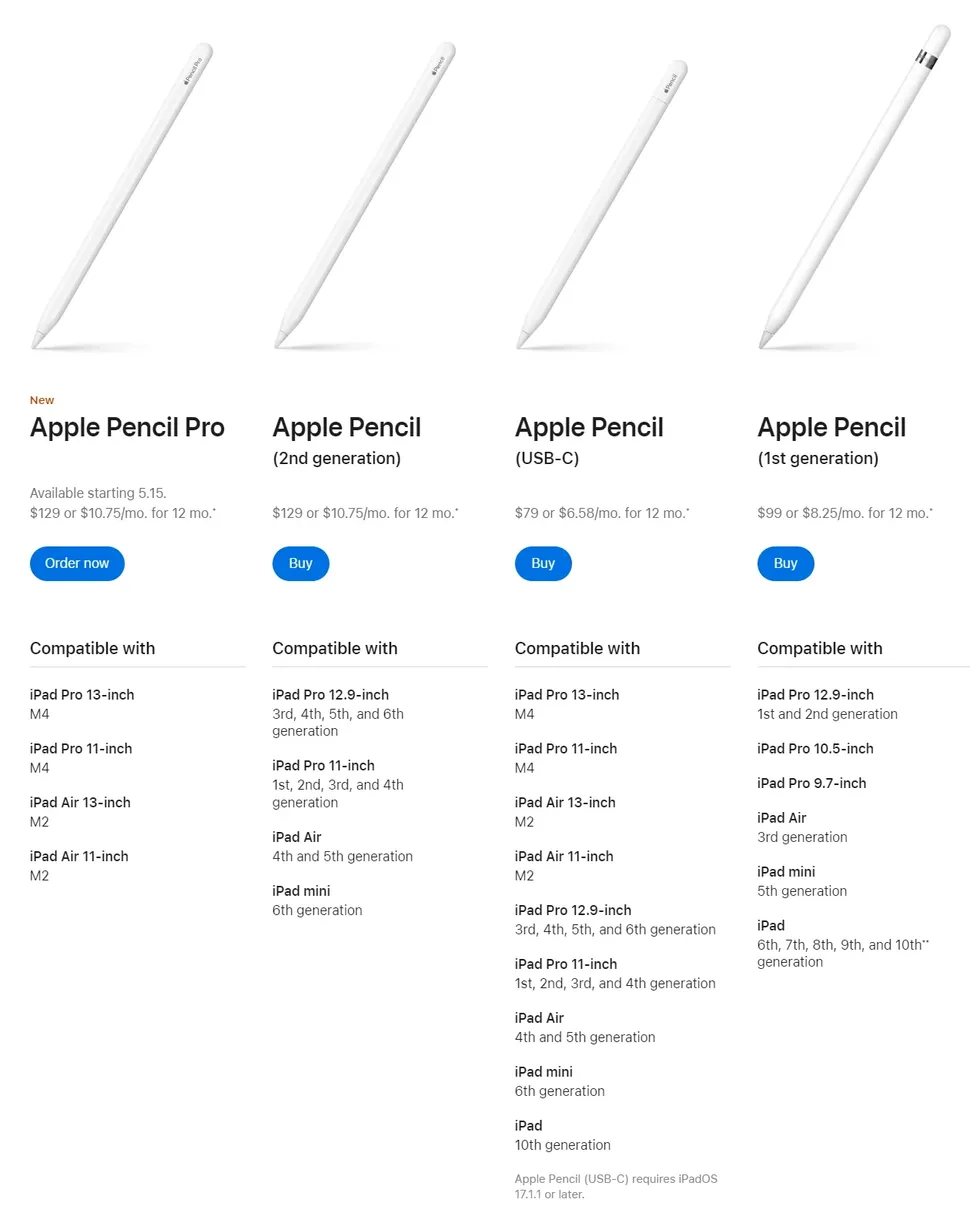
As for the Apple Pencil, compatibility depends on which iPad you have. In fact, the compatibility so ridiculously confusing that instead of attempting to write it out here, I’m just going to show you Apple’s own chart (below), which, let’s be honest, hardly simplifies things at all.

Winner: Logitech Crayon

Thanks, Apple… (Image credit: Apple)

The Logitech Crayon works with every single iPad currently available(Image credit: Apple)

Apple Pencil vs Logitech Crayon: Price

The original Apple Pencil costs $89, while both versions of the Logitech Crayon cost $69.95. The Apple Pencil 2 and Apple Pencil Pro will both set you back$199

The extra money for the Apple Pencil gets you extra hours of battery life (though, as we say, because the Crayon is better at preserving battery, it’s hard to say exactly how beneficial that will be in practice), but most importantly it gets you pressure sensitivity.

For artists, there’s no question that this is worth the higher price. For everyone else, it’s a judgment call – we think the added value of the Pencil is certainly worth the price upgrade if you choose to go for it, though.

Winner: Logitech Crayon

For artists, there’s no question that the Apple Pencil is worth the higher price(Image credit: Apple)

Apple Pencil vs Logitech Crayon: Replacement tips

Both of these styluses have replaceable tips, but while the Apple Pencil comes with an extra tip, the Crayon doesn’t, so that’s another small extra value win for the Pencil.

Here’s an oddity, though: Logitech sells extra tips for the Crayon in packs of three for $14.99 in the US… but availability in other countries seems to be lacking, or non-existent. The good news is that users online report that Apple’s own replacement Pencil tips work in the Crayon, but it’s still not an ideal situation.

Apple’s tips cost $19 for a four-pack, which is fine for value, particularly since they last really well. Exactly how well they last will depend on your use, but the nice smooth glass of the iPad is quite kind on the tips, and it’s normal for them to last two years. However, using a screen protector can reduce that a lot, depending on the finish of it.

Winner: Apple Pencil (all models)

Apple Pencil vs Logitech Crayon: Storage

The Apple Pencil 2 and Apple Pencil Pro’s magnetic storage capabilities are a natural winner over the Logitech Crayon. With easy on the go access (and the added bonus of charging and pairing) the Apple Pencil is an excellent choice for artists (or anyone that has a habit of misplacing their stylus pens).

The Logitech Crayon doesn’t have any kind of official way to handily store it on or with the iPad. Various iPad cases will have Apple Pencil storage built in, so you can buy one that fixes this oversight, but not so much with the Crayon. The storage is “knowing which pocket you put it into in your bag”.

Winner: Apple Pencil 2 and Apple Pencil Pro

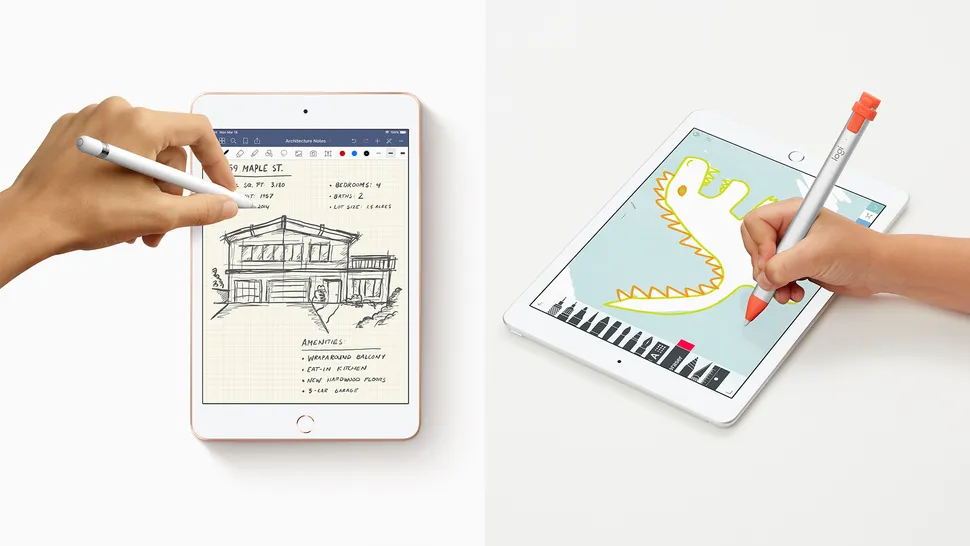
(Image credit: Apple, Logitech)

Apple Pencil vs Logitech Crayon: Conclusion

If you’re looking to do remotely serious art on your iPad, you want the Apple Pencil, there no question there. Pressure sensitivity is non-negotiable.

Beyond that, there’s not that much to choose between them. They’ll both work as well for each other at note taking or precision tool selection, though even then some apps can take advantage of the pressure sensitivity – it’s just not as much of a dealbreaker.

They both have advantages over the other when it comes to aspects such as design or charging/battery life.

The Logitech Crayon is cheaper, but we suspect most people go for the more adult-looking Apple Pencil and it’s familiar pen-like design.